Gravel vs Road Cycling Glasses 2026
Contents5 min read
Gravel vs Road Cycling Glasses: 5 Differences That Actually Matter on the Bike
July in the Alps. Cycling camps across Europe are packed, the Tour de France is racing through mountain stages, and somewhere on a gravel track above Bourg-d'Oisans, a rider is squinting into the afternoon sun with a €4 petrol station pair of sunglasses sliding down their nose. You've seen them. Maybe you've been them. The question of gravel vs road cycling glasses sounds technical, but it comes down to something simple: the conditions you ride in are different, so the glass on your face should be too.
Why Gravel and Road Riding Actually Demand Different Things from Your Glasses
Road cycling is, in terms of optics, a relatively controlled environment. You're moving fast, usually on open tarmac, with a predictable light source above you. The threats to your eyes are well-defined: UV radiation, wind, and the occasional wasp at 35 km/h. What you need is a lens that keeps wind out, blocks UV completely, and doesn't distort the road surface in front of you. Weight matters enormously here. At road pace, aerodynamic fit and frame stability on long descents aren't luxuries, they're safety features.
Gravel riding is different in almost every meaningful way. You're slower in some sections, faster in others. You move from open sun into tree cover within seconds. You're closer to the ground, which means more dust, more debris, more splash from unpaved tracks. The light shifts constantly. A lens optimised purely for bright midday sun becomes a liability the moment you drop into a shaded forest path, and a frame that fits beautifully at 40 km/h on tarmac might rattle and bounce when you're grinding over roots and loose stone.
The practical result is that gravel riders need lens versatility more than road cyclists do. Not a darker lens. Not a lighter lens. A system that lets you respond to conditions. That's the structural difference that most cyclists miss, and it's the reason the petrol station sunglasses answer is so genuinely bad: one fixed tint on a changing terrain is working against you at least half the time.
What to Look for in Cycling Glasses for Gravel and Road: A Practical Checklist
UV400 protection: Non-negotiable on both disciplines. At altitude in the Alps or Pyrenees, UV intensity increases roughly 10% per 1,000 metres of elevation. Every lens you put on a bike should block 100% UVA and UVB. If the packaging doesn't say UV400, put it back.
Anti-fog performance: Gravel riders especially need this. The combination of physical effort, variable temperature, and reduced airflow on technical terrain creates exactly the conditions that cause fogging. A built-in anti-fog system is not a marketing add-on. It is the difference between seeing a root in your path and not seeing it.
Interchangeable lenses: The single most important feature for gravel. A clear lens for pre-dawn starts and tree-lined sections, a high-contrast lens for open terrain and overcast days. If your glasses can't swap lenses, you're committing to one set of conditions before you leave the house.
Weight and fit stability: Road cyclists know that 25 grams versus 35 grams is felt over four hours. Gravel riders know that a frame that slips on sweat is dangerous on technical descent. Look for adjustable nose pads and a frame that stays where you put it without pressure points building over time.
Wind and debris protection: A lens that wraps close to the face keeps wind out on road. On gravel, that same wrap protects against dust and insects thrown up from unpaved surfaces. Coverage matters on both, but gravel amplifies the consequences of a gap between lens and face.
Why the Velluto StradaPro Works for Both Disciplines
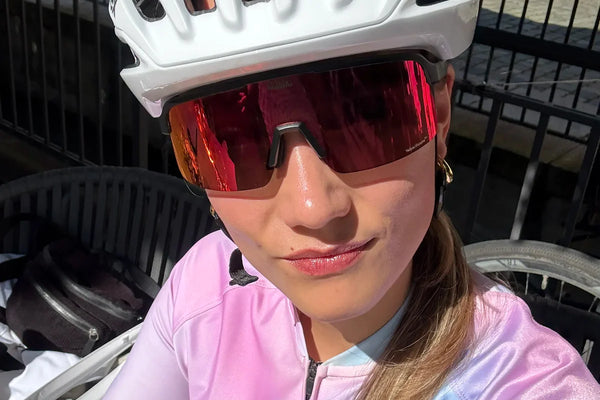
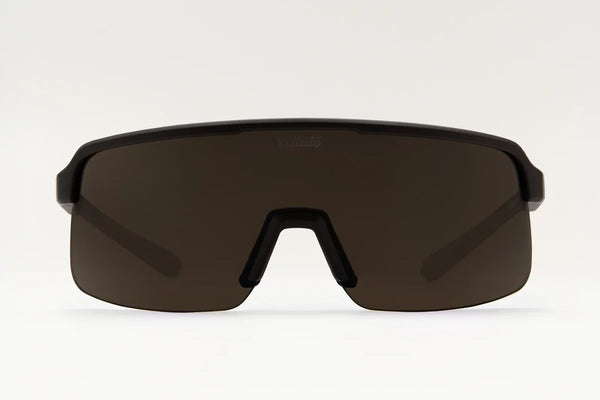
The StradaPro was designed for road cycling, and it shows in the details: 25 grams, UV400 certified, adjustable nose pads that stay put on long Alpine climbs, and a built-in anti-fog system tested in variable mountain weather. The interchangeable lens system makes it especially useful for gravel riders who face shifting light conditions across different terrain.
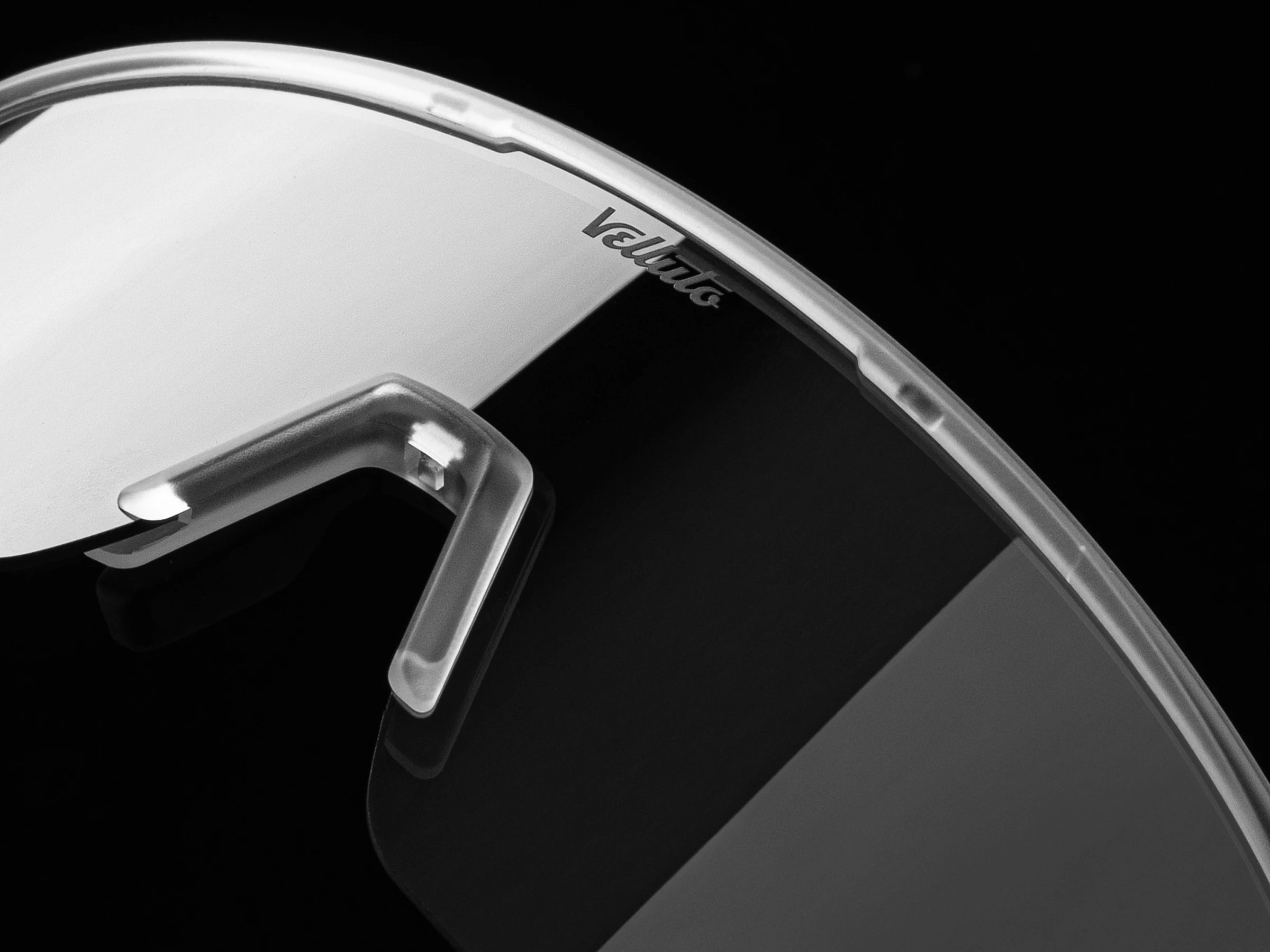
The VellutoPuro transparent lens handles low-light and forested gravel sections with complete UV protection and anti-fog performance. The VellutoVisione high-contrast lens sharpens visual definition on open terrain, picking out surface texture and obstacles faster than a standard tinted lens. Both click in and out without tools in seconds, which means you can swap at the car before a ride, at the top of a climb, or in the car park when the weather shifts. No carrying a second pair of glasses. No committing to one condition before you know what the ride will bring.
The 30-day risk-free trial means you test this on your actual rides, not on a guess. Gravel in the Ardennes, road in the Pyrenees, a Tuesday evening training loop: if the StradaPro doesn't work for your conditions, you return it. Orders over €89 ship free.
 Velluto Starter Vision Kit | Espresso
Frequently Asked Questions
Can I use road cycling glasses for gravel?
Yes, with one condition: the lens system needs to be flexible. A fixed dark tint works on open tarmac but becomes dangerous in shaded forest sections. Road glasses with an interchangeable clear and high-contrast lens cover both disciplines without compromise.
Do I really need anti-fog cycling glasses for gravel?
More than for road, yes. Gravel riding involves more stop-start effort, more temperature variation between open and shaded terrain, and often longer unpaved climbs where airflow is lower. Fogging happens faster and in more situations than most riders expect until it happens to them mid-descent.
How much should I spend on cycling glasses for gravel in 2026?
Enough to get UV400 protection, a secure fit, and an interchangeable lens system. The petrol station option costs you visibility every time conditions change, which on gravel is constantly. A single quality pair with two lenses covers more riding scenarios than two budget pairs combined, and the 30-day trial removes the risk from the decision.
Riding the Alps this summer or heading out on gravel this weekend: the right lens system makes the difference between reacting and guessing. See everything that matters at velluto-shop.com.