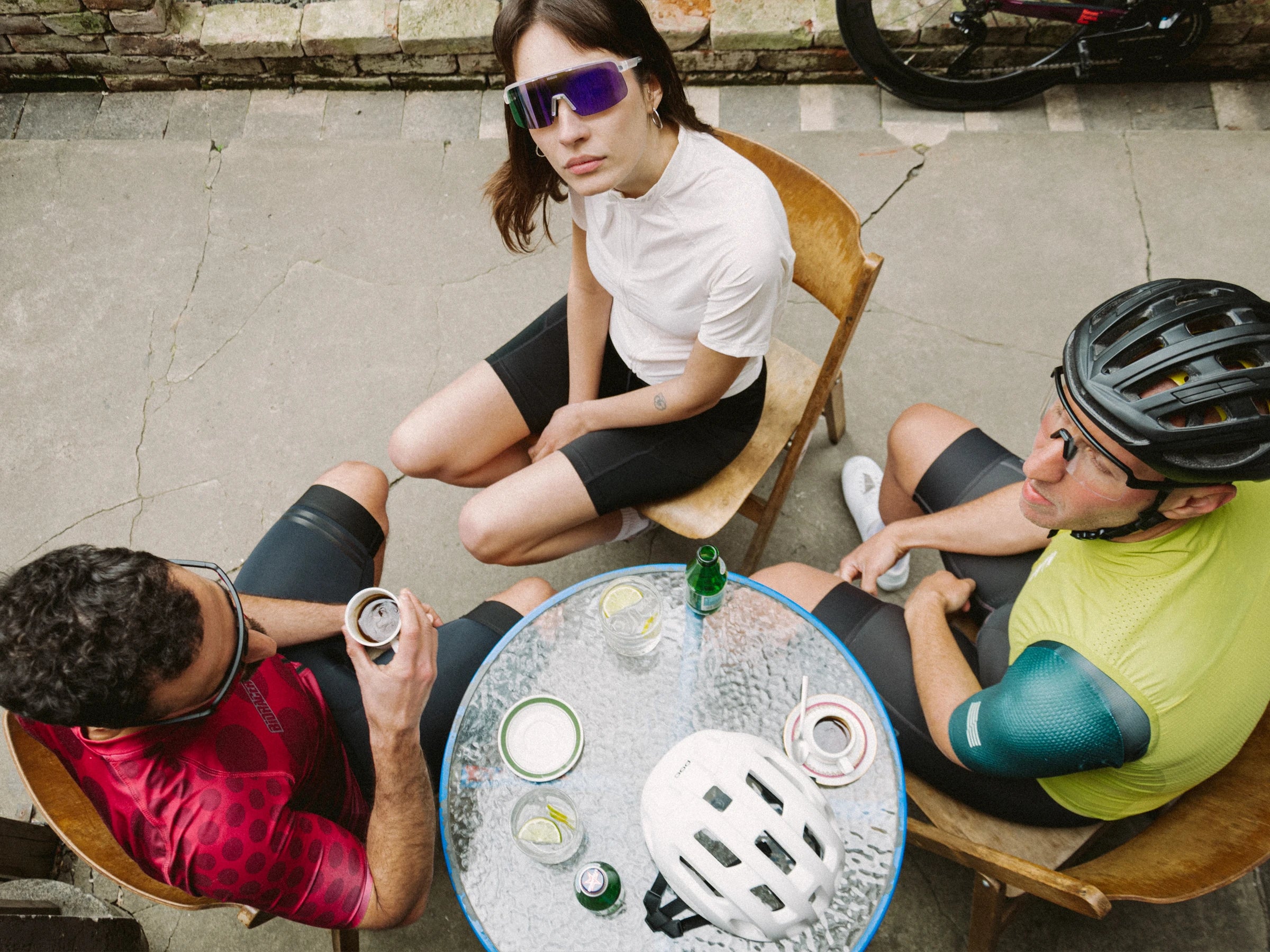
Best Cycling Glasses for Rain and Wet Roads 2027
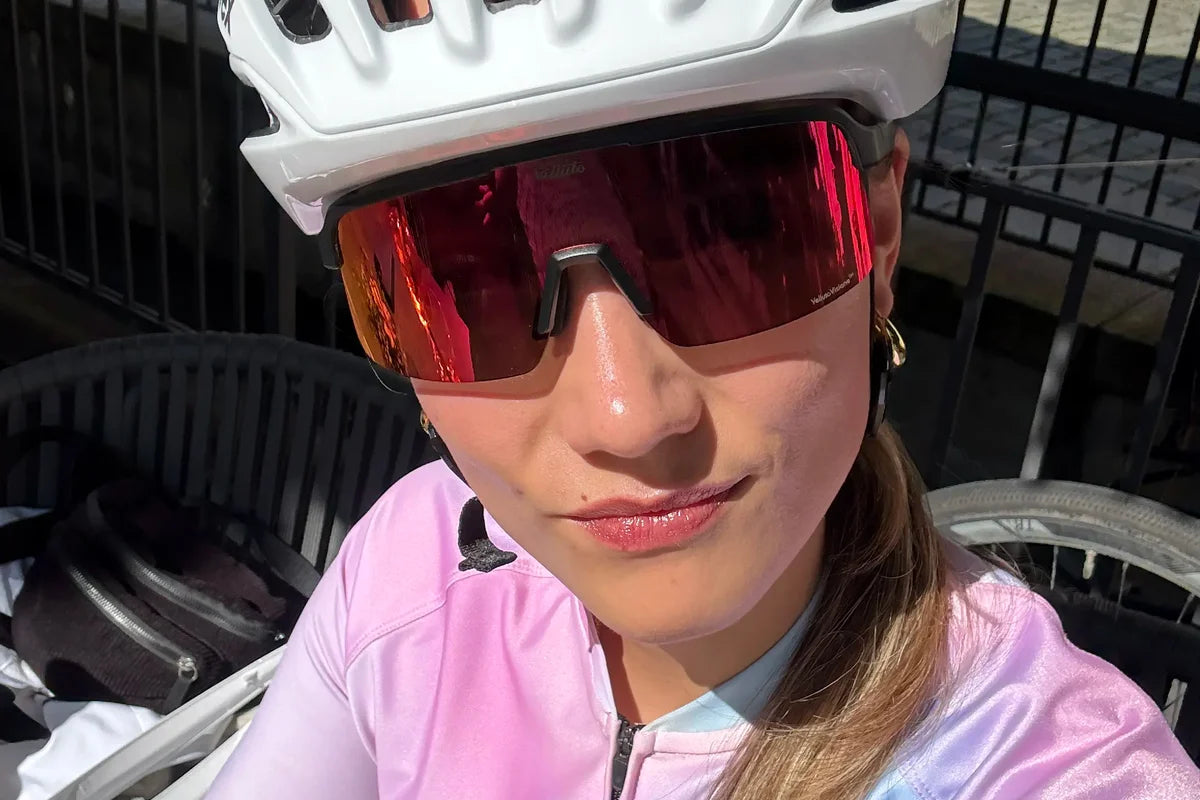
Contents26 min read
You are three kilometres into the second lap of a November cyclocross race, and the course has turned into a brown river. Your glasses are fogging at every dismount, the grey sky gives you nothing to work with, and you are picking your line through standing water more by instinct than sight. This is the moment that separates glasses bought for summer Instagram rides from glasses built for the actual European cycling season.
Wet-weather vision is a specific problem. It is not solved by a darker tint, a stylish frame or a vague mention of "ventilation" on a product page. It requires a clear lens that lets in every available photon on a gunmetal November morning, an anti-fog system that keeps working when you stop pedalling, and a fit that does not slide down your nose the moment it gets wet. This guide walks through every criterion that matters, explains the physics behind each one, and helps you match the right glasses to your riding style and conditions. No invented test scores, no fabricated lab results: just the factors to weigh and the specifications to check.
01 · Why wet weather is differentThe case for dedicated wet-weather glasses
Most cyclists own one pair of glasses chosen for a sunny summer ride. They are probably tinted, possibly mirrored, and almost certainly not what you want on a November morning in Belgium or Hesse when the sky is a uniform grey and the road reflects headlights back at you like a mirror. The mistake is treating cycling eyewear as a summer accessory rather than year-round safety equipment.
Three things change in wet weather, and each one requires a different response from your eyewear.
First, available light drops sharply. Even a light overcast sky can reduce visible light by 60 to 80 percent compared to full sun. A dark or even a lightly tinted lens compounds this reduction: you end up squinting at road surfaces that you need to read precisely to judge grip, puddle depth and camber. A clear lens is the mechanical solution. It transmits as much light as possible without altering the colour spectrum you use to judge the road.
Second, temperature differentials cause fogging. Your body is generating heat. Your face is generating warm, moist air. The lens surface is cold from the ambient temperature and from the rain hitting it. Warm, humid air meets a cold surface and condenses: fog. This is especially acute at slow cyclocross speeds, during dismounts, on steep climbs where your pace drops, or in the moments between laps when you are standing in the pit. A passive frame that relies only on airflow through the vents provides less protection in these slow-speed scenarios than a lens with an active anti-fog coating working in addition to ventilation.
Third, wet conditions compromise grip. That applies to your tyres, your gloves, your shoes and your nose pads. A frame that sits securely on a dry summer ride can creep forward on a wet face, pulling the lens down out of your line of sight exactly when you need it most. Adjustable nose pads allow you to customise the contact angle and pressure to your specific nose geometry, dramatically reducing the chance of slip even on a sweat-soaked or rain-soaked ride.
02 · The lens questionClear, high-contrast or photochromic: which for rain?
The lens choice for wet-weather riding is the most consequential decision you will make, and it is worth understanding what each category actually does rather than trusting marketing copy.
Clear lenses are the standard answer for rain, dull light and anything approaching darkness. A clear lens has no tint, so it does not reduce the amount of light reaching your eye. What it does provide is wind and debris protection, UV400 coverage (which matters even on overcast days, since UV radiation passes through cloud cover), and a physical barrier between your eyes and rain, mud spray and gravel chips. For cyclocross racing and wet road rides in November and December, a clear lens is the first lens to reach for.
High-contrast lenses sit in the middle ground. They are lightly tinted and optically treated to sharpen the definition between surfaces. The practical effect is that the edge of a pothole, the boundary between dry and wet tarmac, or the shadow of a rut becomes easier to identify. High-contrast lenses work well on days that are overcast but not dark, or during variable riding conditions where you move between tree cover and open road. They are less ideal for the darkest winter mornings or for events that push into dusk.
Photochromic lenses adapt their tint automatically in response to UV intensity. In low light and rain they become clearer; in bright conditions they darken. The appeal for autumn and winter riding is obvious: a single lens handles the full range of light you encounter on a four-hour winter ride that starts before sunrise and finishes in afternoon sun. If you are looking for a one-lens solution for constantly changing conditions, this category is worth serious consideration.
For the StradaPro, Velluto's approach is a two-lens interchangeable system rather than a single adapting lens. You carry the VellutoPuro clear lens for rain, dawn and dusk, and the VellutoVisione high-contrast lens for variable overcast conditions. The switch takes seconds with no tools. For riders who like to match their optics precisely to conditions before leaving the house, this system is deliberate and practical. For riders who want to leave home with one lens and not think about it again, the photochromic route offers a different kind of convenience.
A clear lens is not a compromise. On a November road it is the most technically correct choice available.Wet-weather lens logic, explained
03 · Anti-fogWhy ventilation alone is not enough
Every cycling glasses brand mentions ventilation. Very few explain what their ventilation system actually does, under what conditions it works well, and where it reaches its limits. This matters for wet-weather riders, because the conditions that create the most dangerous fogging are precisely the conditions where airflow-only systems perform least well.
Ventilation works by moving air across the lens surface, carrying away warm humid air before it can condense. At road cycling speeds on flat or descending terrain, airflow is generous and passive ventilation is often sufficient. The problem arises in four specific scenarios: slow climbs, cyclocross dismounts, café stops and cold rain. In each case, forward speed drops or stops, air movement across the lens falls toward zero, and warm humid air accumulates against a cold lens surface. If the only anti-fog measure is frame geometry, fogging in these moments is essentially inevitable.
An anti-fog coating on the lens surface changes the physics. Rather than relying on air movement to carry humid air away, a coating changes the surface energy of the lens so that water molecules spread into a thin, uniform film rather than collecting into the droplets that scatter light and reduce vision. The coating works independently of forward speed. It is relevant precisely when ventilation cannot compensate.
The practical implication for buying decisions: look for glasses that explicitly offer both ventilation geometry and a lens-level anti-fog treatment. Treat "ventilated frame" as a necessary but not sufficient feature for wet-weather riding. A combined system gives you protection across the full range of speeds and conditions you will encounter in a cyclocross race or a winter road ride.
04 · Fit in the wetSecure grip when everything is slippery
Frame fit is the least glamorous part of an eyewear buying guide and the part that most directly affects your riding. A frame that sits correctly stays in your sightline, keeps the lens in its designed position relative to your eye and does not distract you with pressure points on a four-hour ride. A frame that moves, bounces or slides is a safety issue as well as an annoyance.
Wet conditions make fit harder to maintain. Sweat and rain reduce friction at every contact point: nose pads, temple tips, the contact between ear and arm. Frames that fit adequately on a dry ride can migrate forward on a wet one, pulling the lower rim of the lens into your direct line of sight. For cyclocross specifically, the repeated action of dismounting, shouldering the bike and running creates physical shock loads that a loose frame does not handle well.
Three design elements contribute to secure wet-weather fit. The first is nose pad material and adjustability. Softer silicone or rubber compounds maintain grip on wet skin better than rigid plastic. Adjustable nose pads allow you to customise the angle and pressure to your specific nose geometry, so the frame is not relying on generic assumptions about face shape. The second is temple arm design. Arms with a curved or anatomical tip wrap around the ear rather than sitting loosely behind it; combined with a lightweight frame, this reduces bounce. The third, often overlooked, is total frame weight. A 25 g frame generates less downward pressure on the nose pad contact point than a 35 g frame. When the coefficient of friction between pad and nose drops in wet conditions, the lighter frame is easier to hold in place.
When you are evaluating a frame for wet-weather use, pay attention to whether the nose pads are adjustable or fixed, and whether the product page specifies the frame weight. These two numbers tell you more about wet-weather fit potential than any lifestyle photograph.

05 · UV400 in overcast conditionsWhy certification matters even on grey days
A common mistake is treating UV protection as a summer-only concern. The logic runs: no sun, no UV, so a UV-rated lens is unnecessary overhead for a rainy November ride. This is incorrect, and it is worth understanding why before discounting UV400 as a marketing checkbox.
Ultraviolet radiation is not the same as visible light. Cloud cover, overcast skies and rain all reduce the visible light you see, but they do not proportionally reduce UV radiation. Depending on cloud density and atmospheric conditions, UV exposure on an overcast day can be 60 to 80 percent of what it is on a clear day. For a rider spending three to five hours outdoors in November, that is meaningful cumulative exposure. The cumulative effect of UV radiation on eye tissue, the cornea and lens specifically, is a documented long-term health concern.
UV400 certification means the lens blocks all wavelengths of UV radiation up to 400 nanometres. This covers the full UVA and UVB spectrum. It is not a performance claim or a marketing term: it is a measurable, verifiable optical property of the lens material and coating. When a lens is described as UV400 certified, that certification is attached to a specific standard that was met and documented.
The practical advice is simple: for any glasses you wear regularly for outdoor cycling, UV400 should be a baseline requirement rather than a differentiating premium feature. This applies as much to your winter wet-weather pair as to your summer racing pair.
06 · The StradaPro for rainVelluto's wet-weather specification
The Velluto StradaPro is a road cycling frame designed around the conditions that European cyclists actually ride in, which includes a significant proportion of wet, grey, cold and variable weather. The frame weighs 25 g. It has adjustable nose pads. It has a built-in anti-fog system that combines frame ventilation with a lens-level coating. It carries UV400 certification, blocking 100 percent of UVA and UVB radiation. And it uses a tool-free click-in lens system that lets you swap between the VellutoPuro clear lens and the VellutoVisione high-contrast lens in seconds.
For wet-weather riding specifically, the relevant specification is the combination of the VellutoPuro lens, the anti-fog system and the adjustable nose pad fit. The VellutoPuro is a clear lens designed for wind and debris protection in low-light conditions. It transmits the maximum available light on a dull morning, protects your eyes from road spray and mud, and carries UV400 certification for the UV radiation that is present even when visible light is low. The anti-fog system means that when you slow down on a climb or stop for a mechanical, the lens does not immediately fog as the airflow across it drops. The adjustable nose pads mean the frame stays where you positioned it, even when your face is wet.
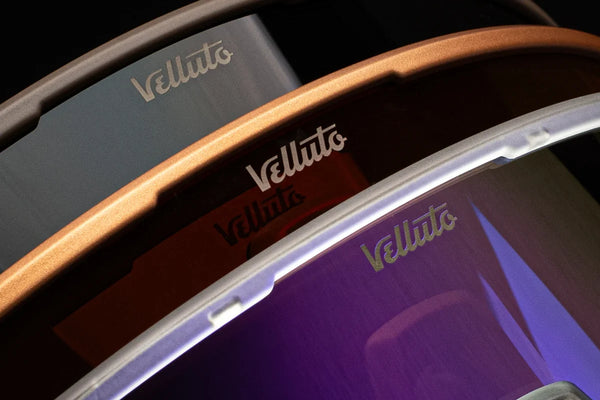
The design origin is Italian, and the frame is available in four colours: Arancia (orange), Espresso (brown), Nero (black) and Viola (purple). All four carry the same specification. Colour choice is aesthetic: pick the one that works with your kit or your mood in November, which may well be the most defiant orange you can find.
The lens system extends the value of the frame beyond wet weather. The VellutoVisione high-contrast lens clicks in without tools when conditions brighten. If you ride in autumn and winter but also put in spring and summer miles, you are not buying a single-use frame: you are buying a system that covers the full range of European riding conditions.

07 · The VellutoPuro lensClear optics for grey skies and spray
The VellutoPuro is Velluto's clear lens for the StradaPro. It was designed specifically for road cyclists riding in conditions where visible light is limited: early mornings, overcast autumn days, rain and variable mixed-light conditions. Understanding what it does, and what it does not do, helps you decide whether it is the right starting point for your wet-weather kit.
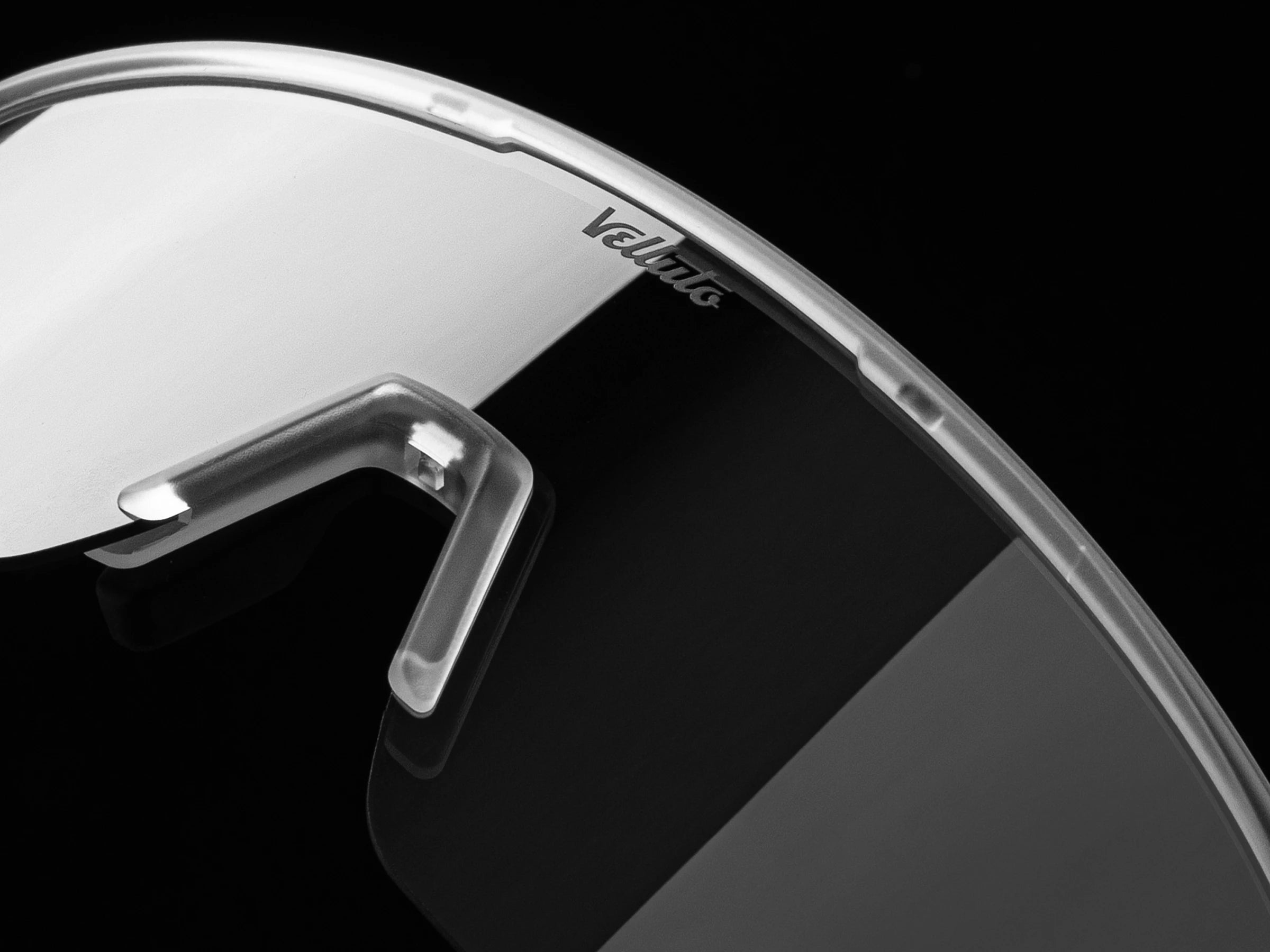
The lens is clear. This means it has no tint that reduces light transmission. When you are riding in November rain on a grey road with spray coming off the wheel ahead of you and the sun nowhere in the picture, every photon matters. A clear lens gives you maximum contrast between road surfaces without the artificial colour shift of a tinted lens. You see the difference between wet tarmac and a standing puddle. You see the dark line of a drain cover. You see the edge of the verge in the half-light at the bottom of a descent.
The VellutoPuro carries UV400 certification. Clear does not mean unprotected: the lens material and coating block 100 percent of UVA and UVB radiation at wavelengths up to 400 nanometres. This matters on overcast days when UV is still present in the atmosphere even though visible light is reduced.
The anti-fog performance of the VellutoPuro is part of the StradaPro's combined anti-fog system. The lens coating and the frame ventilation geometry work together to keep the inner lens surface clear when airflow drops. This is relevant on slow cyclocross courses, on steep climbs and in the moments when you stop to adjust clothing or wait for a gap in traffic.
The click-in system means the VellutoPuro can be installed or removed in seconds, with no tools, mid-ride if necessary. If conditions improve and you want to swap in the VellutoVisione for better contrast on a brightening afternoon, the transition does not require a pit stop or a multi-tool. The click is secure: the lens does not rattle or shift once installed.
The VellutoPuro is sold separately as a replacement or additional lens, and it is fully compatible with every StradaPro frame colour. If you already own a StradaPro and have been using the VellutoVisione through the summer, adding the VellutoPuro for 19 EUR is the most cost-efficient way to extend the system into wet-weather season.

08 · The VellutoVisione lensHigh contrast for variable overcast conditions
Not every wet-weather ride happens under a uniform grey sky. Autumn light is unpredictable. You can start a ride under heavy overcast, hit a section of road that opens to the horizon, and find yourself squinting into an unexpected low sun before the rain returns twenty minutes later. The VellutoVisione high-contrast lens is designed for this middle ground.
The VellutoVisione uses Velluto's high-contrast optical technology to sharpen the definition between surfaces. The practical effect is that visual transitions between light and shadow are cleaner and more defined. The edge of a pothole in dappled woodland light. The shadow of a bridge crossing against bright sky. The change in surface texture between fresh tarmac and rough chip seal. These transitions are easier to read with a high-contrast lens than with a clear one, in conditions where there is enough ambient light for the contrast enhancement to work.
The key qualifier is light level. The VellutoVisione works best when there is genuine ambient light to work with, even if that light is variable or diffuse. On the darkest mornings, in heavy rain under a solid overcast, or approaching dusk, the VellutoPuro's maximum light transmission is generally the better choice. The two lenses are designed as complements, not competitors: together they cover the full range of European all-season riding conditions with a single frame.
The VellutoVisione shares the StradaPro's UV400 certification and anti-fog system. It uses the same click-in mechanism as the VellutoPuro, so swapping between lenses before a ride takes under a minute. The VellutoVisione is priced at 39 EUR as a standalone lens and is compatible with all four StradaPro colour variants.
09 · The Chromo optionPhotochromic for riders who want one lens for everything
The StradaPro's two-lens approach suits riders who like to choose their optics deliberately. But there is a different kind of rider who wants to leave home with one pair of glasses and not make any decisions about lenses until they get home. If that describes you, the photochromic route is worth understanding.
Velluto's photochromic model is the Chromo, a separate product launched in October 2026. The Chromo lens adapts to light as you ride: it is clearer in low light and darkens to a mirrored finish in bright sun. This makes it particularly well suited to autumn and winter riding, where the light can shift from grey overcast to a blast of low sun and back again within a single ride. You do not need to carry a second lens or stop to swap. The lens handles the adaptation for you.
The Chromo is available in four colourways: Nero Fumo, Nero Fuoco, Bianco Lago and Bianco Viola. It carries UV400 protection. The price is 119 EUR. If you want to understand the full specification and see which colourway suits your riding, the details are on the Velluto Chromo page.
The two products serve different preferences rather than different performance levels. The StradaPro gives you precise, deliberate lens choice for each ride. The Chromo gives you one lens that adapts continuously. Both approaches are valid. Your choice depends on how you prefer to manage your kit and how much your rides vary in lighting conditions.
Through 30 November 2026, Velluto is running a 2-for-1 offer on the Velluto Chromo: the second pair is free, and the two pairs do not have to be the same colour. Full conditions are on the Chromo page.
10 · Lens comparison tableMatching the lens to your conditions
The table below maps each Velluto lens option to the conditions it is designed for. Use it as a starting point: your specific riding conditions, local terrain and typical weather will refine the picture further.
| Lens | Type | Best conditions | UV400 | Anti-fog | Price |
|---|---|---|---|---|---|
| VellutoPuro | Clear | Rain, dull overcast, dawn, dusk | Yes | Yes (combined system) | 19 EUR |
| VellutoVisione | High contrast | Variable overcast, mixed light | Yes | Yes (combined system) | 39 EUR |
| Velluto Chromo | Photochromic | Changing light, all-day autumn rides | Yes | Yes | 119 EUR |
11 · How to chooseMatching glasses to your riding type
The right wet-weather glasses depend on what you are actually doing in November and December. Here is a framework based on three common rider profiles. These are not rigid categories: most riders sit between two of them, and the right choice is usually clearer once you have identified which pressures matter most to you.
The cyclocross racer. You are doing multiple laps at variable speeds, dismounting and remounting, shouldering a bike, running through mud and stopping in the pit for mechanical adjustments. Your biggest concerns are fogging at slow speed, fit stability through repeated physical movement, and clear vision on a surface that is never predictable. The VellutoPuro on the StradaPro addresses all three. The adjustable nose pads hold the frame through the physical demands of a cross race. The combined anti-fog system stays relevant during dismounts when airflow drops to zero. The clear lens gives you maximum light on a grey race morning. This is the core use case the StradaPro and VellutoPuro were built for.
The winter road rider. You are doing three to five hour road rides in conditions that are variable by nature. You might start in grey drizzle, hit an hour of decent light, and finish in heavy cloud with the light fading. You want glasses that handle the full arc without making you stop and think about optics mid-ride. The StradaPro with both lenses gives you a deliberate toolkit: start with the VellutoPuro, swap to the VellutoVisione if conditions improve and you notice the extra contrast is working for you. Alternatively, if you prefer to set and forget, the Chromo's photochromic adaptation handles the arc automatically. Both are rational choices for this rider profile.
The commuter and gravel rider. You are doing shorter rides in urban or mixed terrain, often at times when light is genuinely low: early mornings, late afternoons or under heavy tree cover. Your priority is a clear, unobstructed view and glasses that do not feel fussy to use. The VellutoPuro on the StradaPro is again the natural starting point: simple, clear, anti-fog, secure fit, and fast to put on and take off. The cleaning accessories matter more for this profile than for a pure sportive rider, since urban riding tends to cover glasses in road spray faster than open country riding. A 50 ml Velluto Cleaning Spray and a microfibre cloth keep the lens clear between rides.

12 · Accessories for wet weatherKeeping your lens clean and clear
A technically correct lens choice and a secure frame are necessary conditions for wet-weather vision. They are not sufficient if the lens surface is covered in dried mud, road spray residue or fingerprints. Lens maintenance is a practical part of wet-weather riding that most buyers' guides do not cover.
Road spray in wet conditions is a cocktail of water, tyre rubber residue, motor oil and road salt. When it hits a warm lens and dries, it leaves a smear that is harder to remove than clean dust. Rubbing it off with a jersey sleeve or the first cloth that comes to hand risks micro-scratching the lens surface, particularly if any grit is present. Over time, micro-scratches accumulate into a haze that reduces optical clarity even when the lens is nominally "clean".
The correct approach is a cleaning spray that breaks down the residue before you wipe it away, combined with a cloth made from fibres fine enough to lift residue without scratching. The Velluto Cleaning Spray is a 50 ml formulation designed for optics cleaning. It is refillable and made in Germany. The microfibre cleaning cloth is 25 x 25 cm, with a composition of 80 percent polyester and 20 percent polyamide. The fibre structure lifts particulates from the lens surface rather than dragging them across it.
The practical routine for a wet ride: spray the lens before wiping. Wait two seconds for the formula to dissolve the residue. Wipe with the microfibre cloth in a single direction rather than a circular motion. Repeat on the other side of the lens. This takes under a minute and prevents the gradual optical degradation that most cyclists attribute to "the lens getting old" but is in fact preventable surface damage.

13 · Colour variantsFour frames, one specification
The StradaPro is available in four colours. The specification is identical across all four: 25 g, UV400 certified, adjustable nose pads, built-in anti-fog, tool-free click-in lenses. The choice is aesthetic.


14 · 30-day risk-free trialTest them in real rain
The most useful wet-weather test is not a wind tunnel or a lab. It is a November morning with a full sky of cloud, a road surface soaked from two days of rain, and a two-hour ride that includes a climb slow enough to let the anti-fog system earn its keep. That is the test that tells you whether a pair of glasses works for your riding.
The StradaPro comes with a 30-day risk-free trial. This means you can order the glasses, ride them in real conditions through November, and return them within 30 days if they do not perform as expected. The trial removes the main risk of buying eyewear online: that the frame geometry does not suit your face, or that the anti-fog system does not hold up on your specific terrain. If the glasses do not deliver in the conditions this guide describes, you are not locked in.
For a wet-weather purchase decision, this is a meaningful differentiator. The conditions that matter for cyclocross and winter road riding are not reliably available in a shop changing room. The only real test is a real ride in real weather.
15 · Buyer comparison tableKey criteria across wet-weather options
The table below sets out the criteria that matter most for wet-weather cycling glasses. Use it to structure your own decision rather than as a definitive ranking: your face shape, riding discipline and local conditions will weight the criteria differently.
| Criterion | What to look for | StradaPro (VellutoPuro) |
|---|---|---|
| Lens type | Clear for maximum light in rain | Clear (VellutoPuro) |
| Anti-fog | Coating plus ventilation | Built-in combined system |
| Fit stability | Adjustable nose pads, lightweight frame | Adjustable pads, 25 g |
| UV protection | UV400 certified | UV400 certified |
| Lens flexibility | Interchangeable for changing conditions | Tool-free click-in system |
| Trial period | Test in real rain before committing | 30-day risk-free trial |
Compare the full lineup in the Velluto StradaPro cycling glasses collection.
09 · FAQFrequently Asked Questions
What are the best cycling glasses for rain and wet roads?
The best cycling glasses for rain combine a clear or lightly tinted lens for low light, a built-in anti-fog system, adjustable nose pads for a stable fit, and UV400 protection. The Velluto StradaPro with the VellutoPuro clear lens meets all of these criteria at 25 g. The 30-day risk-free trial means you can test the glasses in real rain before committing.
Should I use clear or tinted lenses when cycling in the rain?
Clear lenses are the standard choice for rain and dull light. They transmit the maximum amount of available light so you can read road surfaces, spot puddles and judge depth on wet descents. The VellutoPuro is Velluto's clear lens, designed exactly for these conditions. If your ride involves variable light, the high-contrast VellutoVisione is an alternative worth considering for the brighter sections.
How do I stop my cycling glasses from fogging in the rain?
Fogging happens when warm, moist air from your face meets a cold lens surface. It is most acute at low speeds: on climbs, during cyclocross dismounts or when you stop. Look for glasses that combine a lens-level anti-fog coating with ventilation geometry. Airflow alone is not sufficient when speed drops. The Velluto StradaPro has a built-in anti-fog system that uses both approaches together.
Are lightweight cycling glasses better for wet weather?
Weight matters for fit stability in wet conditions. When rain and sweat reduce friction at the nose pad contact point, a lighter frame is easier to hold in position. A 25 g frame like the StradaPro exerts less downward pressure than a heavier alternative. Combined with adjustable nose pads that customise the contact angle to your face, this significantly reduces the chance of the frame sliding forward during a ride.
What is UV400 protection and do I need it on rainy days?
UV400 means the lens blocks all UV radiation up to 400 nanometres, covering 100 percent of UVA and UVB. UV radiation is present on overcast and rainy days: cloud cover reduces visible light significantly but does not eliminate UV. For anyone spending several hours outdoors on a bike in November, UV400 protection is a relevant consideration regardless of whether the sun is visible. It should be a baseline requirement for any cycling lens, not a premium feature.
Can I use the VellutoPuro lens for night riding?
The VellutoPuro is a clear lens optimised for daylight conditions with low or variable light, including rain, overcast mornings and dusk. It is not specifically designed or certified for night riding. If you are riding after dark, check local regulations for eyewear standards that apply to night-time cycling in your country before making a decision.
What is the difference between the VellutoPuro and VellutoVisione lens for rain?
The VellutoPuro is a clear lens that transmits as much light as possible. It is the first choice for heavy rain, grey overcast and low-light conditions where every photon counts. The VellutoVisione is a lightly tinted high-contrast lens that sharpens definition between surfaces. It works best when there is enough ambient light for the contrast enhancement to be useful. Both lenses click in and out of the StradaPro without tools. Many riders carry both and choose by the morning's conditions.
Is there a photochromic option from Velluto for changing autumn light?
Yes. The Velluto Chromo is a separate photochromic model that adapts its tint to light conditions as you ride. It goes clearer in low light and darker, with a mirrored finish, in bright sun. This makes it well suited to autumn and winter rides where the light shifts significantly over the course of a few hours. It is a different product from the StradaPro: the Chromo has a single adapting lens, while the StradaPro uses a two-lens interchangeable system. Full details and all four colourways are on the Velluto Chromo page.
Does Velluto offer a trial period so I can test the glasses in real rain?
Yes. Every Velluto StradaPro comes with a 30-day risk-free trial. You can ride the glasses in your actual conditions, including wet November roads and cyclocross courses, and return them within 30 days if they do not perform as expected. This is the most useful test available: real weather, your face, your riding.
Wet-weather cycling does not wait for a gap in the forecast. If you are ready to ride through November and December with clear vision and a frame that stays in place, the full range of Velluto cycling eyewear is at velluto-shop.com, including the StradaPro with the VellutoPuro clear lens and a 30-day risk-free trial that lets the rain decide.