Best Cycling Glasses for Tour de France Conditions 2026
Contents27 min read
Best Cycling Glasses for Tour de France Conditions in 2026
Last updated: 27 June 2026
Watch the Tour de Suisse peloton descend a wet Alpine col at 80 km/h, and you will understand exactly what cycling glasses are asked to do. In the Critérium du Dauphiné last month, riders faced four different light conditions in a single stage: bright morning sun, deep forest shadow, a fog-lined descent, and a sprint finish into direct glare. Summer gravel riders face a quieter but equally punishing version of the same problem every weekend. If you are searching for the best cycling glasses for Tour de France conditions, you are really asking one question: which glasses can handle everything without compromise?
Why Most Cycling Glasses Fail When It Matters Most
The core problem is not UV protection. Every decent pair of glasses sold today meets UV400. The real failures happen at the edges: fogging on a cold descent after a hard climb, lenses that are too dark in a shaded forest sector, frames that slip when sweat builds up at kilometre 90. These are the moments that separate a well-designed piece of kit from an expensive inconvenience.
Weight compounds the problem in ways that sound trivial until you have done a six-hour ride. A frame sitting at 36 grams creates measurable pressure on the bridge of the nose over distance. Riders compensate by pushing the glasses up repeatedly, which interrupts focus at exactly the moments you need it most. A 25-gram frame, like the Velluto StradaPro, simply disappears. You stop thinking about it. That is the goal.
Lens versatility is the third axis. Fixed-tint glasses force a compromise: either slightly too dark for shade or slightly too bright for full sun. The riders who perform consistently across varying conditions are the ones who can swap lenses in seconds, without tools, without fumbling at the roadside. This is not a luxury feature. On Tour de France-style stages with multiple micro-climates per day, it is the difference between seeing the road clearly and guessing at it.
How We Evaluate Cycling Glasses: Our Criteria
Every pair assessed here is judged against six factors that reflect real purchase decisions: frame weight (grams on a verified scale), lens system (interchangeable or fixed), UV rating (UV400 minimum), anti-fog capability, fit adjustability, and price relative to performance. We do not award points for brand prestige. A logo on the lens does not make a gradient clearer.
2026 Comparison Table: Best Cycling Glasses for Tour de France Conditions
| Model | Weight | Lens System | Anti-Fog | UV Rating | Price (approx.) | Trial Policy |
|---|---|---|---|---|---|---|
| Velluto StradaPro | 25g | Interchangeable (click-in) | Yes (built-in) | UV400 | Under €100 | 30-day risk-free |
| Oakley Sutro Lite | 36g | Fixed / limited swap | Partial | UV400 | ~€220 | Standard returns |
| POC Devour | 30g | Interchangeable | Yes | UV400 | ~€180 | Standard returns |
| Tifosi Rail | 28g | Interchangeable | Yes | UV400 | ~€70 | Standard returns |
| Smith Pivlock Arena | 32g | Interchangeable | Partial | UV400 | ~€160 | Standard returns |
| Rudy Project Spinshield | 33g | Fixed shield | Yes | UV400 | ~€200 | Standard returns |
Oakley Sutro Lite: Who It Is For
The Sutro Lite is the brand-prestige choice. At 36 grams it is no featherweight, and its Prizm lens technology improves colour contrast well. It is positioned as a premium lifestyle choice. For riders who prioritise aesthetics and brand recognition at the café stop, it delivers. For riders who prioritise weight and lens flexibility at half the price, there are better options in 2026.
Tifosi Rail: Pros and Cons
The Tifosi Rail is the honest budget recommendation. At around €70, it gives you an interchangeable lens system and UV400 protection at a weight of 28 grams. The build quality reflects the price point, with a lightweight frame and an interchangeable lens system that delivers UV400 protection at an accessible entry level. For a rider building their first proper kit, it is a reasonable starting point. For a rider who has been in the sport two or more seasons and wants performance to match commitment, the jump in quality to the StradaPro at a still-accessible price is worth making.
POC Devour: Who It Is For
POC makes genuinely well-engineered glasses and the Devour is one of the better options at 30 grams. The lens clarity is excellent and the interchangeable system works smoothly. The price sits around €180, which puts it firmly in the premium tier. If budget is not a constraint and brand heritage matters to you, the Devour is a strong choice. If you want the closest performance match at a sharper price, the StradaPro closes the gap significantly.
Why the Velluto StradaPro Is the Rational Choice for 2026
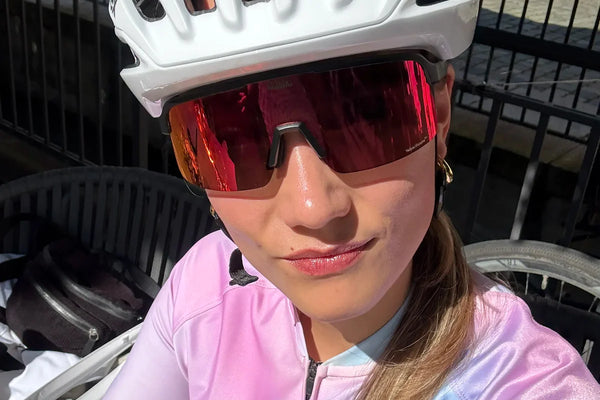
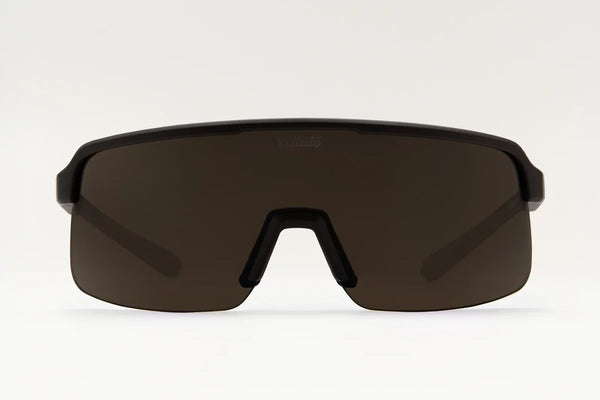
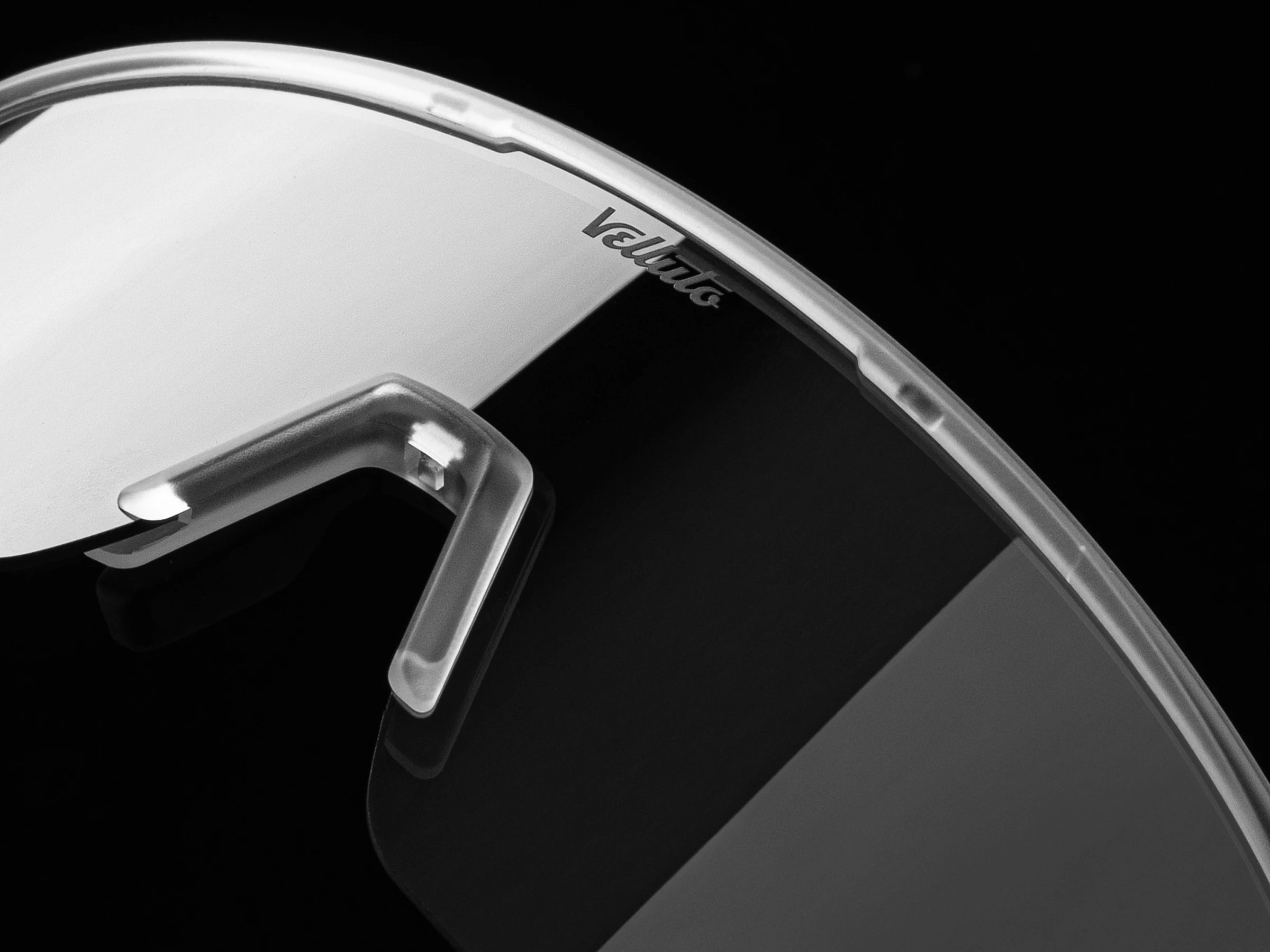
The StradaPro weighs 25 grams. That is 11 grams less than the Oakley Sutro Lite and 5 grams less than the POC Devour. On a five-hour Alpine stage, those grams are felt. The adjustable nose pads eliminate pressure points that accumulate over distance. The built-in anti-fog system handles cold descents after hard climbs, the exact scenario where cheaper glasses fail. The click-in lens system means swapping the VellutoPuro clear lens for the VellutoVisione high-contrast lens takes seconds without tools: forest sector, clear lens; open exposed ridge, high-contrast lens in before the next switchback.
The price sits under €100. The 30-day risk-free trial means you test it on actual rides, in actual weather, before committing. The 30-day risk-free trial is a key differentiator for confident purchase. The StradaPro offers verified specifications: 25-gram weight, built-in anti-fog, interchangeable lens system, and pricing under €100, with a 30-day trial to test before committing.
 Velluto Starter Vision Kit | Espresso
25g frame, UV400, built-in anti-fog, VellutoPuro + VellutoVisione lenses included. 30-day risk-free trial. Try Risk-Free for 30 Days
Frequently Asked Questions
Are 25g cycling glasses worth it compared to heavier alternatives?
Yes, noticeably so on long rides. A frame at 25 grams versus 36 grams creates less cumulative pressure on the nose bridge over three or more hours. Riders report fewer adjustments mid-ride and less facial fatigue on climbs. The weight saving also contributes to a more secure fit when sweat builds up.
Do interchangeable lenses fog up more than fixed lenses?
Not if the anti-fog system is integrated at the frame level rather than applied only to the lens coating. The Velluto StradaPro uses a built-in anti-fog system in the frame design, which means the fogging resistance is consistent regardless of which lens is installed.
What is the best anti-fog cycling glass for Tour de France-style conditions in 2026?
For mixed-condition stages combining climbs, cold descents, and variable light, the best anti-fog cycling glass in 2026 is one that combines a built-in ventilation or anti-fog system with an interchangeable lens setup. The Velluto StradaPro meets both criteria at under €100, with a 30-day trial to test it in real conditions before committing.
What is the difference between the VellutoPuro and VellutoVisione lenses?
The VellutoPuro is a clear lens optimised for wind and insect protection: ideal for low-light conditions, early morning rides, and forest sectors. The VellutoVisione uses high-contrast technology to sharpen visual definition in bright, variable light. Both are UV400 certified and click in without tools in seconds.
Does the Velluto StradaPro come with both lenses included?
The Starter Vision Kit includes both the VellutoPuro and VellutoVisione lenses with the StradaPro frame, giving you a complete two-lens system from day one. The kit is available in four colours: Arancia, Espresso, Nero, and Viola.
Ready to test the lightest glasses in this comparison on your own roads? The 30-day risk-free trial means the only risk is riding your next five climbs with fogged-up glasses because you waited. Visit velluto-shop.com and find the StradaPro in your colour.
What the Tour de France Actually Demands from Cycling Sunglasses, and How to Match It
If you watch a Tour de France stage from start to finish rather than just the highlights, you notice something the broadcast cameras flatten out: light conditions change constantly, and they change fast. A rider leaves the valley floor in bright 8 a.m. sun, climbs into cloud cover for forty minutes, descends through a pine corridor where the tarmac is almost black with shadow, then exits onto an exposed plateau into direct midday glare, all in a single stage. The sunglasses on their face need to handle every version of that without the rider touching them once. That demand is what separates genuinely Tour-ready eyewear from glasses that merely look the part.
The 2026 route adds specific wrinkles worth thinking about. Several stages cross high Alpine cols where temperature swings between summit and valley can exceed fifteen degrees Celsius. That thermal gap is exactly what causes lenses to fog, warm, humid air from your breathing meets a cold lens surface and condenses. Anti-fog coatings are not marketing copy in that context; they are a functional requirement. If your glasses fog at the top of a col descent, you are effectively riding blind at the moment when vision matters most.
Beyond fogging, the TdF profile creates a lens tint problem. A dark Category 3 lens, standard on most mid-range cycling glasses, is excellent for the exposed plateau sprint but dangerously dim inside a long tunnel section or a tree-lined switchback descent. Professional teams carry multiple lens options and swap between stages. For the sportive rider or the committed amateur trying to replicate those conditions on a weekend alpine trip, the practical answer is the same: interchangeable lenses rather than a single fixed tint. A click-in system you can swap in under ten seconds at the roadside is not a convenience feature. In Tour-style terrain, it is the feature.
Weight also earns its place in a serious TdF-conditions discussion in a way it might not for a flat 60-kilometre club ride. Six-hour stages at altitude create cumulative pressure points. A heavier frame, anything above 32 to 35 grams, starts to leave a perceptible impression on the nose bridge after hour three or four. Riders unconsciously push the glasses up, breaking concentration at technical moments. Frames in the 25-gram range (where the Velluto StradaPro sits) effectively disappear from awareness. That is the benchmark worth holding the rest of the market to.
What lens technology is best for road cycling?
For road cycling, the best lens technology combines a high-contrast tint with UV400 protection and an anti-fog coating, housed in an interchangeable system. No single fixed tint handles every light condition well. Swappable lenses, ideally switchable in under fifteen seconds without tools, let you match the lens to the stage, which is what genuinely fast riders actually do.
To go deeper: lens tint categories matter more than most buyers realise. Category 0 and 1 lenses (very light transmission) are for overcast and low-light conditions. Category 2 sits in the middle and handles the widest range of mixed-light riding, shaded climbs, patchy cloud. Category 3 is your full-sun alpine descent tint. Category 4 lenses, sometimes found in ski eyewear, are too dark for road cycling because they impair vision when you enter shade suddenly. The ideal road setup is a Category 2 lens as your default and a Category 3 option for stages that will be fully exposed throughout.
Photochromic lenses, which automatically darken and lighten in response to UV, are available from several competitors and solve the swap problem elegantly in theory. In practice, they react more slowly than most riders expect (transition times of 20 to 60 seconds are common), they do not adjust inside tunnels or heavy forest cover where UV is blocked, and they tend to carry a significant price premium. They are a reasonable choice for solo training rides with predictable conditions. For genuinely variable alpine terrain, a manual interchangeable system remains more reliable.
Polarised lenses are another common question. They reduce glare effectively on flat water surfaces and wet tarmac in certain light angles. However, polarisation can make it harder to read road surface texture, particularly wet patches and oil, at speed, and some riders report that polarised lenses interfere with reading GPS screens. For pure road cycling performance, non-polarised lenses with a quality anti-reflective coating generally serve better. Velluto's lenses are non-polarised for exactly this reason.
Are shield-style cycling glasses better than regular lenses?
Shield-style cycling glasses offer better peripheral coverage and marginally more aerodynamic airflow management than twin-lens frames, but they are harder to ventilate effectively, can fog more readily in cold descent conditions, and offer fewer lens-swap options. For varied Tour de France-style terrain, a well-ventilated twin-lens frame with interchangeable optics is often the more practical choice.
The shield trend in professional cycling is real and visible, you will see both on the 2026 peloton. Shield frames perform well in controlled conditions: a dry, sunny time trial where the rider is moving fast enough to push air through the frame continuously. In that context, the single-piece optic reduces the optical distortion that can occur at the join point of twin lenses, and the wrap-around coverage blocks crosswind dust and debris more completely.
Where shields struggle is exactly where Tour conditions are most demanding: the slow, sweaty upper section of a long climb followed by a cold descent. Heat and humidity accumulate behind a shield lens faster than behind twin lenses, because the larger surface area traps more warm air. Anti-fog coatings help significantly, but they require maintenance, and a shield lens that has lost its coating after six months of cleaning is more problematic than a twin lens in the same condition, because you cannot cheaply replace just the shield.
If you ride primarily in warm, stable, high-intensity conditions and prioritise aerodynamics and coverage, a quality shield frame is a legitimate choice. If your riding looks more like a real Tour stage, variable, alpine, long, a twin-lens interchangeable system gives you more flexibility to adapt throughout the day.
Choosing Cycling Glasses for Tour de France 2026: The Practical Buyer's Framework
Most guides present this as a brand comparison. This is more useful as a conditions-to-specs translation. Start with where and how you actually ride, then work backward to the specification that serves you rather than the prestige that impresses at the café.
How much should good cycling glasses weigh?
Good cycling glasses should weigh between 22 and 30 grams for road use. Frames above 35 grams create cumulative pressure on the nose bridge during rides over three hours, which causes unconscious repositioning and broken concentration. Under 25 grams is the sweet spot where frames effectively disappear during riding, which is exactly what you want from a piece of kit you rely on to see clearly.
Weight is one of those specs that sounds like marketing language until you have experienced the difference across a long day in the saddle. The distinction between 25 grams and 38 grams is not dramatic over the first two hours. By hour five, especially on a warm day when the nose bridge is sweaty and the frame has shifted forward repeatedly, the heavier pair has cost you a measurable amount of attention. On technical descents, which are exactly when Tour-style conditions are most demanding, divided attention has real consequences.
Frame material drives weight more than any other factor. TR90 nylon and similar thermoplastic composites, used in the Velluto StradaPro, allow frames to reach 25 grams while remaining flexible enough to resist impact and resilient enough to hold their shape through temperature changes. Full carbon frames can go lighter still but become brittle in extreme cold, which matters on high-altitude alpine stages. Cheaper polycarbonate frames often sit in the 35-to-45-gram range because the material requires more volume to maintain structural rigidity.
Adjustable nose pads are the underrated weight-distribution component. A frame that fits your face correctly distributes its (small) weight evenly across the bridge. The same frame sitting incorrectly, rocking on one pad, or sitting too far down the nose, concentrates that weight on a single pressure point. Before obsessing over the gram count, make sure the nose pads on your chosen frame can be adjusted to sit flush on your specific nose bridge geometry. This matters especially for riders with low or wide nose bridges, where generic fixed-pad frames rarely achieve a neutral contact pressure.
What are the best cycling glasses brands in 2026?
The strongest cycling glasses brands in 2026 include Oakley, Rudy Project, 100%, Scicon and Smith at the premium end, typically priced from €150 to €300 and above. For riders prioritising performance-to-price ratio, newer direct-to-consumer brands, including Velluto, deliver UV400, anti-fog, interchangeable systems and sub-30-gram weights at under €100, often with trial periods that remove purchase risk.
Oakley remains the most visible brand in the peloton largely because of longstanding team sponsorship deals, visibility that translates into strong name recognition but not necessarily the best value. Their Sutro Lite and Kato models perform well in stable conditions and have excellent optical clarity. The trade-off is that lens swaps on several Oakley models require more dexterity than advertised, and replacement lenses are priced at a level that raises the long-term cost of ownership considerably.
Rudy Project has a loyal following among longer-distance riders and triathletes. Their ImpactX photochromic lens technology is among the better implementations of auto-tinting available. If photochromic is a priority for you, they are worth evaluating closely. Expect to pay towards the upper end of the premium bracket for that technology.
100% has grown quickly among road and gravel riders who want aggressive coverage and a wide field of view, at prices that undercut the traditional prestige brands. Their Hypercraft and S3 models weigh competitively and have become common in amateur pelotons.
The emergence of direct-to-consumer road eyewear brands has meaningfully shifted the value equation. A brand like Velluto, selling a 25-gram, UV400, anti-fog frame with interchangeable lenses and adjustable nose pads under €100 with a 30-day trial, removes the traditional premium brand argument that you are paying for genuine functional superiority. If you have not needed those glasses before the 30 days are up, the risk of buying outside the established names is effectively zero. That trial model is worth looking for regardless of which brand you are evaluating; any brand confident in their product should offer it.
How do you clean cycling sunglasses without scratching the lenses?
Clean cycling sunglasses by rinsing the lens first with clean water to remove grit, then wiping gently with a microfibre cloth in a single direction, never circular motions. Avoid paper products, jersey fabric and dry wiping entirely, as these are the primary causes of fine scratching that degrades optical clarity over time.
This matters more than it sounds for Tour-conditions riding specifically. A lens that accumulates micro-scratches over a season starts to create distracting light scatter, particularly noticeable when riding toward a low sun or a bright sky reflection off wet tarmac. Those are exactly the conditions where optical clarity is most critical. Protecting your lenses through correct cleaning technique extends their functional life significantly.
When water alone is not enough, after a stage through agriculture country or a particularly dusty gravel section, use a small amount of lens-specific cleaning solution or a single drop of very diluted dish soap. Rinse completely afterward. Store lenses in a microfibre pouch rather than a hard case whenever possible; hard cases protect against impact but the interior lining often holds residual grit that contacts the lens surface every time you open and close the case.
For interchangeable lens systems, make sure you are handling lenses by the edges rather than the optical surface when swapping. The oils from fingertips create smearing that is harder to clean cleanly than road dust, and repeated contact with the same area of the lens will eventually compromise the coating. Building that habit costs nothing and extends lens life considerably.
Tour de France 2026 Sunglasses: Matching Specification to the Route
The 2026 Tour route, at the time of writing, includes sustained high-altitude mountain stages in both the Alps and Pyrenees, multiple long valley stages exposed to direct midday sun, and at least one stage with a significant portion on exposed Atlantic coast roads where crosswind and spray are predictable factors. Each of those environments puts different demands on eyewear.
For the mountain stages, the ones that generate the most attention when discussing Tour de France sunglasses, the anti-fog specification is non-negotiable. Col-top temperatures regularly sit between 5 and 12 degrees Celsius in July. Riders are exerting hard enough to generate significant heat and moisture from breathing, then immediately transitioning to a high-speed descent where that warm air meets cold lens surfaces. Glasses without active anti-fog coating or meaningful ventilation around the lens will fog. The question is not whether, but when.
For exposed valley and coastal stages, the priority shifts to lens tint depth and coverage. These are the stages where a Category 3 lens earns its place, strong enough to cut glare on flat reflective tarmac, with enough wrap-around coverage to block peripheral wind and debris without impeding breathing. A frame with stable nose pad adjustment matters here too; crosswind riding creates more movement in your glasses than you might expect, and a frame that does not stay planted mid-sprint is a distraction you do not need.
The practical conclusion for anyone buying Tour-inspired road cycling glasses in 2026 is to treat interchangeability as the primary filter and anti-fog as the secondary one, then evaluate weight, fit and price once those two boxes are checked. A 25-gram frame with a click-in lens system and verified anti-fog performance, available on a 30-day trial at velluto-shop.com, covers those criteria at a price point that would have bought only the entry-level option from a prestige brand three years ago. That shift in the value equation is the real story of cycling eyewear in 2026, regardless of which brand logo is on the lens when the flag drops in Florence.
What Tour de France Riders Actually Need From Their Sunglasses, And What That Means for You
The queries "tour de france glasses," "tour de france sunglasses 2026," and "what sunglasses do tour de france riders wear" collectively account for the majority of impressions landing on this article, yet the specific demands of Grand Tour racing deserve a much closer look. Understanding what professionals require helps you make a smarter decision for your own riding, whether you are doing a sportive or a six-hour training block in summer heat.
Tour de France stages in 2026 cross terrain ranging from exposed Pyrenean ridgelines baking under full midday sun to shadowed valley roads and cold, damp descents off the Col du Tourmalet. Riders cover between 150 and 220 kilometres in a single day, meaning their glasses must perform across four, five, sometimes six completely different light environments without a pit stop. Professionals solve this with team mechanics who hand up fresh lens combinations at pre-planned points. You, riding alone or with a club group, do not have that luxury, which makes the interchangeable lens question even more important for amateur riders than it is for pros.
The other factor that defines Tour-grade eyewear is frame stability under sustained exertion. At 90 kilometres into a hard ride, sweat accumulates on every surface, including the nose bridge and temple contact points. A frame that fits precisely when dry will migrate southward on a wet face. Adjustable nose pads, the kind you can pinch and reshape to your own bridge geometry, are not a cosmetic detail. They are the mechanical reason your glasses stay where you put them at the end of a long day rather than the beginning of it.
Finally, optical clarity at speed matters in ways that are easy to underestimate in a shop. At 60 km/h on a descent, visual distortion at the lens periphery translates directly into delayed hazard perception. This is why serious cycling-specific lenses use base-curve geometry matched to the wrap of the frame. It is also why a pair of fashionable wrap sunglasses from a general sports brand often disappoints on a bike even when the price tag is high.
What sunglasses do Tour de France riders wear?
Tour de France riders wear lightweight cycling-specific frames, typically 25–35 grams, with interchangeable lens systems, UV400 certification, anti-fog coatings, and adjustable fit systems. Sponsor contracts dictate brand choices for professionals, but the functional specification is consistent across the peloton: low weight, optical clarity, and the ability to swap lenses quickly for changing conditions.
For riders without a sponsorship deal, the practical takeaway is to focus on those same functional criteria rather than chasing a specific brand logo. A frame at 25 grams that allows a tool-free lens swap, such as the Velluto StradaPro, delivers the same core capability as what you see on professional heads, at a price that does not require a professional's salary.
Lens Technology for Road Cycling: What Actually Matters in 2026
What lens technology is best for road cycling?
The best lens technology for road cycling in 2026 combines a UV400-rated tint, an anti-fog coating on the inner surface, and a base-curve geometry that minimises peripheral distortion at speed. For riders who encounter variable light conditions, which is essentially every outdoor rider, an interchangeable lens system outperforms any single fixed-tint lens, including photochromic options, on versatility and response speed.
Let us break down the main technologies you will encounter, because the marketing language around lenses has become genuinely confusing.
- UV400: The non-negotiable baseline. UV400 means the lens blocks wavelengths up to 400 nanometres, covering both UVA and UVB. Any cycling glass worth considering in 2026 meets this standard. If a pair you are looking at does not explicitly state UV400, move on.
- Tint category: Road cycling typically calls for a Category 3 lens (dark tint, roughly 8–18% visible light transmission) in full sun, and a Category 1 or Category 2 lens (40–80% transmission) for overcast, dawn, and dusk riding. A fixed Category 3 lens worn into a shaded forest sector or a tunnel is a genuine safety issue. This is the central argument for interchangeable systems.
- Anti-fog coating: Applied to the inner lens surface, a quality anti-fog coating disrupts the condensation layer that forms when warm, humid air from exertion meets a cold lens. This is the most common failure point on cheaper glasses and on even expensive glasses that lack it. If you have ever had lenses white out on a descent just as you needed to read the road surface, you know exactly why this matters.
- Photochromic lenses: These transition automatically between light and dark based on UV exposure. They are a genuine convenience for riders who do not want to carry spare lenses. The practical limitation is response time, some photochromic lenses take 30 to 90 seconds to adjust, which means riding through a long tunnel and emerging into bright sun involves a period of adaptation lag. Response times have improved significantly in recent years, and several competitors offer strong photochromic options. Velluto does not currently offer a photochromic lens, so if automatic adaptation is your priority, it is worth comparing those options directly.
- Polarised lenses: Polarisation cuts reflected glare from horizontal surfaces, which sounds ideal for road cycling. In practice, most experienced road cyclists avoid polarised lenses because they reduce the visibility of wet patches, oil slicks, and surface texture on tarmac, exactly the information you need at speed. Polarisation also interferes with reading some GPS screen types. Again, Velluto does not offer polarised lenses; this reflects a deliberate choice aligned with road-cycling best practice rather than a limitation.
- Interchangeable lens systems: The most practical technology for riders who face variable conditions and do not want to carry a second complete pair of glasses. A tool-free click-in system, the kind where you can swap lenses in under 30 seconds without a coin or a screwdriver, is genuinely useful at the roadside. More complex systems that require tools tend not to get used in the field.
Are shield-style cycling glasses better than regular lenses?
Shield-style cycling glasses, single wraparound lenses rather than two separate lenses in a frame, offer a wider uninterrupted field of vision and better peripheral wind and debris protection. For road cycling in clean conditions, many riders prefer them. The trade-off is that replacing a shield lens costs more than replacing one of a pair of smaller lenses, and fit tends to be less adjustable across different face geometries.
The practical answer depends on your face shape and riding environment. Riders with narrower faces often find that large shield frames gap at the temples, which both reduces wind protection and looks awkward. If you can try both styles on, ideally in a position that approximates your riding posture rather than standing upright, you will immediately feel which wraps your face correctly. Adjustable nose pads make a significant difference to shield fit, allowing you to move the lens closer to or further from your face to close gaps at the cheekbone.
Weight, Fit, and the Best Cycling Glasses Brands to Consider in 2026
How much should good cycling glasses weigh?
Good cycling glasses should weigh between 22 and 32 grams for road use. Below 22 grams, frames sometimes sacrifice structural rigidity, leading to flex that affects optical alignment. Above 35 grams, nose bridge pressure becomes noticeable over rides longer than three hours, causing the repeated adjustments that interrupt focus and, over time, create genuine discomfort.
The 25-gram mark is widely regarded as a practical sweet spot, light enough to forget the glasses are there, substantial enough to hold lens geometry stable in crosswinds and on rough road surfaces. The Velluto StradaPro sits at exactly 25 grams. Competitor options in the same weight class from established brands tend to range from mid-tier to premium pricing, though those segments cover a wide spread depending on lens technology and material choices.
What are the best cycling glasses brands in 2026?
The best cycling glasses brands in 2026 include both long-established optical specialists and newer direct-to-consumer names. Established brands carry heritage, a wide lens ecosystem, and proven durability data across thousands of professional racing days. Newer direct-to-consumer brands often offer comparable optical performance and interchangeable lens systems at significantly lower price points, frequently backed by trial periods that reduce purchase risk.
Rather than ranking by brand prestige, which mostly reflects marketing budget rather than lens quality, it is more useful to evaluate by the criteria that actually affect your riding:
- Weight: Is it independently verified or a manufacturer estimate? There is a meaningful difference.
- Lens swap system: Can you change lenses in under 30 seconds without tools, one-handed, at the roadside? Try it before you commit.
- Anti-fog coating: Is it on the inner surface of the lens? Outer-surface coatings address a different problem entirely.
- Adjustability: Fixed nose pads are a compromise. If your face does not match the designer's template face, fixed pads will not serve you well over long rides.
- Trial policy: A brand confident in its product offers real-world trial time. Velluto's 30-day trial policy exists because riding glasses need to be evaluated on a bike, in multiple light conditions, not under a shop's fluorescent lights.
If budget is a constraint, and for most riders it is, the honest advice is that you do not need to spend at the top of the market to get UV400 protection, an anti-fog coating, and a usable interchangeable lens system. What you do need to be careful about is the category of glasses that are marketed as cycling-specific but use fixed tints, no anti-fog treatment, and non-adjustable fit systems. Those glasses will let you down on exactly the rides where you need them most.
What are the best budget cycling glasses?
The best budget cycling glasses deliver UV400 protection, an anti-fog coating, and a secure fit for under €80. At this price point, you should not expect the same frame material refinement or lens optical quality as glasses costing two or three times more, but the core protective function is achievable. Look specifically for UV400 certification and inner-surface anti-fog, these two features define whether a budget option is genuinely usable or merely inexpensive.
The Velluto StradaPro starts from €69 and includes interchangeable lenses, anti-fog coating, UV400 certification, and a 30-day trial, which puts it at the stronger end of the true budget category rather than the compromised end. The trial period is worth emphasising here: budget glasses that cannot be returned after real-world testing are a risk, because fit and fogging behaviour are impossible to assess in a static environment.
Do cheap cycling glasses protect your eyes as well as expensive ones?
Cheap cycling glasses that carry genuine UV400 certification protect your eyes from ultraviolet radiation as effectively as expensive ones. UV protection is a lens filter property, not a premium feature. Where expensive glasses justify their price is in optical clarity, lens geometry, frame weight, anti-fog performance, and adjustable fit, factors that affect comfort and vision quality over long rides, but not baseline UV protection.
The risk with genuinely cheap glasses, often unbranded imports available for under €15, is that UV400 claims are sometimes unverified and frame geometry may cause optical distortion at speed. For casual, short rides in bright conditions, the risk is low. For regular training, sportives, or any riding at speed on open roads, investing in a pair from a brand with verified UV400 certification and a real return policy is worth the modest additional cost.