Oakley Alternatives: 25g Cycling Glasses 2027
Contents18 min read
You are standing at the start of a November cyclocross race, cold mud underfoot, your glasses already fogging before the whistle. You paid serious money for those lenses. The question you are asking yourself, right now, is whether the brand on the frame actually earned that price, or whether you paid for a logo that has been selling the same heritage story for thirty years.
Oakley makes well-known cycling glasses. That is not under debate. The Jawbreaker and Sutro are genuinely capable frames with real optical engineering behind them. But in 2026, they are no longer the only option for a rider who wants premium road performance, and the gap between the flagship names and the European alternatives has narrowed substantially. This guide exists to help you make an informed decision based on what actually matters on a bike, not on what a brand's marketing department decided matters.
What follows is a spec-based, criteria-first look at what to demand from any pair of cycling glasses, where Oakley sits in that landscape, and where newer European makers like Velluto cycling eyewear offer a genuinely compelling alternative. No hype, no rankings, no fabricated test results. Just documented specs and honest trade-offs.
In this guide
01 · Short answerYes, there are strong Oakley alternatives for road cyclists
If you want a direct answer before reading further: yes, there are several European cycling glasses that match or exceed the core performance criteria of Oakley's road range, often at a lower price point, and in some cases with better lens versatility for variable conditions. The right choice depends on the criteria you weight most highly. This guide will help you identify those criteria and apply them to your situation.
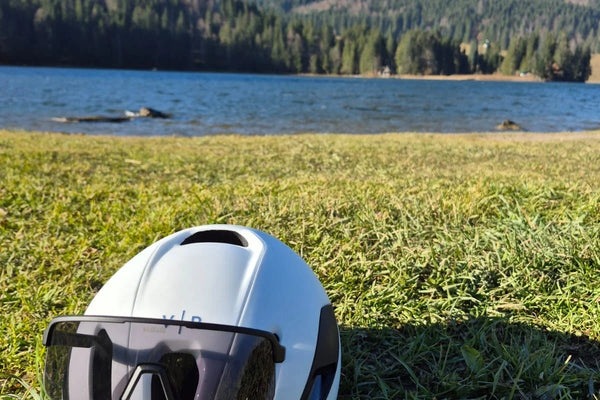
If you are specifically looking for interchangeable lenses, anti-fog performance, a lightweight frame and a risk-free way to test before committing, the Velluto StradaPro is worth serious consideration. It weighs 25 grams, carries UV400 certification on both included lenses, has a built-in anti-fog system, and comes with a 30-day risk-free trial. Those are verifiable, documented claims. We will return to them in detail.
But first, let us build the criteria framework properly, because buying cycling glasses without one is how you end up fogged-out on a November descent, questioning your choices.
02 · CriteriaWhat actually matters in cycling sunglasses
Before you can evaluate any alternative to Oakley, you need a clear framework. The cycling eyewear market has become expert at marketing language that sounds technical but means very little. Here are the six criteria that actually affect your performance and comfort on a bike, ranked by how often they are overlooked relative to how much they matter.
The remaining two criteria are fit stability and lens optical quality. Fit stability is partly about frame design and partly about adjustability: glasses that move on your face in a sprint or on rough terrain are not just annoying, they are unsafe. Lens optical quality is harder to assess from a spec sheet, which is why a trial period matters more than any marketing claim about optical clarity.
Keep those six criteria in mind as you read the rest of this guide. Every claim, every table, every recommendation below maps back to them. If a brand cannot answer those six questions with documented specs, treat the gap as a signal.

03 · ContextThe Oakley landscape in 2026
Oakley has built one of the most recognisable names in sport optics over several decades. The Jawbreaker, in particular, became something close to a default choice for road cyclists at the professional level, partly because of team kit sponsorship and partly because it genuinely performs well in the conditions it was designed for: fast, aerodynamic riding with a wide field of vision.
The Sutro is Oakley's response to the lifestyle-meets-performance segment, with a larger lens face and a slightly more casual silhouette. The Radar EV continues as a proven competition frame. All three are well-constructed glasses with real optical pedigree.
What they share, beyond performance credentials, is a price point that reflects decades of brand equity as much as the cost of the optics themselves. That is not a criticism. Brand investment, sponsorship, distribution and retail infrastructure all have real costs, and Oakley's pricing reflects those costs honestly. But it does mean that a rider who wants Oakley-tier optical performance without paying for the full ecosystem of brand overhead now has more alternatives than at any previous point in the sport's history.
The question is not whether Oakley makes good glasses. They do. The question is whether the specific performance attributes you need are available elsewhere at a price that better reflects what you are actually getting. In 2026, for many road cyclists, the answer is yes.
The gap between premium European alternatives and the established American brands has closed significantly on the specs that actually matter: UV protection, lens clarity, anti-fog and frame weight.Velluto Buying Guide, 2026
04 · AlternativesWhat European alternatives now offer
Several European eyewear brands have emerged in the last five years with a proposition that targets exactly the gap described above: optical performance without the heritage markup. The strongest of them share a few characteristics that distinguish them from the incumbents.
First, they tend to publish their specs clearly and specifically, because they cannot rely on brand recognition to do the selling for them. Weight in grams, UV rating, lens category, anti-fog system design: these appear in the product descriptions, not buried in a footnote. That transparency is itself a trust signal.
Second, they tend to offer interchangeable lens systems as a core feature rather than an optional upgrade, because variability of conditions is the main challenge their customers face and they know it. A lens system that adapts to changing light without requiring a second pair of glasses is a significant functional advantage for a rider who trains year-round.
Third, several of them have adopted trial-period policies that let you test the glasses on real rides before you commit. This is the most honest possible form of product confidence. A brand that offers a 30-day risk-free trial on its cycling glasses is making a direct statement about how certain it is that the product will perform.
Brands worth knowing in this space include SunGod, Alba Optics, Rudy Project, Koo and Velluto. Each has a distinct positioning. SunGod is known for colour customisation options. Rudy Project has deep roots in triathlon and time trial. Koo has established itself in the professional peloton relatively quickly. Velluto is a German brand with Italian design, focused specifically on road cycling performance, with a lean product range and transparent specifications.
None of these alternatives requires you to compromise on the criteria that matter. The differences are in price point, lens system design, frame geometry and brand aesthetic. Choosing between them is a question of which combination of those factors fits your riding and your preferences.
05 · ProductVelluto StradaPro: verified specs
The StradaPro is Velluto's core road cycling glass. It is designed in Italy and sold across Europe by a German brand. The following specifications are documented and verifiable. We are not inventing performance claims or extrapolating from marketing language. These are the actual numbers.
Weight: 25 grams. That is the frame weight, without lenses. For context, most road cycling frames sit between 25 and 35 grams. The StradaPro is at the lower end of that range, which is relevant for riders who wear glasses for three to six hours at a stretch and find heavier frames creating pressure points by hour two.
UV protection: UV400 certified on both included lenses. UV400 means 100% blockage of UVA and UVB radiation. This is not a marketing claim; it is a certification standard. Both the VellutoPuro (clear) and VellutoVisione (high-contrast) lenses carry this certification.
Anti-fog: built-in anti-fog system. This is a material-level treatment, not a frame ventilation gap. The distinction matters for cyclocross and winter riding, where ventilation-only solutions tend to fail on sustained climbs or in very cold conditions.
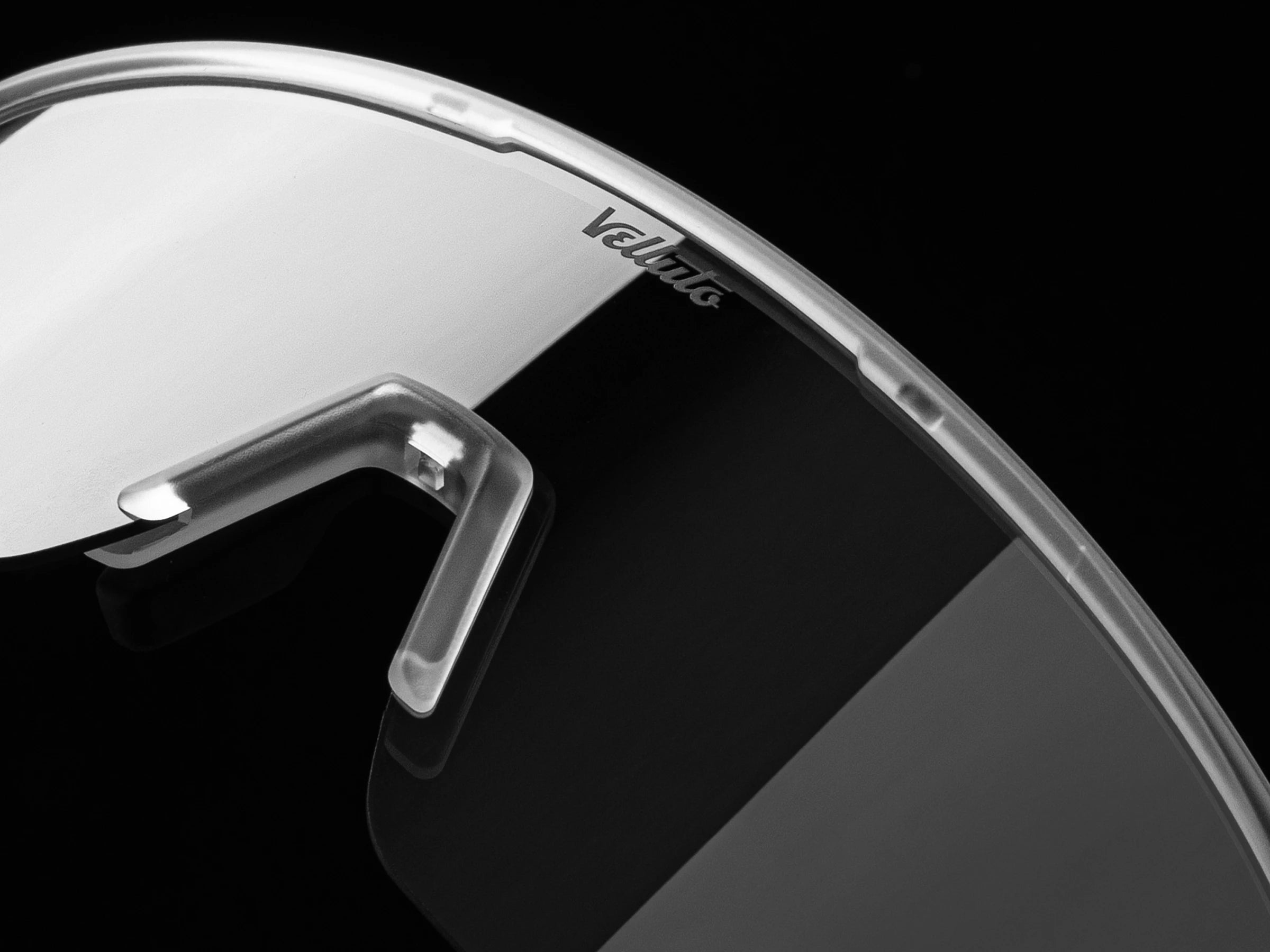
Lens system: tool-free click-in. The VellutoPuro clear lens is optimised for wind and insect protection. The VellutoVisione high-contrast lens sharpens contrast and visual definition on the road. Both click in and out without tools in a matter of seconds. The frame is compatible with both lens types.
Fit: adjustable nose pads. This is a genuinely useful feature that many single-piece frames lack. It allows the bridge position to be tuned to your face geometry, which affects both comfort and stability. For riders with a narrower or wider nose bridge than the frame's default assumption, adjustable pads are the difference between a glass that stays put and one that migrates down your nose on every climb.
Trial: 30 days, risk-free. Free shipping on orders over 89 EUR.


06 · ScenariosReal-world riding scenarios: which glass performs
Criteria frameworks are useful, but decisions happen in context. Here are four common road and cyclocross riding scenarios and what each one demands from your eyewear.
Scenario 1: November cyclocross race, morning start, variable cloud. You need a lens that works in low-to-medium light, an anti-fog system that handles hard effort on cold mornings, and a fit that does not shift when you dismount and run. The VellutoPuro clear lens is well-suited to low-light conditions. The StradaPro's built-in anti-fog system addresses the fogging risk directly. The adjustable nose pads maintain position through the physical demands of cyclocross: dismounts, barriers, shoulder carries. This is exactly the scenario where a single-lens tinted glass becomes a liability.
Scenario 2: Winter base training, three-hour road ride, mixed conditions. Starting in the dark, finishing in pale winter sun. You need lens versatility without carrying a second pair of glasses. The click-in system solves this. Swap the VellutoPuro clear lens in at the start for maximum light transmission, switch to the VellutoVisione high-contrast lens when the sun comes up. The swap takes seconds at the roadside. No tools, no fuss.
Scenario 3: Autumn sportive, 150km, long climbs. Anti-fog matters most on sustained climbs where your effort level is high and the temperature at altitude is lower than at the base. A ventilation-only solution tends to fail here because you are pushing enough heat that passive air movement cannot keep up. A built-in anti-fog coating handles the temperature differential at the material level. Weight also matters over 150km: at 25 grams, the StradaPro is light enough to genuinely disappear on a long day in the saddle.
Scenario 4: Gravel riding, mixed terrain, bright autumn light. High-contrast lenses earn their place here. Terrain definition on gravel is a genuine safety consideration: distinguishing between a loose surface and a solid one, reading the texture of a trail, identifying ruts and rocks before they become problems. The VellutoVisione high-contrast lens is designed specifically to sharpen visual definition in road and gravel conditions. UV400 certification means you are also protected in the bright autumn light that reflects off pale surfaces and can be more intense than summer sun at lower elevation angles.
In each of these scenarios, the choice of cycling glass has a direct effect on performance and safety, not just aesthetics. The criteria are not abstract. They map to real outcomes on real rides.

07 · ComparisonOakley alternatives at a glance: comparison table
The table below compares the Velluto StradaPro against the general characteristics of well-known cycling glass alternatives. For competitor specs, we have used only the type of information brands typically publish: lens system category, UV rating, general weight range where publicly stated, and lens type. We have deliberately omitted competitor policies such as trial periods or return terms because these change and an incomplete comparison is worse than no comparison. For any rival brand's current terms, check their official website directly.
| Glasses | Weight | UV Rating | Lens System | Anti-Fog | Trial Policy | Price Range |
|---|---|---|---|---|---|---|
| Velluto StradaPro | 25g (documented) | UV400 certified | Interchangeable, tool-free click-in (2 lenses included) | Built-in anti-fog system | 30-day risk-free trial | from 69 EUR |
| Oakley Jawbreaker | See manufacturer | UV400 | Interchangeable (Prizm lens range) | Ventilation system | See manufacturer | Premium range |
| SunGod Velans | See manufacturer | UV400 | Single lens (high customisation options) | Ventilation | See manufacturer | Mid-to-premium range |
| Koo Open Cube | See manufacturer | UV400 | Single lens (multiple tint options) | Ventilation | See manufacturer | Mid-to-premium range |
| Rudy Project Cutline | See manufacturer | UV400 | Interchangeable | Ventilation + ImpactX treatment | See manufacturer | Premium range |
A note on reading this table: "See manufacturer" in the trial policy column is not a negative signal. It is an honest acknowledgement that return policies change frequently and that citing a specific policy for a competitor we cannot currently verify would be misleading. For Velluto's own policy, the 30-day risk-free trial is a documented and current offer. For any other brand, go directly to their website and check the current terms.
The same principle applies to competitor weights: rather than print figures we cannot verify as current and accurate, we have directed you to the manufacturer. What we can confirm is that Velluto's 25g is a documented spec for the StradaPro frame.
08 · DecisionWho should buy which
This section is the most honest thing we can write, and it requires acknowledging that different glasses suit different riders. We are a Velluto brand publication. We will tell you clearly when another brand's strengths are genuinely relevant to your situation, because pretending otherwise would waste your time and damage the trust that makes this guide useful.
Buy the Velluto StradaPro if: you want a 25g interchangeable-lens road glass with two lenses included in the box, an anti-fog system that works on climbs and in cold conditions, UV400 certification, and a 30-day risk-free trial that lets you test on real rides. The adjustable nose pads make it particularly useful for riders who have struggled with standard-bridge frames slipping or sitting at the wrong height. The StradaPro suits year-round road training and is well-matched to cyclocross and winter preparation riding.
Consider Oakley if: you want the Prizm lens technology specifically, which is Oakley's proprietary contrast-enhancement system with a wide range of tint options across different light and terrain conditions. Oakley's heritage in sport optics is real, their distribution is excellent, and for riders who have already built their kit around Oakley's ecosystem (spare lenses, cases, frames) the switching cost may not be worth it. The Jawbreaker in particular has a strong reputation for aerodynamic performance at the professional level.
Consider SunGod if: lens colour customisation is a high priority for you. SunGod's approach to colour and frame personalisation is genuinely distinctive in the market, and for riders who care about matching their glasses to their kit or expressing a specific aesthetic, it is a genuine strength.
Consider Rudy Project if: you have deep roots in triathlon or time trial and already use Rudy Project helmets. The brand has real optical engineering depth, and the ecosystem integration across helmet and eyewear is a legitimate benefit for TT-focused riders.
Consider Koo if: you want a glass that is current in the professional peloton and prioritise a large lens field of vision. Koo has established itself quickly at the WorldTour level and the Open Cube in particular is a distinctive frame with strong rider feedback.
The honest summary: Oakley alternatives exist, they are good, and several of them compete directly on the criteria that matter most for road and cyclocross riding. The right choice is the one that maps best to your specific requirements, your face geometry, and your willingness to pay for particular features. Use the criteria from section 02, apply them to your riding, and let the specs do the talking.

If you are ready to try the Velluto approach, there is also an adaptive-lens option in the range. The Velluto Chromo (119 EUR, launching October 2026) uses a self-adapting lens that responds to changing light as you ride. It is a different solution to the same problem of variable light: where the StradaPro solves it with two swappable lenses, the Chromo solves it with one lens that adapts. It is a different solution to the same problem of variable light: where the StradaPro solves it with two swappable lenses, the Chromo solves it with one lens that adapts. The Chromo is available in four colourways: Nero Fumo, Nero Fuoco, Bianco Lago and Bianco Viola. If autumn and winter riding in unpredictable light is your primary context, it is worth comparing both options before deciding.
Compare the full lineup in the Velluto StradaPro cycling glasses collection.
09 · FAQFrequently Asked Questions
Are there good Oakley alternatives for road cycling?
Yes. Several European brands now offer road cycling glasses with UV400 protection, anti-fog systems and interchangeable lenses at a range of price points. The Velluto StradaPro is one example: it weighs 25g, includes both a clear lens (VellutoPuro) and a high-contrast lens (VellutoVisione) in the box, and comes with a 30-day risk-free trial so you can test it on real rides before committing.
What makes a cycling glass worth buying over Oakley?
The criteria that matter most on the road are UV400 protection, lens clarity, weight, anti-fog performance, fit stability and lens versatility for changing light. Any glasses that score well across those criteria represent good value regardless of brand. Velluto's StradaPro addresses all six: UV400 certified, 25g frame, built-in anti-fog, adjustable nose pads, and two interchangeable lenses (clear and high-contrast).
How does the Velluto StradaPro compare to premium cycling sunglasses?
The StradaPro weighs 25g and includes two click-in lenses: VellutoPuro (clear, optimised for wind and insect protection) and VellutoVisione (high-contrast). It has UV400 certification, a built-in anti-fog coating, adjustable nose pads and a 30-day risk-free trial. Those are the documented specs. We encourage you to compare them directly against any other glasses you are considering.
Does the Velluto StradaPro have interchangeable lenses?
Yes. The StradaPro uses a tool-free click-in system compatible with VellutoPuro (clear) and VellutoVisione (high-contrast) lenses. The swap takes seconds and requires no tools. This makes the frame adaptable to variable light conditions without buying a second pair of glasses.
Is the StradaPro suitable for cyclocross and winter training?
Yes. The built-in anti-fog system handles the temperature swings common in autumn and winter training. The VellutoPuro clear lens is well-suited to low-light conditions such as early morning or overcast winter days, and the VellutoVisione high-contrast lens sharpens definition of terrain features that cyclocross and gravel riding demand. Both lenses carry UV400 protection.
What is UV400 protection and why does it matter for cyclists?
UV400 means the lens blocks 100% of UVA and UVB rays up to 400 nanometres wavelength. Cyclists spend extended periods outdoors, often at elevation where UV exposure is higher. Glasses without UV400 certification offer no guarantee of full eye protection even if the lens is tinted. Both Velluto lenses (VellutoPuro and VellutoVisione) are UV400 certified.
Does the Velluto StradaPro offer an anti-fog system?
Yes. The StradaPro has a built-in anti-fog system designed for road cycling conditions: climbs, cold descents, and variable autumn weather where fogging is most likely to occur. This is particularly useful during the cyclocross and winter training season, where effort levels and ambient temperature create the conditions most likely to cause lens fogging.
Does the StradaPro come with a trial period?
Yes. Velluto offers a 30-day risk-free trial on the StradaPro. You can ride in them for up to 30 days and return them if they do not work for you. Orders over 89 EUR qualify for free shipping. The trial period is the most honest signal a brand can give about its confidence in the product.
Does the Velluto StradaPro work for cyclists with different face shapes?
The StradaPro has adjustable nose pads that allow a secure, pressure-free fit across a wide range of face shapes. The 25g frame weight means it stays in place without feeling heavy on long rides. It is designed to be worn on its own as a performance cycling glass, and the adjustable nose bridge is one of the features that most distinguishes it from single-piece frames with fixed bridge geometry.
If you have worked through this guide and the StradaPro's specs align with what you need from a road cycling glass, the logical next step is to try it. The 30-day risk-free trial exists precisely so that you do not have to take our word for any of it. Test it on your actual rides, in your actual conditions, and decide from experience. Visit velluto-shop.com to see the full range, check current availability across all four colourways, and read the trial terms in full before you order.