Buy Cycling Glasses with Interchangeable Lenses: 2026 Guide
Contents24 min read
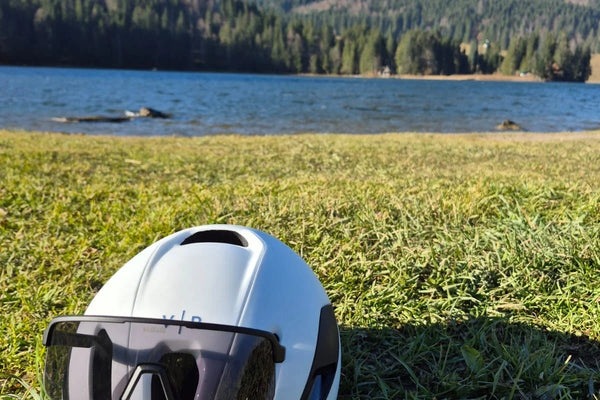
You are standing at the start of a November cyclocross race. The sky is a flat grey, the tape is wet, and by the third lap the sun will knife through the clouds just long enough to ruin your line into the off-camber. One pair of glasses with fixed tinted lenses is a gamble. Two pairs of glasses is a bag problem. The rider lining up next to you has already swapped lenses at the car, clicked them in with two fingers, and is now relaxed. That is the case for interchangeable-lens cycling glasses: not a gadget, but a practical solution to a problem every cyclist faces every autumn.
This guide exists because "buy cycling glasses with interchangeable lenses" is a broader search than it looks. The swap mechanism varies by brand. The lenses available vary. The price structure varies significantly, from the upfront frame cost to what you pay each time you add a new lens. Storage, anti-fog performance, and frame fit all matter when you are choosing a system to live with across an entire season. We will walk through each of those dimensions honestly, then show you how the Velluto StradaPro Starter Vision Kit fits into the picture, alongside the alternative if you would rather not swap at all.
01 · How the systems workWhat interchangeable lenses actually means
Not every pair of cycling glasses with removable lenses is the same. The term covers everything from frames where the lens is held by a single clip at the nose bridge to full-wrap shields that lock into the temple arms with a multi-point system. Understanding what you are buying before you spend money is worth five minutes of reading.
The core mechanics fall into two categories. The first is a tool-free click-in system: the lens has tabs or flex points that snap into corresponding slots in the frame. You swap with your fingers. The second requires a small screwdriver or proprietary tool to unscrew retention screws before the lens releases. Both can hold a lens securely during a ride. The difference is entirely about convenience: how quickly you can swap, and whether you can do it in the field without a kit in your pocket.
Beyond the mechanism, the number of lens options matters. Some systems offer two or three lenses covering clear, tinted and high-contrast. Others are deeper ecosystems with six or more tints covering everything from photochromic to polarised to category 4 for high altitude. Deeper ecosystems sound appealing until you realise the cost of each additional lens and the question of where to store them all. Most cyclists, even dedicated ones, end up using two or three lenses regularly. The question is whether the system you choose covers those two or three well.
Frame weight matters more with an interchangeable system than it might seem. The mechanism that allows the lens to come out adds components to the frame, and some frames compensate poorly, ending up noticeably heavier than fixed-lens alternatives. The Velluto StradaPro, for instance, weighs 25 grams including the click-in mechanism, which puts it in the lighter end of the category.
02 · Which lens for which lightMatching the lens to the conditions
This is the question most buyer's guides answer poorly, so let us be specific. Cycling light conditions fall into five practical categories, and knowing which lens type addresses each one removes most of the confusion around buying a multi-lens system.
Pre-dawn and tunnel-lit commutes. Clear lenses with UV400 certification. No tint reduction. Maximum light transmission with eye protection against wind and insects. This is the scenario where a tinted lens, even a light one, creates a genuine hazard. If you train before sunrise in autumn or winter, a clear lens is not optional: it is safety equipment.
Overcast and flat grey days. High-contrast lenses. These do not simply add a tint: they sharpen the contrast between surfaces, which matters enormously on wet roads, gravel, or cross courses where you are reading the terrain at speed. Many cyclists underestimate how much a high-contrast lens improves their ability to spot road camber and surface changes under overcast conditions.
Variable conditions: sun through cloud cover. This is where the interchangeable system earns its value, or where a photochromic lens earns its value, depending on your preference. With an interchangeable system like the StradaPro, you choose the lens before you set off based on expected conditions, and you can swap if conditions change significantly. With a photochromic model like the Velluto Chromo, the lens adapts automatically as you ride.
Full sun on long summer rides. A tinted lens in a darker category, which is not part of the StradaPro's two-lens system but is available through other brands' wider lens ecosystems. It is worth noting that the StradaPro is designed for road cyclists and covers the two most practically useful lens types: clear for low light, high contrast for variable and bright conditions. It does not attempt to cover category 4 alpine use, and that is an honest trade-off, not a shortcoming, for the typical road and cross rider.
Low evening sun in autumn. A yellow or amber high-contrast lens is well suited here, cutting glare while keeping contrast high. The VellutoVisione lens addresses this. Combined with the adjustable nose pads on the StradaPro, which allow you to position the lens closer to or further from your face, you get additional control over how much of the frame enters your peripheral vision.

03 · How swap systems differ across brandsThe mechanics of competing systems
When you decide to buy cycling glasses with interchangeable lenses, you will encounter several approaches in the market. Here is an honest comparison of what different categories of system offer, written without brand disparagement, because most of the brands in this space make competent eyewear and the differences are real rather than invented.
Premium performance brands. Oakley, Rudy Project and similar brands at the higher end of the market build deep lens ecosystems with many tint options, proprietary coatings and in some cases optical inserts for prescription use. The frames are engineered to demanding performance specifications. The lens swap mechanisms vary: some are tool-free, some require more manipulation. If you value a very wide lens selection and a long-established ecosystem, these brands are worth considering. Frame prices sit at the top of the market, and additional lenses are priced accordingly.
Mid-range specialist brands. Brands like Tifosi and Bliz have built solid reputations in the category with tool-free systems and two or three-lens starter kits. Weight varies by model. These are reliable, practical systems that most road cyclists will find perfectly adequate. They do not carry the premium positioning of the market leaders but represent strong value within the interchangeable-lens category.
Direct-to-consumer brands with focused lens systems. This is where Velluto sits. The StradaPro offers a two-lens system covering the two most practically important scenarios for road and cyclocross cycling. The click-in system is tool-free. The frame weighs 25 grams. The model is sold directly with a 30-day trial, which removes the risk of buying based on a description rather than a real ride.
What to compare systematically. When you are evaluating any interchangeable-lens system, the useful criteria are: frame weight, UV protection standard, anti-fog provision, ease of lens swap, number of lenses available, price of additional lenses, trial or return policy, and storage provision. The table below maps these across five well-known options in the 2026 market.
04 · Comparison tableFive interchangeable-lens systems compared
The table below compares five cycling glasses systems available in 2026 across the criteria most relevant to road cyclists and cyclocross riders buying interchangeable-lens eyewear. Where a competitor's specification is not officially published, the cell reads "see manufacturer" to avoid presenting an estimated or potentially outdated figure as fact.
| Model | Frame weight | UV rating | Anti-fog | Swap mechanism | Lenses in kit | Trial policy |
|---|---|---|---|---|---|---|
| Velluto StradaPro Starter Vision Kit | 25 g | UV400 certified | Built-in anti-fog system | Tool-free click-in | 2 (clear + high-contrast) | 30-day risk-free trial |
| Oakley Sutro Lite | 26 g | UV400 | Ventilated lens | Tool-free | See manufacturer | See manufacturer |
| Rudy Project Propulse | See manufacturer | UV400 | See manufacturer | Tool-free | See manufacturer | See manufacturer |
| Tifosi Swank XL | See manufacturer | UV400 | See manufacturer | Tool-free | See manufacturer | See manufacturer |
| SunGod Velos³ | See manufacturer | UV400 | See manufacturer | Tool-free | See manufacturer | See manufacturer |
Reading this table honestly: several brands have UV400-rated lenses and tool-free swap systems, which makes the standard mechanism broadly available at this point in the market. Where the StradaPro is specifically measurable is on the 25-gram frame weight with a built-in anti-fog system, and on the trial policy. For any specification marked "see manufacturer," visit that brand's current product page for verified figures, since specs and policies change between model years.
The swap takes about four seconds once you have done it once. The click is positive enough that you know the lens is in.StradaPro rider, cyclocross season 2026
05 · The StradaPro Starter Vision KitHow Velluto's system is built
The Velluto StradaPro Starter Vision Kit is the entry point into the Velluto lens ecosystem. It combines the StradaPro frame with both interchangeable lenses: the VellutoPuro clear lens and the VellutoVisione high-contrast lens. This covers the two scenarios that matter most for road cycling in autumn and winter: low light and variable or bright conditions.
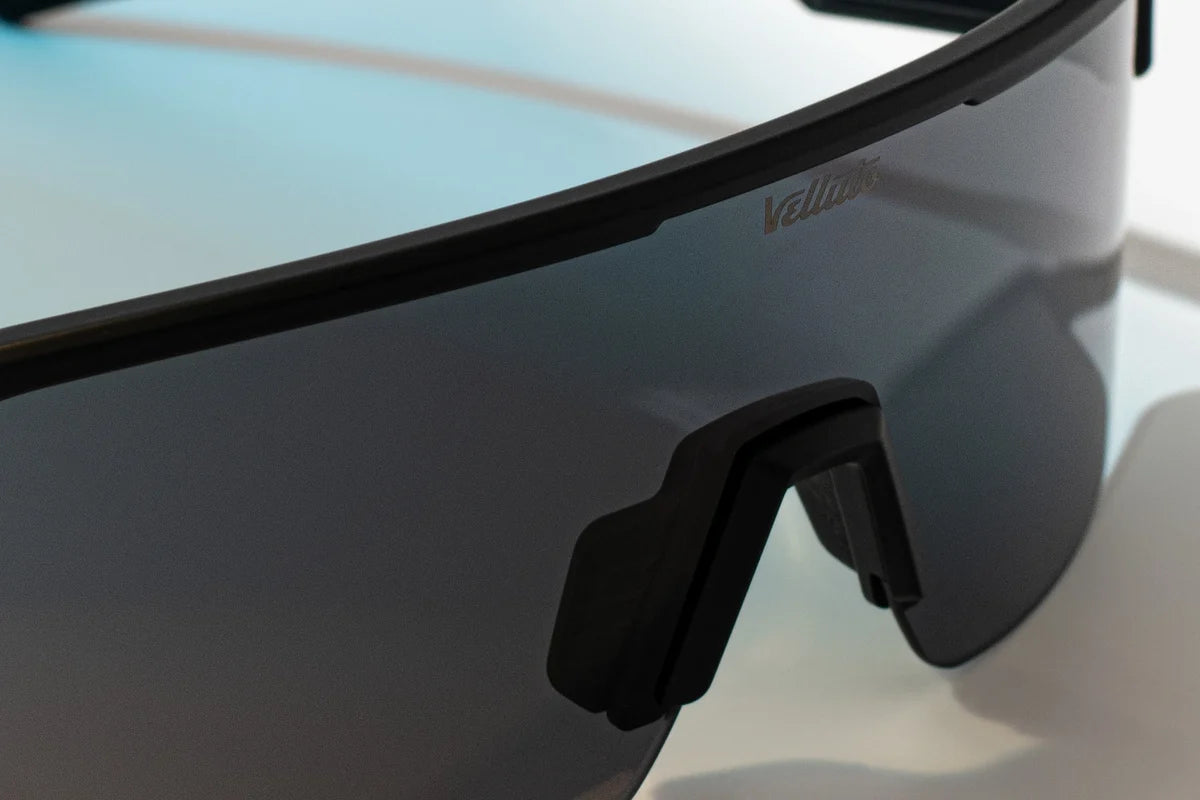
The frame itself is built around four measurable features that matter on longer rides. It weighs 25 grams. The nose pads are adjustable, so you can dial in the fit without pressure building over three or four hours. The anti-fog system is built into the frame rather than relying purely on ventilation, which matters on climbs where the temperature differential between your face and the air is greatest. UV400 protection applies to both lenses regardless of tint, including the clear VellutoPuro, which is important because UV radiation does not disappear on overcast days.
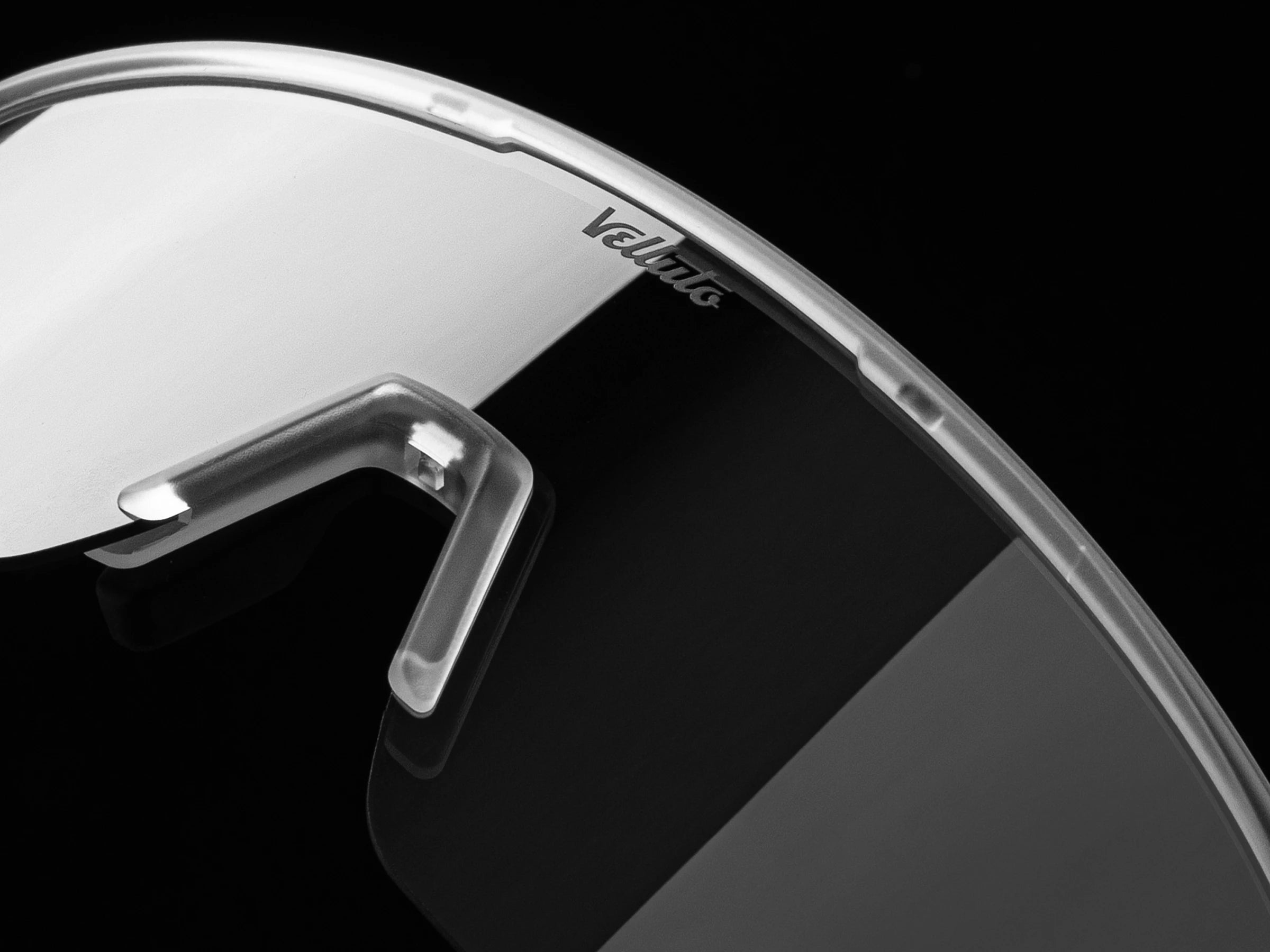
The click-in system is tool-free. The VellutoPuro and VellutoVisione lenses are both designed for the StradaPro frame and use the same mechanism, so swapping between them does not require learning two different processes. The click is designed to be audible and tactile so you know the lens is seated correctly before you ride.
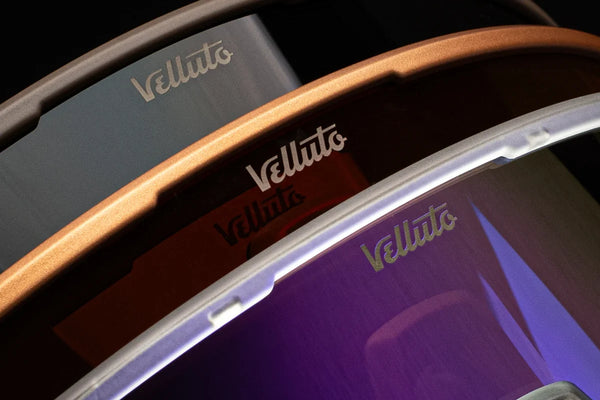
The design is Italian. The brand is German. The StradaPro is available in four colourways: Arancia (orange), Espresso (brown), Nero (black), and Viola (purple). These are not purely cosmetic distinctions: the colourway affects the frame colour visible in your peripheral vision, which some riders find more or less distracting depending on the lens tint installed.

06 · Lenses individuallyVellutoPuro and VellutoVisione: what each does
Understanding the two lenses separately helps you decide how to use them and whether you need to buy additional lenses beyond what comes in the Starter Vision Kit.
VellutoPuro (clear lens, 19 EUR). The VellutoPuro is a UV400-certified clear lens. Its primary function is protecting the eyes from wind, airborne insects and debris at speed, while keeping light transmission as close to unobstructed as possible. This is the lens for pre-dawn training rides, overcast November road races, autumn cyclocross events where the light starts low and stays low, and any situation where adding tint would reduce visibility. It also carries anti-fog performance. The click-in system is identical to the VellutoVisione, so swapping between them takes the same amount of time regardless of direction.
VellutoVisione (high-contrast lens, 39 EUR). The VellutoVisione uses VellutoVisione technology to sharpen contrast and visual definition. In practice, this means the lens enhances the difference between surfaces: wet tarmac and dry tarmac read differently, gravel and soil separate more clearly, and shadows become more legible at speed. For cyclocross riding, where you are reading terrain changes in a fraction of a second, this is a meaningful performance benefit. The lens is UV400 certified and uses the same click-in system as the VellutoPuro.
The practical question most riders ask is which lens to start with on a given day. A simple decision framework: if you are riding before 8am or in heavy overcast with no forecast change, start with VellutoPuro. If you are riding in variable light from mid-morning onwards, or in a cross race where effort spikes will push your body temperature up rapidly, start with VellutoVisione. If you are going long and conditions are genuinely uncertain, put the second lens in a jersey pocket in its protective cloth so you can swap at a natural stop.

07 · Storage and lens careKeeping spare lenses safe between rides
This section of a buying guide is usually an afterthought. It should not be, because the fastest way to damage an interchangeable-lens system is poor storage of the lenses you are not wearing. Lens coatings, including anti-fog and UV treatments, are sensitive to abrasion. A lens rattling loose in a jersey pocket risks abrasion to the lens coating. Protect spare lenses with the microfiber cloth or a hard case to preserve the anti-fog treatment and optical clarity.
Storage solutions. A hard case with a soft interior is the benchmark for cycling eyewear storage. The Velluto Hard Case has an anti-crash guarantee and a velvet interior, and it fits all Velluto cycling glasses. It is designed to hold the frame and a spare lens without the two contacting each other directly. If you are travelling to race weekends or multi-day events, a hard case is worth the space in your bag.
On the bike and in the pocket. For mid-ride swaps on a sportive or during a long training block with changing weather, the more practical solution is a small lens pouch inside a jersey pocket. Wrap the spare lens in the microfiber cloth before putting it in the pocket. The Velluto Microfiber Cleaning Cloth (25 x 25 cm, 80% polyester / 20% polyamide) is designed for this dual use: cleaning and temporary protection. The cloth itself should be kept clean because a dirty cloth redistributes grit across the lens surface.
Cleaning the lenses. Anti-fog coatings are particularly vulnerable to cleaning products that contain alcohol or abrasive compounds. Use a lens-safe spray or plain water and a clean microfiber cloth. The Velluto Cleaning Spray (50 ml, apple fragrance, made in Germany) is formulated for optical surfaces and is refillable, which reduces the per-use cost over a full season. Avoid paper towels, jersey fabric, or any dry surface on a lens without first applying a small amount of liquid.
Temperature and storage environments. Do not leave cycling glasses in a car on a hot day, regardless of brand. High temperatures affect lens coatings and frame geometry on most cycling eyewear. A cool, dry environment away from direct sunlight is the right long-term storage condition.

08 · The alternative: no swapping requiredWhen to consider the Velluto Chromo instead
Not every cyclist wants to manage two lenses. Some riders prefer one lens that handles changing light automatically. That is a legitimate preference, not a compromise, and it is worth addressing directly in a guide about interchangeable-lens systems, because the honest answer is that the photochromic option suits some use cases better.
The Velluto Chromo is a photochromic model launching in October 2026 at 119 EUR. Its lens self-tints: it is clear in low light and darkens to a mirrored finish in bright sun as you ride. This means you do not need to decide which lens to fit before the ride, and you do not need to carry a spare. For road cyclists whose routes take them through woods, exposed climbs and valley sections in a single ride, the automatic adaptation removes the decision entirely.
The Chromo is available in four colourways: Nero Fumo, Nero Fuoco, Bianco Lago, and Bianco Viola. It carries UV400 protection. It is the only Velluto model that is photochromic and the only Velluto model with a mirrored finish in bright conditions. The StradaPro is neither of these things: it is an interchangeable-lens system, which is a different approach to the same underlying problem of variable light.
How to decide between them is straightforward if you think about your riding patterns. If your rides are typically in one light condition (always early morning, always midday, always overcast autumn racing), the StradaPro with the right lens installed keeps the system lightweight and straightforward. If your rides consistently move through several light conditions in the same session and you prefer a lens that adapts automatically, the Chromo handles changing light without manual swaps. Both approaches solve variable-light challenges: the StradaPro through deliberate lens selection, the Chromo through photochromic adaptation. Your preference for manual control or automatic response will determine which suits your workflow better.
Through 30 November 2026, Velluto is offering a two-for-one on the Chromo: the second pair is free, and the two pairs do not have to be the same colour. Full conditions are on the Chromo page.
09 · ColourWaysChoosing your StradaPro colour
The StradaPro is available in four colourways. The choice is partly aesthetic but has a small functional dimension worth noting: the frame colour is visible at the edge of your peripheral vision when you ride, and riders differ in how much they notice or are distracted by this. Darker frames (Nero, Espresso) tend to disappear into peripheral vision more easily than brighter ones. The Arancia orange and Viola purple frames are more visible at the edge of the visual field, which some riders actively prefer for identity reasons and others find distracting. No colourway changes the lens performance: the same VellutoPuro and VellutoVisione lenses are compatible with all four.


10 · Fit across face typesAdjustability and riding position
An interchangeable-lens system is only useful if the frame fits correctly. A frame that sits too far from the face lets wind and debris in around the lens edges, negating the protection the lens provides. A frame that sits too close fogs more easily because airflow is restricted. Getting the fit right is therefore a functional requirement, not just a comfort preference.
The StradaPro uses adjustable nose pads to address this. You can move the nose pad position to change how far the lens sits from your face and how the weight distributes across the nose bridge. This is particularly relevant for riders with a narrower nose bridge, where fixed-pad frames often sit at the wrong angle and create pressure points over long distances. The adjustability also helps when riding in an aggressive aero position: the frame angle changes relative to the horizon when you drop onto the drops, and an adjustable nose pad allows you to compensate for this.
The 25-gram frame weight interacts with fit in one important way: a lighter frame requires less clamping pressure from the temples to stay in place, which reduces the pressure headache that some riders experience after three or four hours in stiffer, heavier frames. The adjustable nose pad combined with a light frame is a particularly useful combination for long rides, sportives, and races that extend beyond two hours.
For riders with smaller faces, the StradaPro fits a wide range of face shapes and comes with interchangeable clear and high-contrast lenses for varying light conditions. The adjustable nose pads are the specific adjustment point that makes the difference on narrower face geometries, since they allow the frame to be positioned correctly without the lens sitting at an angle across the visual field.

11 · Anti-fog in cold weatherWhy November is the real test
Anti-fog performance is the most practically underrated specification in cycling eyewear. It is also the one that separates frames most clearly when tested under real autumn and winter conditions rather than in a shop or a warm room.
Fogging occurs when warm, humid air from your breathing or body heat meets a cooler lens surface and condensation forms. The conditions that maximise this are exactly the conditions of November cyclocross and winter road riding: cold air, high exertion, and the kind of climb-and-descent cycling where your breathing rate and body temperature swing rapidly. A frame with purely passive ventilation manages this adequately in mild conditions but can fail in cold, damp weather, particularly on the lower half of the lens where exhaled air rises.
The StradaPro uses a built-in anti-fog system rather than relying solely on ventilation. This means the lens has an active treatment or coating working alongside the frame geometry to prevent condensation. The result is relevant during cyclocross races where you are going from full aerobic effort on a run-up to a slower technical section in the space of thirty seconds, with your body temperature and breathing rate changing accordingly. It is also relevant on winter road rides where a long, cold descent follows a climb, and the temperature differential across the lens is at its maximum.
The VellutoPuro clear lens, in particular, makes the anti-fog system matter most: a clear lens used in cold, low-light conditions is precisely the scenario where fogging is most likely and most dangerous, because reduced visibility at dawn or dusk on wet roads is a genuine safety problem rather than a minor inconvenience.
12 · Buying decision frameworkMatching the system to your actual needs
By this point in the guide you have the information to make a considered decision. The framework below is designed to convert that information into a clear recommendation for your specific situation.
Buy the StradaPro Starter Vision Kit if: you ride across a range of light conditions (early morning through afternoon), you want one frame that handles both low-light and variable/bright rides, you value being able to carry a spare lens for mid-ride swaps, and you want a trial period before committing. The kit includes both lenses and a 30-day risk-free period.
Buy just the StradaPro frame and one lens if: you have a very specific primary use case (for example, you only race in the morning and always need a clear lens). You can add the second lens later when you need it. The VellutoPuro clear lens costs 19 EUR separately, and the VellutoVisione high-contrast lens costs 39 EUR separately.
Consider the Velluto Chromo if: your rides consistently pass through multiple light conditions in a single session and you prefer a lens that adapts automatically to managing two separate lenses. The Chromo at 119 EUR is a different kind of investment, covering changing light with a single photochromic lens rather than a swap system. The Velluto Chromo page has full details on the colourways and specifications.
Consider a premium brand's wider ecosystem if: you have highly specific lens requirements (category 4 for high altitude, optical inserts, a very wide tint range) that go beyond what a two-lens system covers. Oakley, Rudy Project and similar brands have decades of lens ecosystem development and are worth evaluating if your use case demands it. Neither is better than the StradaPro in absolute terms: they serve different requirements.
What to actually do next: if you are unsure, the 30-day trial on the StradaPro removes the risk of a wrong decision. Ride with it. If it does not work for your face shape, light conditions or lens preference, the trial exists precisely to give you that information without losing your money.

Compare the full lineup in the Velluto StradaPro cycling glasses collection.
13 · FAQFrequently Asked Questions
What is the advantage of interchangeable lenses on cycling glasses?
What is the difference between a tool-free and a tool-required lens swap?
How does the Velluto StradaPro click-in system work?
What is the difference between VellutoPuro and VellutoVisione lenses?
Is the Velluto StradaPro suitable for cyclocross and winter riding?
What is the Velluto Chromo and how is it different from the StradaPro?
How should I store interchangeable lenses when not in use?
What does UV400 protection mean on cycling glasses?
Does Velluto offer a trial period on the StradaPro?
If you are ready to compare options and find the right system for your riding, start at velluto-shop.com, where the full StradaPro range, both interchangeable lenses, and the Chromo are available with the 30-day trial.