Women's Cycling Glasses: Why Fit Beats Gender Labels
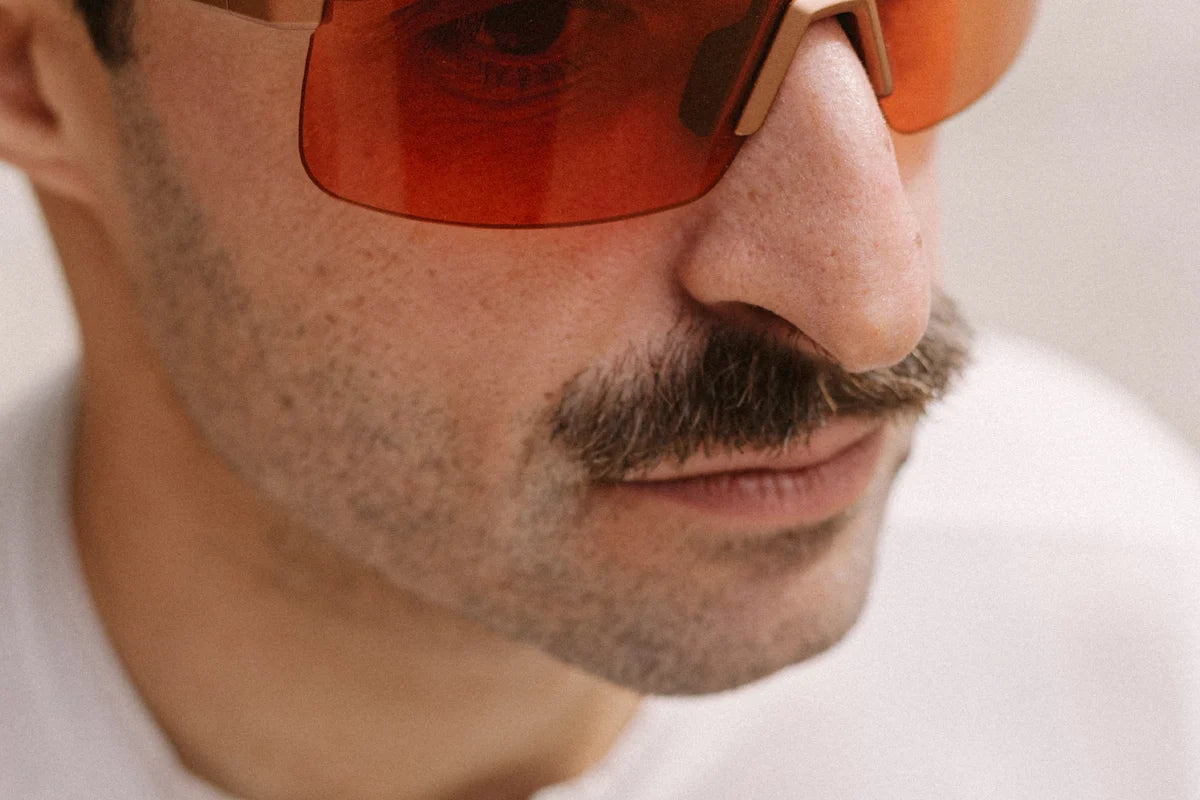
Contents22 min read
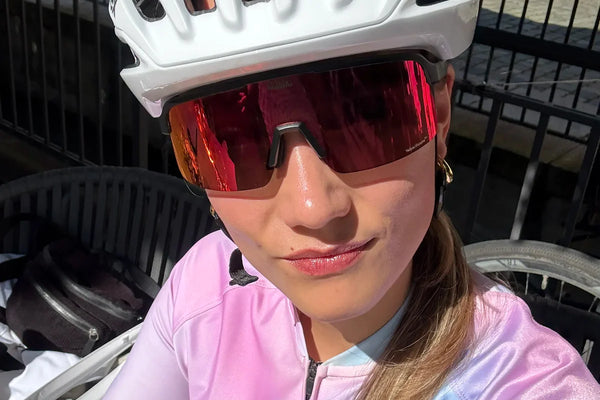
You are two days into a cycling camp in the Pyrenees, kit packed in June, and somewhere between Pau and the Col du Tourmalet your glasses are doing something frustrating: sliding down your nose on every climb, fogging halfway up every col, and leaving a pressure mark across your bridge that you will still feel at dinner. The frame cost over a hundred euros. It is technically a women's model. It fits badly anyway.
This is the conversation the cycling eyewear industry has been slow to have. For years, the default answer to "I need cycling glasses that fit a narrower face" has been "buy the women's version." That answer is incomplete, and for many riders it is simply wrong. Face geometry is not sorted neatly by gender. Bridge height, interpupillary distance, cheekbone prominence, and nose pad width vary enormously across individuals, and a frame labelled "women's" tells you almost nothing about whether it will sit correctly on your specific face.
What actually determines fit, and therefore comfort, fog resistance, and long-ride wearability, is adjustability. Specifically: whether the nose pads can be repositioned, whether the temple arms flex without digging in, and whether the frame can be tuned to the unique geometry of your face rather than a statistical average. That is the argument this guide makes, and it is the reason a frame designed for road cycling in general, with precision-adjustable components, will outperform a gender-labelled frame with fixed geometry every time.
Last updated: July 27, 2026. All product details verified against current Velluto specifications.
01 · The Gender Label ProblemWhy women's cycling glasses is the wrong search
Type "women's cycling glasses" into any search engine in July 2026 and you will find rows of frames in smaller sizes, lighter colours, and narrower profiles. Some of them will fit certain faces well. Others will not. The problem is that the category logic assumes gender is a reliable proxy for face geometry, and the data does not support that assumption.
Facial anthropometry research has consistently shown that the variation in facial dimensions within a gender group is larger than the average difference between groups. In plain English: the range of nose bridge heights among women is wider than the average difference between men's and women's bridge heights. A shorter bridge profile is more common among women on average, but "on average" is doing a lot of work in that sentence. A significant proportion of women have bridge heights and interpupillary distances that fall squarely in the range typically labelled as men's, and vice versa.
For cycling glasses specifically, the dimensions that matter most are not the frame width (though that matters), but rather the nose pad position, the angle at which the lens sits relative to your cheeks, and how the temple arms interact with your helmet. A frame with fixed geometry in all these areas will fit some faces well and others poorly, regardless of which gender label is on the tag.
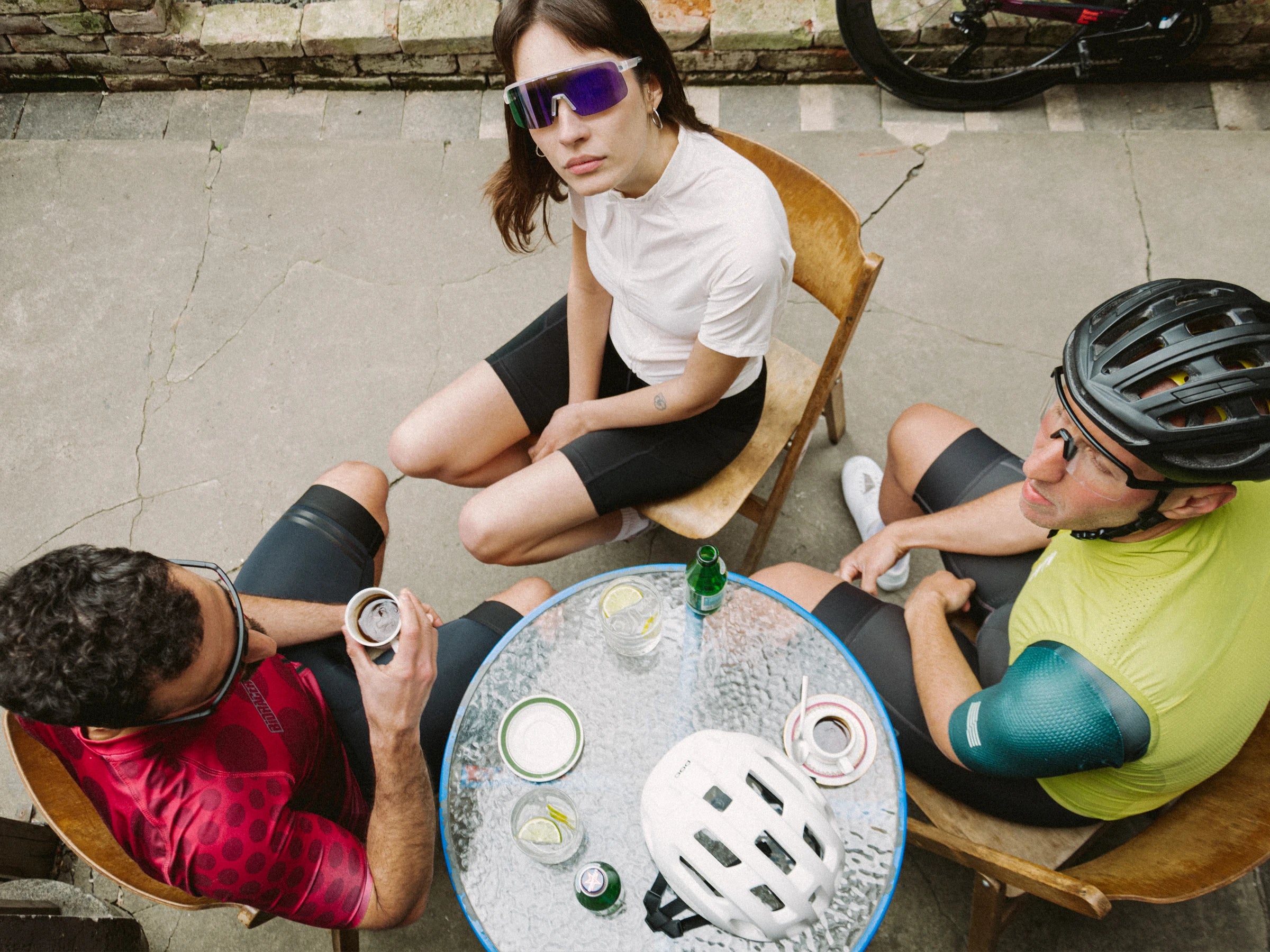
The industry has responded to this slowly. A few performance-oriented brands have moved toward universal fit systems with adjustable components rather than separate men's and women's lines. That approach is better engineering and better customer experience. It also produces a more honest product: rather than implying that your face has been accounted for because you selected your demographic, it gives you the tools to actually account for your face yourself.

02 · Face Geometry 101The five dimensions that actually determine cycling glasses fit
Before you can evaluate whether any frame will fit, it helps to understand which anatomical features are doing the work. There are five that matter most for cycling eyewear.
Bridge height. This is the distance from the top of your nose to the point where the frame's nose pad makes contact. Riders with a lower bridge, meaning the highest point of their nose sits lower relative to their eyes, often find that frames slide forward because there is less structure to rest against. Adjustable nose pads can compensate by repositioning the contact point higher or lower on the nose.
Interpupillary distance (IPD). The distance between the centres of your pupils determines how wide the frame needs to be for the optical centre of each lens to align correctly with your line of sight. Most cycling glasses have enough lens width that small IPD differences do not cause optical distortion, but frames that are genuinely too wide will sit asymmetrically or slide off-axis.
Cheekbone prominence. High, prominent cheekbones mean the lower edge of the lens sits closer to the skin. For a flat-profile face, the same frame will sit with a larger gap beneath the lens. This affects both comfort (a lens resting on your cheekbone will bounce on descents) and anti-fog performance (a large gap below the lens lets warm exhaled air rise directly onto the inner surface).
Temple width. The distance between your temples determines how tightly the frame arms press against the sides of your head. Too tight creates pressure headaches on long rides; too loose causes the frame to bounce. Flexible temple arms with a degree of natural tension adapt better than rigid ones.
Ear position relative to eye level. The height difference between the top of your ear and your eye level determines the angle at which the temple arm needs to run. Frames with fixed, horizontal arms will create either pressure at the ear or a gap at the temple depending on your individual geometry. This is one reason helmet-frame interaction varies so much between riders on the same model.
Understanding these five factors helps you evaluate any frame, gender-labelled or not, before you buy. And it clarifies why adjustability, specifically nose pad repositioning and flexible temple arm design, resolves more fit problems than a narrower frame size does.
Adjustable pads reposition the contact point for low or high bridges, preventing sliding without pressure.
Correct pad height keeps the lower lens edge from resting on prominent cheekbones during bumpy descents.
Flexible temple arms distribute grip evenly so the frame stays secure without creating a headache after two hours.
Nose pad position controls the tilt of the lens relative to your brow line, directly affecting anti-fog airflow.
03 · The Fog ProblemWhy fit failure always shows up on the climb
Fog on a cycling lens is almost always a fit problem before it is a lens problem. Understanding why reveals how closely nose pad position and cheekbone clearance are linked to the anti-fog performance claims you see on product pages.
When you climb, three things happen simultaneously. Your speed drops, which reduces the volume of cold air flowing across the outer lens surface. Your core temperature rises, which increases the amount of warm, humid air escaping upward from beneath your collar and chin. And your respiration rate increases, which adds more warm, moist exhaled air to the microclimate around your face. All three push condensation onto the inner lens surface.
A frame sitting too low on your nose creates a large gap between the lower lens edge and your cheekbones. This gap acts as an entry point for warm exhaled air, which rises and meets the cooler outer surface of the lens. The result is fog that appears on the lower half of the lens first, typically two-thirds of the way up a climb when you are working hardest and visibility matters most.
Conversely, a frame sitting too high, or with nose pads positioned to push the lens away from the face at an aggressive angle, creates a gap at the brow line. Wind catches this gap on descents, and on cold days it creates a cold-air lens-cooling effect that accelerates the condensation of any warm air that does get underneath.
The correct fit seals the frame to your face geometry precisely enough to direct airflow across the outer lens surface rather than underneath it, while leaving enough ventilation at the top of the frame to allow the anti-fog system to work. This is a balance that adjustable nose pads make achievable. Fixed geometry frames require you to have the "right" face for that specific product, which is a gamble.
Fog on a cycling lens is almost always a fit problem before it is a lens problem.Velluto Fit Guide, July 2026
04 · The Adjustable Nose PadThe most underrated component in cycling eyewear
Most buyers focus on lens technology when they are choosing cycling glasses. Tint, contrast enhancement, UV rating, anti-fog coating: these are the features that get column inches in cycling media. The nose pad gets almost none, which is disproportionate to its influence on whether the glasses actually work for you.
The nose pad on a cycling glass does four things. First, it positions the lens at the correct height relative to your field of vision. Too low, and you are looking slightly over the top of the frame on a low-head aero position. Too high, and the lower rim intrudes into your view on a more upright climbing position. Second, it determines the gap between the lens and your cheekbones, which as discussed above is a primary driver of fog formation. Third, it distributes the weight of the frame across a small surface area, and the correct position means the weight sits on the broadest, least pressure-sensitive part of your nose rather than a ridge or a bone. Fourth, it anchors the frame against sliding, which is critical on climbs when you are sweating and your posture shifts repeatedly.
A nose pad that can only be accepted or rejected, with no adjustment, works well for the face it was designed for and poorly for others. A nose pad that can be repositioned, angled, and set independently on each side adapts to the specific geometry of your face regardless of which demographic category you belong to.
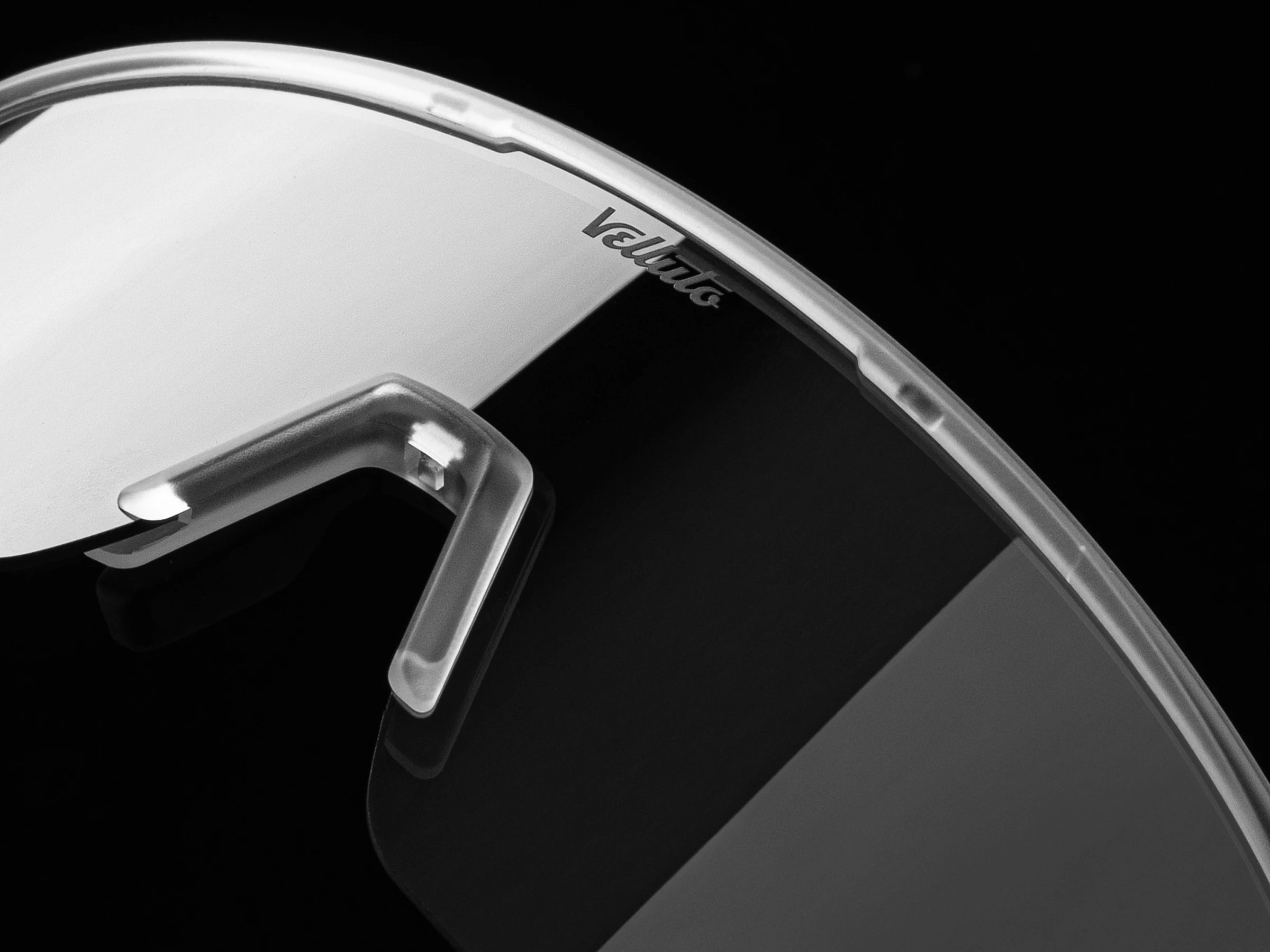
The StradaPro's adjustable nose pad system addresses all four functions. You can raise or lower the contact point to correct height and gap, tilt the pads to match a low or asymmetric bridge, and set the width to match your interpupillary distance and nose width simultaneously. This is what makes the frame genuinely fit-agnostic: it is not designed for an average face, it is designed to be adjusted to your actual face.
05 · The Velluto StradaProEngineering fit-first cycling glasses for road and gravel
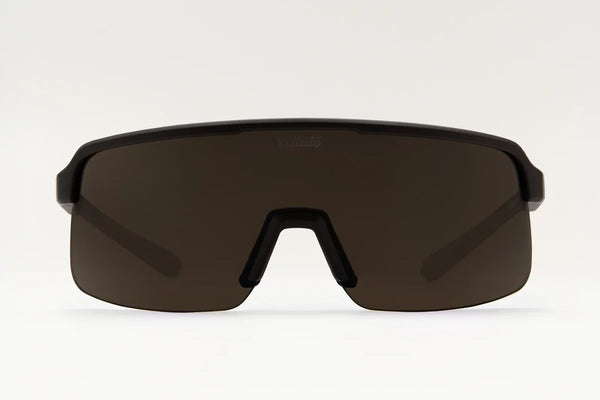
The StradaPro is Velluto's road cycling glass, built in Germany with Italian design and sold across Europe. It is a single model, available in four colours, designed around fit adjustability as the primary performance feature. There is no separate women's version because the adjustable architecture makes that unnecessary.
At 25 grams, the frame weight is low enough that nose-bridge pressure on a four-hour ride is minimal. This matters more than it might seem. Heavier frames require more nose pad surface area to distribute their load comfortably, which constrains nose pad design and reduces adjustability range. At 25 grams, the pad can be smaller, more precisely positionable, and gentler on a wider range of bridge geometries.
The built-in anti-fog system works in conjunction with the nose pad position: the system is designed to maintain airflow across the outer lens surface at the reduced speeds typical of long climbs, which is when fog most commonly forms. Setting the nose pads correctly, meaning close enough to the face to seal the lower lens gap, allows the ventilation system to perform as designed. A poorly-fitted frame defeats the anti-fog system even if the lens material itself is excellent.
UV400 certification means the StradaPro blocks 100% of UVA and UVB radiation. This is the correct protection standard for road cycling in summer, where cumulative UV exposure at altitude, particularly on Alpine and Pyrenean cols above 2,000 metres, can be significant. UV protection does not vary between the VellutoPuro clear lens and the VellutoVisione high-contrast lens: both are UV400 certified.
The interchangeable lens system uses a click-in mechanism that requires no tools and takes a few seconds. This is relevant for all-day rides where the light changes from tunnel approaches to open ridge roads to shaded descent through forest. Rather than carrying two complete pairs of glasses, you carry one frame and one spare lens. The swap takes less time than removing and repacking your jersey pocket.

06 · VellutoPuro and VellutoVisioneChoosing the right lens for your ride conditions
The lens question for road cycling is simpler than the market makes it appear. You need UV400 protection. You need anti-fog performance. And you need to be able to see clearly in variable light conditions, because no Alps stage and no Pyrenees day has uniform light from start to finish.
The StradaPro is compatible with two lenses. The VellutoPuro is a clear lens optimised for wind and insect protection. It is the right choice when light levels are low or variable, when you are riding before sunrise or into the evening, or when a mixed-terrain day involves significant time in tunnels, forests, or under heavy cloud. It provides full UV400 protection while transmitting maximum available light. It is also the lens that makes the most sense for riders who are still learning to read light conditions and want a single lens that performs across a wide range.
The VellutoVisione uses Velluto's high-contrast lens technology to sharpen the visual definition of road surfaces, gravel, and terrain texture. On a bright Alpine morning on an open col with no shade, or on a sun-exposed Pyrenean descent where road surface reading is critical for braking judgment, the VellutoVisione gives your eyes more information about what is in front of you. The effect is most noticeable when transitioning from shadow to full sun, where the contrast enhancement reduces the adjustment lag that can make the first few seconds in bright light disorienting.
Both lenses click into the StradaPro frame using the same mechanism and both are UV400 certified. Switching between them takes seconds. The practical approach for a multi-day cycling camp is to start each morning with VellutoPuro if the weather is uncertain or the first hour involves valley roads in shadow, then switch to VellutoVisione once you are above the treeline and the light is stable. The swap takes less time than a gel from your back pocket.

07 · How Other Brands Approach Women's Cycling GlassesA category overview for informed comparison
Several established cycling eyewear brands offer women's-specific frames as separate product lines, each with their own design philosophy and dimensional approach to women's fit. These are genuinely useful products for riders whose face geometry aligns with the adjustments made in the women's version.
The difference in approach is that women's-specific frames assume gender predicts the required dimensional adjustments reliably enough to segment the market on that basis. For many riders, that assumption works well. For a significant number, it does not, and those riders benefit more from adjustable fit architecture than from a gender-based frame variant.
A parallel approach, which some brands are moving toward, is adjustable-fit universal frames. These do not require a gender choice. They require the rider to spend a few minutes with the nose pads to find the position that works for their face. For riders who have been disappointed by gender-labelled frames in the past, this approach is often a revelation: not because the frame is inherently better in materials or optics, but because it actually fits.
The comparison question is therefore not "which women's cycling glasses are best" in the sense of which product in that category wins. It is "do I need a gender-labelled frame or do I need an adjustable frame," and for most riders the second answer is more useful. If you have tried multiple women's frames and found that some fit and others do not, the differentiating factor is almost always the adjustability of the nose pad and the flexibility of the temple arms, not the gender label on the box.

08 · Choosing Your StradaProColour, lens, and fit setup for summer road cycling
If you are considering the StradaPro for summer road cycling, here is a practical setup guide based on the most common scenarios.
For Alpine or Pyrenean camp riding in July and August. The combination most suited to variable mountain light is any frame colour with both VellutoPuro and VellutoVisione lenses. Start with VellutoVisione for the main climb, where bright sun on pale limestone is the norm. Carry VellutoPuro in a jersey pocket and swap it in for the descent if you are entering tree cover or tunnel sections. The 25-gram frame weight means carrying it in a pocket for part of the day is not uncomfortable.
For nose pad setup. When you first put on the StradaPro, note whether the lower lens edge rests on or near your cheekbones. If it does, move the nose pads up until there is a few millimetres of clearance. Then check the height: the top of the lens should roughly align with your brow line so that in an aero position your eyes look through the centre of the lens rather than over the top. Adjust the pad width to match your nose: the pads should contact the sides of the nose without pinching. This takes two or three minutes the first time. After that, the position is set.
For helmet compatibility. Put on your helmet before finalising the temple arm position. The arms should sit beneath the helmet strap without the strap pushing the frame down toward your nose. If there is downward pressure, the frame will sit lower than intended, changing the nose pad geometry you set earlier. Most standard road helmet designs accommodate the StradaPro's slim temple arms without interference.
For the 30-day trial. The most useful thing about the StradaPro's 30-day risk-free trial is that it gives you enough time to experience the fit across different ride types. A 45-minute flat ride in good weather tells you almost nothing about whether a frame will work for you. A four-hour day with two significant climbs, temperature variation, and a fast descent tells you everything. Use the trial period for the rides that actually stress-test the fit.


09 · Accessories Worth AddingThe cleaning and protection kit for serious road cyclists
A frame and lens setup that fits well and protects your eyes is worth maintaining properly. Two accessories make a meaningful difference to lens longevity and optical clarity over a full season.
The Velluto Cleaning Spray is a 50ml refillable spray with an apple fragrance, made in Germany. At that volume it is small enough to carry in a cycling bag or jersey pocket on a multi-day camp, which means you can clean the lens in the field rather than waiting until you return to your accommodation. A smeared or dusty lens on a high-speed descent is a safety issue before it is a comfort issue. The spray is formulated for optical surfaces and is safe for use on both the VellutoPuro and VellutoVisione lenses. The 25x25cm microfibre cloth, made from 80% polyester and 20% polyamide, removes the spray residue without scratching.
The Velluto Hard Case provides rigid impact protection for transport. At a cycling camp where glasses travel in a kit bag through airport handling and across stages, a hard case is the difference between arriving with clean lenses and arriving with a cracked frame. The velvet interior finish protects the lens surface from contact scratching. The case fits all StradaPro frames and is sized to accommodate a spare lens alongside the frame.

10 · The Fit Argument, SummarisedWhat to actually look for when buying women's cycling glasses
The question "which women's cycling glasses should I buy" is best rephrased as "which cycling glasses will fit my face geometry and work across the conditions I ride in." That rephrasing changes what you look for.
You look for adjustable nose pads as a primary requirement, not an optional extra. Fixed nose pads mean you are accepting the nose geometry of whoever designed the frame. Adjustable pads mean you are setting the geometry yourself. For a high-investment purchase intended to work on long rides in variable conditions, that distinction matters.
You look for temple arm flexibility rather than rigidity. Arms that flex slightly distribute grip over a larger contact area and resist the loosening that occurs when the arm-to-skull contact point is a single pressure ridge. This matters more on rides above two hours than on short efforts.
You look for a lens system that adapts to changing light conditions. A single-tint fixed lens is a compromise from the moment the light changes. An interchangeable system gives you the right lens for the right conditions without carrying a second pair of glasses.
You look for UV400 certification, not UV400 labelling. The distinction matters: certified protection means the claim has been verified against a standard. For summer riding at altitude, where UV intensity is meaningfully higher than at sea level and cloud cover provides less protection than most riders assume, certified UV400 is the correct baseline.
And you look for a trial period long enough to test the frame on the rides that actually stress it. A 30-day risk-free trial is enough to take the glasses on three or four serious training days across different conditions. That is a better product evaluation than any specification sheet.

Compare the full lineup in the Velluto StradaPro cycling glasses collection.
11 · FAQFrequently Asked Questions
Do women need specific cycling glasses, or will standard frames fit?
What does adjustable nose pad actually mean for cycling glasses?
How do I stop my cycling glasses from fogging up on long climbs?
Which StradaPro colour suits road cycling best in summer?
Are 25-gram cycling glasses noticeably lighter on a long ride?
Can I use the StradaPro with a cycling helmet without gaps at the temple?
What is the difference between VellutoPuro and VellutoVisione lenses?
How does the 30-day risk-free trial work for cycling glasses?
Does the StradaPro fit narrow or low-bridged faces?
The StradaPro fits a wide range of face shapes and comes with interchangeable clear and high-contrast lenses for varying light conditions. If you want to find out whether it fits yours, the 30-day trial is the most honest way to do that. Start at velluto-shop.com.