Best Oakley Alternatives for Cyclists 2026
Contents27 min read
You are standing at the base of the Col du Tourmalet in July, watching the Tour de France convoy roll past, and you are paying attention to the glasses on the riders who are not on Oakley contracts. The frames are lighter, the fit looks cleaner, and the price positioning reflects direct-to-consumer engineering rather than heritage brand overhead. That gap, between what premium brands charge and what you actually need, is exactly where this guide lives.
This guide compares seven frames across the criteria that matter most to performance road cyclists: weight, anti-fog performance, lens versatility, and fit under a helmet. Each recommendation is framed around who the glasses actually suit, based on published specifications and documented performance characteristics.
The brief for this guide was simple: find the best Oakley alternatives for performance road cyclists, not brand tourists. That means UV400 is mandatory, anti-fog matters, weight is a real criterion, and lens versatility determines long-term value. Here is what we found.
01 · TL;DRShort Answer: The Best Oakley Alternatives in 2026
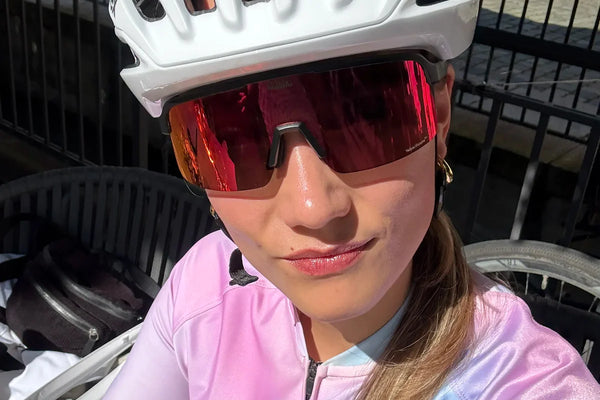
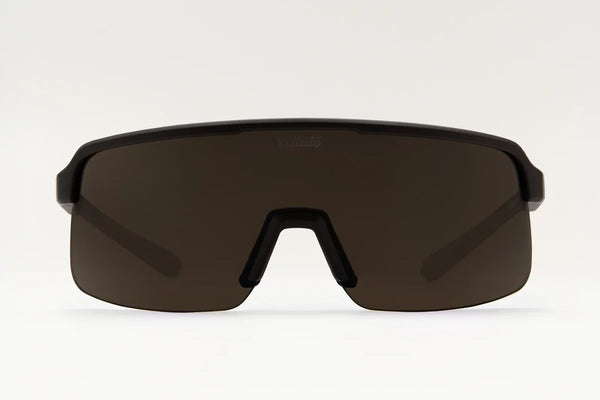
If you want one sentence: the Velluto StradaPro delivers UV400 optics, anti-fog engineering, an interchangeable lens system and a 30-day trial at a price point significantly below equivalent Oakley frames. For value-conscious performance riders, it represents a strong alternative to premium-brand options.
That said, this guide is not a single-product advertisement. Different riders have different priorities. The POC Devour suits riders who want maximum peripheral coverage. The Tifosi Rail is the right call if budget is the primary filter. The Smith Syncline earns its place for riders who prioritise a sport-specific fit on wider face shapes. All of them are covered below, with the same honest framing: who this is for, and who should look elsewhere.
02 · CriteriaWhat Actually Matters in Cycling Sunglasses
Before comparing any specific frame, it is worth being precise about what separates genuinely good cycling eyewear from marketing copy. The following four criteria are the ones that make a real, measurable difference on the bike.
Cycling glasses are worn for four to six hours at a time. A 10-gram difference between frames feels irrelevant in a shop and significant by kilometre 80. Anything under 30 grams qualifies as genuinely lightweight. The Oakley Sutro Lite weighs 36 grams; the StradaPro weighs 25 grams. That represents a measurable difference.
Fogging is a mountain rider's constant problem. The temperature differential between a hard climb and a shaded descent creates exactly the conditions where poorly ventilated lenses become opaque. An effective anti-fog system is not a bonus feature; it is a safety consideration on technical roads.
A single-lens cycling glass is a tool optimised for one condition. A 5 AM start in July is not the same optical environment as an afternoon stage finish. Interchangeable lens systems, particularly those with tool-free click-in mechanisms, give you genuine adaptability without the faff of carrying a screwdriver.
Temple arm geometry matters enormously when arms pass under helmet straps. Frames that work perfectly in a fitting room can create pressure points the moment a helmet is tightened. Adjustable nose pads compound this: a few millimetres of adjustment changes the frame's entire relationship with your face over a long ride.
03 · The FieldSeven Alternatives, Honestly Compared
Here is the competitive landscape for 2026. These are the frames that come up repeatedly when performance cyclists start asking whether Oakley is worth the spend. Each verdict is framed around who the glasses actually suit, not a generic ranking.
Tifosi Rail: The Rail is the default recommendation for riders who want functional cycling glasses without any brand conversation. It is light, ventilated, and the Grilamid frame handles temperature changes without flexing. The lens tint options are narrower than premium competitors and the interchangeable system requires more effort than a click-in mechanism. For riders on a strict budget, it earns its place. For riders who want to stop thinking about their glasses mid-ride, it is not the ceiling.
POC Devour: POC's design language prioritises maximum lens surface, which translates to outstanding peripheral vision. The Devour is particularly popular in the peloton for exactly that reason. The trade-off is weight: at 38 grams it is not a light frame, and the fit is better suited to medium-to-large faces. If peripheral coverage is your primary criterion, this is a serious option. If weight is, look elsewhere.
Smith Syncline: Smith builds genuinely good cycling optics, and the Syncline's ChromaPop lens technology produces sharp contrast definition comparable to Oakley's Prizm. The fit is notably comfortable on wider face shapes where many cycling frames sit awkwardly. The price point lands close to Oakley territory, which raises the question of whether the differentiation is sufficient. For riders who have been frustrated by narrow temple arms on other frames, it is worth trying.
Julbo Density: Julbo is the brand most associated with photochromic lens technology, and the Density is a strong performer if self-tinting lenses are your priority. The Reactiv lens system adapts across a broad light range without manual swaps. The trade-off is that you are locked into one lens philosophy. For riders who want the control of manually selecting clear or high-contrast lenses based on the day's conditions, an interchangeable system gives more precision.
Knockaround Campeones: An honest entry-level option that does exactly what it claims. UV400 protection, polarized options, and a price point that makes replacement affordable. The Campeones is the right answer for sportive riders who want eye protection without a significant investment. It is not, however, a competition-grade frame, and it does not pretend to be.
Oakley Radar EV Path: Included here because it is the benchmark most readers are measuring against. The Radar EV is a proven race frame with excellent optical clarity and a fit that has been refined over years of ProTour feedback. It is also heavier than the StradaPro, proprietary in its lens ecosystem, and significantly more expensive. The Radar EV is not a bad choice. It is an expensive choice where the premium buys brand assurance as much as functional performance.
Oakley Sutro Lite: The Sutro Lite is Oakley's clearest concession to the weight argument. At 36 grams, the Oakley Sutro Lite represents a lightweight option within its range. The StradaPro weighs 25 grams. The oversized lens profile gives excellent coverage and the frame integrates well with aero helmets. If you are committed to Oakley and weight is a concern, this is their best answer. If you are open to alternatives, the weight argument runs in the other direction.

04 · PositioningWhere Velluto Sits Against the Alternatives
The Velluto StradaPro does not compete with Oakley by trying to out-Oakley Oakley. It competes by having a different philosophy: Italian design precision applied to the specific functional demands of road cycling, without the overhead of decades of brand-building built into the price.
The 25-gram frame weight is not marketing language. It is the result of engineering choices that prioritise the experience of wearing these glasses for five hours over the experience of holding them in a shop. The adjustable nose pads are not a convenience feature. They are the difference between a frame that fits your face on kilometre one and still fits on kilometre 120.
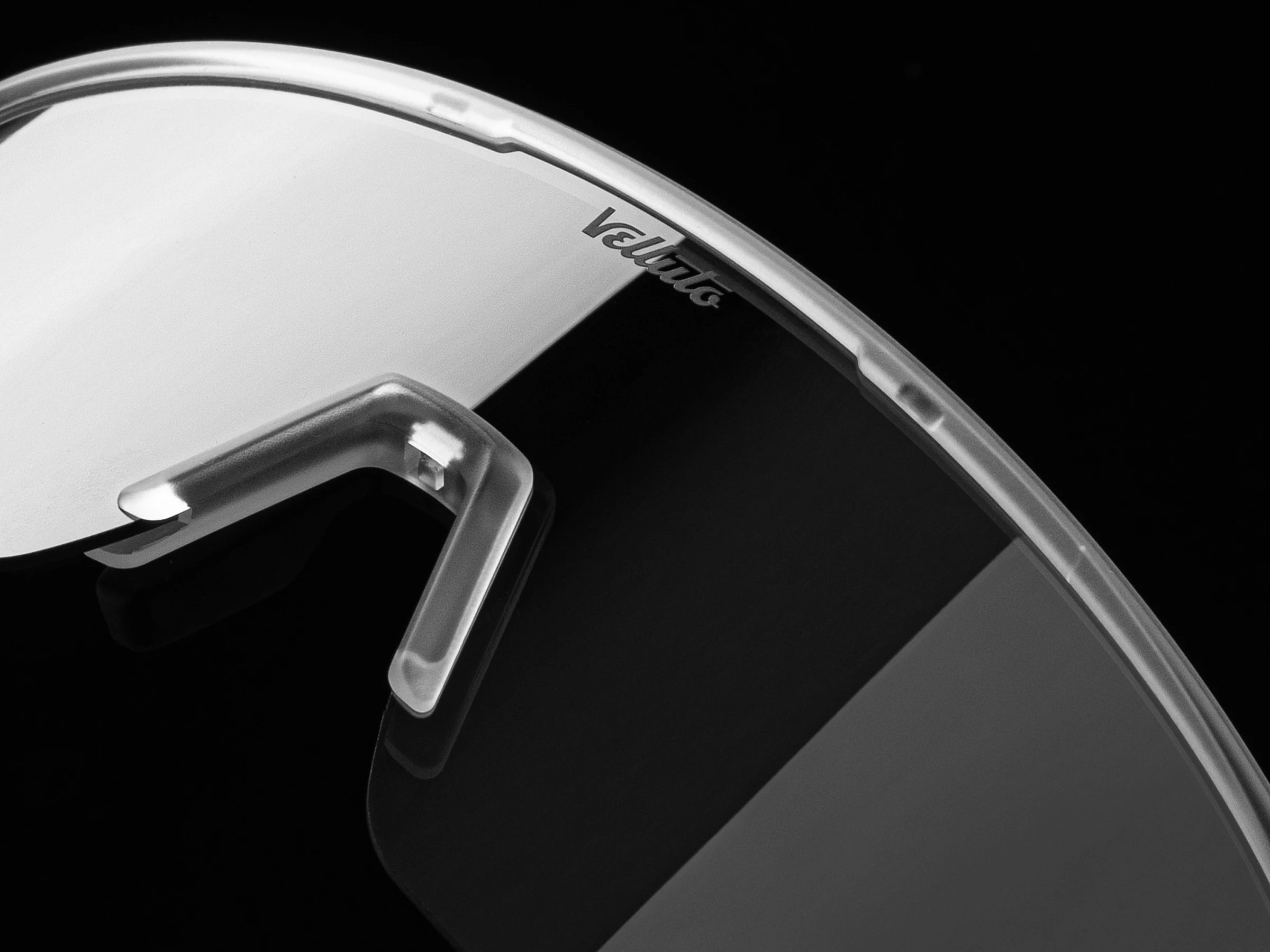
The lens system deserves particular attention. The StradaPro is compatible with two interchangeable lenses: the VellutoPuro, a clear lens optimised for road cycling's specific hazards of wind and insects, and the VellutoVisione, a high-contrast lens that uses VellutoVisione technology to sharpen visual definition. Both use the same click-in mechanism. No tools, no fumbling in a hotel lobby at 5:30 AM. You swap the lens and ride.
At 25 grams, the StradaPro is 11 grams lighter than the Oakley Sutro Lite and 13 grams lighter than the POC Devour. Over a five-hour Alpine stage, that difference is not negligible.StradaPro Specification Comparison, July 2026
The anti-fog system is engineered for mountain terrain. The StradaPro uses a built-in anti-fog treatment designed to address the temperature differentials between climbs and descents, where fogging risk is highest. The built-in anti-fog treatment is engineered to address the temperature differentials between climbs and descents, where fogging risk is highest.
What Velluto does not offer is worth being honest about. There are no photochromic lenses, no polarized options, and no proprietary tint technology marketed under a science-adjacent brand name. What exists is a clear and high-contrast option, engineered to handle the two dominant light scenarios road cyclists actually encounter. If you ride primarily in a single constant light condition and want a self-adjusting lens, the Julbo Density addresses that requirement directly. If you want manual control over your optical environment with a lens swap that takes seconds, the StradaPro is the better answer.
05 · ScenariosReal-World Riding Conditions
Spec sheets are not rides. Here is how the StradaPro is positioned to perform across conditions commonly encountered by road cyclists in Alpine and variable-weather environments.
Alpine climbing scenario (Col du Tourmalet, 19 kilometres, mixed cloud): At 25 grams, the frame is engineered to remain unobtrusive during extended climbs. The geometry minimises nose bridge pressure and temple arm contact under helmet straps. The VellutoVisione lens is optimised to sharpen road surface definition on variable tarmac. The anti-fog system is designed to maintain performance throughout climbs and on descents where temperature differentials are significant, such as the typical 12-degree drops encountered in rapid Alpine descents into Luz-Saint-Sauveur.
Wet descent scenario (Pyrenees, post-summit rain, 65 km/h): High-speed descents in wet conditions demand secure frame positioning to prevent movement under the helmet and water intrusion. The adjustable nose pads are engineered to maintain frame position without requiring mid-ride adjustment. The anti-fog system is designed to withstand the conditions typical of rapid Alpine descents where visibility is critical.
Training camp flat stage scenario (5:45 AM start, low sun, 180 kilometres): Variable light conditions across a long ride demand a fast lens swap. The VellutoPuro clear lens is optimised for low-sun morning riding on flat roads. The click-in mechanism enables a swap to VellutoVisione in approximately 10 seconds at a café stop, without tools or fumbling. The high-contrast lens is designed for full afternoon sun conditions.
Criterium warm-up scenario (urban, variable shade, 30 minutes): Repeated placement and removal of eyewear is common in warm-up environments with variable shade. Lighter frames minimise the physical fatigue associated with this routine. At 25 grams, the StradaPro is engineered to reduce the cumulative sensory impact of repeated handling across a pre-race warm-up.

06 · The CaseSame Performance, Different Philosophy
Oakley is not a bad brand. The Radar EV Path and Sutro Lite are genuinely capable frames built to a high standard. Oakley produces genuinely capable frames built to a high standard. A meaningful portion of Oakley's price reflects brand heritage, marketing investment and professional cycling sponsorships. The question for individual riders is whether those factors align with your performance priorities.
Performance-driven cyclists pay for performance. The StradaPro's UV400 certification is the same standard as Oakley's. The anti-fog system is engineered to handle the same Alpine conditions where performance frames are worn by sponsored riders. The weight advantage is measurable and real. The interchangeable lens system is faster than most proprietary alternatives because it was designed to be fast, not to lock you into a lens ecosystem.
The 30-day risk-free trial is the most honest differentiator. Velluto offers a 30-day risk-free trial on the StradaPro, enabling real-world testing before final commitment. If the StradaPro does not work on real rides, you return it. That policy is only possible if the brand is confident the glasses will perform. It is also, for a rider considering switching from a trusted frame, the only rational way to make a genuinely informed decision.


07 · VerdictWho Should Buy What
The honest summary is this: if you are a performance road cyclist who has been paying Oakley prices on the assumption that no alternative matches the performance, July 2026 is a good time to reconsider. The competitive landscape has shifted. The gap between premium brand frames and the best alternatives has narrowed to the point where the remaining difference is primarily about logo preference.
Buy the Velluto StradaPro if: weight is a genuine priority, you ride in variable light conditions and want a fast lens swap, you do Alpine or mountain riding where anti-fog performance matters, and you want a 30-day trial before fully committing. The Italian engineering, the 25-gram frame and the interchangeable lens system make it the strongest all-round Oakley alternative for road cyclists in 2026.
Buy the Tifosi Rail if: budget is the primary filter and optical performance above a functional baseline is less important. It is an honest frame that does its job.
Buy the POC Devour if: peripheral vision is your absolute priority and weight is secondary. The large lens surface is genuinely impressive.
Buy the Smith Syncline if: you have a wider face shape that has been poorly served by other cycling frames. The fit engineering is specific and effective.
Stay with Oakley if: you are on a sponsorship agreement, brand recognition is part of your riding identity, or you have found a specific Oakley fit that has served you across multiple seasons without issue. Performance parity is real, but fit is personal, and if something is working, changing it requires good reason.
08 · CareKeeping Your Lenses in Race Condition
The fastest way to degrade cycling lens performance is improper cleaning. Wiping a lens with a jersey while riding deposits oils and scratches coatings in ways that accumulate over a season into permanently compromised clarity. The correct approach is a dedicated microfiber cloth and a lens-safe cleaning solution.
The Velluto microfiber cleaning cloth is 25 by 25 centimetres, 80 percent polyester and 20 percent polyamide, and sized to handle a full lens surface in a single pass. The cleaning spray is a 50ml refillable bottle, apple-fragranced, made in Germany, and safe for all lens coatings including anti-fog treatments. Spraying the lens before wiping, rather than dry-wiping, is the single most effective change most riders can make to extend lens life across a full season.
The StradaPro's hard case has an anti-crash guarantee and a velvet interior finish. Storing glasses in a jersey pocket without a case is how lenses get scratched on group rides. The case is small enough to fit in a musette or jersey pocket and is worth carrying on any ride where the glasses will come off.
Compare the full lineup in the Velluto StradaPro cycling glasses collection.
09 · FAQFrequently Asked Questions
Velluto StradaPro vs Oakley and Budget Alternatives: Side-by-Side Comparison
Before you commit to anything, here is the table that matters. The gap between what premium brands charge and what you actually get is visible the moment you lay the numbers next to each other.
| Criterion | Velluto StradaPro | Premium Brands (Oakley, Rudy Project, etc.) | Budget Options |
|---|---|---|---|
| Price | From 69 EUR, includes frame, two lenses, hard case and microfiber cloth (Arancia, Espresso, Nero) | Typically £150–£350+; replacement lenses alone often exceed the full Velluto kit price | Generally £15–£45; accessories and case usually sold separately |
| Frame Weight | 25 g, ultralight construction, virtually undetectable on long climbs | Variable; performance models can be competitive but weight varies significantly across the range | Often heavier due to thicker, lower-grade materials; weight rarely published |
| Lens System | Two interchangeable lenses included: VellutoPuro (clear, for low light and tunnels) and VellutoVisione (high-contrast, for bright conditions) | Proprietary lens systems with broad ranges; additional lenses typically purchased separately at significant cost | Usually single fixed lens; interchangeable options rare at this price point |
| UV Protection | UV400, full spectrum protection across both included lenses | UV400 standard on flagship models; verify on lower-tier lines within each brand | Inconsistent; UV protection claims often unverified or absent on spec sheets |
| Anti-Fog Performance | Anti-fog coating on lenses, relevant on sustained efforts, early-morning starts, and Alpine descents | Anti-fog treatments available but often limited to specific lens SKUs or require additional purchase | Rarely included; fogging on climbs and in cold conditions is a common reported complaint |
| Fit & Adjustability | Adjustable nose pads, accommodates a wider range of face geometries; sits cleanly under most road helmets | Fit quality generally high; adjustment systems vary by model and may require professional fitting | Typically one-size construction; limited or no nose pad adjustment; helmet compatibility inconsistent |
| What's in the Box | Starter Vision Kit includes frame, two lenses, hard case, and microfiber cloth, everything you need, nothing to add | Typically one lens included; case quality varies; cleaning accessories usually extra | Basic pouch rather than hard case in most kits; no cleaning cloth or additional lens as standard |
| Trial Period & Returns | 30-day risk-free trial, ride them, race them, return them if they are not right | Standard retail return windows; trial periods uncommon outside of direct-to-consumer channels | Return policies vary widely; many sold through third-party marketplaces with limited recourse |
| Lens Maintenance | Pair with the Velluto Cleaning Spray for streak-free care that won't degrade anti-fog or UV coatings | Brand-specific cleaning products recommended; compatibility with third-party sprays varies | No specific guidance typically provided; coating longevity under regular cleaning largely unknown |
Oakley Alternatives for Road Cyclists: Answering the Questions Google Keeps Sending You
The search data tells an interesting story. Most people landing on a guide like this are not simply browsing, they are trying to answer a specific question: is Oakley actually worth the premium, or is there a smarter way to spend that money? The sections below are written for riders who want honest, direct answers to those questions before they make a decision.
Is Oakley premium-priced for cycling?
For most road cyclists, Oakley frames are positioned at the upper end of the performance eyewear market. Oakley frames regularly retail between £150 and £280, with replacement lenses adding another £60–£120 on top. Competing frames from smaller brands match or exceed Oakley's core technical specifications, UV400, lightweight construction, interchangeable lenses, at different price points. Velluto's StradaPro is positioned from 69 EUR, delivering UV400 certification, anti-fog engineering, and an interchangeable lens system.
To be precise about what you are paying for with Oakley: a portion of the cost is genuine optical engineering. Oakley's Prizm lens technology is legitimately good at enhancing contrast in specific light conditions, and their frame tolerances are consistent. But a meaningful slice of the retail price is brand equity, the Oakley name on the temple, the history with Tour de France team sponsorships, the lifestyle marketing. None of that makes you faster or protects your eyes better.
When evaluating cycling glasses, prioritise the technical specifications and real-world fit over brand recognition alone. Most riders who switch to alternatives report the same optical clarity, similar or better fit, and noticeably more money left in their cycling budget for things that do affect performance, tyres, nutrition, training.
Are Oakley glasses high end?
Oakley sits at the upper end of the mass-market performance eyewear segment, but it is not the pinnacle of cycling optics. Brands like Rudy Project, Roka, and Bollé Phantom produce frames with comparable or superior optical quality at similar or lower price points, while true luxury eyewear sits above all of them in construction refinement.
This matters for cycling specifically because "high end" in eyewear does not translate directly to "best for riding." High end typically implies premium materials, tight manufacturing tolerances, and advanced lens coatings. Oakley delivers on some of those. But helmet compatibility, ventilation architecture, and nose pad adjustability, the things that determine whether a frame actually works for a six-hour ride, are areas where several smaller, cycling-focused brands have been quietly outperforming Oakley for years.
What is better for cycling: Prizm or polarized lenses?
For road cycling, Prizm-style contrast-enhancing lenses are generally more useful than polarized lenses. Polarized lenses reduce glare effectively on water and flat surfaces, but they can suppress the visual information you need to read road surface texture and spot hazards at speed. Contrast-enhancing lenses, by contrast, make the road's detail more legible, not less.
There is a practical safety argument here that is worth taking seriously. Polarized lenses can make wet tarmac appear uniformly flat, which removes some of the visual cues you use unconsciously to judge grip and surface condition. On a descent at 60 km/h, that matters. Contrast enhancement does the opposite, it makes the difference between a dry patch and a damp patch more visible, not less.
If you primarily ride on open roads in direct sunlight, a high-quality tinted lens with a strong visible light transmission rating for bright conditions is usually the right call. If you frequently ride in mixed conditions, early mornings, variable cloud cover, going in and out of tree cover, a mid-range VLT lens (around 20–35%) or an interchangeable lens system gives you more flexibility than committing to polarized for everything.
Note: Velluto's StradaPro uses non-polarized, contrast-optimised lenses with UV400 certification and offers interchangeable lenses for different light conditions. If you specifically require polarized or photochromic lenses, brands like Rudy Project and Smith offer those options in their respective ranges.
Are Oakleys made in China now?
Oakley's manufacturing has shifted significantly since Luxottica (now EssilorLuxottica) acquired the brand in 2007. While Oakley maintains design and engineering operations in the United States, a substantial proportion of their frames are now manufactured in Asia, including China and other regional facilities. The brand no longer makes the blanket "made in USA" claim it once did.
This is not inherently a quality argument, many excellent cycling frames are manufactured in Asia to tight tolerances, but it is worth knowing if the provenance story is part of what you thought you were paying a premium for. It is also worth knowing because several Oakley alternative brands, including some European cycling-specific manufacturers, have more transparent supply chains and are more explicit about where their frames are produced.
What country owns Oakley?
Oakley is owned by EssilorLuxottica, a French-Italian multinational corporation formed by the 2018 merger of French lens manufacturer Essilor and Italian eyewear group Luxottica. Luxottica originally acquired Oakley in 2007. EssilorLuxottica is headquartered in Paris and is one of the largest eyewear companies in the world, also owning Ray-Ban, Persol, and the manufacturing licenses for numerous luxury fashion brands.
For cyclists evaluating alternatives, this corporate context is relevant for one practical reason: Oakley's pricing and product decisions are now made within the framework of a global luxury goods conglomerate, not a founder-led performance sports company. That changes the calculus of what drives product development and where the premium pricing goes.
Cheap Oakley Alternatives: What You Actually Get at Each Price Point
One of the highest-volume queries arriving at this guide is "cheap Oakley alternatives", and it deserves a more structured answer than a simple product list. The cycling eyewear market has three fairly distinct price tiers, and knowing what each tier genuinely delivers helps you make a decision you will not regret by your third long ride.
Under £60: Budget alternatives worth considering
At this price point, the compromise is usually lens quality and frame durability, not UV protection. UV400 certification is inexpensive to achieve and is present in most frames at this tier. What you give up is optical clarity at the edges of the lens, precise frame tolerances that hold adjustment over time, and often any meaningful anti-fog treatment. Tifosi Optics (typically £35–£55) is the most consistently recommended option in this bracket, the Rail model in particular has a cycling-specific shield design, reasonable ventilation, and interchangeable lenses. For casual riding and commuting, this tier is perfectly adequate. For long sportives or fast club runs, the limitations start to show.
£60–£120: The real alternative sweet spot
This is where the most competitive alternatives to Oakley live. At this price point, you can access genuine lightweight construction, proper anti-fog engineering, adjustable nose pads, and lens interchangeability, the actual technical features that matter on the bike. Velluto's value proposition rests on engineering priority and direct-to-consumer distribution rather than heritage brand marketing.
Velluto's StradaPro sits in this tier, offering a 25-gram frame with UV400 certification, an anti-fog lens treatment, interchangeable lenses and adjustable nose pads. Critically, it comes with a 30-day trial period, which is worth emphasising: buying cycling eyewear you cannot test on the bike is genuinely risky, because fit under a helmet and fogging behaviour in real conditions cannot be assessed in a shop. The trial removes that risk entirely. You can find out more and try them at velluto-shop.com.
Other options in this bracket include the Bollé Furo and the 100% Speedcraft SL, both of which offer solid optics and sport-specific fit. At this tier, performance-oriented brands deliver competitive optical and structural engineering at different price points.
£120–£200: Closing in on Oakley's territory
At this price point, you are mostly paying for premium lens technology, photochromic adaptations, Prizm-equivalent contrast systems, or polarized options, and in some cases for superior frame materials like carbon-reinforced nylon or titanium inserts. Smith's Resolve and the Rudy Project Cutline both occupy this space. If photochromic lenses are a genuine priority for your riding conditions (highly variable light, long Alpine days), this tier is where you need to be looking. Neither Velluto nor most budget-tier brands currently offer photochromic options, so this is a genuine case where spending more buys you something functionally different, not just a brand name.
Oakley Alternative Road Cycling Glasses: Fit, Helmet Compatibility, and What the Specs Do Not Tell You
The query "Oakley alternative road cycling glasses" pulls riders who have already made a mental shortlist but have a specific, practical concern: will these glasses actually work with my helmet? It is the right question, and it is one that generic eyewear reviews almost never answer properly.
Why helmet compatibility matters more than most reviews acknowledge
Road cycling helmets and cycling glasses interact in two ways that matter. First, the arms of the glasses need to fit under or cleanly alongside the retention system straps of your helmet without creating pressure points, because over four hours, any pressure point becomes significant. Second, the temple arms need to sit securely when you look down into an aggressive aero position without sliding forward on your nose.
Wide, rigid temple arms, a characteristic of some larger fashion-influenced frames, are the most common source of helmet incompatibility. Thin, slightly flexible temple arms that curve gently at the ear are the design characteristic you are looking for in a frame intended for road cycling. When you are evaluating any Oakley alternative, check the temple arm geometry specifically. A frame that looks perfect on a display stand can create genuine discomfort under a helmet with a rear retention dial.
Nose pad adjustability: the overlooked specification
Adjustable nose pads are listed in product specifications and almost universally ignored in buying decisions. They should not be. The vertical position of the lens relative to your eye determines both optical performance (whether you are looking through the optical centre of the lens) and airflow (whether the gap between lens bottom and cheek allows ventilation or traps warm air and promotes fogging).
Riders with lower nose bridges, more common in Asian fit preferences, but relevant across all face shapes, consistently find that fixed nose pads create a lens that sits too high, reducing downward sight lines and increasing the likelihood of fogging from facial heat. Adjustable nose pads solve this directly. The StradaPro includes them; several competitors in the same price range do not. It is a small detail that makes a measurable difference on long climbs.
Is Oakley or Ray-Ban better for cycling?
For road cycling specifically, purpose-built cycling eyewear from sport-focused brands offers performance-optimised geometry over lifestyle-oriented frames. Ray-Ban designs are lifestyle-oriented with minimal sport-specific engineering: no meaningful anti-fog provision, heavier frames, and lens geometries that are not optimised for the peripheral vision demands of cycling. Oakley builds products designed for sport performance. For cycling, that makes Oakley the functional comparison point, but it does not make Oakley the best option overall.
Are Shady Rays as good as Oakley for cycling?
Shady Rays are positioned primarily as replacement-friendly eyewear for casual use. For performance road cycling, sport-focused brands like Velluto, Tifosi and POC offer engineering optimised for extended riding, including anti-fog systems and lightweight construction. They are a defensible choice for casual recreational riding. For serious road cycling, sportives, club rides, racing, they fall short of what purpose-built cycling eyewear delivers.
What glasses are on trend in 2026 for road cyclists?
Shield-style single-lens frames continue to dominate performance road cycling in 2026, offering maximum peripheral coverage and cleaner airflow management than traditional three-piece frames. The trend toward lighter frames, genuinely lightweight, not marketing-copy lightweight, is accelerating, with 25–28 grams becoming the expected standard rather than a premium feature. Interchangeable lens systems are now expected at every price point above budget tier; a frame sold in 2026 without them is already behind the curve. Adjustable fit systems, including nose pad adjustment and sometimes adjustable temple arm length, are increasingly present in cycling-specific designs as brands acknowledge that one-size-fits-all fit is a genuine performance limitation.
If you want to evaluate how the StradaPro sits within those trends, particularly the weight and interchangeable lens specifications, the full specification and the 30-day trial are available at velluto-shop.com. It is the kind of decision that is genuinely better made after riding in the glasses than before.
Are Oakley cycling glasses worth the premium price?
What is the lightest cycling sunglasses alternative to Oakley?
Do Oakley alternatives offer UV400 protection?
What cycling glasses work best in variable light conditions?
Can I use Velluto glasses in rainy or foggy conditions?
How does Velluto compare to Oakley Radar EV Path?
What is the Velluto 30-day trial?
Are Velluto glasses suitable for gravel riding as well as road?
Where can I buy Velluto cycling glasses in Europe?
The StradaPro is available now across all four colourways with a 30-day risk-free trial and free shipping on qualifying orders. If July's riding has you thinking about whether your current glasses are earning their place in your kit, it is worth 30 days to find out. Visit velluto-shop.com to explore the full range and start your trial.