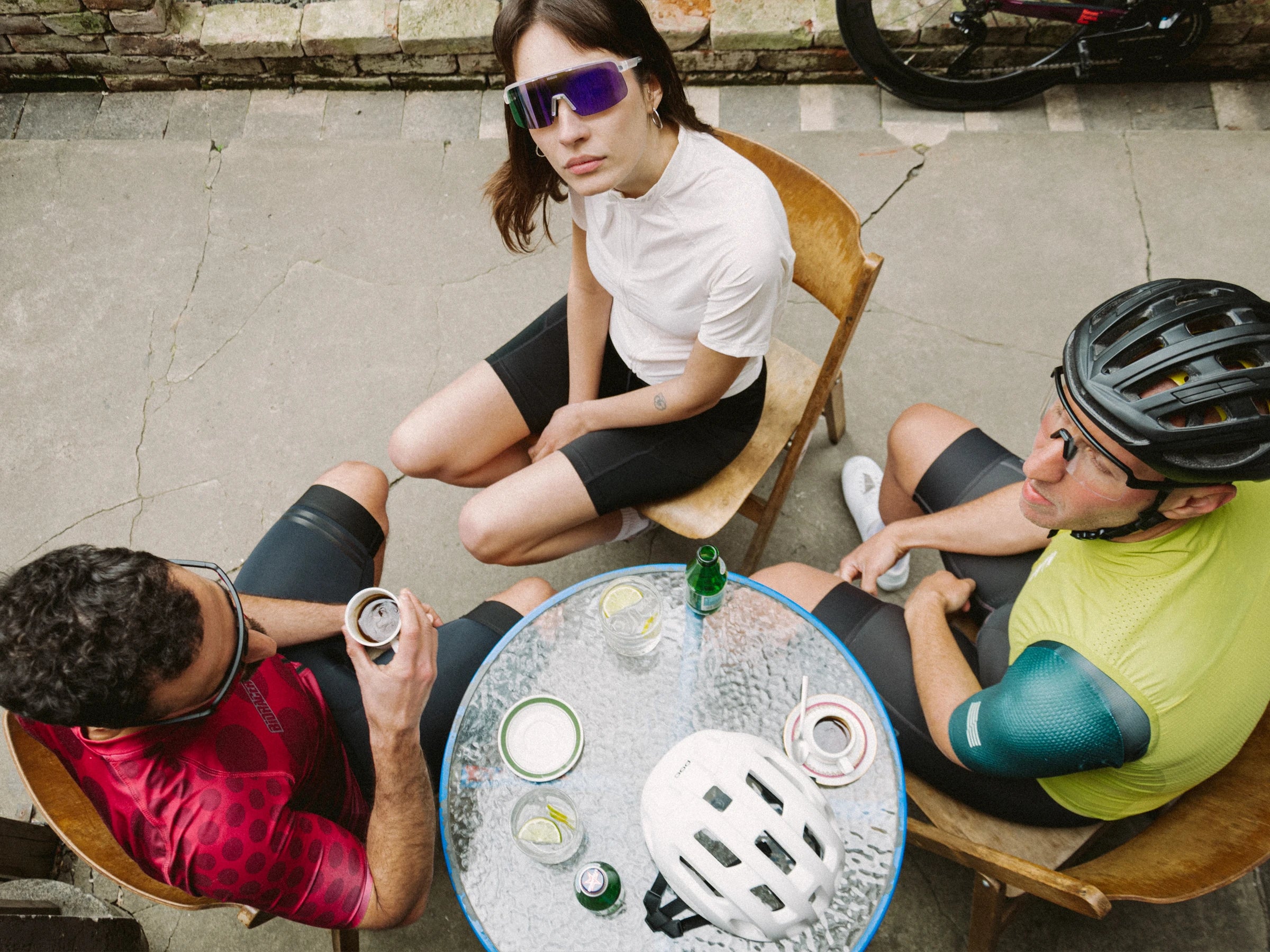
Best Mirrored Cycling Sunglasses 2026: Buyer's Guide
Contents19 min read
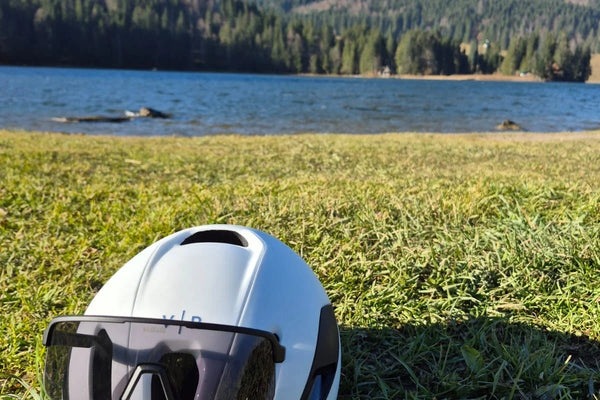
The peloton crests the Civiglio and the lake opens up below: flat light one moment, a wall of low autumn sun the next. On days like this, the lens you chose that morning is either working for you or quietly making every kilometre harder than it needs to be.
Mirrored cycling sunglasses are one of the most searched categories in road eyewear, and also one of the most misunderstood. The mirror finish is visible from a hundred metres away, which is partly why people buy them. But the reason they exist is functional: a reflective outer coating reduces glare in bright conditions, cutting the intensity of light before it reaches the lens proper. Understanding what that coating actually does, and what it does not do, is the difference between a good purchase and an expensive mistake sitting in your kit bag.
This guide walks through everything worth knowing before buying mirrored cycling sunglasses in 2026. What the coating is for. What else to check alongside it (UV rating, weight, fit, anti-fog, return policy). How fixed mirrored lenses compare to photochromic lenses that also mirror in bright sun. And where the Velluto range fits into the picture honestly, including the fact that one Velluto product is mirrored and one is not.
01 · The coatingWhat a mirrored lens coating actually does
A mirrored coating is a thin metallic or dielectric layer applied to the outer surface of a lens. When light hits the lens, a portion of it is reflected back off that layer before it ever reaches your eye. The result is a reduction in the overall intensity of incoming light, which is especially useful on bright road surfaces, open water crossings, alpine descents into sun, and the kind of low-angle autumn glare that sits right at eye level for hours.
It is worth being precise about what the mirror effect is not. It is not the same as UV400 protection. UV400 is a certification that the lens material blocks 100% of ultraviolet wavelengths up to 400 nanometres, covering both UVA and UVB radiation entirely. You can have a lens that is heavily mirrored but lacks UV400 certification, and that is a problem: the pupil dilates behind a dark or mirrored lens, potentially admitting more unfiltered UV than if you wore nothing at all. Always check that a mirrored lens is also UV400 certified. They are separate features and both matter.
A mirrored coating also does not change tint. A fixed mirrored lens has one tint level, set at manufacture. If you start a ride in shade and finish in full sun, the lens does not adapt. This is the key practical limitation of a standard mirrored lens for road cycling, where light conditions can shift dramatically within a single ride. That limitation leads to the second major category: photochromic lenses that also develop a mirrored finish.
02 · Lens typesFixed mirror vs photochromic mirror: which to choose
Once you understand what a mirrored coating is, the next decision is whether you want a fixed mirror or a photochromic lens that mirrors in bright sun. These are meaningfully different products suited to different riding patterns.
A fixed mirrored lens has a set tint density. It performs exactly as designed in the conditions it was optimised for, typically Category 3 (bright to very bright sun), and it does that job consistently and cheaply. If you ride predominantly in full sunshine, at midday, on open terrain with little tree cover or tunnels, a fixed mirrored lens is a clean, simple answer. You do not need to think about it once it is on your face.
A photochromic lens that also develops a mirrored finish is a different proposition. The lens material contains compounds that react to UV light: in low light or shade the lens stays relatively clear, and as UV intensity increases the lens darkens and the mirrored surface becomes more pronounced. When you come out of a tunnel at speed, ride into tree-filtered light, or move between valley floor and exposed ridge, the lens is working with you rather than against you.
The trade-off for photochromic technology is typically cost and, in some products, a slight delay in adaptation. For autumn riding in particular, where light changes fast and unpredictably, many experienced road cyclists consider the photochromic approach the more versatile choice. For summer training on consistent sunny days, a fixed mirror at a lower price point may be all you need.
03 · Buying criteriaThe six things to check before you buy
Mirrored lenses generate a lot of marketing noise. These six criteria cut through it and give you a framework for comparing any pair of cycling sunglasses, mirrored or otherwise.
1. UV400 certification
This is non-negotiable. Not "UV protection", not "filters UV", but UV400 certified: 100% blockage of UVA and UVB up to 400nm. Check the product specification sheet, not just the marketing description. Any reputable cycling eyewear brand will document this clearly. If it is absent or vague, move on.
2. Lens type for your conditions
Fixed mirror, photochromic mirror, or a two-lens interchangeable system: as covered above, match the lens type to your typical riding pattern. A single fixed mirrored lens bought for autumn use and worn on a six-hour ride through Lombardy-style light changes is going to compromise visibility at some point in the day.
3. Frame weight
Weight matters more in cycling than in almost any other sport because you are wearing the glasses for hours at a time, often in a low aerodynamic position where the frame interacts with your helmet straps. Glasses in the 25 to 30 gram range are considered lightweight for road cycling. Above 35 grams, pressure points on the nose and temples become noticeable over long rides. Check the manufacturer's stated weight and factor it into your decision.
4. Nose pad and fit adjustability
A mirrored lens that slides down your nose in the middle of a climb is both annoying and potentially dangerous. Adjustable nose pads let you dial in the fit for your face shape without relying on the luck of a universal geometry. This matters particularly for smaller faces, where many cycling frames sit too wide or too far forward, and for long climbs where sweat accumulates and fixed nose pads lose grip.
5. Anti-fog provision
Mirrored lenses are frequently associated with warm-weather riding, but the reality is that cycling generates significant facial heat even in autumn. On climbs, the combination of exertion, cooler ambient temperature, and a tight-fitting lens creates ideal conditions for fogging. Look for frames with either a built-in ventilation system or an anti-fog coating on the inner lens surface. This detail is rarely prominent in marketing but is one of the most consistent sources of rider frustration.
6. Return or trial policy
Fit is genuinely personal. A lens that looks perfect in a product photo can sit wrong on your face, create pressure behind the ears, or turn out to have a tint that does not suit your riding environment. A trial period, ideally on real rides rather than just within packaging, is the only way to know. Check the brand's return policy before purchasing. Some brands offer genuine risk-free trial periods; others offer standard retail returns within a short window.

04 · Autumn ridingMirrored cycling sunglasses and the specific challenge of autumn light
Il Lombardia is the final Monument of the cycling season and its light tells you everything about autumn riding. The race starts in morning shade, crosses climbs where the canopy breaks and the sky opens, descends through backlit corridors of beech and chestnut, and finishes beside a lake that reflects whatever the sky is doing that day. It is one of the most visually demanding environments in road cycling, compressed into a single day.
Recreational autumn rides follow the same pattern in miniature. You leave home in grey morning light, the sun appears at low angles as you gain altitude, you descend into shadow, and by afternoon the light is golden and directly in your eyes. A fixed mirrored lens calibrated for peak summer sun can be noticeably too dark for the early and late portions of that day.
This is exactly the scenario where a photochromic lens that also mirrors in bright sun makes practical sense. The lens responds to the UV component of incoming light, so when the sun is hidden the lens is clearer, and when you crest a ridge into direct sun it darkens and the mirrored surface becomes more pronounced. You are not manually swapping lenses at the bottom of a descent; the lens is doing that work passively.
For cyclists who ride year-round in Northern Europe, the Netherlands, Belgium, Germany, and the northern reaches of France and Switzerland, autumn and winter light is the baseline rather than the exception. The same photochromic rationale applies: a lens that is useful across the full range of light you actually encounter, rather than optimised only for conditions you rarely see.
The lens decision is really a decision about which light conditions you are willing to compromise on. Choose the one that costs you least on the rides you do most.Buyer's guide principle
05 · Velluto ChromoThe Velluto Chromo: photochromic and mirrored in bright sun
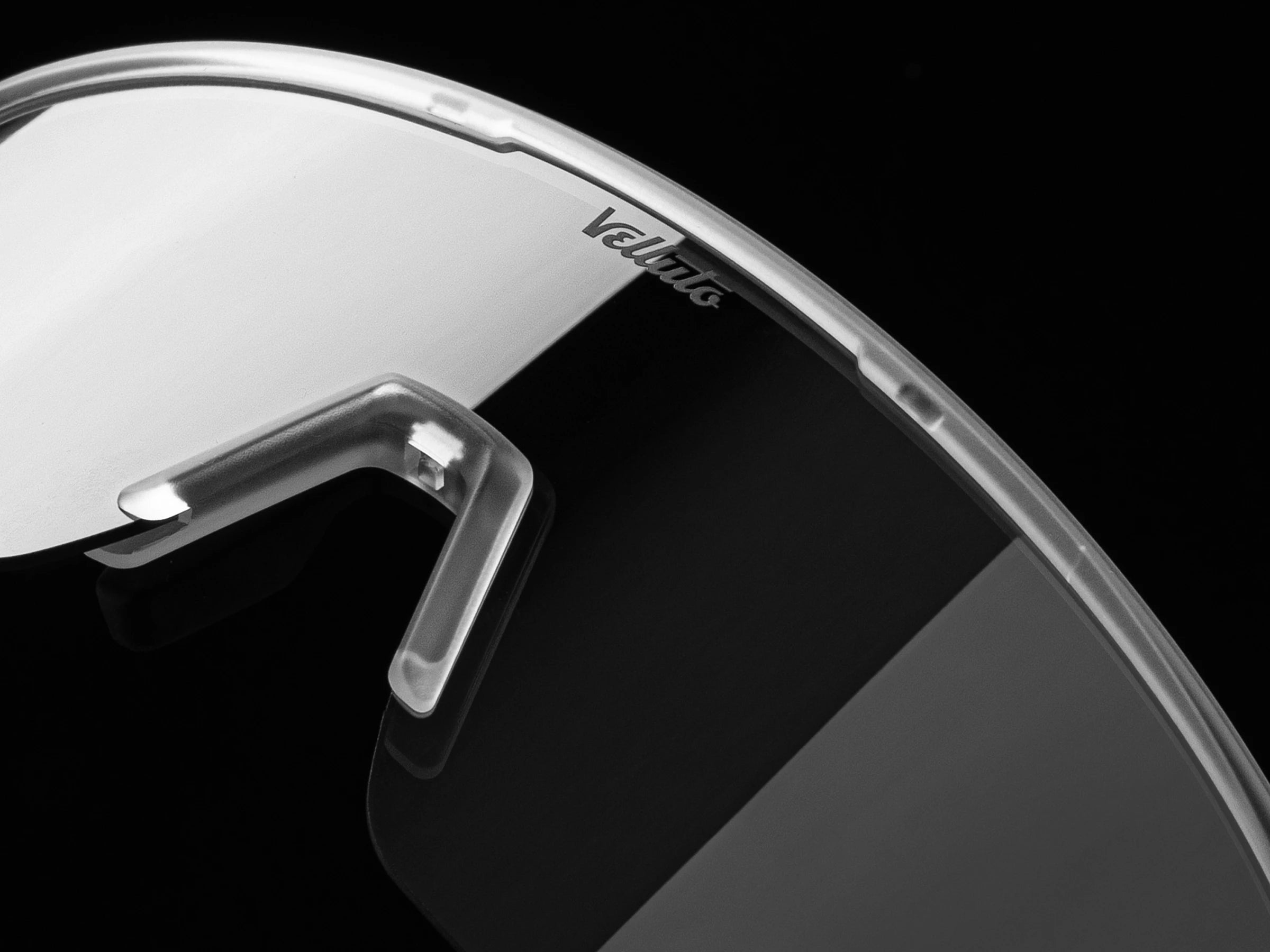
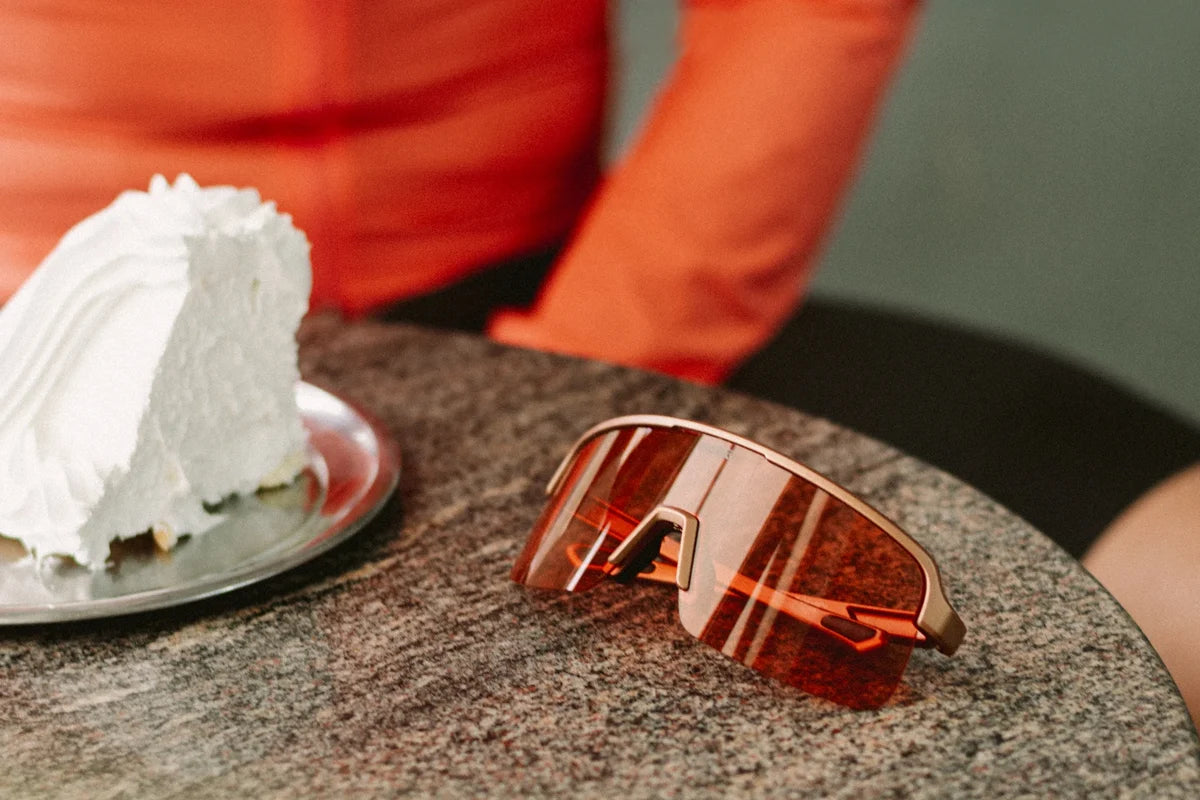
Within the Velluto range, the product that answers the mirrored lens question is the Velluto Chromo. It is a photochromic lens: it adapts to light as you ride, staying clearer in low light and darkening, with a mirrored finish, in bright sun. This is the only Velluto product that is either photochromic or mirrored. Both characteristics belong to the Chromo specifically.
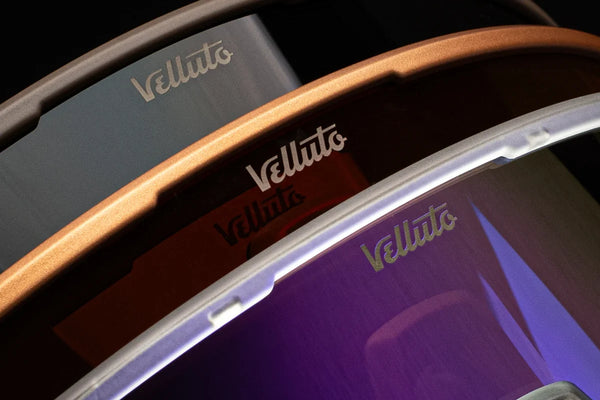
The Chromo is available in four colourways: Nero Fumo, Nero Fuoco, Bianco Lago, and Bianco Viola. All four share the photochromic and mirrored-in-sun characteristics. The lens carries UV400 protection. The price is 119 EUR.
Launched in October 2026, the Chromo was designed with the kind of riding described above in mind: rides where the light does not stay consistent, where you are moving through tree cover and open road, climbing and descending, starting in grey and finishing in afternoon sun. The photochromic approach means you carry one pair and the lens adapts, rather than carrying a second pair in a jersey pocket.
For full colourway details, availability, and current offers on the Chromo, visit the product page.
Until 30 November 2026, there is a 2-for-1 offer on the Velluto Chromo: the second pair is free, and the two pairs do not have to be the same colour. Full conditions are on the Chromo page.

06 · StradaProThe Velluto StradaPro: not mirrored, a different approach
It is worth being direct here because clarity serves you better than ambiguity. The Velluto StradaPro is not mirrored. It is not photochromic. If those are the features you are looking for, the StradaPro is not the right Velluto product, and it would be misleading to imply otherwise.
What the StradaPro offers is a different solution to the variable-light problem: two interchangeable lenses on a single frame, swapped tool-free with a click-in system. The VellutoPuro is a clear lens, optimised for low-light conditions and protection against wind and insects. The VellutoVisione uses contrast-enhancing technology to sharpen visual definition in mixed or bright light. Neither is mirrored. Neither is photochromic.
The frame weighs 25 grams and carries UV400 certification on both lenses. It features adjustable nose pads for a secure fit across a range of face shapes, a built-in anti-fog system, and comes in four colours: Arancia (orange), Espresso (brown), Nero (black), and Viola (purple). Velluto offers a 30-day risk-free trial with every StradaPro purchase.
The StradaPro's answer to changing light is to let you choose your lens before you ride, based on the forecast. The Chromo's answer is to adapt continuously during the ride. Neither approach is categorically superior: they are different tools. A rider who likes to set up once and then not think about optics during the ride may prefer the photochromic approach. A rider who wants maximum control over exactly which lens is on their face at any moment, and who does not mind a quick swap, may prefer the interchangeable system.


07 · The marketHow the mirrored cycling sunglasses market breaks down in 2026
Understanding where a pair sits within the broader market helps calibrate expectations before you spend. The mirrored cycling sunglasses market in 2026 spans a wide range of price points and lens technologies, and a higher price does not always mean a better answer for your specific riding conditions.
Entry level (approximately 30 to 60 EUR)
At this price point you will find fixed mirrored lenses in a range of tints. UV400 documentation is inconsistent here: some products carry it, some do not. Frame materials are typically lighter plastics, weight is often above 30 grams, and adjustability is limited. These can be a reasonable choice for occasional use in consistent sunny conditions if you verify UV400 certification carefully. For frequent road riders, the fit and durability limitations tend to show over a season.
Mid-range (approximately 80 to 150 EUR)
This is where most cycling-specific eyewear brands compete. Brands such as POC, 100%, Scicon, SunGod, and Out Of offer mirrored options in this range, as do smaller specialist brands including Velluto. UV400 is standard at this level. Frame weight drops toward the 25 to 30 gram range with better materials. Anti-fog provision, adjustable nose pads, and lens swap systems appear more consistently. The Velluto Chromo at 119 EUR sits in this segment, as does the StradaPro interchangeable system at from 69 EUR.
Premium (150 EUR and above)
Oakley, Rudy Project, Smith, and Roka compete at this level. At 150 EUR and above you typically encounter proprietary lens coatings, precision ventilation systems, a wider range of lens options, and in some cases photochromic technology integrated into their offerings. If photochromic performance is a priority and budget allows, this segment offers established alternatives.
The practical question for most cyclists is whether the premium segment delivers meaningfully better performance for their typical rides, or whether a well-specified mid-range product at 80 to 150 EUR achieves the same result on the road. That is an honest question with a genuinely personal answer, and it is worth thinking through before the purchase rather than after it.

08 · ChecklistYour pre-purchase buying checklist for mirrored cycling sunglasses
Before completing any purchase of mirrored cycling sunglasses, use this checklist. It applies to any brand, including Velluto.
Beyond the checklist: think about the specific rides you do most. A cyclist who races crits on sunny summer weekends has different needs from one who logs three-hour autumn endurance rides before work. Neither profile is wrong; they just point toward different products. The best mirrored cycling sunglasses for you are the ones optimised for the light and duration you actually encounter, not the ones optimised for conditions on a marketing photograph.
A note on accessories
Whatever glasses you buy, the correct maintenance accessories extend both the life of the lenses and the clarity of the coating. Lens coatings, including mirrored coatings, are damaged by dry wiping with unsuitable fabrics. A proper microfibre cloth (Velluto's is 25x25cm, 80% polyester and 20% polyamide) and a purpose-made cleaning spray protect the coating surface and keep the lens optically clear. The Velluto Cleaning Spray is 50ml, apple-scented, refillable, and made in Germany. Between rides, a hard case with an anti-crash guarantee prevents the frame and lens damage that sidelines equipment unnecessarily.
Compare the full lineup in the Velluto StradaPro cycling glasses collection.
09 · FAQFrequently Asked Questions
What does a mirrored coating on cycling sunglasses actually do?
A mirrored coating is a reflective layer applied to the outer surface of a lens. It reflects a portion of incoming light before it reaches your eye, which reduces glare in very bright conditions such as open road riding on a sunny day. It does not replace UV400 protection: those are two different things. A good pair should offer both a mirrored coating and certified UV400 protection that blocks 100% of UVA and UVB radiation.
Are mirrored cycling sunglasses suitable for autumn riding?
It depends on the lens. A fixed mirrored lens designed for bright sun can feel too dark on overcast autumn days, reducing contrast and making road surfaces harder to read. A photochromic lens that also develops a mirrored finish in bright light is a better match for autumn's variable conditions: it adapts as the light changes, staying clearer when the sun disappears behind clouds. The Velluto Chromo works this way: photochromic and mirrored in strong sun, clearer in low light.
What is the difference between photochromic and mirrored lenses?
A mirrored lens has a fixed reflective coating. A photochromic lens changes its tint automatically in response to UV light, independently of any mirror effect. Some lenses are both: they are photochromic (self-tinting) and also develop a mirrored finish when fully darkened in bright sun. The Velluto Chromo is this type. A standard mirrored lens that is not photochromic stays at the same tint level regardless of the light.
Is the Velluto StradaPro a mirrored lens?
No. The StradaPro is not mirrored and not photochromic. It is an interchangeable-lens frame: you click in the VellutoPuro clear lens for low-light or variable conditions, and the VellutoVisione high-contrast lens for brighter rides. The mirrored, photochromic option in the Velluto range is the Chromo.
What should I check for when buying mirrored cycling sunglasses?
Check these in order: UV400 certification (not just "UV protection", but 100% UVA and UVB blockage); lens type (fixed mirror vs photochromic mirror, depending on your typical riding conditions); weight (lighter frames reduce pressure on long rides); nose pad adjustability (a secure fit matters more at speed); anti-fog provision (especially relevant in autumn and on climbs); and the brand's return or trial policy, so you can test fit on a real ride before committing fully.
What is UV400 and why does it matter for cycling?
UV400 means the lens blocks all ultraviolet wavelengths up to 400 nanometres, covering 100% of both UVA and UVB radiation. For cyclists this matters because rides can last several hours with eyes directly exposed to sun, reflected light from road surfaces, and UV at altitude. A lens that is dark or mirrored but lacks UV400 certification can actually be harmful: the pupil dilates behind a dark lens, potentially admitting more unfiltered UV than with no glasses at all.
How much do good mirrored cycling sunglasses cost?
The market ranges widely. Entry-level mirrored options start around 30 to 50 EUR, though UV400 certification and build quality at that price point vary. Mid-range options from established cycling-specific brands typically fall between 80 and 150 EUR. Premium performance eyewear from brands such as Oakley, POC, or Rudy Project sits above 150 EUR and can reach 300 EUR or more. The Velluto Chromo is priced at 119 EUR.
Can I ride Il Lombardia-style routes in autumn with mirrored sunglasses?
Late-season rides through varied terrain, where you move in and out of tree cover, descend into valleys, and then climb into open sky, expose you to rapidly changing light. A fixed mirrored lens can struggle in those transitions. A photochromic lens that also mirrors in full sun handles that variation better: it responds to UV changes as the landscape shifts. For that kind of autumn riding the Velluto Chromo, which is photochromic and develops a mirrored finish in bright sun, is the Velluto answer.
What is the 2-for-1 offer on the Velluto Chromo?
Until 30 November 2026, when you buy one Velluto Chromo you receive a second pair free. The two pairs do not have to be the same colour. Full details and terms are on the Chromo page.
Ready to choose? For the photochromic and mirrored option, visit the Velluto Chromo page for full colourway details and the current offer. For the interchangeable two-lens system, the StradaPro is available directly at velluto-shop.com, with a 30-day risk-free trial and free shipping on orders over 89 EUR.