Best Road Bike Sunglasses 2026: Buyer's Guide
Contents24 min read
It is 7:14 on a Saturday morning in late August. The peloton of your local sportive is rolling out under a sky that can't decide between cloud and sun, and you are already calculating whether your lenses are right for this light. Sunglasses are the one piece of kit on your face for every kilometre you ride, and yet most cyclists buy them once, keep them for six years, and spend more time researching tyres. This guide fixes that.
August 2026 is a genuinely interesting moment to buy road bike sunglasses. The Vuelta a España is running through Spain and riders in the peloton are dealing with the same conditions you face on summer sportives: brutal midday sun at altitude, shaded valley descents, and the sweated-up, fogged-lens problem that kills comfort on every climb. The technology that matters most in 2026 is not new materials science or AI-generated tint curves. It is simpler than that: weight, fit, certified protection, and the ability to swap lenses fast when the light changes. This guide covers exactly those four things, with the products and specs to back it up.
01 · ContextWhat Has Actually Changed in Road Eyewear for 2026
Cycling eyewear has gone through two meaningful shifts since 2024. The first is the consolidation around interchangeable lens systems. A few years ago, swappable lenses were a premium-tier feature found on frames costing well above the market average. In 2026, any serious road cycling frame that does not offer a lens swap option is already behind the curve. The reason is straightforward: riders have learned that carrying one spare lens and swapping it in 10 seconds is more practical than owning three separate pairs of glasses.
The second shift is a market-wide sensitivity to weight that mirrors what happened with helmets around 2019 and 2020. Cyclists who used to accept 35 g or 40 g frames without complaint are now testing alternatives after trying a friend's 25 g option and noticing the difference over a four-hour ride. The reference point has moved. If you are comparing a frame from 2022 to a current option and wondering why it suddenly feels heavier, that is why.
What has not changed, and what some marketing in this category continues to obscure: lens category ratings, UV standards, and the basic geometry of how a road cycling frame should sit on your face. The fundamentals still matter more than any headline technology. A lens with UV400 certification blocking 100% of UVA and UVB radiation is measurably safer than one without it. A frame that weighs 25 g causes less fatigue over five hours than one that weighs 38 g. An adjustable nose pad is still the most reliable way to achieve a stable fit across different face shapes. None of that has changed.
02 · Lens ScienceUnderstanding Lens Categories Before You Buy
Before comparing frames, understand what you are comparing lenses on. The EN ISO 12312-1 standard classifies lenses into five protection categories based on how much visible light they transmit.
Category 0 transmits 80 to 100% of visible light. These are clear or very lightly tinted lenses, suitable for indoor use or very low ambient light. Category 1 transmits 43 to 80%: useful for overcast days or early morning riding. Category 2 covers 18 to 43% transmission, the range for variable European weather conditions. Category 3 is 8 to 18% transmission, the correct category for bright sun, high altitude, and Mediterranean summer riding. Category 4, below 8%, is intended for extreme environments like glacier mountaineering and is not legal for driving, which matters if you cross roads.
UV400 certification sits on top of this scale and applies across all categories. A lens can be any transmission category and still carry UV400 certification, which means it blocks 100% of ultraviolet radiation at wavelengths up to 400 nanometres. UV400 and CE marking are sometimes confused. CE indicates the lens meets the basic EN ISO standard for the relevant category. UV400 is a separate and more specific protection guarantee. When a lens manufacturer lists both, that is a meaningful safety claim. When they list only "CE" without UV400, ask what the UV transmission rate actually is.
For road cycling in August across Europe, the relevant range is Category 2 to Category 3. A lens that can cover both through tint adjustment, whether via a separate clear lens for tunnel and overcast sections or a high-contrast lens for variable light, gives you real versatility. That is the practical case for interchangeable systems: not just convenience, but covering the full protection category range within a single day's riding.

03 · Buying CriteriaThe Four Things That Actually Matter on the Road
After filtering out the marketing noise, four criteria determine whether a pair of road bike sunglasses works on real rides or just looks good in the shop.
A fifth consideration that earns more weight the longer your rides get: fit adjustability. Adjustable nose pads are the most practical way to ensure a frame sits correctly across different face geometries. Without them, a frame that fits your riding buddy's face perfectly may sit too low or too high on yours, affecting both optics and ventilation. This is particularly relevant for road cyclists who spend hours in an aggressive position with their head tilted upward at the horizon.
04 · Market OverviewWhere Road Bike Sunglasses Sit in 2026
The road cycling eyewear market in 2026 splits broadly into three tiers, and understanding where the value actually sits saves you from spending more than you need to.
The high-end tier covers brands like Oakley, Rudy Project, and Alba Optics. Frames here carry significant brand equity alongside genuinely good optics. Oakley's Sutro and Jawbreaker are widely used in professional cycling and carry a reputation for lens performance. Rudy Project has strong heritage in time-trial and long-distance cycling with their Defender and Cutline models. Alba Optics serves a niche that appreciates minimal design paired with performance optics. At this level you are paying for a combination of lens technology, brand presence, and in some cases photochromic systems that adapt automatically to light changes. The trade-off is price and, in some cases, weight: full-coverage frames with large lenses and thick temples often sit above 30 g.
The mid-market tier has become significantly more competitive. Tifosi, SunGod, Gloryfy, and uvex all sit here and offer solid UV protection with interchangeable or photochromic lens options at accessible price points. SunGod offers extensive colour customisation options, which is a genuine strength for riders who want a frame that matches their kit. Tifosi offers interchangeable lens systems across their product range. Gloryfy focuses on impact-resistant lens materials, which appeals to riders who prioritise durability across different riding disciplines.
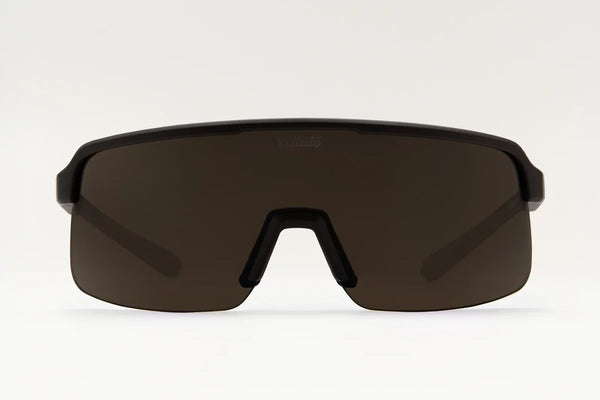
The emerging performance tier is where newer European brands with focused design briefs are finding space. Here the emphasis is on doing fewer things extremely well: ultra-low weight, precise fit engineering, and lens systems optimised for road cycling rather than general sports use. This is where Velluto positions the StradaPro: a German-designed frame with Italian aesthetic sensibility, built around the specific requirements of road cycling rather than adapted from a broader sports eyewear platform.
One thing worth noting across all three tiers: the 2026 market has seen several brands introduce "photochromic" as a headline feature without being clear about the limitations. Photochromic lenses do adapt to changing light, but they adapt more slowly in cold temperatures, they do not darken inside car tunnels (because photochromic activation requires UV light, which glass blocks), and the tint chemistry degrades over several years. For many road cyclists, an interchangeable lens system gives more reliable control with less long-term degradation. Neither approach is universally superior; they suit different rider preferences and should be chosen consciously.

05 · The StradaProVelluto's Answer to Road Cycling Eyewear
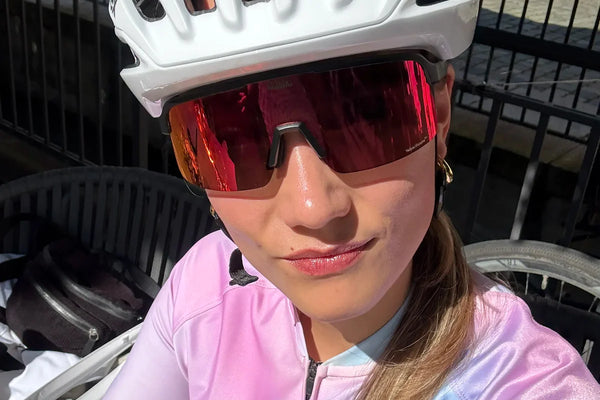
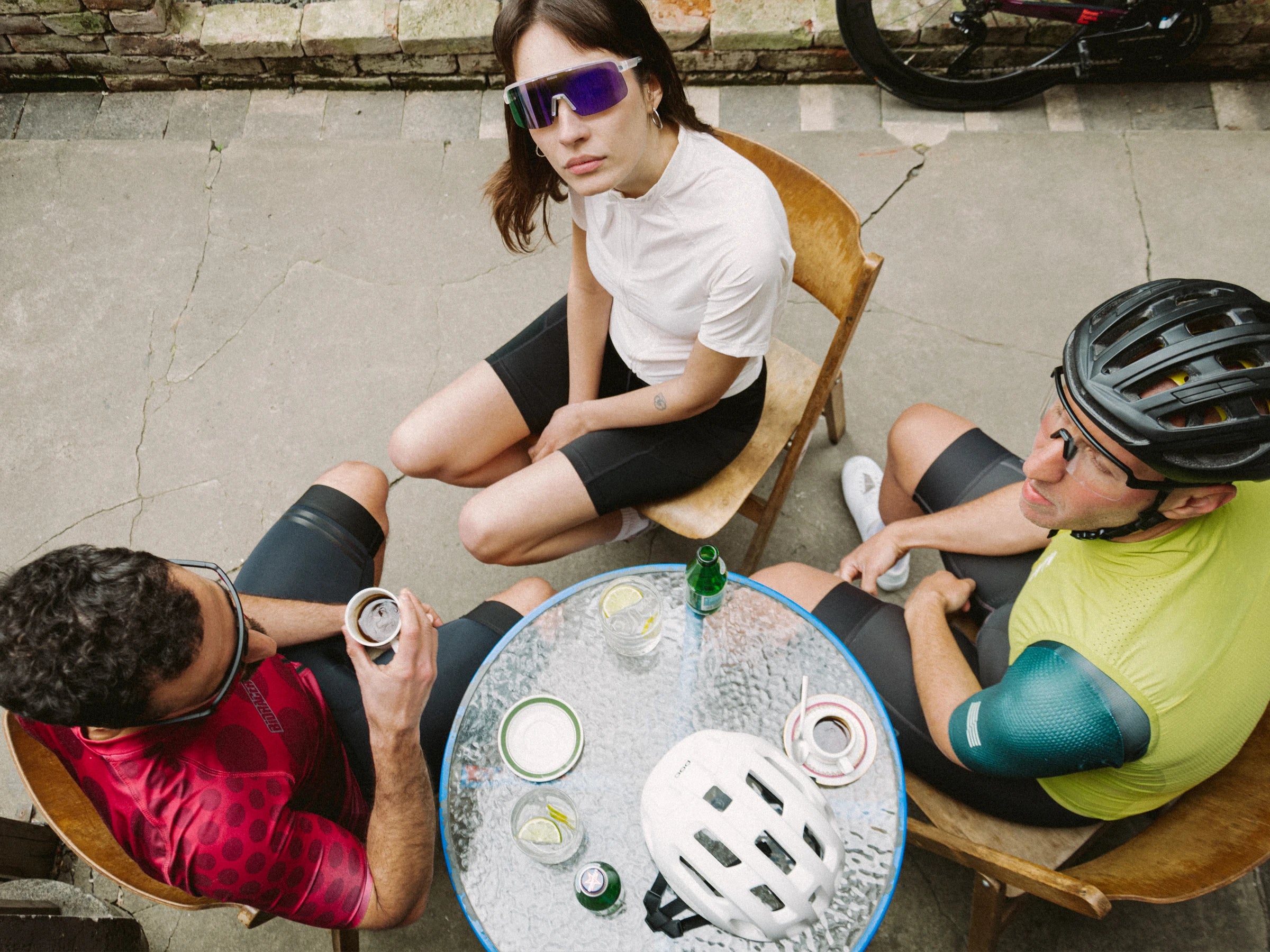
The Velluto StradaPro is the product this brand was built to make. It is not a general sports frame adapted for cycling. Every specification reflects what road cycling actually demands: a weight you stop noticing within two minutes, a fit that stays put through five hours and 2,000 metres of climbing, lenses that can change with the light, and a frame that looks like it belongs at La Vuelta rather than a leisure trip to the coast.
At 25 grams, the StradaPro sits at the lighter end of what is currently available with a full interchangeable lens system. That number matters in a specific way that lighter-than-air marketing language cannot capture: when a frame weighs 25 g, you stop thinking about it. When it weighs 38 g, you notice it on the nose bridge after hour three. The difference is not dramatic in a hand comparison. On a 160 km sportive, it is everything.
The anti-fog system is built into the frame geometry and lens design rather than being a coating that wears off after a season. This distinction matters for late August riding when temperature differentials between a sunny exposed ridge and a shaded valley can swing 8 to 10 degrees Celsius within the same descent. Fogging at the top of a climb, when your speed has dropped and your body heat is at its peak, is a real safety issue on technical descents. A built-in system that works at low speed and in humid conditions is not a luxury feature on road-specific eyewear.
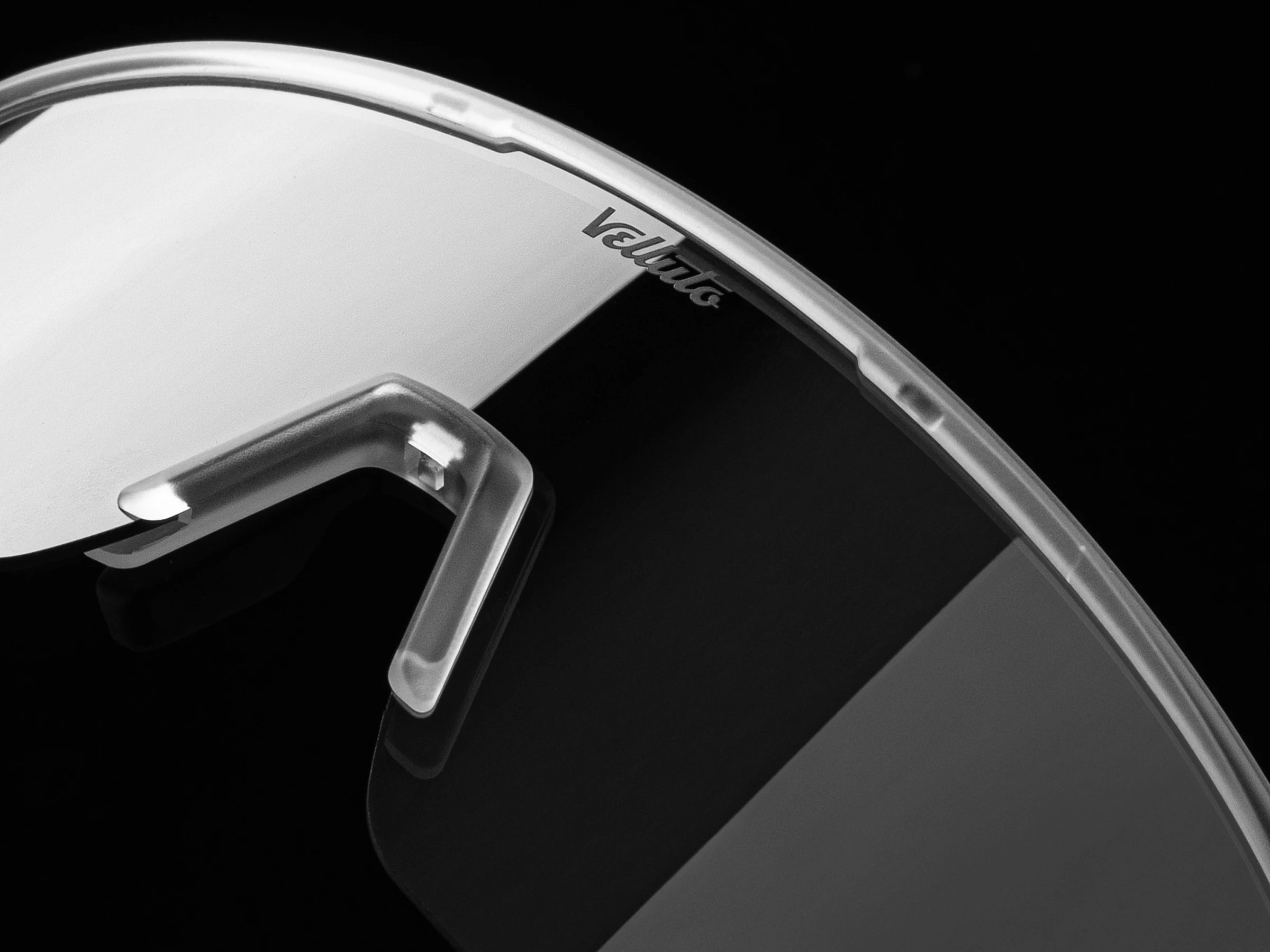
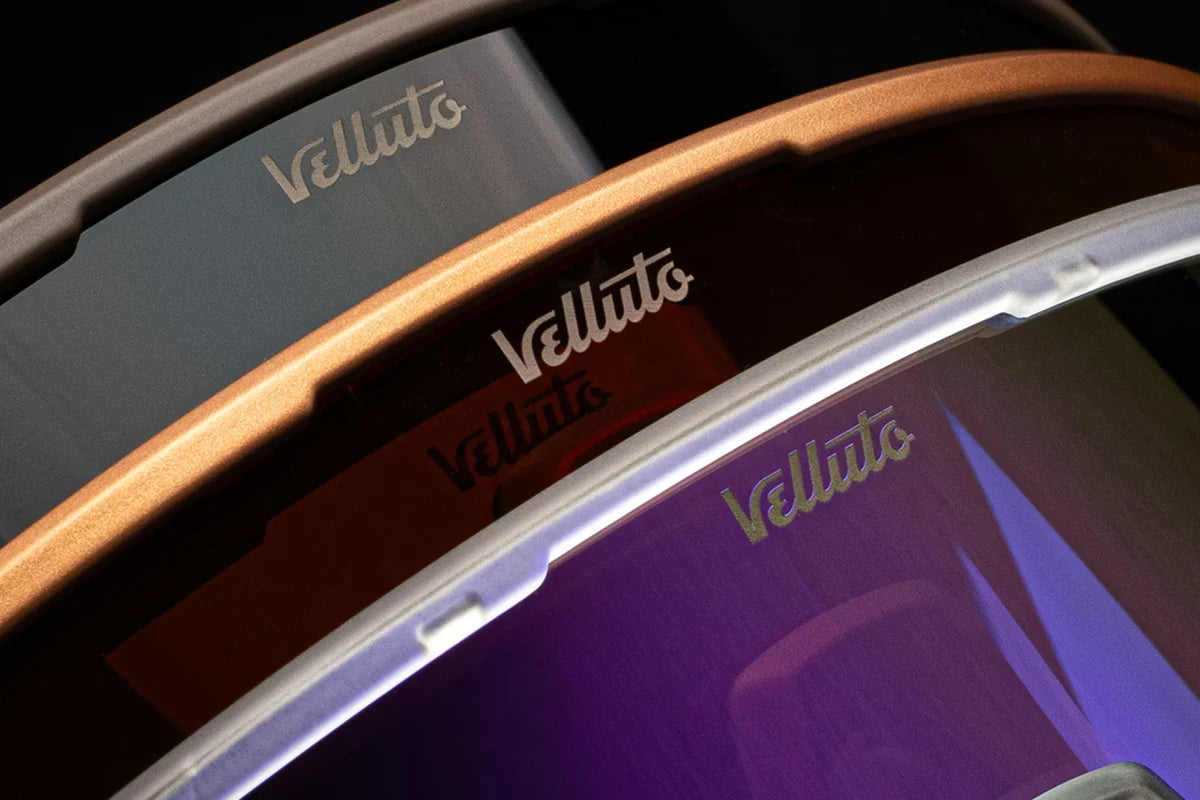
The lens system covers two scenarios with genuine precision. The VellutoPuro transparent lens blocks 100% UVA and UVB with UV400 certification while transmitting virtually all visible light. This is the correct lens for pre-dawn sportive starts, tunnels, and overcast conditions where a tinted lens would reduce visibility dangerously. The VellutoVisione high-contrast lens uses contrast-enhancement technology to sharpen visual definition in variable and bright conditions. For the rider trying to read a gravel road surface at 40 km/h, or pick a line through a technical descent on a wet road, the difference in visual definition is meaningful rather than cosmetic.
Both lenses click in and out without tools in a matter of seconds. The system is designed so you can perform the swap with cycling gloves on, which matters at the start of a morning ride before your hands have warmed up. The frame accepts both lenses in the same way, so there is no asymmetry in fit or field of view between the two.

06 · Lens GuideChoosing Between Clear and High-Contrast Lenses
The single most common question from cyclists buying interchangeable lens glasses for the first time is: which lens do I start with, and when do I swap? Here is a practical answer based on the specific conditions of late summer European road cycling.
Start with VellutoPuro clear on any ride that begins before full sunrise or is forecast to stay overcast. The transparent lens gives you full UV400 protection, maximum wind and insect barrier, and zero reduction in ambient light. If the sun comes up and conditions sharpen into bright direct light, swap to VellutoVisione at the next natural stop: a summit, a coffee point, a regrouping. The click-in system makes this fast enough that it adds no meaningful time to your stop.
Start with VellutoVisione on a ride with a clear sky forecast from the first kilometre. High-contrast lenses are optimised for the conditions where contrast definition matters most: reading shadows on a descent, picking up surface texture on a road you have not ridden before, and managing glare from vehicles or wet roads. If you head into a long tunnel section or the light drops significantly, swap to Puro.
The scenario that trips most riders up is the early-morning mountain sportive. You start in valley shadow at 6:00 am, climb into full sun by 8:30, descend into forest shade by 10:00, and hit open plateau again by 11:00. This is exactly the scenario an interchangeable system is built for. Carry both lenses and swap twice rather than compromising your vision for the sake of convenience.
The lens you start a ride with is not always the lens you should finish it on. Carrying both takes 20 grams of extra weight and solves the problem entirely.Velluto Eyewear Guide, August 2026
One more consideration for long rides: lens cleanliness. Road grime, insect residue, and fingerprints accumulate over extended rides. A microfibre cloth in your jersey pocket and a small cleaning spray kept in a saddle bag are the low-friction solution. Velluto's cleaning spray is 50 ml, refillable, and specifically formulated for cycling lens coatings rather than general glass surfaces. It is a small detail that matters when you are 120 km in and trying to clean your lenses at a food stop without scratching the coating.

07 · ComparisonStradaPro vs the Main Alternatives in 2026
Comparison tables in cycling eyewear content are often built to make one product look like the obvious choice through selective inclusion of specs. This one takes a different approach: it includes the publicly stated specifications from each brand and leaves cells blank where a value is not officially confirmed, rather than inventing a number or implying a negative.
The five frames below represent the brands most commonly appearing in searches for road cycling eyewear in 2026 at comparable price points or directly above. All competitor information comes from the brands' own published product pages and is accurate as of August 2026. Verify current specs directly with each manufacturer before purchasing.
| Feature | Velluto StradaPro | Oakley Jawbreaker | Rudy Project Cutline | Tifosi Alliant | SunGod Velans |
|---|---|---|---|---|---|
| Weight | 25 g | See manufacturer | See manufacturer | See manufacturer | See manufacturer |
| UV protection | UV400 certified | UV protection (verify current spec) | UV protection (verify current spec) | UV protection (verify current spec) | UV protection (verify current spec) |
| Interchangeable lenses | Yes | Yes | Yes | Yes | Yes |
| Anti-fog system | Built-in | See manufacturer | See manufacturer | See manufacturer | See manufacturer |
| Adjustable nose pads | Yes | See manufacturer | See manufacturer | See manufacturer | See manufacturer |
| Design origin | German brand, Italian design | American | Italian | American | British |
| Trial period | 30-day risk-free | See retailer | See retailer | See retailer | See manufacturer |
A note on reading this table: competitor weight and anti-fog specifications are marked "see manufacturer" rather than filled with values that could become outdated or that are not consistently presented across product variants. Oakley's Jawbreaker is a widely respected road frame with a large lens geometry and proven aerodynamic profile. Rudy Project's Cutline has strong heritage in European professional cycling with a detailed fit system. Tifosi's Alliant offers reliable interchangeable lens performance at a lower price point. SunGod's Velans stands out for its colour customisation depth, which is a genuine competitive strength for riders who prioritise matching kit.
The StradaPro's verifiable differentiators within this comparison are the 25 g frame weight, the built-in anti-fog system, and the 30-day risk-free trial that allows you to test the fit and performance on real rides before committing.
08 · Use CasesWhich Frame Works Best for Your Riding
The correct road bike sunglasses for you depend on the specific conditions you ride in most often. Here is how to think through the decision by use case.
Long road sportives (over 100 km): Weight and fit adjustability are the primary criteria. Over five or six hours, a heavier frame creates cumulative nose bridge pressure that a lighter one simply does not. Adjustable nose pads allow you to set the frame so it floats rather than presses. The StradaPro's 25 g weight and adjustable nose pad system were designed with exactly this rider in mind. Anti-fog performance also becomes critical because sportives involve sustained climbing efforts at reduced speed where ventilation drops and fogging risk rises.
Early morning or dawn rides: A clear lens is the right starting lens. The VellutoPuro transparent lens blocks wind, insects, and UV radiation without reducing the low ambient light you need to see the road clearly. If you start with a tinted lens in pre-dawn conditions you are voluntarily reducing your vision for no protective benefit. Carry VellutoVisione in your jersey pocket and swap when the sun is fully up.
Summer mountain riding (Alps, Pyrenees, Sierra Nevada): UV intensity increases with altitude at roughly 10 to 12% per 1,000 metres. At 2,000 metres on an August day, UV levels are materially higher than at sea level. UV400 certified lenses are not optional at altitude; they are a straightforward health requirement. The combination of high sun intensity on the exposed climbs and cool shade on the descents also creates exactly the conditions that test an anti-fog system hardest.
All-weather and variable European conditions: This is the scenario where interchangeable lenses deliver the most obvious value. British, Belgian, and Northern European summer riding frequently involves starting in overcast conditions, experiencing a brief sunny window, and finishing in low evening light. A single tinted lens handles none of these particularly well. A clear lens plus a high-contrast lens handles all of them.
Gravel and mixed surface riding: High-contrast lenses are particularly valuable for mixed surface riding because the ability to read road texture at speed is enhanced by contrast amplification. The VellutoVisione lens is as relevant on gravel as it is on road. The StradaPro's frame fits securely enough under vibration to remain in position on rougher surfaces without the constant repositioning that lighter grip frames require.

09 · Avoiding OverpayingWhat You Are Actually Paying For in High-End Eyewear
Premium cycling sunglasses range from under a hundred euros to well above three hundred euros. At what point does the price stop reflecting meaningful performance gains and start reflecting something else?
At the lower end of the market, the trade-offs are real: less consistent UV certification, heavier frames using less refined materials, lens swap systems that require tools or that degrade with use, and fit systems that rely on fixed nose bridges. These limitations matter for serious riders and justify spending more.
Moving into the mid-market and above, the picture becomes less linear. The performance gains from doubling the price are not always proportional. What you are sometimes paying for at the top of the market is brand heritage, professional cycling sponsorship, retail distribution costs, and aesthetic status. These are legitimate reasons to buy a specific product if they matter to you. They are not the same as performance.
The features that genuinely justify price in road cycling sunglasses are: documented UV400 certification, a frame weight below 30 g, a tool-free interchangeable lens system, a built-in (not coating-based) anti-fog system, and adjustable fit. A frame that has all five of those and costs less than a frame that has three of them is the better performance purchase, regardless of the logo on the temple.
The features that are sometimes used to justify premium pricing but that require scrutiny: photochromic tint (convenient but limited, and the chemistry degrades), proprietary lens coatings with trade names but no published specifications, and aerodynamic claims that are not meaningful at sportive-level speeds. If a brand's case for its price rests heavily on any of those three, consider whether the underlying frame and lens fundamentals justify the cost independently.
One practical signal worth noting: a brand that offers a genuine risk-free trial period is confident enough in its product's real-world performance to invite you to test it on the road before committing. That kind of confidence is itself a quality signal. Velluto's 30-day trial exists because the StradaPro is designed to be ridden before you decide.


10 · AccessoriesThe Kit That Makes Good Glasses Work Better
The right accessories extend the life of your lenses and make mid-ride maintenance effortless. Three items are worth keeping in your kit alongside your cycling glasses.
A hard case is the one accessory that most cyclists underestimate until the first time they open their bag after a rough sportive and find a scratched lens. The Velluto hard case is built with an anti-crash guarantee and a velvet interior that will not abrade lens coatings. It fits all road cycling glasses and is narrow enough to fit without rearranging a saddle bag. If you carry a second lens for swapping, the case holds both safely.
A quality microfibre cloth matters more than most cyclists expect. The difference between a 25x25 cm cloth made from 80% polyester and 20% polyamide and a generic cloth is measurable in how cleanly it removes grime without leaving residue or creating micro-scratches on coated lenses. The Velluto cloth is sized specifically for this purpose and fits in a jersey pocket without taking up meaningful space.
A dedicated lens cleaning spray avoids the lens-coating damage that household glass cleaners can cause. Velluto's cleaning spray is 50 ml (jersey-pocket friendly), apple-scented rather than solvent-smelling, refillable from a standard bottle, and made in Germany. It is formulated for cycling lens coatings rather than general glass surfaces, which matters when you are cleaning a UV400 lens you want to last several seasons.

11 · Quick PicksSummary: Which to Choose
If you want a straightforward decision guide without re-reading the whole article, use this.
Buy the StradaPro with VellutoPuro if: most of your riding is in variable or low light, you do pre-dawn starts, or your route includes long tunnel sections. The clear lens gives you maximum visibility across all light conditions with full UV400 protection and no visible light reduction. It is also the right choice if you are new to interchangeable lens glasses and want to start with one lens before building out your system.
Buy the StradaPro with VellutoVisione if: most of your riding is in full sun, you do a lot of high-altitude or summer riding where contrast definition on descents matters, or your primary condition is variable cloud and sun that creates sharp contrast shifts on the road surface. The high-contrast lens is also the better choice for gravel sections and mixed surface riding.
Buy the Starter Vision Kit: if you want both lenses from day one and prefer to carry the full system without making an initial choice. The kit includes the StradaPro frame and both lenses in a single purchase, which is the most practical starting configuration for a rider who plans to use the glasses across different seasons and conditions.
Consider the competition if: you specifically want a photochromic lens that adapts without manual swapping and you are willing to accept the cold-temperature and tunnel limitations that come with it. Oakley, Rudy Project, and several other brands offer photochromic options at this level and they are worth considering for riders who prioritise automatic adaptation over full lens control. If colour customisation depth is your main criterion, SunGod's system for personalising frame and lens colour is a genuine strength that no other brand in this market matches at their price point.

Compare the full lineup in the Velluto StradaPro cycling glasses collection.
12 · FAQFrequently Asked Questions
What are the most important features in road bike sunglasses for 2026?
How light should road cycling sunglasses be?
What is UV400 protection and why does it matter for cyclists?
Are interchangeable lenses worth it for road cycling?
What is the difference between VellutoPuro and VellutoVisione lenses?
Do road cycling sunglasses fog up on climbs?
Are photochromic lenses better for road cycling than interchangeable lenses?
How should road bike sunglasses fit to avoid pressure on long rides?
What is the Velluto 30-day risk-free trial?
The best road bike sunglasses for 2026 are the ones you stop noticing after two minutes and trust completely for five hours. Certified protection, a weight your face forgets, lenses that match the light, and a fit that stays put through every climb and descent: those four things, done right, are the complete brief. If you want to start with the frame that was built specifically around that brief, the StradaPro is waiting for you at velluto-shop.com, with a 30-day trial that lets the road make the decision for you.