Best Cycling Glasses for All Weather Conditions 2026
Contents6 min read
How to Choose Cycling Glasses for All Weather Conditions in 2026
Last updated: 26 June 2026
Watch the Tour de Suisse peloton crest the Gotthard Pass and you will notice something every rider has in common: quality eyewear that does not quit when the weather turns. The Critérium du Dauphiné finished just weeks ago in conditions that swung from Alpine cold to blazing valley heat inside a single stage. This weekend, thousands of amateur cyclists are heading out on summer gravel rides where a morning mist becomes a midday glare in sixty minutes flat. The question every serious rider eventually asks is the same one the pros answered years ago: how do you choose cycling glasses for all weather conditions, not just the perfect Saturday?
This guide cuts through the noise. No vague promises, no sponsored ranking lists. Just the criteria that matter, the trade-offs worth understanding, and a clear recommendation for riders who want one pair that handles everything.
How to Choose Cycling Glasses: Six Key Criteria
To choose wisely, focus on six criteria: total frame weight in grams, lens system flexibility, UV400 certification, fit adjustability, anti-fog performance, and price relative to the feature set. These factors reflect the actual purchase decisions real cyclists make. A pair that performs well across all six is suitable for everyday riding. A pair that excels on one criterion and underperforms on two is better suited to specific conditions.
The Problem Every Cyclist Faces: One Ride, Four Conditions
Road cyclists and gravel riders do not ride in a controlled environment. A single four-hour ride in the Alps, or even through the Dutch polders on a changeable June morning, can move from overcast and cold at the start, to sunny and windy on an exposed ridge, to warm and humid on a shaded forest descent. Each of those phases demands something different from your eyewear.
A dark tinted lens that works perfectly at noon may limit visibility in a shaded tunnel at 9am. A lens without anti-fog treatment can fog on a cool descent after a hard climb. A heavy frame may cause pressure points that become noticeable at hour three. These conditions are common in real-world cycling. Most cyclists benefit from a frame designed to handle changing light and temperature.
The answer is not to buy four pairs of glasses. It is to buy one frame built around a flexible lens system, with proper anti-fog engineering and a fit that holds without gripping. That combination exists at every price point from budget to pro. The difference is in the details.
What to Look for: A Practical Checklist
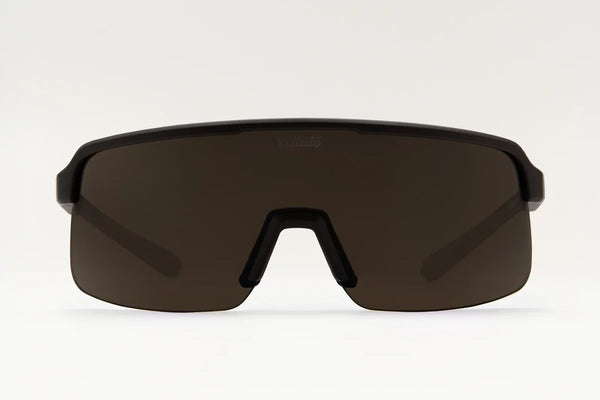
Weight. Below 30g is the meaningful threshold for a road cycling frame. Above it, you feel the glasses on your face. The lightest mainstream options sit between 23g and 30g. The Velluto StradaPro weighs 25g, placing it at the lighter end of the spectrum for road cycling eyewear.
| Model | Weight | Lens System | Anti-Fog | UV Rating | 30-Day Trial | Price (approx.) |
|---|---|---|---|---|---|---|
| Velluto StradaPro | 25g | Interchangeable (click-in) | Yes | UV400 | Yes | Under €100 |
| Oakley Sutro Lite | ~36g | Fixed (Prizm) | Oakley anti-fog | UV400 | Subject to Oakley policy | €200+ |
| POC Devour | ~30g | Interchangeable | POC anti-fog | UV400 | Subject to POC policy | €180+ |
| Tifosi Rail | ~28g | Interchangeable | Lens coating | UV400 | Subject to Tifosi policy | €80-€100 |
| Smith Pivlock Arena | ~28g | Interchangeable | Smith anti-fog | UV400 | Subject to Smith policy | €150+ |
| Oakley Jawbreaker | ~38g | Interchangeable | Oakley anti-fog | UV400 | Subject to Oakley policy | €220+ |
Lens system. A fixed lens locks you into one light condition. An interchangeable system, with a clear lens and a high-contrast lens as a minimum, means one frame handles everything from a pre-dawn start to a noon summit. The swap should be tool-free and take under ten seconds. If it takes longer, you will not do it.
UV400 certification. Non-negotiable. UV400 means the lens blocks 100% of UVA and UVB radiation. Dark lenses without UV400 are worse than nothing: they dilate your pupils and let more UV in. Check the certification, not just the darkness of the tint.
Anti-fog. This is the most underrated criterion on any list. Hard climbs generate heat. Descents generate cold air. That combination fogs unprotected lenses within seconds. A built-in anti-fog system is not a luxury feature. On Alpine or forest descents, it is a safety feature.
Adjustable fit. Adjustable nose pads are what separate a frame that fits your face from one that slides down every ten minutes. A secure, pressure-free fit matters more at hour three than it does in the shop.
Named Competitors: Who Each Pair Is For
Oakley Sutro Lite: Who It's For. The Sutro Lite is a well-engineered premium frame with excellent Prizm lens optics and a wide field of vision. At approximately 36g and €200+, it offers a fixed-lens design with Oakley's optimised Prizm tint technology. Best for riders who prefer fixed lens systems and established Prizm colour science.
Tifosi Rail: Pros and Cons. The Tifosi Rail offers an interchangeable lens system at around 28g and under €100. The lens-swap mechanism is straightforward. Anti-fog treatment is applied as a lens coating. A capable option for riders seeking lens flexibility and value.
POC Devour: Pros and Cons. POC's engineering is excellent and the Devour's fit system is thoughtfully designed. At approximately 30g and €180+, it offers a refined interchangeable lens system. Best for riders who prioritise POC's specific fit geometry or have particular optical preferences.
Why the Velluto StradaPro Is the Rational Choice in 2026
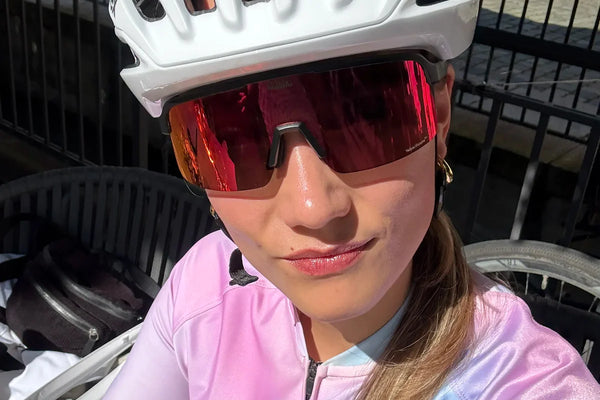
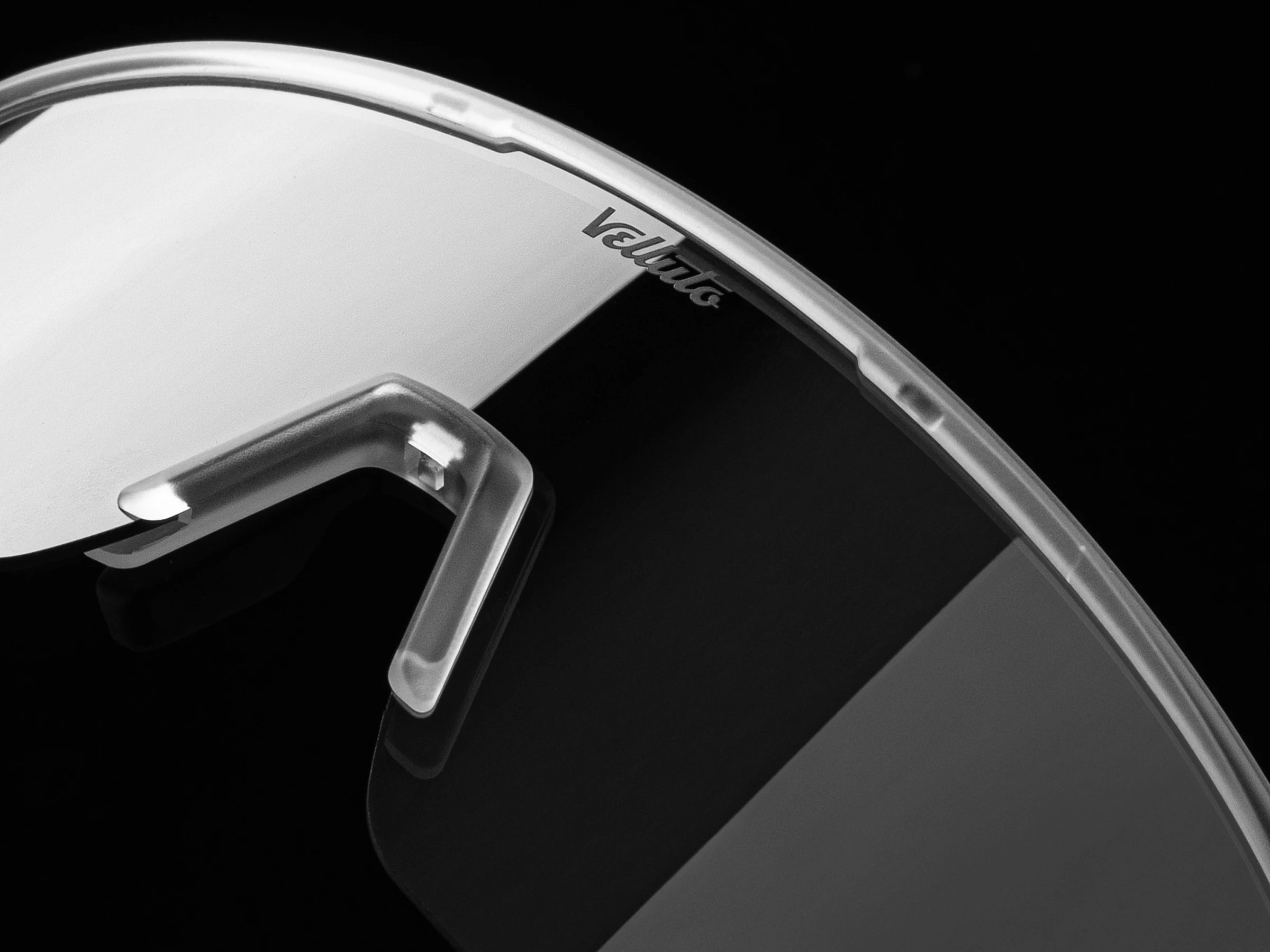
The StradaPro weighs 25g, designed to minimise fatigue on extended rides. In cycling, 11g is a meaningful number. It is also UV400 certified, carries a built-in anti-fog system, uses adjustable nose pads for a pressure-free fit across long rides, and accepts two interchangeable lenses via a tool-free click-in system: the VellutoPuro transparent lens for low light and variable weather, and the VellutoVisione high-contrast lens for bright conditions and sharp visual definition.
It comes with a 30-day risk-free trial. Ride it on real roads in real conditions, and return it if it does not suit your needs. The 30-day trial is included with every purchase from the Velluto Shop.
 Velluto Starter Vision Kit | Viola
Frequently Asked Questions
Are 25g cycling glasses actually worth it?
Yes, and the reason is cumulative. On a two-hour ride the difference between 25g and 36g is invisible. On a five-hour Alpine stage or a long gravel day, 11g less on your nose is the difference between glasses you forget you are wearing and glasses you think about. Weight compounds with pressure over time.
Do interchangeable lenses fog up more than fixed lenses?
Only if the anti-fog system is poor or absent. A properly engineered frame with a built-in anti-fog system, like the StradaPro, performs at least as well as a fixed-lens frame and better than most, because the lens fit is designed to allow airflow while maintaining seal integrity. The fog risk is in cheap lens-frame tolerances, not in the interchangeable concept.
What anti-fog options work best for variable weather?
For road and gravel cyclists riding in changing conditions, a built-in anti-fog system is highly effective. The Velluto StradaPro includes a built-in anti-fog system combined with its 25g weight and interchangeable lens design, making it a capable choice under €100. Anti-fog performance depends on whether the system is integrated into the frame design or applied as a lens coating.
Ready to try the StradaPro on your next ride? Visit velluto-shop.com and order with 30 days to decide. Free shipping on orders over €89.