Anti Fog Cycling Glasses: What Actually Works in 2026
Contents24 min read
You are twelve kilometres into a fifteen-kilometre climb, sitting at 260 watts in the July heat of the Pyrenees. Your speed has dropped to fourteen kilometres per hour. Somewhere around kilometre ten, your lenses went white. You are effectively riding blind through the upper hairpins of a mountain pass, trying to wipe a fog layer off the inside of a lens with your glove, which makes everything worse. This is not a fringe scenario. It is what happens to cycling glasses that were not designed for the specific physics of a slow, sweating climb.
Anti fog cycling glasses have been a marketing claim for decades. Every brand puts something on the box. But there is a real difference between a hydrophilic coating that delays fogging by thirty seconds and a ventilated frame architecture that actively moves warm air away from the lens surface throughout a two-hour ascent. Understanding which approach works, and why, is worth more than any number of influencer reviews before you buy.
This guide covers the actual physics of fogging, what frame design does versus what lens coatings do, how fit affects the problem, and what to look for when choosing glasses for long mountain rides. The 2026 season has brought a new wave of cyclists through the Alps and Pyrenees for Tour de France amateur camps and club trips, and the question comes up constantly: why are my glasses still fogging even though the box said anti-fog?
The answer is usually in the engineering, not the label.
01 · The PhysicsWhy Cycling Glasses Actually Fog Up
Fogging is a condensation event. It happens when warm, moisture-laden air contacts a surface that is cooler than the dew point of that air. Water vapour shifts from a gaseous state into liquid droplets, and those droplets scatter light. What was a transparent lens becomes a diffuser screen.
Inside a cycling frame, the warm air source is you. Your face radiates heat continuously, and when you are working hard on a climb, that heat output increases significantly. The moisture source is also you: perspiration from your brow and forehead evaporates into the air immediately in front of your face. The cooler surface is the lens, which is exposed on its outer face to ambient air. If the ambient temperature is lower than your skin temperature, and it almost always is on a mountain pass above 1,500 metres, then the lens interior will be cooler than the air your face is producing.
At high road speeds, say 40 kilometres per hour on a descent, the airflow through and around the frame is sufficient to continuously replace the warm humid air near your face with cooler, drier ambient air. The temperature differential across the lens surface is constantly equalised. Fogging does not occur because the conditions for condensation are never allowed to stabilise.
On a climb at fourteen kilometres per hour, that convective airflow essentially disappears. The air inside the frame becomes stagnant. Your face continues to produce heat and moisture. The lens surface cools from the outside. The dew point is reached, and condensation forms on the inner lens surface. The harder you are working, meaning the higher the humidity and heat your face is producing, the faster this happens.
There are three variables the frame designer can control: the rate at which humid air is removed from inside the frame, the temperature differential between inner and outer lens surfaces, and the area of lens surface that is exposed to both air sources simultaneously. Everything else, including coatings, is a modification of what happens after the humid air has already arrived at the lens.
02 · Frame DesignVentilation Architecture: The Only Permanent Solution
Frame ventilation design is the primary engineering lever in anti-fog performance. The goal is to create a continuous, passive airflow path that moves warm humid air away from the inner lens surface even at low forward speeds. This is harder than it sounds, because the same design that maximises airflow also reduces protection against wind and insects, and it makes the frame less effective at blocking peripheral light. Every manufacturer is making a trade-off between these competing requirements.
The two broad approaches are open-frame ventilation and lens-level ventilation channels.
Open-frame ventilation means the frame geometry itself creates gaps or channels between the frame body and the face. The upper portion of the frame, which sits closest to the brow, is the most important zone. This is where the warmest, most humid air from your forehead accumulates. A frame that curves tightly against the brow with no gap will trap this air. A frame that holds the lens slightly forward and allows a gap at the top of the orbital creates a convection path: warm air rises and escapes upward and out of the frame while cooler ambient air is drawn in from below or around the sides.
Lens-level ventilation channels are moulded into the lens itself or into the bridge and temple arms at specific points. When air does move through the frame at speed, these channels direct it across the inner surface of the lens in a controlled way, sweeping moisture before it condenses. The most effective designs combine both approaches: frame geometry that creates passive airflow paths at low speed, plus moulded channels that accelerate and direct airflow when forward speed is higher.
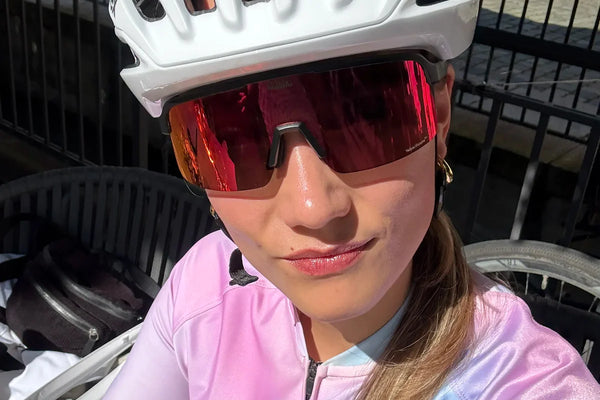
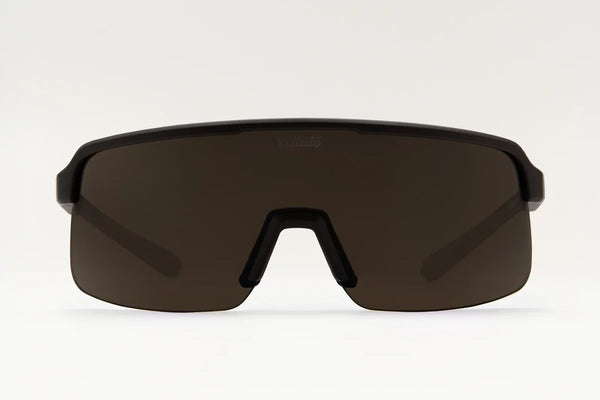
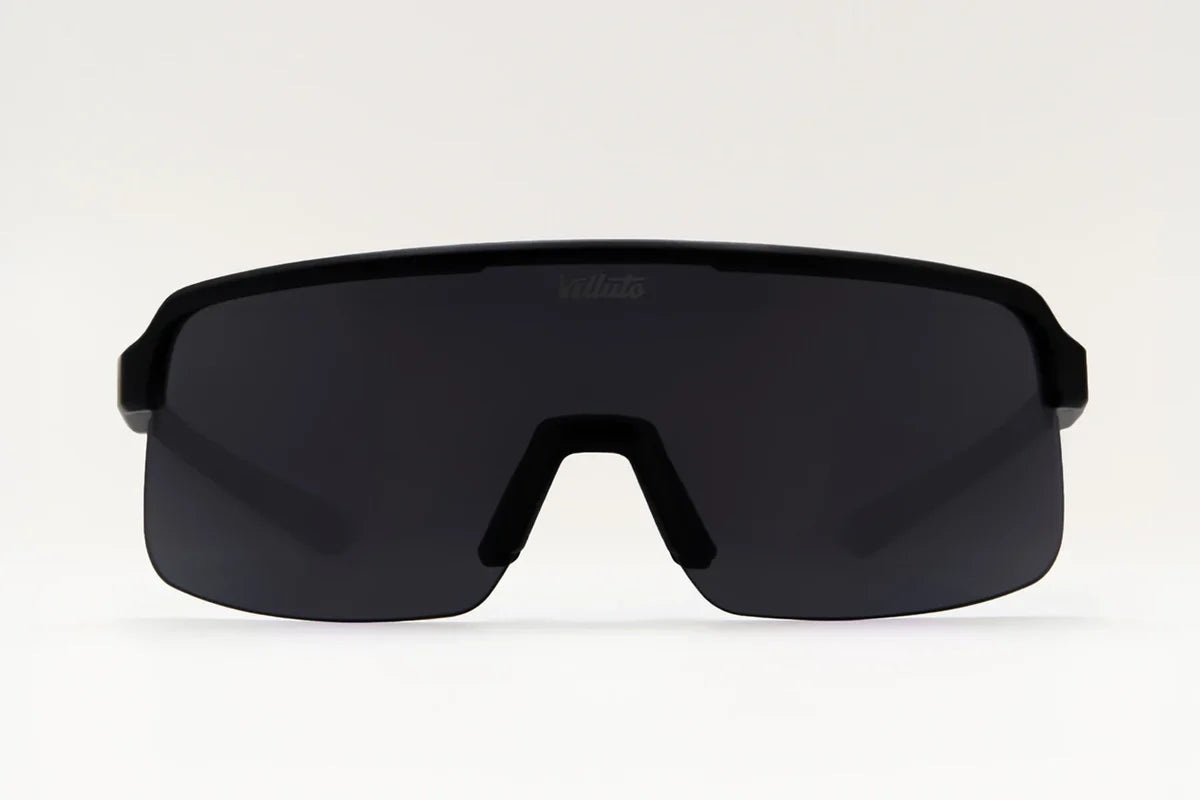
The Velluto StradaPro uses a built-in anti-fog system that addresses this from the frame geometry outward. The frame profile is designed to maintain a controlled air exchange path even on slow climbs, where rider-generated airflow is minimal and the fogging risk is highest. The adjustable nose pads play a direct role here: they allow you to set the precise stand-off distance between the frame and your face, which determines the width of the airflow gap at the brow and cheeks. A rider with a wider face can adjust the pads to maintain the same functional gap as a rider with a narrower face. This matters because if the pads press the frame flush against your face, you seal the ventilation path regardless of how well the frame geometry was designed.

One underappreciated design element is the frame's cross-section at the temple. Frames with a wide, solid temple arm that sits flush against the side of the head create a seal effect at the outer edge of the lens. Airflow from the sides is blocked. Frames with a thinner or perforated temple arm allow side-entry air to pass through the frame cavity, adding a lateral component to the airflow path. On a hot climb in still air, this lateral path can make a measurable difference.
Weight also plays an indirect role. A heavier frame has greater thermal mass and takes longer to warm up to ambient temperature. During the early part of a climb, before the frame has equilibrated with the surrounding air, the lens is more likely to be cool enough to trigger condensation. A 25-gram frame reaches thermal equilibrium with its surroundings faster than a 40-gram frame, which means the fogging-risk window at the start of a climb is shorter. This is a secondary effect compared to airflow design, but it is a real one.
03 · CoatingsWhat Hydrophilic and Anti-Fog Treatments Can and Cannot Do
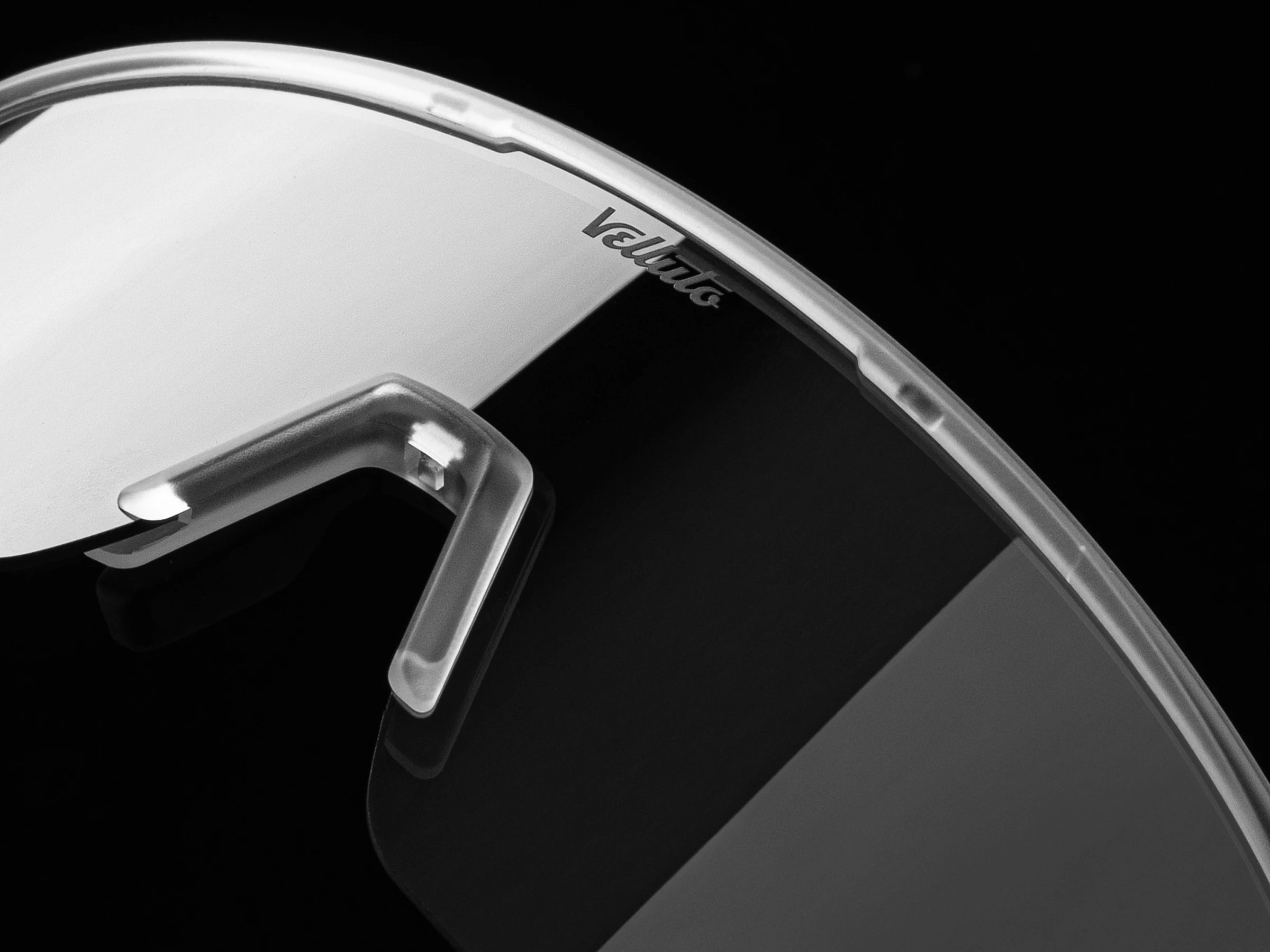
Anti-fog coatings are hydrophilic treatments applied to the inner lens surface. The word hydrophilic means water-attracting, and the mechanism is counter-intuitive: the coating does not repel water. It spreads water molecules into an ultra-thin, uniform film across the lens surface instead of allowing them to cluster into discrete droplets. Droplets scatter light because each one acts as a tiny lens, refracting incoming light at a different angle. A uniform thin film transmits light much more evenly, which is why it appears transparent even when the lens is technically wet.
This is genuinely useful technology. A well-formulated hydrophilic coating can delay the visible onset of fogging significantly, and in conditions where fogging is mild, it can prevent it entirely. The limitation is physical: the coating has a finite water absorption capacity. On a sustained thirty-minute climb in high humidity with high exertion, the coating becomes saturated. At that point, it stops spreading water and starts behaving like an uncoated surface. Fog appears, and there is nothing the coating can do until conditions change.
The second limitation is durability. Hydrophilic coatings are soft and surface-active by design. They degrade with every cleaning cycle, especially if you wipe with an abrasive cloth or use alcohol-based cleaning products. A coating that performs well on the first ten rides may be significantly degraded by ride fifty. This means anti-fog performance from a coating-dependent design is not a constant, it is a declining function of use.
A ventilation design that moves air across the lens surface works on ride one and ride five hundred. A coating that does the same job works on ride one and progressively less well on every ride after that.Velluto Technical Notes, 2026
Hydrophobic coatings, sometimes confused with anti-fog coatings, work on the opposite principle: they repel water, causing droplets to bead up and roll off the outer lens surface. These are effective for rain conditions on the outer face but have no useful anti-fog effect on the inner surface, because the fog droplets on the inner face are forming from warm humid air, not from external water landing on the lens. A hydrophobic outer coating and a hydrophilic inner coating can be used together, serving different functions on each face of the lens.
The practical implication for buyers is this: if a glasses brand leads with coating technology as its primary anti-fog selling point, ask what happens to that performance after one hundred washes and two seasons of riding. If a brand leads with frame ventilation architecture as its primary solution, the underlying physical mechanism does not degrade with use in the same way. Both approaches can be combined, and the best designs do combine them, but ventilation architecture should be the foundation and coating should be the supplement, not the reverse.
04 · Lens ChoiceClear vs High-Contrast for Mountain Conditions
The anti-fog performance of a frame does not change with lens colour. What does change is your ability to see clearly at different light levels, and this has a secondary effect on fogging behaviour that is worth understanding.
When light is low or flat, for example on the upper slopes of an Alpen pass in early morning or under overcast skies, a dark tinted lens forces you to squint to see the road surface clearly. Squinting tenses the muscles around your eyes and brow, which compresses the gap between frame and face at the top of the orbital. It also directs the warm air from your nose and mouth upward and toward the lens interior. Neither effect is large, but both close the airflow gap that your frame geometry has been designed to maintain. In other words, an incorrectly tinted lens for the conditions can partially defeat your frame's ventilation design.
For mountain stages with variable light, this is where interchangeable lenses become a functional advantage rather than just a marketing feature. The Velluto StradaPro Starter Vision Kit pairs the frame with both the VellutoPuro clear lens and the VellutoVisione high-contrast lens. Both carry UV400 certification, meaning 100% UVA and UVB protection regardless of the visible light transmission. The VellutoPuro is optimised for low-light and variable weather conditions, keeping the visual field open and reducing squinting. The VellutoVisione sharpens contrast definition on bright exposed climbs, making road surface texture and hairpin edges easier to read at distance.
The click-in system is tool-free. On a typical Alpine or Pyrenean stage, you might start the day's ride with VellutoPuro in place for the cool, shaded valley roads, click in the VellutoVisione for the bright upper slopes of the col, and revert to VellutoPuro for the long north-facing descent into the next valley. The swap takes seconds without stopping, and the mechanical connection is secure enough that the lens does not rattle or move under vibration from road surface.

UV protection becomes more important at altitude, not less. UV radiation increases by approximately 10 to 12 percent per 1,000 metres of elevation gain. A rider summiting a 2,500-metre Pyrenean col is receiving roughly 25 to 30 percent more UV radiation than they would at sea level, even on a cloudy day, because cloud cover blocks only a portion of UV. UV400 certification means the lens blocks all wavelengths up to 400 nanometres, covering both UVA and UVB completely. This is the relevant standard for altitude riding and should be verified, not assumed, on any lens you choose.
05 · FitWhy Adjustability Is an Anti-Fog Feature, Not a Comfort Accessory
The cycling industry tends to present adjustable nose pads as a comfort feature, which they are. But for anti-fog performance, adjustability is a functional engineering requirement.
The passive airflow path inside a cycling frame is defined by the geometry between the frame body and the rider's face. The frame designer can optimise this geometry for a statistical average face, but faces vary in width, nose bridge height, cheekbone prominence and orbital depth in ways that span several centimetres across a typical adult population. A frame that sits with a 4-millimetre gap at the brow on a face that matches the design assumption may sit flush, with zero gap, on a face with higher cheekbones or a lower nose bridge. That rider, wearing exactly the same frame, has no passive airflow path and will experience fogging in conditions where the design should prevent it.
Adjustable nose pads allow the rider to set the stand-off distance precisely for their own face geometry. More nose pad height moves the frame slightly away from the face, opening the upper airflow gap. Less nose pad height brings the frame closer, which increases wind protection but reduces ventilation. On a long climb in humid conditions, you want slightly more stand-off. On a fast, cool descent where wind is cold and direct, you want slightly less. This is a real, adjustable dial, not a marketing claim.
The StradaPro's adjustable nose pads also address comfort in the way most cyclists are familiar with: eliminating pressure points during rides over two hours. A pad that creates a fixed high-pressure contact point on the nose bridge will cause enough discomfort to distract from riding by the third hour, and discomfort causes face movement and frowning that closes airflow gaps. So comfort and ventilation are served by the same adjustment. A well-fitted frame with adjustable pads is one of those design details where solving one problem also solves another.
06 · ComparisonAnti-Fog Cycling Glasses in 2026: What to Look For
The market for road cycling eyewear in 2026 ranges from sub-30 EUR fashion frames to engineering-led performance pieces above 200 EUR. Anti-fog performance is not strongly correlated with price in this market. Some expensive frames with tight wraparound geometry fog badly on climbs. Some mid-range frames with open ventilation stay clear throughout. The variables that predict anti-fog performance are specific and identifiable, and you can assess them before buying if you know what to look for.
Below is a structured comparison of the key criteria to evaluate. The Velluto StradaPro values are confirmed specifications. For other frames, independently verify current manufacturer specifications before purchasing, as product details change between seasons.
A few specific frames come up frequently in the conversation about anti-fog performance for road cycling in 2026. Here is an honest overview of the landscape.
Oakley's Sutro Lite is a well-regarded road option with an open shield design that provides airflow at the upper frame edge. It weighs approximately 26 grams. The frame features a fixed nose bridge geometry. The lens ecosystem is extensive, with multiple lens options available.
POC's Aspire is a wraparound design optimised for wind protection and peripheral light blocking. It weighs around 28 grams. The build quality and optical clarity are high.
Tifosi's Rail has an open upper frame that provides ventilation, and the Toric lens geometry offers optical coverage. Nose bridge adjustability varies by variant.
Roka's SR-1X is a lightweight option at approximately 20 grams with an adjustable nose bridge. The open-frame architecture provides airflow at low speeds. Roka has invested in lens ventilation geometry. The lens ecosystem is available in multiple options.
The Velluto StradaPro sits at 25 grams with a built-in anti-fog system, UV400 certified lenses, adjustable nose pads, and a tool-free click-in system compatible with VellutoPuro clear and VellutoVisione high-contrast lenses. It comes with a 30-day risk-free trial, meaning you can test it on actual climbs in actual conditions before your purchase is final. That trial policy is the clearest signal of confidence in the product's real-world performance.
The table below organises the key anti-fog relevant specifications for orientation. Always verify current competitor specifications directly from manufacturer sources, as these change between seasons.
| Glasses | Weight | Anti-Fog System | Nose Adjustment | Lens Swap | UV400 | Trial Period |
|---|---|---|---|---|---|---|
| Velluto StradaPro | 25 g | Built-in ventilation system | Adjustable pads | Click-in, tool-free | Certified | 30 days risk-free |
| Oakley Sutro Lite | ~26 g | Open shield geometry | Fixed bridge | Interchangeable | Yes | See manufacturer |
| POC Aspire | ~28 g | Wraparound coverage | Adjustable | Interchangeable | Yes | See manufacturer |
| Tifosi Rail | ~28 g | Open upper frame | Variant-dependent | Interchangeable | Yes | See manufacturer |
| Roka SR-1X | ~20 g | Open-frame architecture | Adjustable | Interchangeable | Yes | See manufacturer |
07 · Product PickVelluto StradaPro: The Anti-Fog Case
The StradaPro is the product that Velluto was built around. It is designed specifically for road cycling, with Italian aesthetics and a German engineering approach to the functional details. The anti-fog system is not a coating added as an afterthought to a fashion frame. It is built into the frame geometry from the design stage, with the passive airflow path defined by the frame profile and the adjustable nose pads working together to maintain that path across different face shapes.
At 25 grams, the frame reaches thermal equilibrium with ambient air quickly, which shortens the fogging-risk window at the beginning of a climb before the rider's body heat has fully loaded the space inside the frame. The UV400 certification is complete, covering all UVA and UVB, relevant at any altitude from sea-level stages to Pyrenean cols above 2,000 metres.
The Starter Vision Kit bundles the StradaPro frame with both the VellutoPuro clear lens and the VellutoVisione high-contrast lens, giving you the two most useful light conditions covered in a single purchase. The click-in system for both lenses is identical, and the swap is secure and fast enough to do on a quiet section of road without stopping the clock.
If you want to test anti-fog performance on real climbs before committing, the 30-day trial removes the risk entirely. Ride it on the ascents where your current glasses fog. If the StradaPro does the same, return it. It is a direct, honest offer from a brand that is confident in what the product does.

08 · Lens CareCleaning Without Destroying Anti-Fog Performance
Lens care is where most riders inadvertently degrade whatever anti-fog performance their glasses had when new. The cleaning habits that work on a phone screen or a standard sunglass lens can actively damage a performance cycling lens.
The inner lens surface is the most sensitive face. This is the side that your frame's anti-fog design is trying to protect, and any hydrophilic treatment layer applied there is thin and mechanically soft. Wiping the inner face with a dry cotton jersey or a rough cloth, even once, introduces microabrasions that break the uniform surface structure of the coating. Once that structure is compromised, water does not spread in a uniform film; it finds the abraded channels and pools in them, creating visible blotching and eventually the same fog droplet pattern as an uncoated lens.
The correct approach for the inner surface is as little contact as possible. If you see condensation forming during a ride, do not wipe. Increase forward speed briefly if you can, or create airflow by moving the frame slightly forward from your face to open the ventilation gap. The condensation will clear as conditions change. If the inner surface has accumulated dust or skin oils, the cleaning sequence should be: rinse with clean water first, then use a purpose-made optical cleaning spray, and only then apply a clean microfibre cloth with minimal pressure in a single direction.
The Velluto Cleaning Spray is 50 ml, apple-fragrance, refillable, and made in Germany. It is formulated for optical lens surfaces and is gentle on surface treatments. The Velluto Microfiber Cleaning Cloth, at 25x25 cm in an 80% polyester / 20% polyamide blend, is the correct tool for the job. The polyamide content is what gives it the optical-grade softness that polyester alone does not provide.

For the outer lens surface, the protocol is more forgiving. Hydrophobic outer coatings, if present, are more durable than inner hydrophilic coatings. Still, the same spray-then-microfibre sequence is the correct approach. Avoid alcohol-based cleaners, which strip protective coatings and can degrade frame materials at contact points over time.
After a long alpine stage where your glasses have been exposed to sunscreen, sweat, and road spray simultaneously, a full clean immediately after the ride is better than leaving residue to dry on the surface overnight. Dried sunscreen in particular bonds to lens coatings under heat and is significantly harder to remove cleanly after twenty-four hours than it is when still fresh.
09 · Colour VariantsFour Colours, Same Anti-Fog Architecture
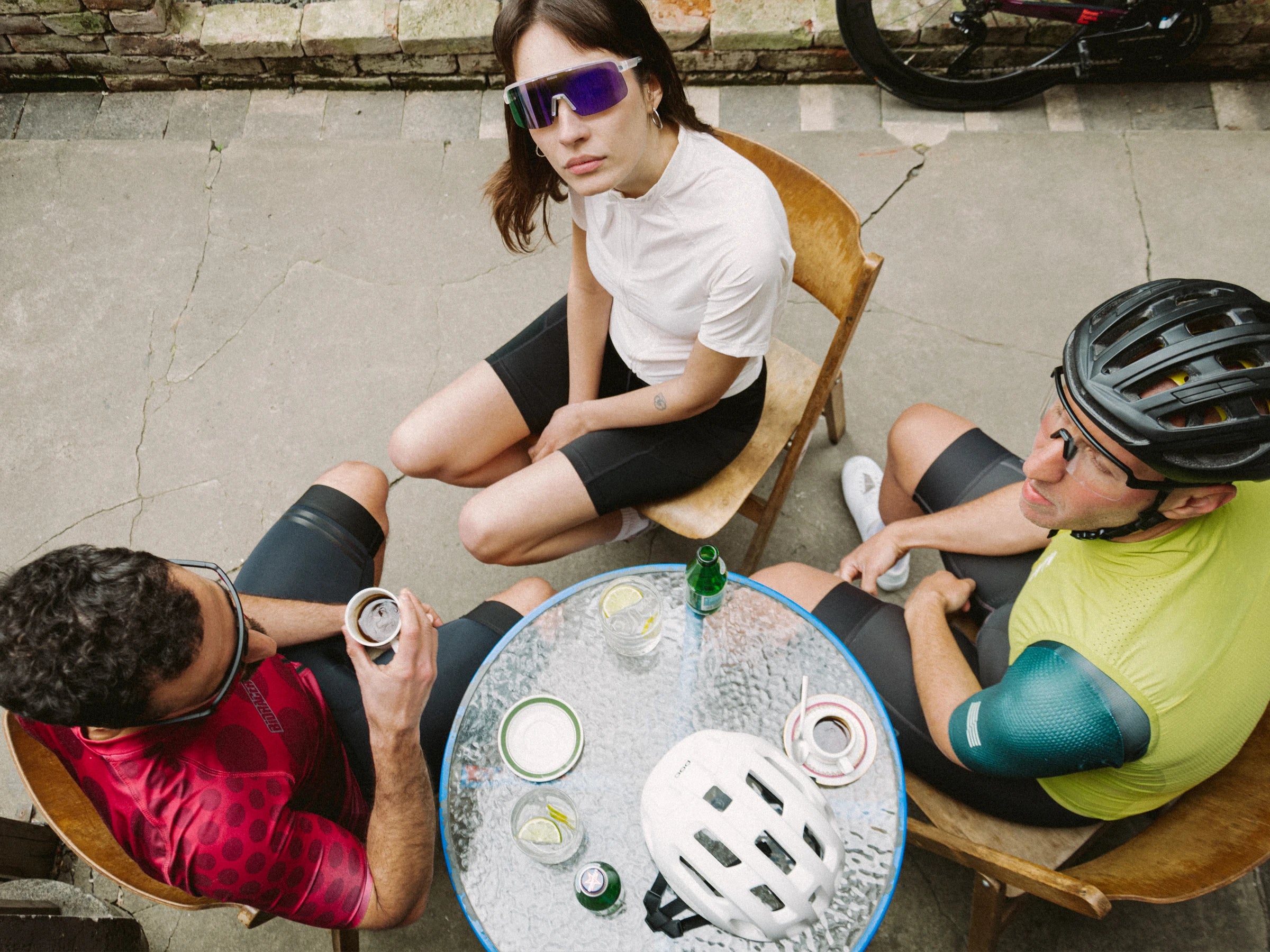
The StradaPro is available in four colours: Nero (black), Espresso (brown), Arancia (orange) and Viola (purple). The frame architecture, anti-fog system, adjustable nose pads, and lens compatibility are identical across all four. Colour is an aesthetic choice, and it is worth making deliberately, since you will be wearing these glasses for a long time on long roads.


Nero is the most versatile for kit matching across different team colours. Espresso works particularly well with earth-tone kits and the brown-and-tan aesthetics that have become prominent in the gravel and endurance road scene. Arancia is a bold choice that reads well at distance and photographs clearly, which matters if you are documenting alpine trips. Viola is the least conventional and the most distinctive, a frame colour that draws attention in the peloton without being loud in the way that neon alternatives tend to be.
All four share the same 25-gram frame, the same UV400 certified lens options, and the same ventilation geometry. The anti-fog performance you read about in sections one through seven applies equally to whichever colour you choose.
Compare the full lineup in the Velluto StradaPro cycling glasses collection.
10 · FAQFrequently Asked Questions
Why do cycling glasses fog up on climbs?
Fogging happens when warm, humid air from your face meets a cooler lens surface and water vapour condenses. On climbs your effort level rises sharply, body heat and sweat increase, and your forward speed drops, so less airflow moves through the frame to equalise the temperature difference. That combination creates the ideal conditions for a fog layer to form on the inside of the lens. The physics are straightforward: it is a dew-point event, and the question is whether your frame's design prevents the conditions for condensation from stabilising.
Do anti-fog coatings actually work?
Hydrophilic anti-fog coatings can delay fogging by spreading water molecules into a thin, transparent film rather than letting them cluster into light-scattering droplets. However, coatings degrade over time, especially when wiped frequently. A built-in ventilation design that moves air continuously across the lens surface is more durable and more effective across varying weather conditions. The best designs combine both, but ventilation should be the foundation and coating should be the supplement.
What is the best anti-fog cycling glasses design for long climbs?
A frame that combines open upper ventilation channels with a sculpted lower edge that channels air across the inner lens surface is the most effective design for long climbs. Glasses that sit very close to the face without airflow gaps are most prone to fogging because warm air from your brow and cheeks has nowhere to escape. The Velluto StradaPro uses a built-in anti-fog system with a ventilated frame geometry designed for exactly this scenario, supported by adjustable nose pads that let you set the correct stand-off distance for your face shape.
How important is fit for anti-fog performance?
Fit is critical. Glasses that press too close to your face act like a sealed chamber, trapping humid air against the lens. Adjustable nose pads let you position the frame so there is a consistent, controlled air gap between your skin and the lens. The Velluto StradaPro includes adjustable nose pads that allow you to dial in this gap precisely, which directly affects fogging behaviour on climbs. The same adjustment that improves comfort on long rides is also the one that keeps the ventilation path open at low speed.
Does lens colour affect fogging?
Lens colour itself does not prevent or cause fogging. The optical tint affects light transmission and contrast, not thermal or humidity behaviour. What matters for anti-fog performance is the lens surface treatment and the frame ventilation geometry. That said, a lens that is too dark for the ambient light conditions may cause you to squint, which partially closes the upper airflow gap and indirectly worsens ventilation. Choosing the right tint for conditions keeps the frame geometry working as designed.
Are interchangeable lenses worth it for variable mountain weather?
Yes, especially in the Alps and Pyrenees where you may start a ride in bright sunshine and finish a descent in cool mist. The VellutoPuro clear lens maximises light transmission in low-light or overcast conditions with full UV400 protection. The VellutoVisione high-contrast lens sharpens definition on bright, exposed climbs. Being able to swap them tool-free in seconds means you can adapt to conditions without stopping. The Velluto StradaPro Starter Vision Kit includes both lenses in a single purchase, which is the practical choice for mountain riding.
Can I clean an anti-fog lens with a cloth?
You should avoid wiping the inner surface of a lens with any abrasive material. Hydrophilic anti-fog coatings are thin and mechanically soft; microabrasions from wiping break the surface structure and degrade fog-resistance over time. For the outer surface, use a clean optical microfibre cloth after applying a gentle cleaning spray. The Velluto Cleaning Spray is 50 ml, refillable, made in Germany, and formulated for optical lens surfaces. The Velluto Microfiber Cleaning Cloth (25x25 cm, 80% polyester / 20% polyamide) is the correct tool for this.
What cycling glasses are best for humid mountain conditions in summer 2026?
For summer mountain stages, look for glasses that combine UV400 protection, a built-in anti-fog system, and a frame ventilation design that stays effective at low speeds. The Velluto StradaPro at 25 grams checks all three criteria, with a click-in lens system so you can switch between the clear VellutoPuro and the high-contrast VellutoVisione as light changes through the day. The 30-day risk-free trial means you can test performance on actual climbs before your purchase is final.
How do I stop my cycling glasses from fogging during a sportive?
The most effective steps are: choose a frame with open ventilation channels rather than a fully wrapped design; ensure the glasses sit with a small controlled air gap at the top of the frame rather than flush against your brow; keep the lens clean, as oil from skin contact accelerates fogging; and use the correct lens tint for conditions so you are not squinting, which pushes warm air upward into the frame. If fogging persists at speed, the frame geometry is likely the limiting factor, not the lens. A frame with adjustable nose pads, like the StradaPro, lets you fine-tune the ventilation gap for your specific face shape and the day's conditions.
If you are still riding with glasses that fog on every serious climb, the solution is in the frame architecture, not another wipe on your jersey. The Velluto StradaPro Starter Vision Kit is built around the specific physics of slow-speed mountain riding, with a 30-day risk-free trial so you can verify that on your own roads. See the full range at velluto-shop.com.