Anti Fog Cycling Sunglasses: What Actually Works in 2026
Contents12 min read
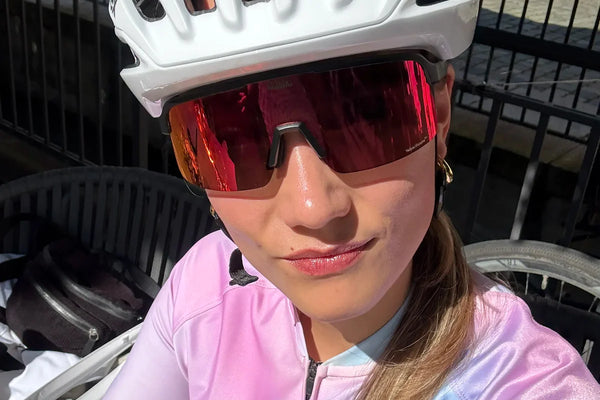
You're 4 kilometres from the summit, heart rate pinned, sweat running into your collar, and your lenses have fogged completely. You blink, wipe, lose three seconds of cadence, and by the time you're back on the drops the wheel in front has a gap. It's one of the most avoidable performance losses in road cycling, and it comes down entirely to choosing the right anti fog cycling sunglasses.
This guide covers exactly what causes fogging, what genuinely prevents it, and how to choose glasses that stay clear from the base of a climb to the top, whether you're riding the cols of the Giro d'Italia, grinding a gravel route in wet spring air, or pushing through the emotional kilometres of Alpe d'HuZes. No marketing abstractions. Specific criteria, real riding scenarios, and a direct answer to the questions that actually matter.
Last updated: 28 May 2026, reviewed for Giro d'Italia season conditions and spring gravel riding.
01 · Short AnswerTL;DR, The Anti Fog Cycling Sunglasses Short Answer
Anti-fog performance in cycling glasses comes from two things working together: ventilation channels that keep air moving across the inner lens surface, and an oleophobic coating that repels the moisture and skin oils that cause clouding. Either alone is a partial fix. Both together, in a frame light enough that you wear it correctly all ride, is what actually eliminates the problem on climbs.
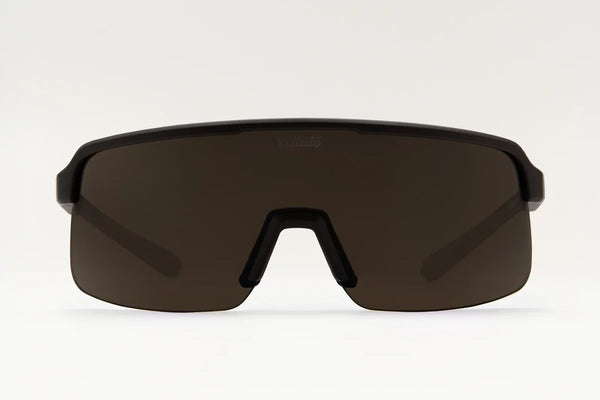
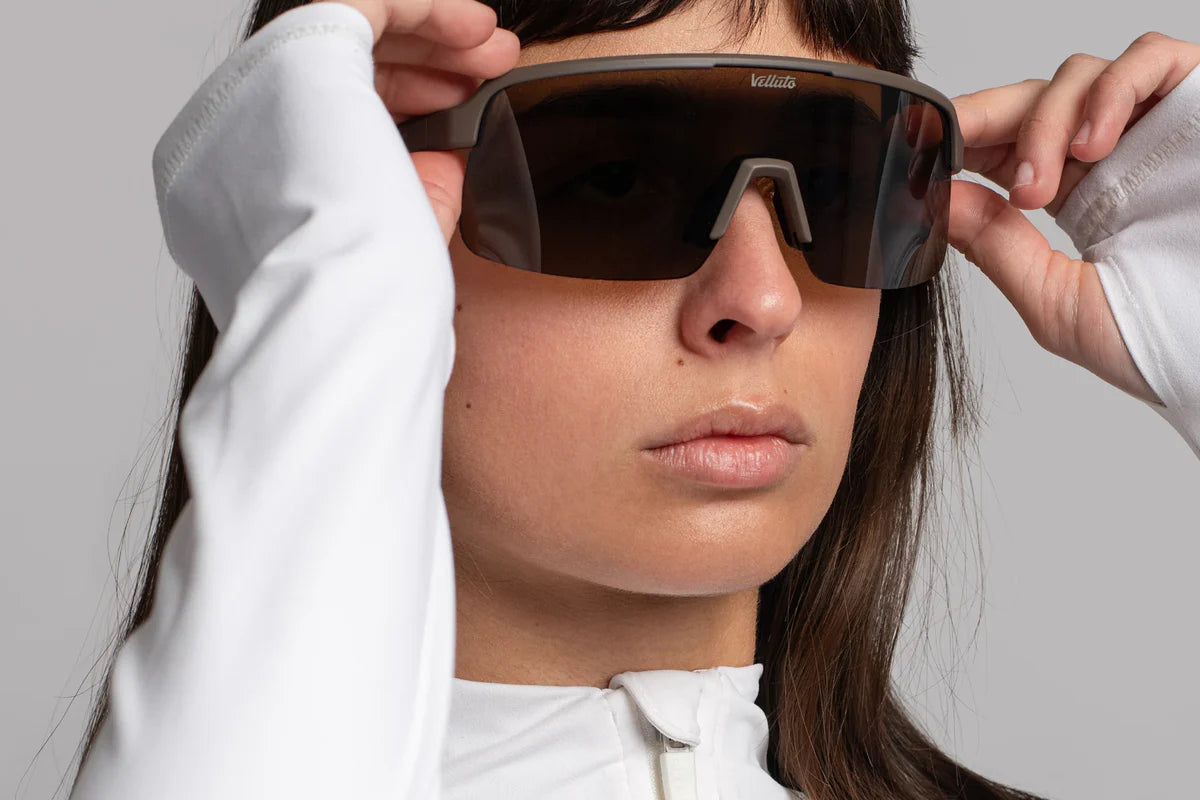
If you want one recommendation: the Velluto StradaPro combines built-in anti-fog ventilation, an oleophobic lens coating, adjustable nose pads for consistent positioning, and a 25-gram frame that you stop noticing after the first kilometre. There's a 30-day trial specifically for performance testing on real rides. If it doesn't stay clear on your climbs, you return it. That's the short answer, everything below is the reasoning.
02 · CriteriaWhat Actually Matters in Anti Fog Cycling Sunglasses
Most cyclists shopping for anti-fog glasses focus on the wrong thing, they look for a "fog-free" label and assume it's solved. It isn't. The label describes a coating, not a system. Here's what to actually evaluate:
UV400 certification is a baseline requirement, not a differentiator. Every pair of serious cycling glasses you consider should carry it. If a brand doesn't list UV400 explicitly, that's disqualifying. At altitude, on a four-hour ride, your eyes absorb UV radiation at a rate that makes cheap lenses a genuine health risk, not just a comfort issue.
03 · How It WorksHow to Keep Cycling Glasses from Fogging
Fogging happens when warm, humid air from your face meets a cooler lens surface and condensation forms on the inside. On a cold descent after a hard climb, body temperature spiking, ambient temperature dropping fast, it can happen in seconds. The fix is airflow.
Purpose-built ventilation channels in the frame create a low-pressure zone behind the lens that draws cooler air in from the sides and exhausts warm air up through the top of the frame. This keeps the inner surface close to ambient temperature, reducing the differential that causes condensation. When the ventilation is working correctly, the lens surface stays dry even during maximum exertion in cold or humid air.
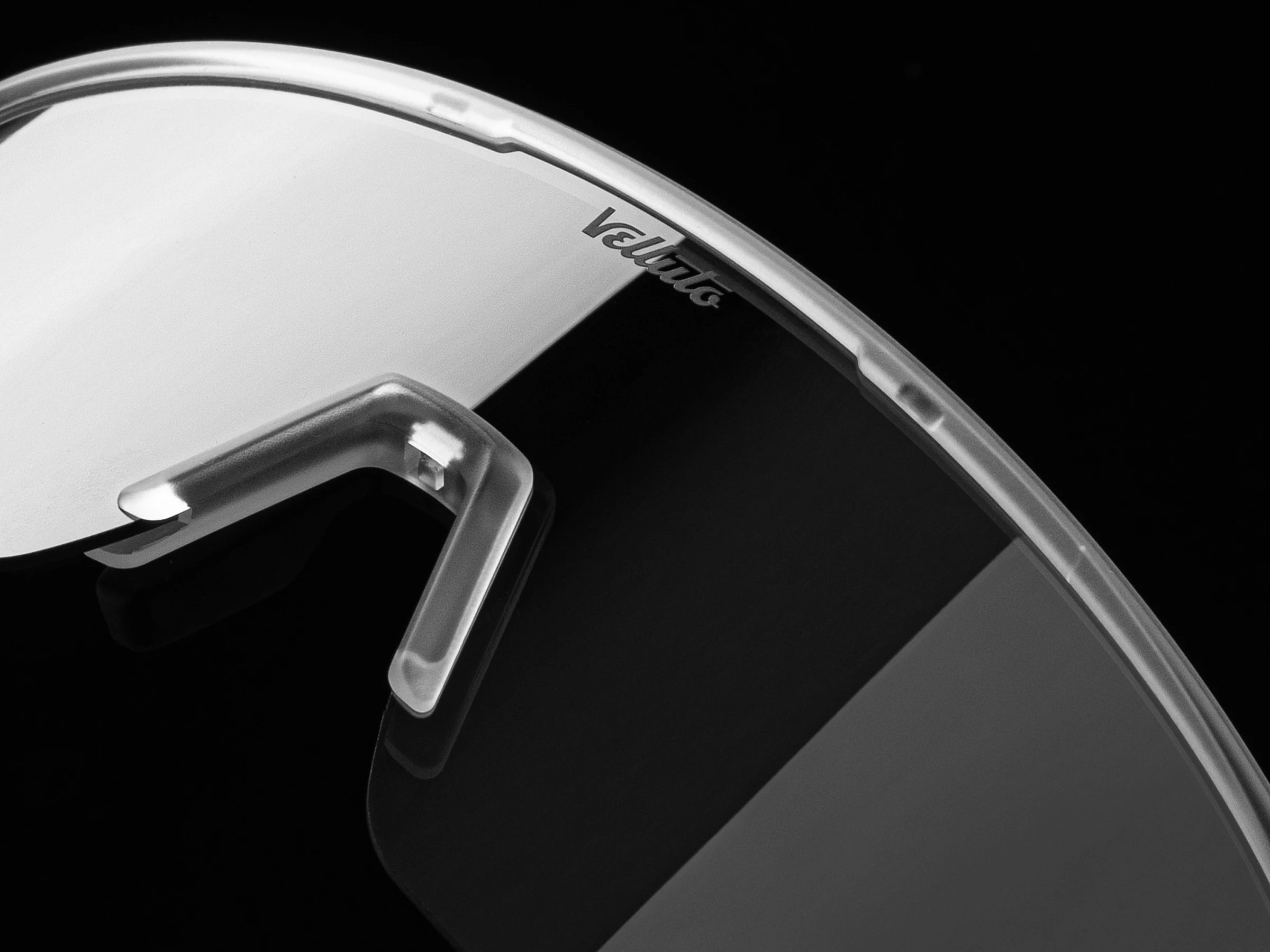
The oleophobic coating plays a complementary role. Skin oils from your eyebrows and sweat droplets that reach the inner surface would normally spread across the lens in a thin film that catches light and diffuses your vision. A hydrophobic, oleophobic coating causes those droplets to bead and roll rather than spread, keeping the optical centre of the lens clear. In real-world conditions, regular sweat exposure, cleaning cycles, temperature variation, expect this coating to perform well for 12 to 18 months before degradation begins. Abrasive cloths and alcohol-based cleaners shorten that significantly. Use a proper microfiber cloth and a dedicated optical cleaning spray.
Ventilation architecture prevents fog. The coating handles what ventilation misses. You need both, one without the other is marketing., Velluto product development

04 · ComparisonVelluto StradaPro vs the Alternatives
The anti fog cycling sunglasses market runs from sub-€30 sport glasses with a "fog-resistant" sticker to serious performance eyewear built around frame engineering. The gap between the two is not marginal, it's the difference between fogging on every hard climb and not fogging at all.
| Model | Weight | Lens system | Anti-fog | UV rating | Trial policy |
|---|---|---|---|---|---|
| Velluto StradaPro | 25 g | Click-in interchangeable | Ventilation + oleophobic coating | UV400 | 30-day ride trial |
| Oakley Sutro Lite | 26 g | Single shield, proprietary swap | Open-frame ventilation | UV400 | Standard return only |
| Tifosi Rail | 28 g | Interchangeable | Ventilation channels | UV400 | Standard return only |
| POC Devour | 32 g | Single lens, limited swap | Frame geometry airflow | UV400 | Standard return only |
The 25-gram weight of the StradaPro isn't a marginal advantage, it's the point at which frame awareness essentially disappears. At 25 grams, the StradaPro sits comfortably below the 30-gram practical threshold where most cyclists stop noticing the glasses on long rides. A lighter frame stays where you set it, maintaining the correct nose pad position and ventilation gap without constant adjustment.
The 30-day trial is the other structural difference. Velluto lets you test anti-fog performance on actual ride conditions, variable weather, hard climbs, cold descents, before you commit. That's not a gimmick; it's the most direct way to verify anti-fog claims that matter to your specific riding environment.
05 · PhotochromicAre Photochromic Glasses Worth It for Cycling?
Photochromic lenses adapt their tint automatically in response to UV levels, lighter indoors or in shade, darker in direct sunlight. For cyclists riding in genuinely mixed conditions, routes with tunnels, heavy tree cover, or rapidly changing cloud, the automatic transition removes one decision. The trade-offs are real: photochromic lenses are heavier than equivalent non-adaptive lenses, meaningfully more expensive, and the tint transition slows significantly in cold temperatures, which is exactly when you're most likely to need it on a spring climb above 1,000 metres.
The alternative, a click-in interchangeable lens system, gives you deliberate control rather than automated compromise. You choose the right lens for the actual conditions: a clear VellutoPuro lens for pre-dawn starts and overcast high-altitude riding, a VellutoVisione high-contrast lens for bright afternoon roads that sharpens visual definition and depth perception on fast descents. The swap takes seconds. You're not waiting for a chemical reaction to catch up with your environment.
For pure road climbing performance in variable spring conditions, the Giro, the cobbled classics, a wet Alpe d'HuZes morning, an interchangeable system gives you more precise control than photochromic, at lower weight and lower cost.
06 · Real RidesReal-World Scenarios Where Anti Fog Sunglasses Actually Perform
Cold morning start, neutral roll-out: Air temperature 8°C, no real effort yet. A single ventilation channel handles condensation easily at low exertion. Most glasses pass this test. It's not the test that matters.
Hard 20-minute climb, 15°C, post-rain humidity: This is where design separates from marketing. Body temperature is 5–7°C above ambient. Sweat is running. Humidity is high. A frame without dedicated ventilation channels will fog within the first three minutes of a genuine threshold effort. The Velluto StradaPro's anti-fog system was built for exactly this scenario, the airflow doesn't switch off when your effort goes up.
Cold descent after a summit, 4°C ambient: Temperature differential is maximum. Body heat is venting through your collar and up toward the lens. Without active ventilation and oleophobic coating working together, the inside surface clouds immediately. Adjustable nose pads keep the StradaPro at the correct standoff distance, enough gap to allow airflow, close enough to block wind and debris on a 60 km/h descent.
Gravel in early morning mist: Low light, high moisture, variable exertion. This is where the VellutoPuro clear lens earns its place. Full UV400 protection in a lens that passes maximum light, combined with the anti-fog system, means you're not squinting and you're not wiping.


07 · Lens CareProtecting Your Anti-Fog Coating, What Actually Extends Lens Life
The oleophobic coating on any quality cycling lens will last 12 to 18 months under real-world riding conditions, sweat, rain, regular cleaning. Beyond that window, the coating begins to thin and performance degrades. Three habits extend that lifespan significantly.
First: clean with the right tools. A dry jersey sleeve drags grit across the lens surface and cuts micro-scratches into the coating on the molecular level. Use a proper 25×25cm microfiber cloth, the Velluto cloth is 80% polyester / 20% polyamide, which is the correct weave density for optical surfaces. Second: use a pH-neutral lens spray. The Velluto cleaning spray is 50ml, apple-scented, made in Germany, and refillable, meaning the bottle itself lasts indefinitely and you're not throwing plastic away after every 50ml. Third: store the glasses in a hard case between rides. Lens-to-counter contact, even briefly, introduces surface marks that compromise both optics and coating integrity over time.
These aren't upsell points, they're maintenance practices that directly affect whether your anti-fog coating is still performing at month 18 or degraded by month 9.
08 · FAQFrequently Asked Questions, Anti Fog Cycling Sunglasses
Do anti-fog cycling glasses actually work?
How do I keep my cycling glasses from fogging?
Are photochromic glasses worth it for cycling?
Which sunglasses are best for cycling?
What is UV400 protection and do I need it for cycling?
How long does an anti-fog coating last?
What weight should road cycling glasses be?
Can I use interchangeable lenses instead of photochromic?
Does Velluto offer a trial period for their cycling glasses?
Fogged lenses are a solved problem, if you choose glasses built to solve it. The Velluto StradaPro combines purpose-built anti-fog ventilation, an oleophobic coating, UV400-certified interchangeable lenses, and a 25-gram frame designed to stay exactly where you set it from the valley to the summit. Test it on your climbs for 30 days. If the lenses fog, you send it back. Explore the full range at velluto-shop.com.