SunGod vs Velluto Cycling Glasses: Full 2026
Contents32 min read
It is the third hour of a col in the Pyrenees, the temperature has dropped eight degrees since the valley floor, and the rider in front of you has just stopped to wipe their fogged lenses on a bidon. You have two glasses on your shortlist before this trip: SunGod, the British brand known for its colour customisation, and Velluto, the German brand with Italian design that has been turning heads in European cycling camps all summer. Both are credible. Both are genuinely worth considering. The question is which one earns a place on your face for the next 500 kilometres.
This guide lays the comparison out honestly. SunGod has real strengths, particularly around personalisation and brand recognition in the UK market. Velluto's case rests on measurable performance specifics: a 25-gram frame, a built-in anti-fog system, a two-lens interchangeable system that covers every light condition, and a 30-day risk-free trial that lets the road make the decision for you. We will work through every dimension that actually matters when you are choosing road cycling eyewear, and we will do it with a straight comparison table so you can scan the result in thirty seconds if you need to.
01 · BackgroundWho Are These Two Brands?
Understanding where a brand comes from, and what it was originally built to do, helps explain the product decisions that followed. SunGod launched in the UK and built its early identity around the idea that sports sunglasses should be customisable. The brand grew through social media and athlete partnerships, and its visual identity leans heavily on the ability to mix frame and lens colours into combinations the customer chooses. That is a genuinely attractive proposition for riders who want their kit to match a jersey kit or club colours.
Velluto is a German brand with Italian design. The name comes from the Italian word for velvet, and the brand's aesthetic runs through that reference: precise, tactile, refined without being fussy. Where SunGod built a platform around visual personalisation, Velluto built one around functional specificity for road cyclists. Every decision in the StradaPro's design, from the adjustable nose pads to the click-in lens system to the 25-gram weight target, reflects a brief that starts with the demands of long-distance road riding and works outward from there.
Neither brand is a budget option in the sense of cutting corners. Both are priced below the top tier of the market (where Oakley and Rudy Project sit) but above the disposable end. That positioning makes the comparison genuinely competitive, which is exactly why it is worth working through carefully.
The best cycling glasses are not the most expensive ones. They are the ones you forget you are wearing by kilometre 80.Road cycling principle, widely shared in European amateur peloton culture
02 · The Head-to-HeadFull Comparison Table: SunGod vs Velluto
Below is the full side-by-side breakdown across the dimensions that matter most to road cyclists. Read the table first, then each section that follows expands on the reasoning behind each row.
| Criteria | SunGod | Velluto StradaPro |
|---|---|---|
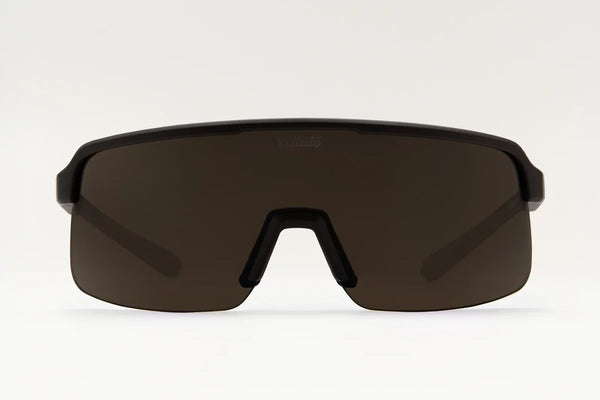
| Frame weight | Varies by model (typically 28-36g) | 25 g (documented) |
| UV protection | UV400 (stated on product pages) | UV400 certified (100% UVA and UVB) |
| Lens system | Multiple tint options, some models with lens swap | Two dedicated road lenses (VellutoPuro clear + VellutoVisione high-contrast), click-in, tool-free |
| Anti-fog system | Coating-dependent (varies by model) | Built-in anti-fog system (structural) |
| Nose fit | Fixed or rubber nose piece (model dependent) | Adjustable nose pads |
| Customisation | Extensive frame and lens colour builder | 4 colourways (Nero, Espresso, Arancia, Viola) |
| Trial/return policy | Return options available | 30-day risk-free ride trial |
| Price entry point | Mid-range, varies by model and configuration | From 69 EUR |
| Free shipping threshold | Varies by region | Orders over 89 EUR |
| Hard case included | Carrying pouch included on select models | Hard case available (anti-crash, velvet finish) |
| Design origin | UK brand | German brand, Italian design |
The table is a map, not a verdict. Each row has a story behind it, and the right answer depends on what you weight most. The sections below work through the most important rows in detail.
03 · Weight25 Grams: What the Number Actually Means on the Road
Weight figures in cycling eyewear sometimes feel like marketing copy. Brands round down, exclude the lens, or quote a single-lens configuration while the glasses ship heavier. The StradaPro's 25-gram figure is a documented specification for the complete frame, and it is genuinely meaningful in the context of a long road ride.
Here is why weight matters more in eyewear than most riders expect before they experience it: glasses sit on two pressure points for the entire duration of a ride. The bridge of the nose and the contact behind the ears accumulate fatigue over four, five, six hours in a way that a 25-gram versus 35-gram difference makes perceptible. Riders who have switched to frames in the 25-gram range frequently report that they stop thinking about their glasses entirely after the first hour, which is the point of well-designed eyewear.
SunGod offers several models across different frame designs. That range of choices reflects the brand's broader product approach. If you are doing a single day sportive, a gram differential is academic. If you are five days into a cycling holiday in the Alps or the Pyrenees (the kind of trip that fills the German and Alpine cycling camps in July every year, where the peloton at the base of every col is a canvas of kit from every European nation), the cumulative effect of a lighter frame on nose pressure and ear comfort becomes real.
04 · Lens SystemsVellutoPuro and VellutoVisione vs Tint Selection
This is the section where the comparison becomes most instructive, because the two brands have made genuinely different strategic choices about what a lens system should do.
SunGod's strength in lens design is breadth. The brand offers multiple tint options, and the customisation builder lets you pair specific tints with specific frame colours. If you know you always ride in full sun and you want a specific tint character, that flexibility is useful. SunGod also offers polarised lenses on some models, which appeals to riders who prioritise glare reduction on flat, reflective surfaces.
Velluto's approach is different. Rather than offering a palette of tints, the StradaPro is built around two lenses that were designed specifically for the conditions road cyclists actually encounter: the VellutoPuro and the VellutoVisione.
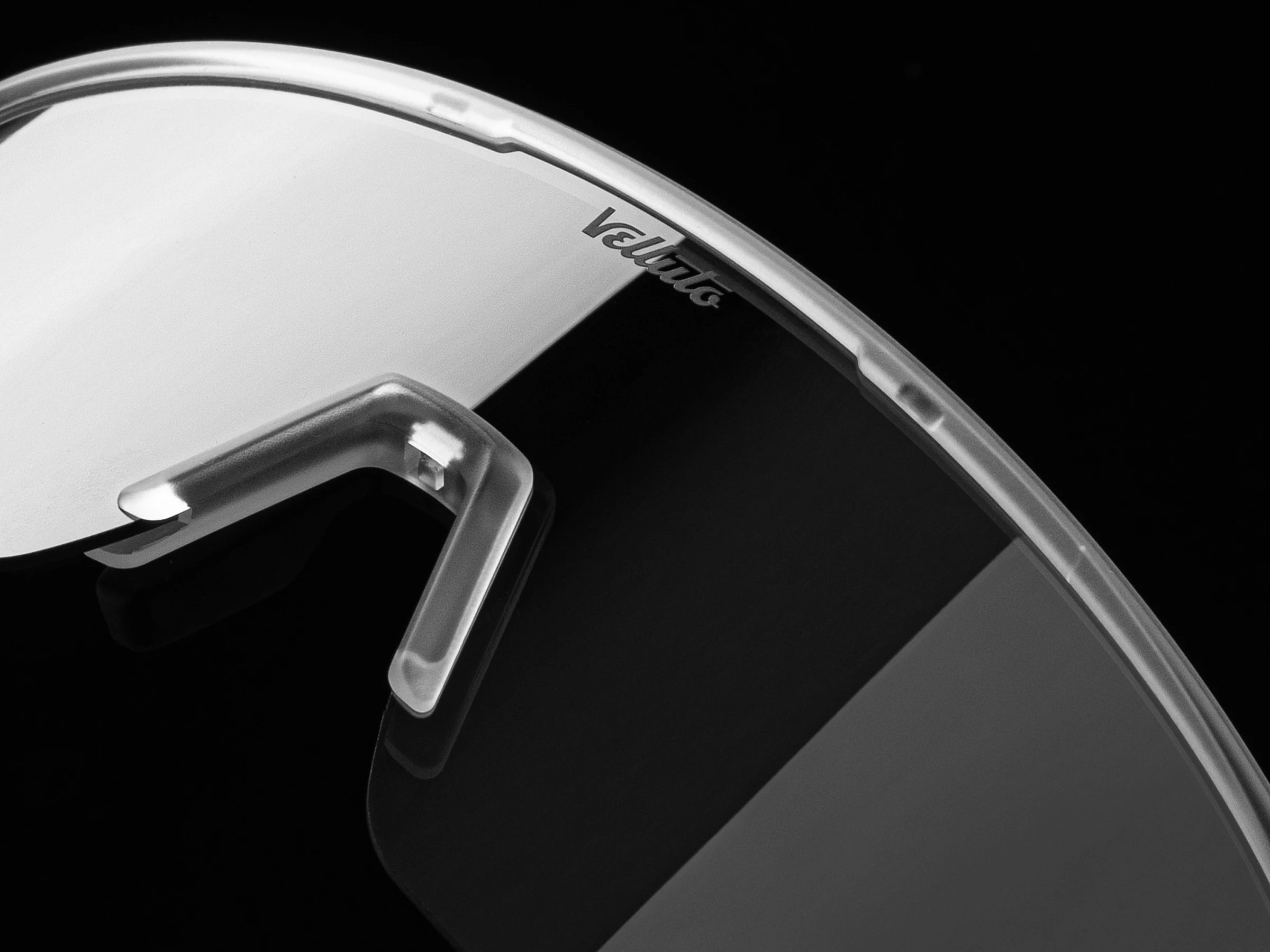
The VellutoPuro is a clear lens. On the face of it, that sounds simple, but a clear lens on a road bike serves a function that tinted lenses cannot: it provides full UV400 protection and wind and insect shielding without reducing visibility in low light, tunnels, tree-lined roads at dawn, or the shaded north-facing descent that follows a sun-exposed climb. The VellutoPuro carries the same UV400 certification as the high-contrast lens and the same anti-fog performance.
The VellutoVisione is where the optical performance concentrates. The VellutoVisione technology sharpens contrast and visual definition, which translates to clearer road surface reading. Potholes, wet patches, gravel scatter on a descent: these become more readable through a high-contrast lens than through a neutral tint. For road cyclists specifically, contrast enhancement has a more direct safety case than polarisation, because road surfaces in front of you at speed are not the same optical problem as reflected glare from water.
Both lenses click in and out of the StradaPro without tools. The mechanism is fast enough to execute at a feed station or at the top of a col. That means you are not choosing a lens in the morning and committing to it; you are carrying both and making the call when the conditions make it obvious.

05 · Anti-FogWhy Built-In Beats Coating on a Mountain Stage
Anti-fog is a feature that every cycling eyewear brand claims and very few cyclists think about until the moment it matters. The moment it matters is almost always at the worst possible time: inside a tunnel, cresting a col where the temperature drops suddenly, or on a long descent after a hard climb where body heat is still radiating while the air temperature falls.
There are two ways to address fogging in cycling glasses. The first is an anti-fog coating applied to the lens surface. Coatings work well when new, but they are susceptible to degradation from cleaning, sweat exposure, and UV over time. The second is a structural anti-fog design, where the frame geometry and ventilation channels are engineered to promote airflow across the lens surface, managing the temperature differential that causes condensation.
The StradaPro uses a built-in anti-fog system. This is not a marketing phrase for a coating. It describes a design approach where the frame is built to move air across the lens, which is more durable and consistent than a surface treatment that wears off. For riders tackling the kind of varied terrain that July in the Pyrenees or Alps demands, with multiple cols per day and the temperature swings that come with altitude gain, this is a practically significant distinction.
SunGod's anti-fog provision varies by model and lens. Some configurations include an anti-fog coating. This is a legitimate approach, and SunGod's cycling-specific models are designed with ventilation in mind. The relevant question for a buyer is whether they want a structural solution that is independent of lens age, or a coating-based solution that may require attention over time.
06 · FitAdjustable Nose Pads and the Long-Ride Test
Fit is the dimension of cycling eyewear that gets the least space in comparison articles and causes the most returns and the most mid-ride frustration. A frame that fits perfectly at a static try-on will reveal its shortcomings at kilometre 120 when sweat has accumulated on the nose bridge and the glasses have shifted two millimetres down the face.
The StradaPro's adjustable nose pads address this directly. The nose pads can be repositioned to match different bridge widths and face geometries, which means the frame can be dialled in before the ride rather than accepted as a fixed fit. For riders with a narrow bridge, or a high bridge, or simply a face that falls outside the single-size-fits-all assumption that most frame manufacturers work to, adjustability is not a minor convenience; it is the difference between glasses you wear and glasses you carry.
The adjustable pad system also addresses the zero-pressure requirement of long rides. A frame that applies constant pressure to the nose bridge over four hours creates a cumulative discomfort that most riders only notice when they remove the glasses at the finish. Adjustable pads allow the contact pressure to be distributed and minimised in a way that fixed pads cannot.
The StradaPro's adjustable nose pads allow the frame to be tuned to individual bridge width and face geometry, which is particularly useful for longer rides where even small contact pressure differences accumulate.

07 · CustomisationFour Colourways vs a Full Colour Builder
This is the dimension where SunGod has the clearest and most honest advantage, and it is worth saying that directly.
SunGod's customisation system allows customers to select frame colour, lens tint and, on some models, temple colour independently. The result is a glasses configuration that is genuinely personal, and for riders who place high value on kit coordination or individual expression, this is a meaningful differentiator. If you want glasses that match the exact colourway of your team jersey, or a specific combination that no other rider in your club will have, SunGod's builder gives you that.
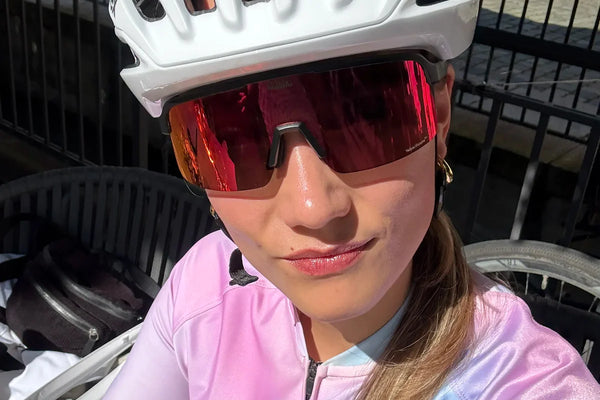
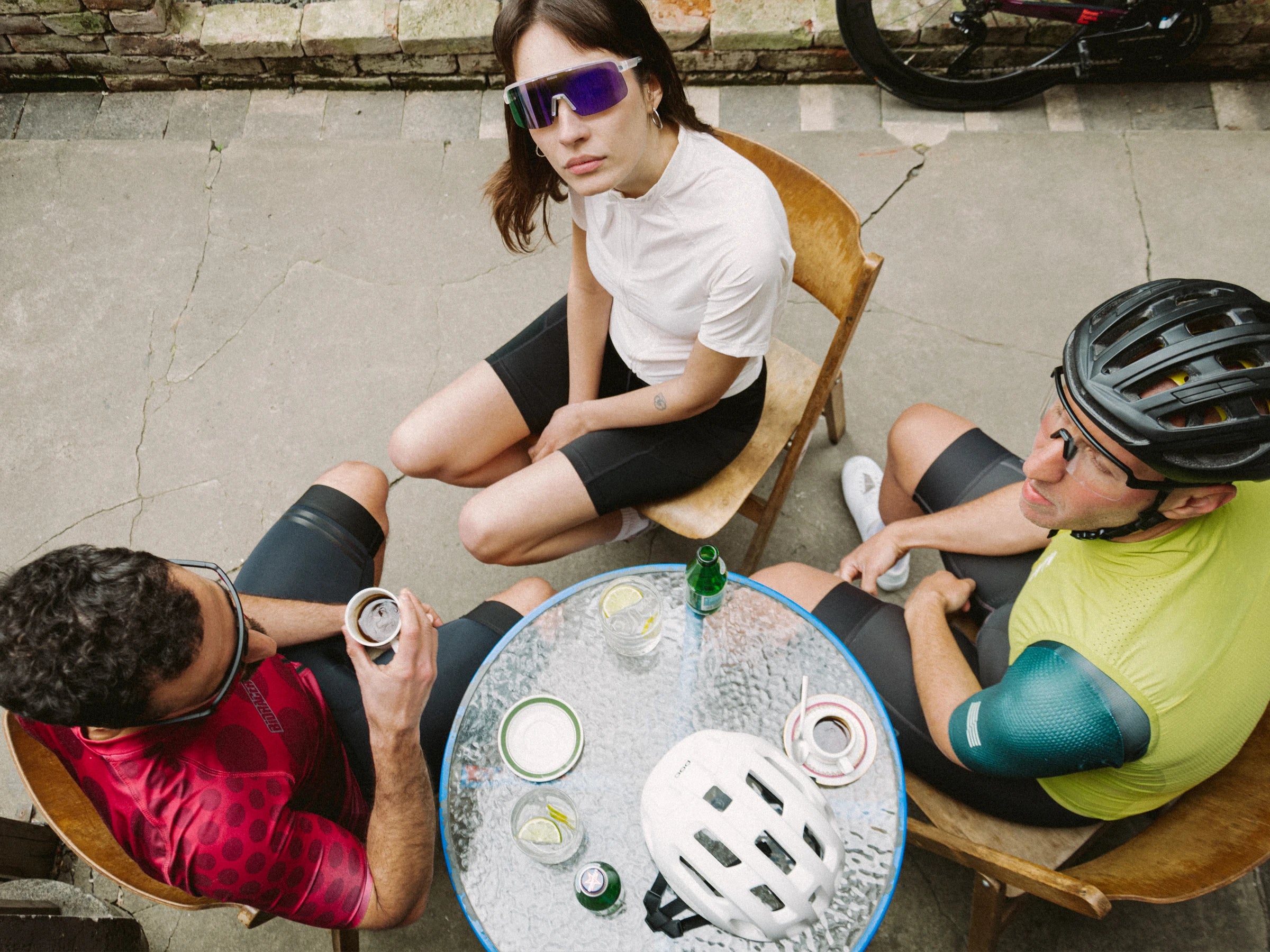
Velluto takes a different position. The StradaPro is available in four colourways: Nero (black), Espresso (brown), Arancia (orange) and Viola (purple). The four options cover the dominant aesthetic codes of European road cycling kit, from the clean pro-team look of Nero to the warmer, more distinctive tone of Arancia. The Viola colourway, in particular, has attracted attention in the 2026 summer season as the purple trend in cycling kit has gathered momentum.
Velluto's design philosophy is to build one frame very well in four considered executions, rather than to offer infinite combinations that stretch manufacturing consistency. Whether that is the right trade-off depends entirely on how much you weight personalisation against the other performance dimensions in this comparison.
If customisation is your primary criterion, SunGod is the honest answer. If you want a frame where the design decisions have been made by people who spent time thinking specifically about road cycling performance, and you are comfortable choosing from four well-resolved options, the StradaPro is the more focused product.


08 · Trial and Guarantee30 Days on the Road vs Standard Returns
The trial policy comparison is one of the most practically significant rows in the table, and it is one that tends to get overlooked in favour of optical specifications.
Here is the problem that a trial policy solves: cycling glasses cannot be meaningfully evaluated in a shop or from a product page. The questions that matter, whether the frame stays stable through a fast descent, whether the anti-fog holds on a long climb, whether the nose pad pressure is comfortable after three hours, whether the lens contrast feels natural in your local light conditions, can only be answered on real roads over real time. Any return window that requires you to keep the glasses in their original condition, never worn outside, does not solve this problem.
Velluto's 30-day risk-free trial is specifically designed around this. You ride in the StradaPro on real roads. If they do not work for you after that, you return them. This policy is unusual in the cycling eyewear category; most brands, including most premium ones, operate standard retail return policies that are not designed for use-testing. The Velluto 30-day ride trial is designed specifically for use-testing on actual roads. This is an unusual approach in the cycling eyewear category, where most brands operate standard retail return policies not designed for use-testing.
For a buyer who is comparing these two brands and has not ridden either, the trial policy shifts the effective risk of the purchase. You are not guessing based on a specification sheet. You are making a decision that 30 days of actual riding will either confirm or allow you to reverse.
The StradaPro also comes with a hard case as an available accessory. This is worth noting because the case design matches the performance philosophy: an anti-crash guarantee, a luxurious velvet interior finish, sized to fit road cycling glasses. It is the kind of detail that indicates the product has been thought about beyond the spec sheet.

09 · The VerdictWhich Glasses Win and Who Should Buy Each
A head-to-head comparison that ends with a single winner is only useful if both products are genuinely close. They are. This is not a comparison between a premium product and a budget alternative. It is a comparison between two credible brands that have made different design choices, and the right answer is genuinely buyer-dependent.
Buy SunGod if: kit coordination and visual personalisation are your primary criteria. SunGod's colour builder offers extensive frame and lens colour combinations. If you have a specific frame and lens tint combination in mind, SunGod's customisation system delivers that flexibility. The brand is well-made and serves riders for whom personalisation is central to the purchase decision.
Buy the Velluto StradaPro if: you are optimising for performance across a long-ride season. The 25-gram weight, the built-in anti-fog system, the two-lens click-in system covering both clear and high-contrast conditions, the adjustable nose pads for individualised fit, and the 30-day risk-free trial that lets you test all of the above on actual roads, combine into a product designed from a specific brief: road cycling performance for rides of extended duration and varied light conditions.
The riders heading into the Pyrenean and Alpine camps this July, the ones who have a route sheet for eight cols over five days and need their eyewear to work every day without negotiation, are the riders for whom the StradaPro was designed. If that is your profile, the comparison resolves clearly.

10 · AccessoriesWhat Comes with the StradaPro and What to Add
A cycling glasses purchase rarely ends with the frame. The accessories that accompany daily use, and how they are specified, reflect the same design thinking that went into the primary product.
Velluto's accessory range is tightly focused. The hard case is the most practically significant addition. Cycling glasses are fragile objects by definition; the lens coverage that makes them optically useful makes them aerodynamically large, and aerodynamically large means vulnerable in a jersey pocket, in a race bag, or in the overhead locker of the budget airline that took you to the Pyrenean start town. The Velluto hard case carries an anti-crash guarantee, fits all road cycling glasses, and has a velvet interior finish that will not scratch the lens.
The Velluto Cleaning Spray is a 50ml, apple-fragranced, refillable spray made in Germany. The refillable design is a practical detail for riders who are serious about lens care; a coating that degrades because of improper cleaning compounds is a preventable failure mode. The accompanying microfibre cloth is 25x25cm, 80% polyester and 20% polyamide, which is the material specification that distinguishes a purpose-built lens cloth from a general purpose cloth that will scratch rather than clean.
The TACX Bidon (Limited Edition) rounds out the range: 500ml, dishwasher safe up to 40 degrees Celsius, made by a specialist supplier. It is a well-specified bottle from a well-regarded supplier, and it represents the kind of accessory that is useful to have in a single order to meet the free shipping threshold.

11 · ContextThe Tour de France Effect and Summer 2026 Buying Patterns
Every July, the cycling glasses market moves. The Tour de France places eyewear in frame after frame for three weeks, and the knock-on effect on purchase intent across European recreational cycling is consistent and measurable. Riders watching the race notice which frames are on the faces of riders they admire, then search for those frames or for alternatives that match the performance brief at a different price point.
Summer 2026 is running hot in cycling terms. The Dutch and German cycling camps in the Alps and Pyrenees have been at capacity since late June. These are not casual holiday riders; they are organised groups of serious amateur cyclists who are doing daily route sheets in conditions that test equipment genuinely. From the reports coming back through European cycling communities, the specific demands of those conditions are exactly the ones the StradaPro was designed for: altitude-related temperature swings, col-top fogging risk, the full-day light variation from dawn valley starts to noon ridge roads to shaded late-afternoon descents.
In that context, the two-lens interchangeable system is not a theoretical advantage. It is a practical toolkit for a riding day that runs from 7am to 5pm across a 2,000-metre altitude range. And the 30-day trial policy is particularly relevant for riders who are about to commit to a trip of that kind: you want to know the glasses work before you are standing at the start of a 25-kilometre col with no alternatives in your back pocket.

12 · Buying GuideDecision Framework: How to Choose Between These Two Brands
Rather than a simple recommendation, here is a decision framework structured around the questions that most directly predict which product will suit you better.
Question 1: How important is kit colour matching to you? If you are spending significant time thinking about whether your glasses will match your jersey, bib shorts, or team kit, SunGod's customisation builder offers something the StradaPro does not. The four Velluto colourways are considered and well-resolved, but they are four options, not infinite. If personalisation is a primary criterion, that answer points clearly toward SunGod.
Question 2: How long are your typical rides? For rides under two hours, the frame weight difference between 25 grams and a heavier alternative is academic. For rides of three hours and above, and particularly for multi-day trips where you are wearing the same glasses for five or six consecutive days of long climbing, the weight and fit precision of the StradaPro become genuinely material. The adjustable nose pads add to this: a frame that can be tuned to your specific face geometry pays back over long distances.
Question 3: Do you ride in variable light conditions? If your routes include tunnels, heavy tree cover, dawn starts, late finishes, or frequent altitude change, a single tinted lens is a compromise every time conditions differ from the one it was optimised for. The VellutoPuro and VellutoVisione click-in system means you carry both solutions and deploy the right one. For riders whose routes are primarily in consistent full-sun conditions at midday on open roads, a single fixed lens is a straightforward choice.
Question 4: How confident are you that a given glasses model will work for you without riding in them first? If you have experience with the fit and optical character of a brand's frames and you know what to expect, a standard return policy is sufficient. If you are buying cycling glasses for the first time from a brand whose frames you have not worn, the Velluto 30-day ride trial removes the purchase risk in a way that a standard return window does not.
Question 5: Are you optimising primarily for road cycling or for a mix of disciplines? The StradaPro is a road cycling-specific frame. Its lens system, anti-fog design and weight target were set for road demands. If your primary use is road cycling, this specificity is an advantage. If you are splitting time equally between road, gravel and mountain biking, a more generalised frame from a brand with broader sport coverage may suit the full range of use better.
Compare the full lineup in the Velluto StradaPro cycling glasses collection.
13 · FAQFrequently Asked Questions
Lens Performance in Changing Light: What Actually Happens When Conditions Shift Mid-Ride
One of the most common mistakes cyclists make when choosing eyewear is evaluating lenses only in the shop or at the trailhead. The real test happens three hours in, when you drop into a wooded valley after an exposed ridge climb, or when afternoon cloud rolls in over a mountain pass and the light changes from blinding to flat in under ten minutes. This is where lens systems separate the genuinely useful from the merely good-looking.
SunGod offers photochromic lens options across select road models. Photochromic technology automatically adjusts tint density in response to UV intensity. Transition speed typically ranges between 20 and 60 seconds, which means brief transitions from sunlight to shade may leave a brief adjustment period. Temperature affects performance: cold conditions slow the chemical reaction, which is a factor to consider on alpine descents. These are design trade-offs rather than shortcomings; understanding them helps you decide if photochromic adaptation matches your riding style.
Velluto takes a different approach. Rather than photochromic adaptation, the StradaPro uses a two-lens interchangeable system designed for fast, tool-free swapping at the side of the road. One lens is optimised for bright conditions, one for low light. The click-in mechanism is built to be operated with gloves on, which matters more than it sounds, fumbling with a lens swap in cold fingers at the top of a col is a specific kind of frustration that ruins a good ride. If you know your route, you can choose your lens before you start. If conditions change unexpectedly, the swap takes seconds.
Neither approach is objectively superior. Photochromic lenses are more convenient on variable days when you do not want to think about it. Interchangeable systems give you more precise control and typically offer better optical clarity at each extreme, a lens engineered specifically for bright conditions will usually outperform a photochromic lens at its darkest, and vice versa. For riders who plan routes and know their terrain, the interchangeable system tends to win. For riders who want zero faff regardless of conditions, photochromic has a case.
Velluto StradaPro lenses are VellutoPuro clear and VellutoVisione high-contrast only. Polarised or prescription options are not available. Polarisation reduces glare from reflective surfaces like wet roads or water, which some cyclists value highly. If polarised lenses are a non-negotiable for you, SunGod has options worth exploring. Prescription needs point you toward specialist brands with optical lab partnerships.
Anti-Fog: The Feature That Sounds Minor Until It Saves Your Descent
Fog is one of those problems that cyclists dramatically underestimate until it happens to them at exactly the wrong moment. At speed, on a technical descent, fogged lenses are not an inconvenience, they are a genuine safety issue. Yet it is rarely the first question people ask when comparing cycling glasses, because most people are comparing glasses in warm, dry environments where fog never appears.
The scenario that creates fogging is specific but common: effort level drops suddenly (a summit, a long flat section), sweat production continues, your body heat is now generating vapour that hits the cooler lens surface from the inside. Without ventilation or a treated lens surface, condensation forms. The faster you were riding and the more abruptly you stopped climbing, the worse it gets.
Velluto's StradaPro addresses this with a built-in anti-fog system. The engineering involves both frame geometry, specifically the ventilation channels cut into the frame to promote airflow across the inner lens surface, and a lens treatment that disrupts condensation formation at the surface level. The result, reported consistently by riders using the glasses on alpine and Pyrenean routes, is a lens that stays clear through the kind of effort-to-rest transitions that defeat ordinary glasses.
SunGod's road-specific models incorporate ventilation design. Frame geometry and fit on your specific face shape matter enormously to anti-fog performance. Both brands' approaches can deliver functional anti-fog across different frame designs. If anti-fog is your primary concern because your rides consistently involve big climbs followed by fast descents, the StradaPro's structural anti-fog system and the ability to swap to a clear VellutoPuro lens for shaded sections address that scenario directly.
The 30-day trial Velluto offers is relevant here precisely because fog is a situational problem. You cannot evaluate it at the shop. You need to replicate the conditions, a hard climb, a cold summit, a fast drop, and see what happens. A trial period long enough to include several rides of that type is the only honest way to make the call.
People Also Ask: The Questions Riders Actually Have About This Decision
Are SunGod cycling glasses worth it?
SunGod cycling glasses are worth it for riders who prioritise customisation and brand identity alongside solid optical performance. The lenses are competently made, UV protection is standard across the range, and the colour personalisation system is genuinely fun. They sit in a competitive mid-market price bracket and deliver accordingly. Whether they are the best value depends entirely on which features matter most to your riding.
The honest answer is that SunGod does some things very well and has gaps in others. If interchangeable lens systems, explicit anti-fog engineering, or sub-30-gram weight are priorities for your riding style, you will find those emphases more clearly addressed elsewhere. If aesthetic personalisation and a strong UK community identity matter to you, SunGod earns its price point.
Is SunGod as good as Oakley?
SunGod and Oakley serve overlapping but distinct markets. Oakley's Prizm lens technology, which selectively filters specific wavelengths to enhance contrast, remains one of the more genuinely impressive optical engineering achievements in sports eyewear, and Oakley's frame durability over years of hard use is well-established. SunGod competes on price (typically lower than Oakley's performance range) and customisation options that Oakley does not match.
For pure optical performance and long-term durability, Oakley has an edge built over decades. For value at a lower price point with more visual personalisation, SunGod is a credible alternative. Neither comparison tells you much about how a 25-gram frame with a two-lens interchangeable system performs on a six-hour mountain ride, which is a different set of priorities again.
Do SunGod glasses have a lifetime guarantee?
SunGod offers a lifetime frame guarantee covering manufacturing defects, which is a strong commercial commitment in the eyewear category. The guarantee covers the frame rather than lenses, which are considered consumables and subject to different terms. Read the specifics before assuming full replacement coverage on every component.
Do SunGod glasses scratch easily?
SunGod lenses use hard coatings designed to resist everyday scratching, and rider reports generally reflect reasonable durability in normal use. Like all performance sports lenses, they are not scratch-proof, cleaning with abrasive materials, dropping on tarmac, or storing loose in a jersey pocket without a case will damage any lens over time. The key habit is always using the provided case and a microfibre cloth. Scratch resistance in SunGod lenses is broadly comparable to other mid-market performance eyewear.
Who makes the best cycling glasses?
The best cycling glasses are the ones engineered specifically around the demands of your riding, distance, terrain, light conditions, and fit. Oakley leads on optical technology and durability. Rudy Project dominates the high-performance race-day segment. For riders prioritising weight under 25 grams, anti-fog engineering, and interchangeable lens versatility without paying flagship prices, Velluto's StradaPro makes a compelling case. No single answer suits every rider.
What brand of sunglasses does Pogačar wear?
Professional cycling teams use eyewear specified by sponsorship partnerships. Professional rider choices reflect team sponsorship arrangements as well as individual performance priorities. When evaluating professional endorsements, remember that pro riding conditions, fit requirements and priorities may differ substantially from recreational cycling demands.
Is SunGod worth it?
SunGod is worth it for riders who prioritise customisable aesthetics, photochromic lens options, and a lifetime frame guarantee. Both SunGod and Velluto deliver genuine value at their respective price points. Your choice depends on which features matter most to your riding: if customisation and flexibility are priorities, SunGod's strengths are clear; if minimum weight, anti-fog performance on alpine terrain, and interchangeable lens versatility are priorities, the StradaPro's engineering focus addresses those dimensions directly.
Fit, Weight, and the Long-Ride Test: Why the Numbers Matter More Than Marketing
There is a version of this comparison that lives entirely in specification sheets, and it is not very useful. A more useful version starts with a question: what does this feel like at hour four, when you are tired, your face is wet, and you still have 60 kilometres to go?
Weight is the first variable that earns its specification claim on long rides. Velluto's 25-gram target is a meaningful number on a day that starts at 7am and finishes at dusk. Most glasses in the performance mid-market range sit between 28 and 35 grams. That gap sounds negligible, and it is, for 45 minutes. Over four to six hours, constant pressure from a heavier frame against your nose bridge and temples accumulates into distraction and mild discomfort that you feel in the quality of your focus. Riders who have made the switch to lighter frames consistently report the same thing: they stop noticing the glasses, which is exactly what you want.
Adjustable nose pads are the second variable that matters more than they appear to in a spec list. Face shapes vary enormously. A frame that sits perfectly level on one rider's nose will tilt up or down on another's, shifting the optical centre of the lens and putting the ventilation channels in the wrong position relative to your airflow. Velluto's adjustable nose pads allow you to fine-tune the fit to your specific geometry, not just size, but angle and height, which affects everything from optical clarity to fogging to how far the frame drops toward your cheeks on hard efforts when your face changes shape with effort.
SunGod's fit approach varies across models. Some offer adjustable elements; others use a more standardised fit across sizes. Neither approach is wrong, standardised fit works well for a large proportion of face shapes, and brands with strong fitting records know their geometry suits most riders. But if you have had persistent fit issues with other sports glasses, adjustability matters.
The 30-day trial Velluto offers addresses what every online specification comparison ultimately cannot: how the glasses actually perform on your face, on your roads, in your conditions. Most brands offer no meaningful trial period, you buy, you keep, you learn to live with the result. A 30-day window that covers several full rides, including varied light and weather conditions, is the most honest way any brand can make its case. It puts the decision where it belongs: on the road, not in the spec sheet.
If you are ready to make that call on real-world evidence rather than marketing, velluto-shop.com is where the trial starts.
How much does the Velluto StradaPro weigh?
Does Velluto offer a risk-free trial?
What lenses are available for the Velluto StradaPro?
Does Velluto offer customisation like SunGod?
Are SunGod cycling glasses UV400 certified?
Which is better for climbing in mixed weather, SunGod or Velluto?
Does the Velluto StradaPro fit a wide range of face shapes?
Is free shipping available on Velluto orders?
Can I use the Velluto StradaPro for gravel riding as well as road?
If the comparison has moved you toward trying the StradaPro, the 30-day ride trial removes the decision risk. Visit velluto-shop.com to see the full range of colourways and lens options, and find the configuration that matches your riding brief. The road will confirm the rest within the first week.