Half vs Full Frame Cycling Glasses: Aerodynamics 2026 | Velluto
Contents6 min read
Half Frame vs Full Frame Cycling Glasses: Aerodynamics, Weight and Vision in 2026
Last updated: 2 July 2026
It is July, the Tour de France is carving through the Pyrenees, and somewhere in a Dutch cycling camp in the Alps a group of riders is having an argument at breakfast. Not about watts or tyre pressure. About glasses. Half frame or full frame: which design actually makes you faster, keeps your vision cleaner, and sits lighter on your face for six hours in the saddle? The debate sounds cosmetic. It is not. If you are serious about half frame cycling glasses aerodynamics, weight and optics, the choice between these two frame architectures has real consequences on every climb and descent. Here is the full breakdown for 2026.
The real difference between half frame and full frame: what most riders get wrong
Most cyclists assume full frame glasses are simply "more protective" and half frame glasses are "more airy." Both assumptions are partly true and mostly incomplete. The structural difference starts at the rim: a full frame wraps a complete border around the lens, locking it into a rigid housing. A half frame, sometimes called a rimless or semi-rimless design, holds the lens at the top and relies on the lens material itself for structural integrity along the lower edge. That single design decision cascades into every performance metric that matters on the bike.
On aerodynamics, the picture is more nuanced than marketing suggests. A full frame creates a consistent sealed edge around the eye, which can reduce turbulence at the lens-to-face interface, particularly at high speed on descents where airflow hits the face at an angle. Half frame designs, by contrast, tend to offer less wind resistance across the lower face, which some riders find more comfortable in variable conditions, but can allow more air turbulence directly into the eye socket at speeds above 50 km/h. Wind tunnel studies on cycling eyewear remain rare and brand-specific, so treat aerodynamic claims from any manufacturer with appropriate scepticism unless they cite independent data.
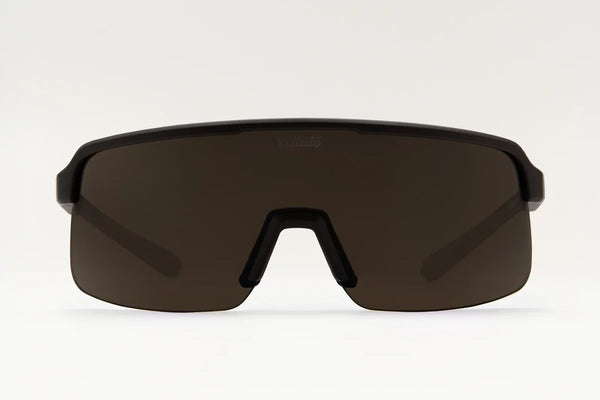
Weight is where half frame designs have historically held an advantage. Removing material from the lower rim saves grams. In a category where elite glasses already sit between 22g and 30g, every gram is real. But modern full frame designs using monocoque construction and advanced polymers have closed this gap dramatically. The Velluto StradaPro, a full frame design, comes in at 25 grams: competitive with leading cycling eyewear in this weight category and within reach of most half frame alternatives. Which means the weight argument for choosing half frame in 2026 is weaker than it was three years ago.
Field of view, fog and fit: the practical checklist for road cyclists
Beyond the aerodynamics debate, here is what actually matters when you are choosing between frame architectures for road riding:
- Vertical field of view: Half frame designs typically offer a marginally wider downward sightline, which some riders value when reading their head unit or scanning rough road surface. Full frame designs with a large single lens achieve comparable vertical coverage without the trade-off.
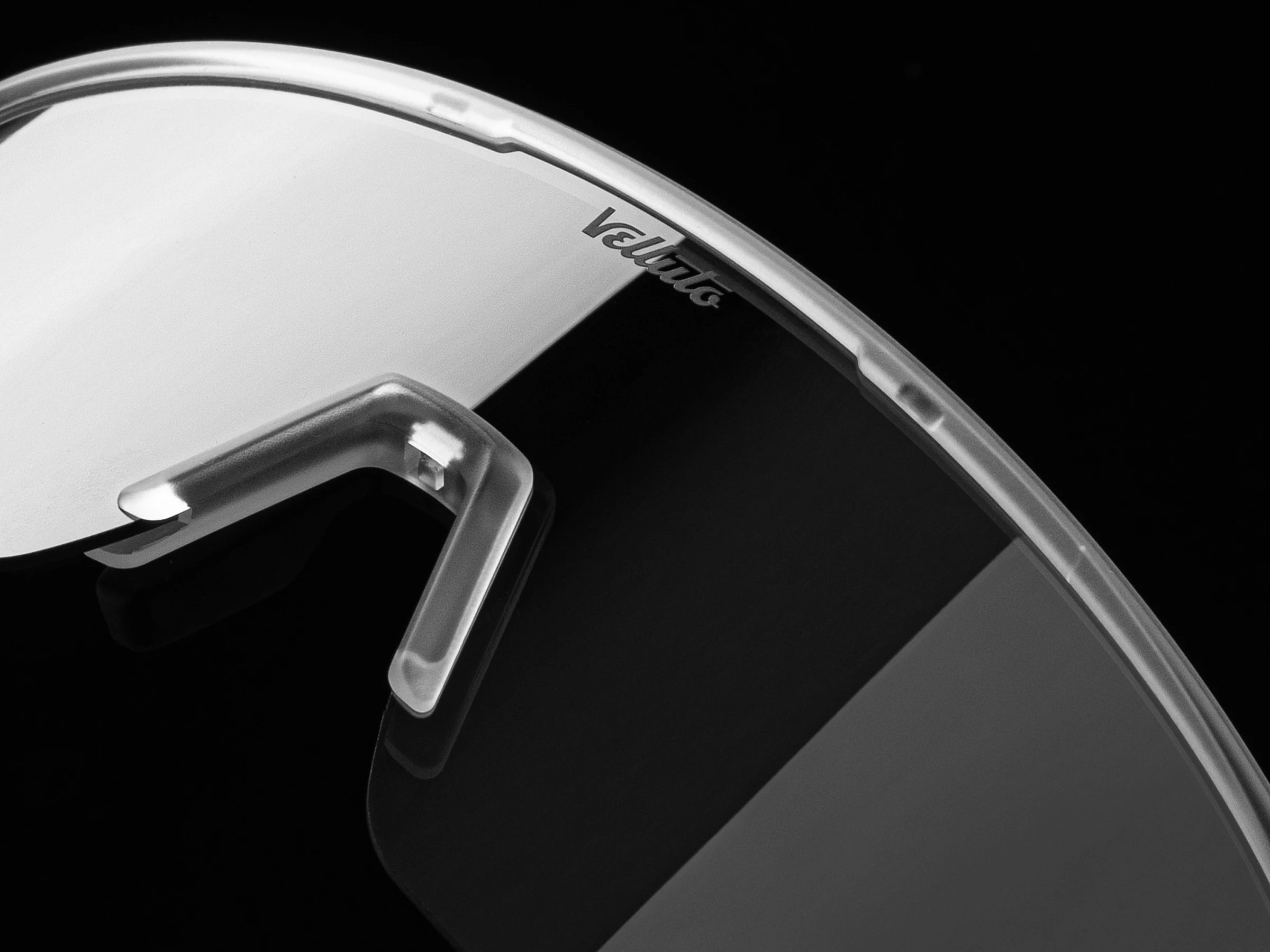
- Anti-fog performance: Full frame glasses seal more completely around the eye, which increases the importance of a proper anti-fog system. Without one, the sealed environment fogs faster on climbs. Look for a built-in ventilation channel in the lens or frame, not just an anti-fog coating that wears off after a season of cleaning.
- Lens interchangeability: This matters more than frame style for most riders. The ability to swap from a clear lens in dawn starts or tunnel-heavy mountain stages to a high-contrast lens in bright afternoon sun is a practical daily advantage. Confirm the click-in system is tool-free and takes under ten seconds, or you will stop using it.
- Nose pad adjustability: On long alpine stages, a rigid nose bridge creates pressure points that become genuinely painful by hour four. Adjustable nose pads are not a luxury: they are a fit requirement for all-day riding.
- UV400 certification: Non-negotiable at altitude. UV intensity increases approximately 10 to 12 percent for every 1,000 metres of elevation gain. If your glasses are not UV400 certified, blocking 100 percent of UVA and UVB, you are riding without adequate eye protection in the Alps or Pyrenees. Verify the certification, do not assume it.
- Weight below 28g: Above this threshold, you will feel the glasses on longer rides. Below it, you stop noticing them. That is exactly where your focus belongs: on the road, not on your face.
Why the Velluto StradaPro answers the frame debate differently
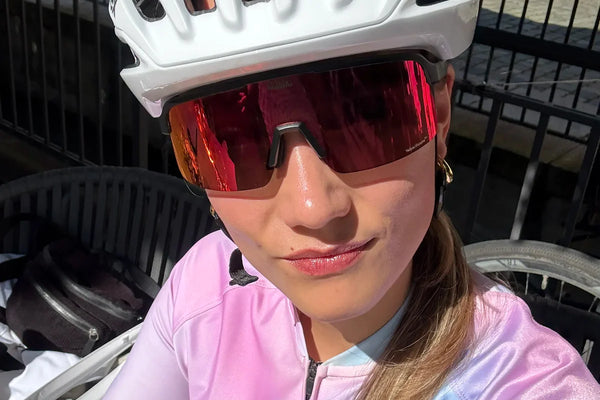
The StradaPro does not pick a side in the half frame versus full frame argument by accident. It is a full frame design built to eliminate the traditional disadvantages of full frame glasses: excess weight, poor ventilation and fixed lens tints. At 25 grams, the weight case against full frame simply does not apply. The built-in anti-fog system handles the sealed-frame fog risk on mountain climbs. And the click-in interchangeable lens system means you are not locked into one optical setup for the day.
The VellutoPuro clear lens is the right choice for early morning starts, variable cloud cover and any stage where you will pass through tunnels. The VellutoVisione high-contrast lens sharpens visual definition in bright conditions, making road surface texture and distance depth easier to read at speed. Both lenses carry UV400 certification and swap in seconds. Whether you are riding a Dutch cycling camp in the Pyrenees or commuting to a criterium, you have the right optics for the light without carrying two pairs of glasses.
Adjustable nose pads ensure a secure, pressure-free fit across face shapes. Italian design means the frame sits close to the face without touching lashes or creating uncomfortable hot spots. The 30-day risk-free trial means you can test this on real rides, in real mountains, before committing. Free shipping applies to orders over 89 euros.
 Velluto Starter Vision Kit | Arancia
Frequently asked questions
Are half frame cycling glasses more aerodynamic than full frame?
Not necessarily. Full frame designs with a close-fitting lens profile can reduce turbulence at the lens-to-face edge, especially at higher speeds. Half frame glasses may feel less restrictive in low-speed conditions but can allow more airflow disturbance directly into the eye at descending speeds. The aerodynamic difference between well-designed options in each category is smaller than most riders expect.
Do full frame glasses fog more than half frame glasses on climbs?
They can, if they lack an adequate ventilation system. A sealed full frame without airflow management will fog faster when your body heat rises on a climb. This is why a built-in anti-fog system is a critical feature in a full frame design, not an optional extra. Half frame glasses allow more natural air circulation but offer less protection against wind and insects at speed.
Is 25 grams light enough for a full day in the mountains?
Yes. At 25 grams, the StradaPro sits below the threshold where most riders notice eyewear weight during a ride. The key factor for all-day comfort is actually fit and pressure distribution rather than absolute weight. Adjustable nose pads and a close-fitting frame profile matter more than shaving one or two additional grams off the total.
Ready to stop guessing and start riding with the right optics? Explore the full Velluto range at velluto-shop.com and test the StradaPro on your next real ride, with a 30-day guarantee behind every order.