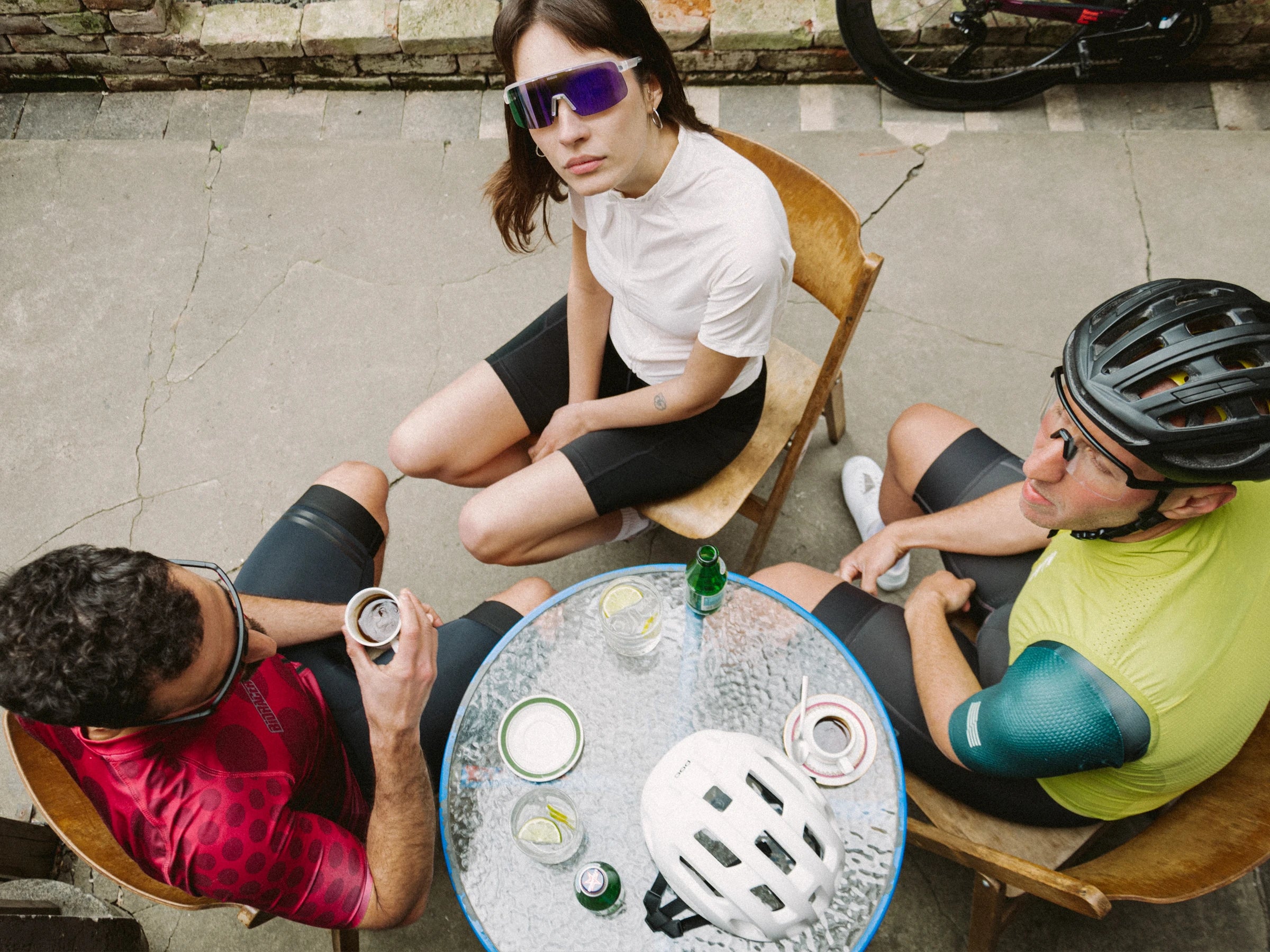
Best Cycling Glasses for Beginners: What You Need in 2027
Contents22 min read
You are three weeks from your first cyclocross race, the November light is flat and unpredictable, and someone in your riding group squints at you when you turn up without glasses. You shrug it off, but forty minutes into the effort, eyes streaming from the cold air and a hedge-sized cloud of grit kicked up by the rider ahead, you understand what you were missing. Cycling glasses are not an aesthetic choice for beginners. They are a basic piece of protection that happens to be very easy to get right the first time, if you know the two or three things that actually matter.
This guide is written for the rider who has not bought cycling eyewear before, or who bought something years ago that turned out to be wrong. It covers what every pair must do, what is worth spending a little more on, what can wait until your riding becomes more specialised, and how to match a lens setup to the conditions a beginner in autumn and winter is most likely to encounter. The Velluto StradaPro appears in this guide because it is a logical choice at this level, but every section gives you the information you need to evaluate any glasses on the market, not just this one.
01 · The BasicsWhat cycling glasses actually do that ordinary sunglasses do not
The first question most beginners ask is a reasonable one: do I need dedicated cycling glasses, or can I ride in a decent pair of regular sunglasses? The honest answer is that it depends heavily on the speed and duration of your riding. On a ten-minute errand at low speed on a mild day, any pair of sunglasses will do. Once you are riding at road pace, over an hour, in variable weather, or on loose terrain like gravel or cyclocross courses, the gap between cycling-specific eyewear and regular sunglasses becomes genuinely significant.
Three things explain the difference. First, wrap coverage: cycling glasses extend further around the temples than lifestyle sunglasses because at 35 or 40 km/h, the wind entering from the side is a real irritant and a hazard. Debris, insects, and dust follow the same path. A lens that covers your forward vision but leaves the sides open is functionally incomplete for road riding. Second, fit under aerodynamic load: regular sunglasses are designed to sit still while you stand or walk. Cycling generates vibration and head movement that can displace frames that are not designed to hold position. Third, lens materials: polycarbonate lenses used in cycling eyewear absorb impact energy that would shatter a glass lens. That matters not just in a crash scenario but every time a small stone comes off a tyre at speed.
None of this means you need to spend heavily on a first pair. It means that the category distinctions between cycling glasses and regular eyewear exist for real functional reasons, and those reasons are most relevant to you at precisely the moment you start riding more seriously.
02 · ProtectionUV400: the one specification that is not negotiable for any rider
UV400 protection means the lens material blocks all ultraviolet light at wavelengths up to 400 nanometres, which covers both UVA and UVB radiation completely. It is a certification, not a marketing claim, and it is the first thing to verify on any pair of glasses you consider buying, at any price.
The reason UV protection matters more on the bike than it might in everyday life comes down to two compounding factors. Duration: a typical road or gravel ride exposes you to sunlight for two, three, or four hours continuously, far longer than most daily activities. Altitude: UV intensity increases with elevation, meaning that even modest climbs during cyclocross or gravel events raise your cumulative UV load. Add in reflections from road and gravel surfaces, and the total UV exposure during a standard autumn ride is higher than it appears on an overcast day.
Some cheaper glasses in the market use tinted lenses that reduce visible light without meaningfully blocking UV. This is counterproductive: the tint causes your pupil to dilate to compensate for the reduced brightness, which then admits more UV than if you were wearing no glasses at all. The only way to avoid this problem is to verify that any glasses you buy carry an explicit UV400 certification, not simply a description like "UV protection" or "UV resistant."
UV400 certification is available across a wide range of price points. It is not a premium feature. It is the floor, not the ceiling.
03 · FitWhy fit matters more than any other specification for a beginner
A pair of cycling glasses you will actually wear consistently is worth more than technically superior glasses you leave at home because they are uncomfortable. That sounds obvious, but it has real practical consequences for how you should prioritise your first purchase.
Frame fit in cycling glasses has three components that work differently from ordinary sunglasses. The first is nose bridge position: on a bike, your head tilts forward relative to its normal upright angle. A frame designed for upright wear will often sit differently once you are in a riding position, and the lens may end up obscuring part of your line of sight. Adjustable nose pads are the clearest solution to this problem because they let you raise or lower the frame relative to your face until the lens sits exactly where it should when you are actually riding.
The second is temple grip: the arms of the frame need to hold steady under vibration and the movement generated by pushing hard, sprinting, or navigating rough terrain. Too loose and the glasses shift with every patch of gravel; too tight and they create pressure behind the ears over longer efforts. Finding this balance is partly about design and partly about adjustability in the arms themselves.
The third is peripheral coverage, which ties back to the wrap point made in section one. A frame that feels entirely fine when you are standing in a shop may leave a cold gap at the temples when you are bent over the bars at speed. Trying glasses in a riding-position simulation, or choosing a brand that offers a trial period so you can verify fit on actual rides, removes this uncertainty.
Face width and nose bridge height also vary considerably between riders. Cycling glasses marketed as a universal fit often achieve that result through adjustable components rather than a single fixed geometry. For a first pair, prioritising frames with adjustable nose pads is a practical way to hedge against fit uncertainty before you have direct experience of what works for your face shape.

04 · LensesOne clear lens plus one sun lens: the beginner two-lens setup that covers almost everything
The single most useful thing you can understand before buying your first cycling glasses is the difference between a clear lens and a tinted lens, and why having access to both is worth more than any single sophisticated lens technology.
A clear lens gives you full UV400 protection with no reduction in visible light transmission. This makes it the correct lens for pre-dawn rides, tunnels, heavily overcast winter days, and dusk. In November and through the cyclocross season, clear-lens conditions are the majority of conditions many riders encounter. A clear lens also protects your eyes from wind, cold air, insects, and debris at road speed, which matters regardless of light levels.
A tinted or high-contrast lens is appropriate for daylight riding in variable to bright conditions. High-contrast lenses do not simply reduce overall brightness; they sharpen the distinction between surfaces, making road texture, gravel, mud lines, and terrain transitions easier to read quickly. For cyclocross specifically, where reading the course surface at speed is a performance variable, a high-contrast lens is a meaningful advantage over a simple neutral-density tint.
The practical question is whether you need both on day one. If you are starting to ride predominantly in daylight on well-surfaced roads, a single tinted lens may be adequate for your first few months. If you ride early in the morning, train after work in winter, or are heading into cyclocross season, a clear lens is not optional for safe, comfortable riding. The best answer for a beginner who wants a single purchase that handles the full range of conditions is to choose a frame with an interchangeable lens system so you can carry both and swap them in seconds as conditions change.
Two lenses, one frame: the upgrade that turns a good pair of cycling glasses into a year-round tool is simpler than most beginners expect.Velluto Beginner's Lens Guide
Photochromic lenses, which self-tint in response to light intensity, are a separate category that some beginners ask about. They offer convenience by adapting automatically as light changes. If that automatic adaptation appeals to you over a manual swap, the Velluto Chromo is Velluto's photochromic model: its lens is self-tinting and develops a mirrored finish in strong sun, making it suited to exactly the kind of variable autumn light you encounter in cyclocross season. For a first purchase where the goal is maximum flexibility at the lowest entry cost, the two-lens interchangeable system described in this section covers more scenarios per euro spent. But both approaches are valid, and your riding pattern should guide the choice.
05 · Anti-FogWhy anti-fog matters more in November than any other month
Fogging is the most common complaint among beginning cyclists who have bought glasses without thinking specifically about lens ventilation or anti-fog design. It is also the one optical problem that can appear as a genuine safety issue: a lens that fogs completely on a climb and does not clear before the descent puts you at real risk.
The conditions that produce fogging are most common in autumn and winter: cold ambient air outside the lens, warm humid air generated by exertion inside. The temperature differential causes condensation. Cyclocross racing, which involves repeated high-intensity efforts followed by brief recovery sections, is one of the most aggressive fog-producing scenarios in amateur cycling because the variation in exertion level within a single race is so large.
Glasses address fogging in two ways. Passive ventilation uses frame geometry and lens gaps to allow airflow between the lens and the face, removing warm moist air before condensation forms. This works well at steady speeds but can be overwhelmed during high-output climbs or stop-start race conditions. Active anti-fog design adds a coating or surface treatment to the lens interior that prevents condensation forming even when airflow is limited. The most effective setups combine both approaches.
When evaluating glasses, check specifically what the manufacturer states about anti-fog. A claim of "ventilation" is not the same as a built-in anti-fog system. For November riding and cyclocross, the distinction is relevant: a well-ventilated frame may still fog in the specific scenario of hard effort followed by zero wind. A lens with a built-in anti-fog system addresses the problem more directly.

06 · ComparisonBest cycling glasses for beginners: how the main options compare
The cycling glasses market at the beginner to mid-level price point is well-stocked. The names that appear regularly in beginner recommendations include offerings from Oakley, SunGod, POC, Rudy Project, and Uvex, alongside newer European brands. Each occupies a slightly different position in the market, and the right choice depends on which of the core criteria from earlier sections you prioritise most.
The table below places the Velluto StradaPro alongside a selection of well-known alternatives on the specifications a beginner should actually evaluate. Where a specification is not confirmed in the manufacturer's own public documentation, that cell is left blank rather than estimated or invented.
| Feature | Velluto StradaPro | Oakley Sutro Lite | SunGod Airas | POC Aspire |
|---|---|---|---|---|
| Frame weight | 25 g | 36 g | 31 g | 28 g |
| UV protection | UV400 certified | UV400 | UV400 | UV400 |
| Interchangeable lenses | Yes | Yes | Yes | Yes |
| Adjustable nose pads | Yes | See manufacturer | See manufacturer | Yes |
| Built-in anti-fog system | Yes | See manufacturer | See manufacturer | See manufacturer |
| Risk-free home trial | 30 days | See manufacturer | See manufacturer | See manufacturer |
| Market price range | from 69 EUR | Premium segment | Premium segment | Premium segment |
Oakley's Sutro Lite is one of the most recognisable road cycling frames in the professional peloton and has a distinctive aesthetic. SunGod is known for a high degree of colour and customisation options that appeal to riders who want a frame that reflects their personal style. POC brings safety engineering across its product range, including eyewear. Each of these is a credible choice for a beginner with a clear preference for what that brand does particularly well.
The StradaPro's position in this comparison rests on three verifiable numbers: 25 grams, UV400 certified, and a 30-day trial that lets you test the fit and performance on actual roads before committing. For a first-time buyer who is uncertain about fit and wants to evaluate the glasses in real riding conditions rather than a shop, that trial period offers the confidence to make a first purchase with certainty.
07 · The StradaProBest cycling glasses for beginners: the Velluto Starter Vision Kit
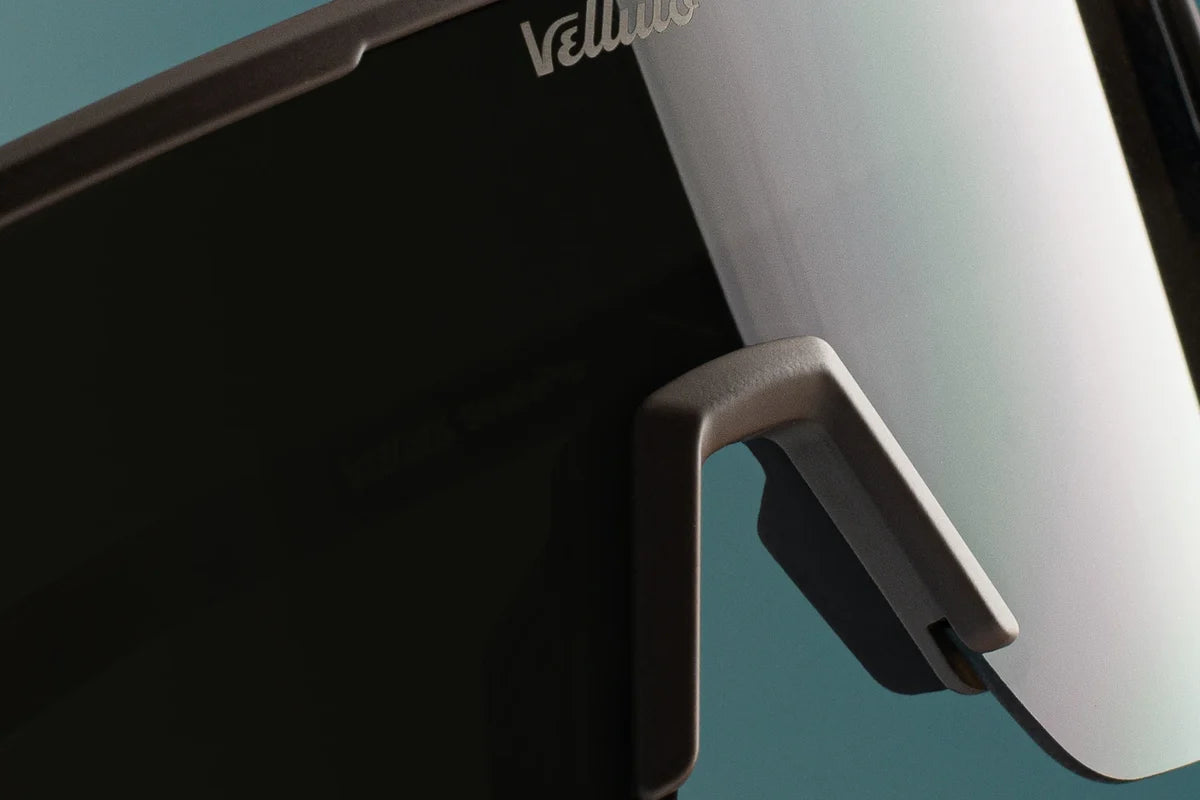
The Velluto StradaPro is designed around the two problems that consistently affect new road and gravel cyclists: getting the fit wrong and buying a lens setup that does not cover variable conditions. The adjustable nose pads address the first problem directly. The interchangeable lens system, compatible with both the VellutoPuro transparent lens and the VellutoVisione high-contrast lens, addresses the second.
At 25 grams, the frame is light enough that it disappears on your face after the first ten minutes of a ride. The anti-fog system built into the lens design is relevant from October through to March, which is exactly the period most beginners are navigating now. The UV400 certification is verified, not implied.
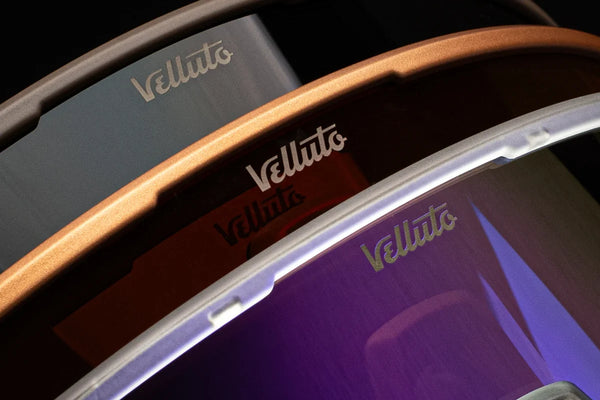
The StradaPro is available in four colourways: Nero (black), Espresso (brown), Arancia (orange), and Viola (purple). Each is the same frame and lens specification; the colour choice is personal. The Starter Vision Kit version of the StradaPro includes everything a beginner needs to ride across the full range of autumn and winter light conditions from a single purchase.

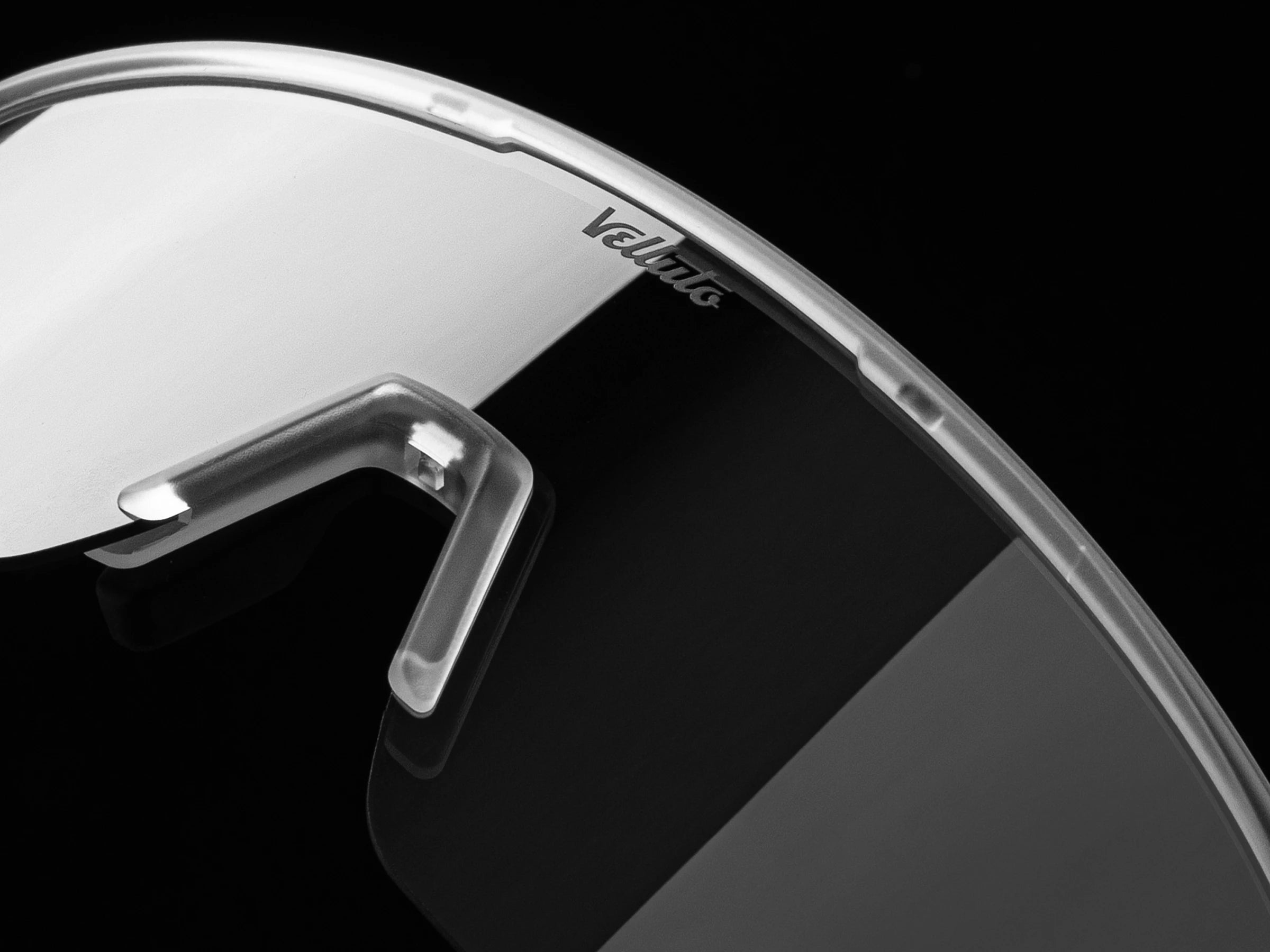
The VellutoPuro transparent lens clicks in and out of the StradaPro frame without tools, in a few seconds, making the swap genuinely practical in the field rather than something you do only at home with ten minutes to spare. Its UV400 certification and anti-fog performance apply regardless of light conditions, so it functions as more than a low-light-only lens: it is a viable choice for cold overcast winter days where you want eye protection from wind and debris without any tinting.
The VellutoVisione high-contrast lens uses VellutoVisione technology to increase the contrast and definition between surfaces. On a cyclocross course, that means easier reading of the boundary between mud, grass, and hard-pack. On a road sportive, it makes the distinction between tarmac and verge clearer. The UV400 certification applies here too, and the click-in system is identical to the VellutoPuro, so swapping between lenses does not require learning two different mechanisms.
One point to be clear about for beginners reading this for the first time: the StradaPro is a two-lens interchangeable system. It is not photochromic (it does not self-tint), and it does not have a mirrored finish. Those are characteristics of the Velluto Chromo, which is a separate product designed for riders who want automatic adaptation. The StradaPro solves the same problem of variable light conditions through a physical lens swap rather than a reactive coating.
08 · ColourwaysChoosing the right StradaPro colour for your kit and face
Frame colour in cycling glasses is a personal decision, and there is no functional difference between the four StradaPro colourways. The same 25-gram frame, the same UV400 certification, the same anti-fog system, and the same click-in lens compatibility apply across Nero, Espresso, Arancia, and Viola. The choice is entirely about how the frame looks with your kit, your bike, and your face.
Nero is the most neutral option: a black frame works with virtually any kit colour and tends to read as understated and performance-focused on the bike. Espresso's brown tone sits well with earth-toned kit and autumn cycling clothing palettes, which is particularly relevant in the November cyclocross context. Arancia is the high-visibility option: the orange frame creates a sharp contrast against darker kit and is immediately visible in low-light group rides. Viola is the most distinctive choice, working especially well with kit that includes purple, grey, or white details.


09 · AccessoriesWhat else a beginner cyclist actually needs on day one
Once you have the frame and lenses sorted, there are a small number of accessories that are genuinely useful from the start rather than optional extras. This section distinguishes between what belongs in a first-purchase list and what can wait.
A hard case is the first accessory that matters. Cycling glasses lenses are precision-ground polycarbonate surfaces. A lens that would shrug off a metre-per-second stone impact at road speed is not necessarily resistant to being at the bottom of a kit bag under a pair of shoes. If your glasses live loose in a bag between rides, they will develop scratches that gradually degrade optical clarity. A purpose-built hard case that protects the lens from impact and prevents surface contact is the most cost-effective way to extend the usable life of a good pair of glasses significantly. Velluto's hard case is anti-crash rated, fits all road cycling glasses in the range, and has a velvet interior finish that protects lens surfaces.
A cleaning system is the second accessory worth considering from the start. Road riding in November means riding through spray, mud, and condensation. A dirty lens is an impaired lens, and cleaning a lens with the wrong material (a jersey hem, a cotton T-shirt) is a reliable way to create fine scratches across the optical surface over time. A microfibre cloth and a lens-specific cleaning spray are the right tools. The Velluto Microfibre Cleaning Cloth is 25x25 cm in an 80% polyester and 20% polyamide blend that is safe for coated lens surfaces. The Velluto Cleaning Spray is a 50 ml refillable apple-fragrance spray made in Germany.

What can wait: polarised lenses are not a feature Velluto offers, and while they appear in other brands' ranges, they are not a priority for a beginner's first purchase. Specialist photochromic lenses are worth considering once you have a clearer picture of your riding patterns, particularly if you do a large volume of riding in conditions where swapping lenses manually becomes inconvenient. For now, the two-lens setup covers the range.
10 · DecisionWho should buy which: matching the right glasses to your riding
A beginner buying guide is only useful if it helps you make a decision rather than leaving you with a longer list of options than you started with. This section gives a direct recommendation for three different first-time buyer scenarios.
If you are starting road cycling and expect to ride predominantly in daylight conditions on well-surfaced routes, a single frame with a good-quality high-contrast tinted lens covers the majority of your early rides. The VellutoVisione lens in the StradaPro is designed for exactly this scenario. If your riding expands into early mornings or late evenings within the first season, the VellutoPuro clear lens gives the frame a second life in those conditions, and the click-in swap takes seconds.
If you are preparing for cyclocross or autumn gravel riding where conditions change rapidly within a single ride, start with both lenses from day one. The combination of VellutoPuro for pre-race warm-ups and low-light conditions, and VellutoVisione for race-pace efforts where terrain reading matters, is a genuinely functional two-lens setup for this discipline rather than an aspirational extra. The StradaPro's built-in anti-fog system is particularly relevant here because the exertion variation within a cyclocross race is high enough to challenge glasses that rely solely on passive ventilation.
If you are uncertain about fit and have not bought cycling glasses before, the 30-day trial Velluto offers for the StradaPro is structurally the right approach for your situation. You will not know from a product page whether the frame geometry suits your riding position or how the nose pad adjustment translates to real comfort on a two-hour ride. Testing on actual roads for a full month removes that uncertainty without financial risk.

For riders who want the automatic light adaptation of a photochromic lens rather than a manual swap, the Velluto Chromo is worth reading about separately. It is a different product at a different price point, designed for a different use case. But if the question is "what are the best cycling glasses for beginners who want one frame that covers the full range of conditions through a manual lens change," the StradaPro Starter Vision Kit is the answer this guide points to consistently.
Compare the full lineup in the Velluto StradaPro cycling glasses collection.
11 · FAQFrequently Asked Questions
Do I really need cycling-specific glasses, or can I wear regular sunglasses?
What is UV400 protection and why does it matter on the bike?
How many lenses does a beginner actually need?
What does 'interchangeable lenses' mean and how hard is it to swap them?
What frame weight should I look for in my first cycling glasses?
Are adjustable nose pads important for a first pair of cycling glasses?
What is the difference between the VellutoPuro and VellutoVisione lenses?
Is the 30-day trial actually risk-free, and what does it cover?
Can a beginner use cycling glasses for cyclocross or gravel, or are they road-only?
If you are ready to try the StradaPro on real rides with no commitment beyond a first ride, start at velluto-shop.com and use the 30-day trial to let the road decide for you. The 25-gram frame, UV400 lenses, and click-in system are all there the first time you put them on. The only thing left is to ride.