Road Bike Glasses 2026
Contents25 min read
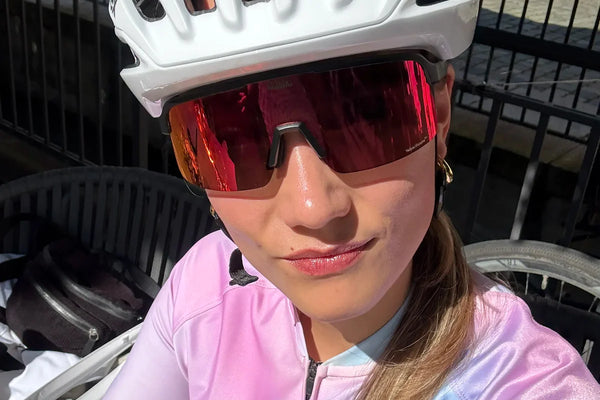
It is stage 14 of the Vuelta, the peloton is grinding through a 38-degree afternoon on the Meseta, and the rider next to you squints into a smear of condensation that has turned their descent view into a watercolour painting. You are not squinting. The lens is clear, the fit has not shifted since kilometre one, and at 25 grams you have genuinely forgotten the glasses are there. That gap between riders is not fitness. It is equipment.
August 2026 is the busiest month in the European road cycling calendar outside July. The Vuelta is running, late-summer sportives are filling up across Spain, France and the Alps, and the question in every cycling group chat is the same: which road bike glasses are actually worth buying at this point in the season? Not the ones your favourite pro wore in February. The ones that hold up in 35-degree heat, survive the transition from full sun to a long tunnel, and do not create a pressure headache by kilometre 80.
This guide answers that question with a structured road bike glasses comparison across the features that matter in the €100–€200 tier: frame weight, lens system flexibility, adjustability, anti-fog engineering and the actual value you get per euro spent. No brand loyalty, no inflated claims, no specs invented to fill space. Just an honest look at what separates a forgettable pair of cycling glasses from the ones you reach for every morning without thinking.
01 · Why this comparisonThe €100–€200 Tier Is Where the Real Decisions Happen
Below €80, the cycling glasses market delivers diminishing returns quickly. You will find frames that look the part but compromise on UV certification consistency, lens optical quality and the engineering precision of features like anti-fog coatings and nose pad adjustability. Above €200, the performance gains become marginal for most riders. What you pay for at that price point is brand recognition, materials with fractional weight differences, and occasionally a proprietary lens tint system that locks you into an ecosystem rather than an interchangeable one.
The €100–€200 bracket is where the genuine engineering decisions live. It is where manufacturers have to choose between spending on a proper UV400-certified lens programme or a marketing campaign. It is where adjustable nose pads either appear as a real feature or get dropped for a cleaner-looking fixed bridge. It is where interchangeable lens systems either work as advertised or reveal themselves as a marketing addition that requires a small tools and ten minutes of frustration every time the light changes.
For the rider who logs 8,000 to 14,000 kilometres a year, does sportives from March through October, and starts rides before 7am at least three days a week, this is the tier to shop. Paying more does not proportionally improve the core experience. Paying less often means replacing the glasses inside twelve months.
02 · Comparison tableKey Specs Side by Side: What the Numbers Actually Mean
The table below compares the Velluto StradaPro against the general specification benchmarks you will encounter from established brands in the same price tier. Where competitor figures are drawn from officially published data, they are noted as such. Where a figure varies by model within a brand's range, a typical range is given rather than a single cherry-picked number. This is how a fair road bike glasses comparison should work.
| Feature | Velluto StradaPro | Premium Tier Benchmark (€130–€200 category average) |
Why It Matters |
|---|---|---|---|
| Frame weight | 25 g | 28–36 g (varies by model) | Every gram above 25 g becomes noticeable after hour two on the bike |
| UV protection | UV400 certified | UV400 (most models) | Certification confirms 100% UVA + UVB block; not all lenses are verified |
| Lens system | Click-in, tool-free (VellutoPuro + VellutoVisione) |
Varies: some tool-free, some require pressure/tools |
Speed of swap matters in changing conditions; a slow system does not get used |
| Anti-fog system | Built-in | Ventilation (most); coating varies | Critical on climbs and in humidity; passive ventilation alone can be insufficient |
| Nose pad | Adjustable | Fixed (many models) or adjustable | Adjustable pads prevent pressure points on rides over 90 minutes |
| Number of lens options | 2 (clear + high-contrast) | 1–4 (tint, mirror, photo options) | Clear + contrast covers the widest real-world range without redundancy |
| Frame colours | 4 (Arancia, Espresso, Nero, Viola) | Typically 3–6 | Aesthetic preference; less critical than optical spec |
| Risk-free trial | 30 days | See individual manufacturer | Fit and anti-fog can only be genuinely tested on real rides, not in a shop |
| Design origin | Italian design, German brand | Varies by brand | Italian design heritage is a consistent reference point for road cycling aesthetics |
A few things stand out immediately when you read this table honestly. Weight is where the StradaPro's 25-gram figure is a genuine outlier in its tier: most competitors in the €130–€200 bracket publish figures between 28 and 36 grams depending on frame size and material. That delta sounds modest until you have been on the saddle for four hours and every contact point is talking to you. The anti-fog column is also worth reading carefully: passive ventilation channels, which appear on most frames in this bracket, are meaningfully different from a built-in system that combines airflow with lens coating. One relies on speed to function; the other works when you are crawling up a 10% gradient at 11 kilometres per hour.

03 · WeightWhy 25 Grams Is Not a Marketing Number
The cycling industry has been describing frames as "ultra-light" for so long that the phrase has stopped meaning anything. Frames that weigh 38 grams call themselves ultra-light. Frames that weigh 31 grams call themselves ultra-light. So let us use the actual number.
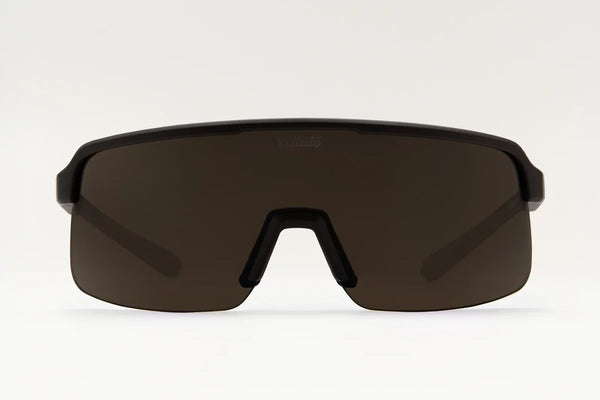
The Velluto StradaPro weighs 25 grams. That is the verified, documented figure for the frame with lens installed. To put it in context: a standard road cycling helmet weighs around 250–280 grams. A pair of road cycling gloves is typically 60–80 grams. Your cycling glasses, at 25 grams, should register as essentially nothing. If they register as something, the frame is too heavy.
Weight in cycling glasses matters across three different dimensions. The first is comfort on long rides: above 30 grams, the contact points on the nose bridge and temples become progressively more noticeable as ride time increases. The second is stability: lighter frames with well-fitted nose pads stay in position on rough road surfaces and in the aerodynamic turbulence generated by a peloton or a fast descent. Heavier frames can shift forward, which is not just annoying but a genuine visibility risk in technical corners. The third is the subtle psychological effect that cyclists who pay attention to weight across their entire setup know well: at 25 grams, the glasses disappear from your awareness. You stop thinking about them, which means you concentrate on the road.
In this tier, 25 grams is the number to beat. Most established brands in the €150–€200 category offer frames across a range of weights depending on model and size. Some go higher when the frame includes additional elements like integrated clip systems or larger lenses. None of this makes a heavier frame a bad frame, but it does make it a different experience on a six-hour ride in August heat.
At 25 grams, the glasses disappear from your awareness. You stop thinking about them, which means you concentrate on the road.Velluto Road Cycling Notes, Summer 2026
04 · Lens systemThe Interchangeable Lens Question: One Tint or Two?
If you start your rides before 8am in summer, or if you do any riding in autumn or spring, a single tinted lens is a compromise. It is either too dark for the first 40 minutes of a pre-dawn start, or too light for the two-hour window around midday when solar intensity peaks. The solution the market has been converging on is the interchangeable lens system, and the difference between implementations is enormous.
A good interchangeable lens system does three things: it swaps in under ten seconds without tools, it locks the replacement lens firmly enough that it does not flex or shift during a descent, and it creates no optical distortion at the swap point. A bad interchangeable system requires two hands, a specific finger pressure technique that takes a few attempts to learn, and leaves you wondering for the next 30 kilometres whether the lens is fully seated.
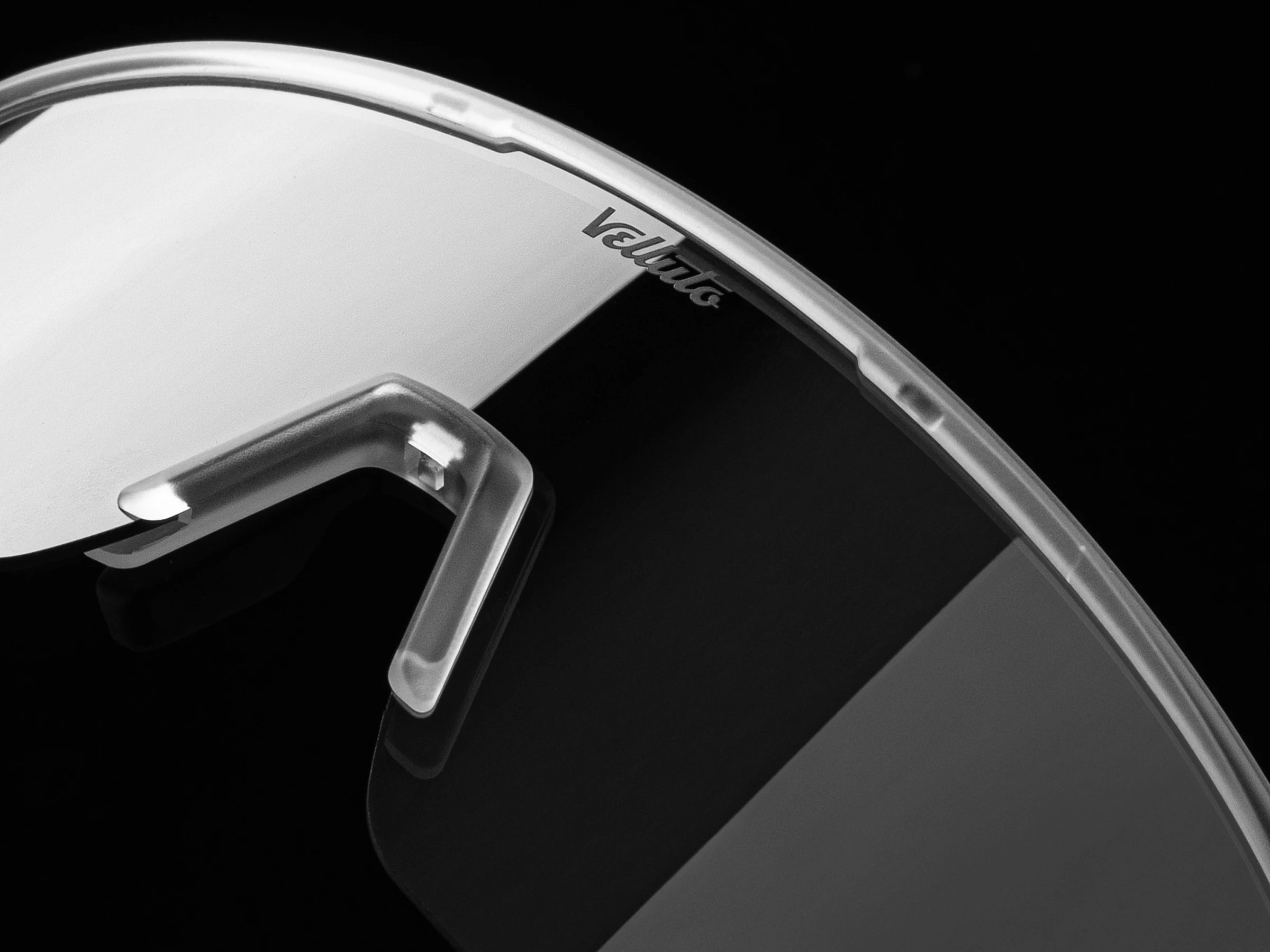
Velluto's click-in system, shared across both the VellutoPuro and VellutoVisione lenses, is designed for the second type of experience. Click-in, tool-free, fast. The mechanism is consistent across all four StradaPro colourways, so if you own glasses in Nero and Arancia, the same lenses work in both frames.
On lens choice specifically: the two-lens strategy of clear plus high-contrast covers more real riding scenarios than any other two-lens combination. Here is why. A clear lens (VellutoPuro) with UV400 certification handles everything from dark morning tunnels to overcast northern European days. It provides full eye protection against wind, insects and UV without reducing the ambient light that your visual system needs in low-contrast conditions. A high-contrast lens (VellutoVisione) does something different and complementary: it sharpens the visual definition of road surfaces, obstacles and terrain features without simply darkening the view. For riders doing gravel sectors in sportives, or navigating poorly surfaced roads in changing cloud cover, this distinction matters. You are not just looking for something darker. You are looking for something clearer in a specific optical sense.
Brands at this price tier frequently offer three, four or five lens options. Some add photochromic self-tinting lenses that respond to UV intensity, some offer mirror coatings, some offer heavily tinted options tuned for specific light conditions. Each of these can be genuinely useful depending on your riding profile. The honest counter-argument is that more options create more decisions, more purchase occasions and more lenses to carry. Two well-chosen lenses that cover the full spectrum of road riding conditions are frequently more useful than five specialist options that each require a specific set of circumstances to justify.

05 · Anti-fogThe Climb Problem That Most Glasses Never Solve
Anti-fog is the most underdiscussed serious feature in road cycling glasses, and the one that creates the most genuine safety problems when it fails. Here is the scenario every road cyclist recognises: you are pushing hard up a long climb, your body is generating significant heat, the ambient temperature is lower than your skin temperature, and the inside surface of your lens begins to fog. You either remove the glasses entirely (losing UV protection and wind protection at a moment when you need both) or you squint through a translucent haze for the next kilometre until pace drops and the fog clears. Neither option is acceptable.
Passive ventilation, the most common anti-fog approach in this tier, works by creating airflow channels in the frame that move external air across the inner lens surface when the rider is moving. This works well at speeds above 25–30 km/h. It works less well on steep climbs where speed drops, it works poorly in humid summer air where the differential between body and ambient temperature is smaller, and it fails entirely at rest. The result is that many cyclists who own glasses with "ventilated frames" still experience fogging in the conditions where they most need clear vision.
The Velluto StradaPro's built-in anti-fog system combines ventilation engineering with a lens coating approach that reduces the condensation threshold: the temperature point at which water vapour on the lens surface transitions from clear to fogged. The practical difference is that the system continues to function in low-speed climbing conditions where passive ventilation alone becomes insufficient. For Vuelta-style riding in August heat, where a stage can move from 38 degrees on the Meseta to 22 degrees on a mountain finish, this is not a marginal feature. It is the difference between seeing the corner and not seeing it.
06 · AdjustabilityWhy a Fixed Nose Bridge Is a Four-Hour Problem
Walk into any cycling shop and look at the frames on the wall. The majority of glasses in the €60–€120 bracket have fixed nose bridges: a single moulded piece of the same material as the frame, shaped to fit the statistical average nose geometry of a product designer's target demographic. If your face matches that geometry, you will be comfortable for the first hour and mildly uncomfortable for the second, because the fixed bridge applies pressure at exactly one point and does not move.
If your face does not match that geometry, the problem arrives sooner and escalates faster. The fixed bridge either sits too high (glasses drop forward on climbs, creating a gap that lets wind and dust reach the eye) or too low (bridge presses into the bone, which becomes genuinely painful on rides over 90 minutes).
Adjustable nose pads, the feature standard in high-quality cycling glasses and the approach taken in the StradaPro, solve this by allowing the rider to set the bridge position precisely to their face. This is not a premium luxury feature in 2026: it is a baseline ergonomic requirement for any glasses that will be worn for more than two hours at a time. The difference in comfort on a five-hour sportive between a well-fitted adjustable pad system and a fixed bridge is measurable in terms of the headache you do or do not have at kilometre 120.
A secondary benefit of adjustable pads is stability during technical descents. When the glasses are correctly positioned against the face with zero gap at the nose bridge, they cannot slide forward under aerodynamic loading. On a fast descent, glasses that shift even two millimetres create a distortion at the lens edge that your peripheral vision registers as movement. This is distracting in a context where distraction has consequences.

07 · Value per featureWhat €100–€200 Actually Buys You in 2026
Price in cycling glasses is not linear with performance. It is not the case that a €200 pair gives you twice the performance of a €100 pair, or that every additional euro above a certain threshold buys proportional value. What it buys is a set of engineering decisions that reflect the brand's priorities, and reading those priorities is the core skill in a road bike glasses comparison at this level.
Brand A in this tier might spend engineering budget on photochromic lens technology: a sophisticated, genuinely useful feature that auto-adjusts tint to UV intensity. This adds cost and adds value for riders who do not want to think about lens swaps, but it also means the frame is built around a proprietary lens system that you cannot replace with a clear option for a night ride. Brand B might prioritise frame aesthetics and brand identity, producing a recognisable look with moderate optical performance. Brand C might prioritise the lens ecosystem, offering multiple tints but a heavier frame and a less refined fit system.
The Velluto StradaPro makes specific engineering choices that reflect a clear hierarchy of priorities for road cycling use: weight first (25 grams), UV certification (UV400), anti-fog (built-in, not passive-only), adjustability (nose pads), and interchangeable lenses (click-in, two options covering the full road cycling spectrum). This is a performance-first specification list, and it is coherent: each feature reinforces the others. Light frame plus adjustable fit plus anti-fog means the glasses work in the conditions where most glasses fail, without asking you to carry them rather than wear them.
The starting price of the StradaPro from 69 EUR positions it compellingly within this tier. The 30-day risk-free trial is the final value element: it converts the purchase from a speculative commitment into a genuine test. If the fit, the anti-fog performance or the lens system does not work for your specific riding pattern, you return the glasses within 30 days. For any cycling glasses claiming performance credentials, this is the only meaningful test environment. A shop fitting tells you nothing about how a frame behaves at kilometre 90 in 35-degree heat.

08 · How to chooseA Practical Road Bike Glasses Comparison Framework
After working through weight, lens systems, anti-fog engineering and adjustability in detail, the question becomes: how do you apply this to a real purchasing decision? Here is a structured framework based on riding profile, not on brand preference.
If your primary riding is long road sportives (four hours or more): Weight and adjustability are the first filter. A fixed-bridge frame above 30 grams will give you feedback you do not want by hour three. Look for UV400 certification as a baseline, adjustable nose pads as a non-negotiable, and a built-in anti-fog system if your sportive routes include significant climbing. The StradaPro is designed precisely for this profile.
If you ride early mornings and late evenings as well as midday: The interchangeable lens system becomes your primary decision point. A single tinted lens that works beautifully at noon will compromise your vision at 6am. VellutoPuro (clear, UV400, anti-fog) plus VellutoVisione (high-contrast, UV400) is the pairing that covers this range without requiring you to carry multiple complete frames. Look for a click-in system you can operate with one hand in 10 seconds or less.
If you ride across multiple disciplines (road, gravel, sportive): Versatility is the spec to optimise for. Adjustable fit handles varied helmet and kit combinations. The two-lens system handles the different road surface and light conditions you encounter across disciplines. Frame durability and the hard case (available separately for the StradaPro, with anti-crash guarantee and velvet finish) become relevant for glasses that travel between multiple riding environments.
If you ride in unpredictable northern European weather: Anti-fog performance is the primary technical requirement, because the temperature differential between body heat and ambient air is higher and more variable in Atlantic and Nordic weather than in Mediterranean summer conditions. The second consideration is lens versatility: a clear lens for grey overcast riding and a contrast-enhanced lens for the moments when the cloud breaks and surface definition becomes critical. The StradaPro's built-in anti-fog system was designed with exactly this weather profile in mind.
If aesthetics matter alongside performance: The StradaPro's Italian design origin is relevant here. The four colourways, Arancia, Espresso, Nero and Viola, are not arbitrary paint choices: they are developed to work with the dominant colour families in road cycling kit. Espresso and Nero suit black and dark kit combinations. Arancia works with Italian red, white and orange kit palettes. Viola pairs with the purple and blue kit colours that have become dominant in European road cycling aesthetics since 2024. This is not vanity specification: looking good in your kit is part of the experience of road cycling, and a frame that works visually with your setup will get used more consistently than one that clashes.

09 · Brands in contextHow the Major Players Position Themselves in 2026
Any honest road bike glasses comparison needs to acknowledge the brands that riders are actually comparing. The following is a category-level overview of how major names position themselves in 2026, written to help you understand the landscape rather than to rank one brand against another.
Oakley remains one of the most recognised names in cycling eyewear globally. Their Sutro and Sutro Lite models are widely visible in professional cycling. Oakley's strength is optical clarity and brand recognition; their lens ecosystem is extensive and the Prizm lens technology is designed to enhance specific colour spectra for different environments. Their frames in the road-relevant range weigh between 28 and 36 grams depending on model. Oakley is a logical reference point for any rider buying in this tier, and their products are well-made. What they offer is different from what Velluto offers: a broader ecosystem with more lens specialisation, at a different price and weight profile.
SunGod has built a strong position in the UK and European road cycling market with a customisation-forward approach. Their Velans and Airas models offer a wide range of frame and lens colour combinations that appeal to riders who want a personalised setup. SunGod's focus on colour variety and customisation is a genuine strength for that rider profile.
Rudy Project is a longer-standing Italian brand with deep roots in triathlon and road racing. Their Cutline and Tralyx models are popular with endurance athletes. The brand's Italian design heritage is similar to Velluto's design language, though the two brands occupy different parts of the market in terms of weight engineering and lens system design.
POC takes a safety-science approach to cycling eyewear, with a particular emphasis on impact resistance and visibility. Their Aspire and Devour models are popular with road cyclists who prioritise protective engineering alongside optical performance.
The honest summary is that each of these brands has genuine strengths and a clear rider profile they serve well. The road bike glasses comparison that matters is not "which brand is best in the abstract" but "which brand's engineering priorities match my riding priorities." For riders who weight weigh, adjustable fit, anti-fog on climbs and a clean interchangeable two-lens system as their primary requirements, the StradaPro's specification is directly built for that profile.
The road bike glasses comparison that matters is not which brand is best in the abstract. It is which brand's engineering priorities match your riding priorities.Velluto Buying Guide, August 2026
10 · ColourwaysStradaPro in Four: Arancia, Espresso, Nero, Viola
The StradaPro's Italian design roots show most clearly in its approach to colour. All four colourways share identical optical and mechanical specification: same 25-gram frame, same UV400-certified lens system, same click-in mechanism, same adjustable nose pads. The colour choice is purely a question of personal aesthetic and kit compatibility.


Espresso is the most versatile colourway in terms of kit compatibility: the warm brown works with black, white and earth-tone kit palettes that are increasingly common in European road cycling in 2026. Nero is the clean, universal option that disappears into any kit combination. Arancia is the statement choice, referencing Italian racing heritage with an orange that works particularly well with red and white kit. Viola is the seasonal standout, a purple-tone frame that aligns with the pastel and jewel-tone kit palettes that have dominated the peloton aesthetics since the 2025 Giro.

11 · Care and maintenanceKeeping Your Lenses Performing Through the Season
A road bike glasses comparison that ends at the purchase decision is incomplete. The glasses you choose will perform differently in six months depending on how you maintain them, and lens care is the area where most cyclists lose performance without realising it.
The primary enemy of lens optical quality is improper cleaning. Wiping a lens dry with a jersey or a rough cloth introduces fine scratches into the coating, which show up under direct sunlight as a haze that no amount of subsequent cleaning will remove. The correct method is a microfiber cloth (Velluto's 25x25cm cloth uses 80% polyester and 20% polyamide, a ratio designed for lens safety rather than just softness) combined with a lens-appropriate cleaning spray.
Velluto's Cleaning Spray is a 50ml formula with apple fragrance, made in Germany and designed for refillable use. The 50ml size fits in a jersey pocket, which matters for mid-ride cleaning when insects, rain or sweat compromise lens visibility. The refillable format reduces waste across a full season of riding, where a single-use lens wipe approach generates significant packaging.
For storage and transport, the hard case with anti-crash guarantee is the option that protects both the frame and the lens coating during the transitions between rides: in a cycling bag, in a car, in a backpack during travel. A case with a velvet interior lining prevents the microscopic contact between frame and case surface that gradually degrades coatings. The StradaPro's hard case fits all road cycling glasses and provides this protection without adding meaningful weight to your kit bag.
Lens swapping, done correctly, preserves the click-in mechanism and the lens alignment. The VellutoPuro and VellutoVisione lenses are designed for repeated tool-free swaps without degrading the connection point. A common error with interchangeable lens systems is forcing the swap: the click-in mechanism is designed to release with a specific motion, and forcing it accelerates wear at the connection points. Follow the specified swap technique for each lens and the system should remain reliable across multiple seasons of regular use.
Compare the full lineup in the Velluto StradaPro cycling glasses collection.
12 · FAQFrequently Asked Questions
What is the most important spec to compare when buying road bike glasses?
How much should I spend on road cycling sunglasses in 2026?
Are interchangeable lenses worth it for road cycling?
What does UV400 mean and do all cycling glasses have it?
How does anti-fog technology work in cycling glasses?
Do adjustable nose pads make a real difference on long rides?
What is the difference between the VellutoPuro and VellutoVisione lenses?
What frame weight should I look for in road cycling glasses?
Can I try road bike glasses before committing to a purchase?
If you have worked through this road bike glasses comparison and the specification profile of the StradaPro matches your riding, the most useful next step is the 30-day trial. The numbers in this guide are accurate, but the only spec that matters at kilometre 100 is whether the frame is still working for you. Try the StradaPro on your actual rides, in your actual conditions, and let the performance make the case. Find the full range and lens options at velluto-shop.com.