Cycling Glasses with Interchangeable Lenses: Best Value 2026
Contents5 min read
Cycling Glasses with Interchangeable Lenses: Same Performance, Smarter Value in 2026
The peloton at the Tour de Suisse this month hammered through valley fog, sharp Alpine sun and sudden cloud cover in the space of a single stage. The Critérium du Dauphiné riders faced the same brutal variety two weeks earlier. And this weekend, thousands of amateur cyclists across the Netherlands and Belgium will chase their own suffering on gravel tracks that shift from shadowed forest to open farmland in minutes. Every single one of them needs cycling glasses with interchangeable lenses. The question in 2026 is not whether you need them. The question is whether you are choosing the right frame for your budget and riding style.
The Problem Every Cyclist Knows But Nobody Talks About
You have stood at the start of a morning ride with dark lenses on, watching the sky and making a silent bet. Halfway through, the sun disappears behind a solid ceiling of grey and your lenses are now working against you, killing contrast, flattening the road surface, turning a fast descent into a guessing game. Or the reverse: you clipped in under clouds and by kilometre 30 the sun is burning directly into your face. Fixed-tint glasses are a bet you lose at least once every three rides.
The cycling glasses market understood this years ago. The solution, interchangeable lenses, has been standard on serious road glasses for a decade. But the price gap between brands has never made logical sense. Price varies widely across the interchangeable-lens category. The key is matching specifications to your needs, not brand familiarity. The UV400 certification, the anti-fog coating, the tool-free click system: these are engineering specifications, not brand heritage. And specifications can be matched by a brand that has made a deliberate choice to pass the margin back to the rider.
This is the conversation that Tour de Suisse commentary does not have. The professionals have sponsors. You have a budget and a real choice. The smartest thing a faster, more experienced rider will tell you is this: check the specs, verify the weight, test the lenses, then decide. Everything else is marketing.
What to Look for in Cycling Glasses with Interchangeable Lenses: A Practical Checklist
Weight under 30 grams. Anything heavier creates pressure on your nose over three-plus hour rides. The lightest options cluster around 25 to 28 grams. The lightest options on the market cluster around 25 to 28 grams, with many serious road glasses sitting between 28 and 32 grams. The threshold matters because glass pressure translates directly into distraction, and distraction on a fast descent costs more than the price difference between glasses.
UV400 certification, not just "UV protection". UV400 means 100% blockage of UVA and UVB rays up to 400 nanometres. Vague UV claims without the 400 rating are not the same thing. Do not accept less, especially for summer Alpine riding where UV index routinely hits 8 or higher.
A genuinely fast lens swap. Tool-free click-in systems vary. Some require two hands, a flat surface and a moment of concentration. The best systems swap in under five seconds with one hand. Test this before committing, or read reviews that describe the swap process explicitly rather than just calling it "easy".
Anti-fog performance on climbs. Fog is not a winter problem. At 12 degrees Celsius climbing into mist, your face is producing heat and moisture. Glasses without active anti-fog engineering will fog within three minutes. This is not cosmetic, it is a safety issue on technical descents.
Adjustable nose pads. Face geometry varies. Adjustable pads are the difference between glasses that sit correctly and glasses that slide 4mm down your nose every ten minutes. For gravel riding on rough surfaces, this matters even more.
A trial period with real return conditions. Any brand confident in their product offers a meaningful trial. Thirty days is the minimum to test across variable summer conditions.
Why the Velluto StradaPro Is the Rational Choice in 2026
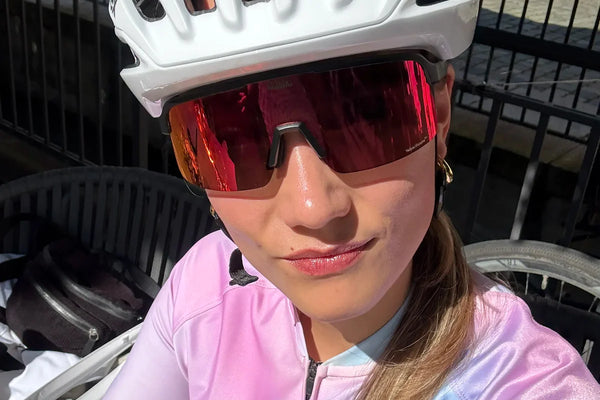
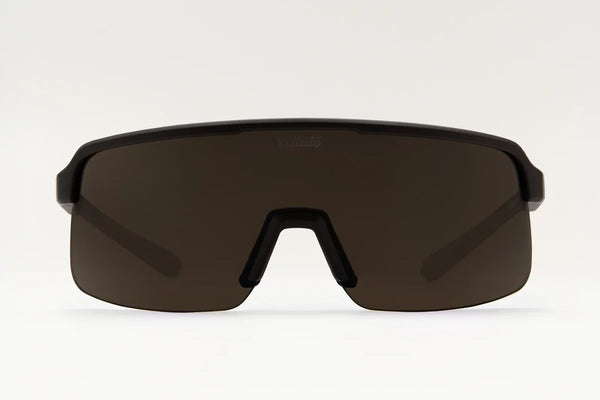
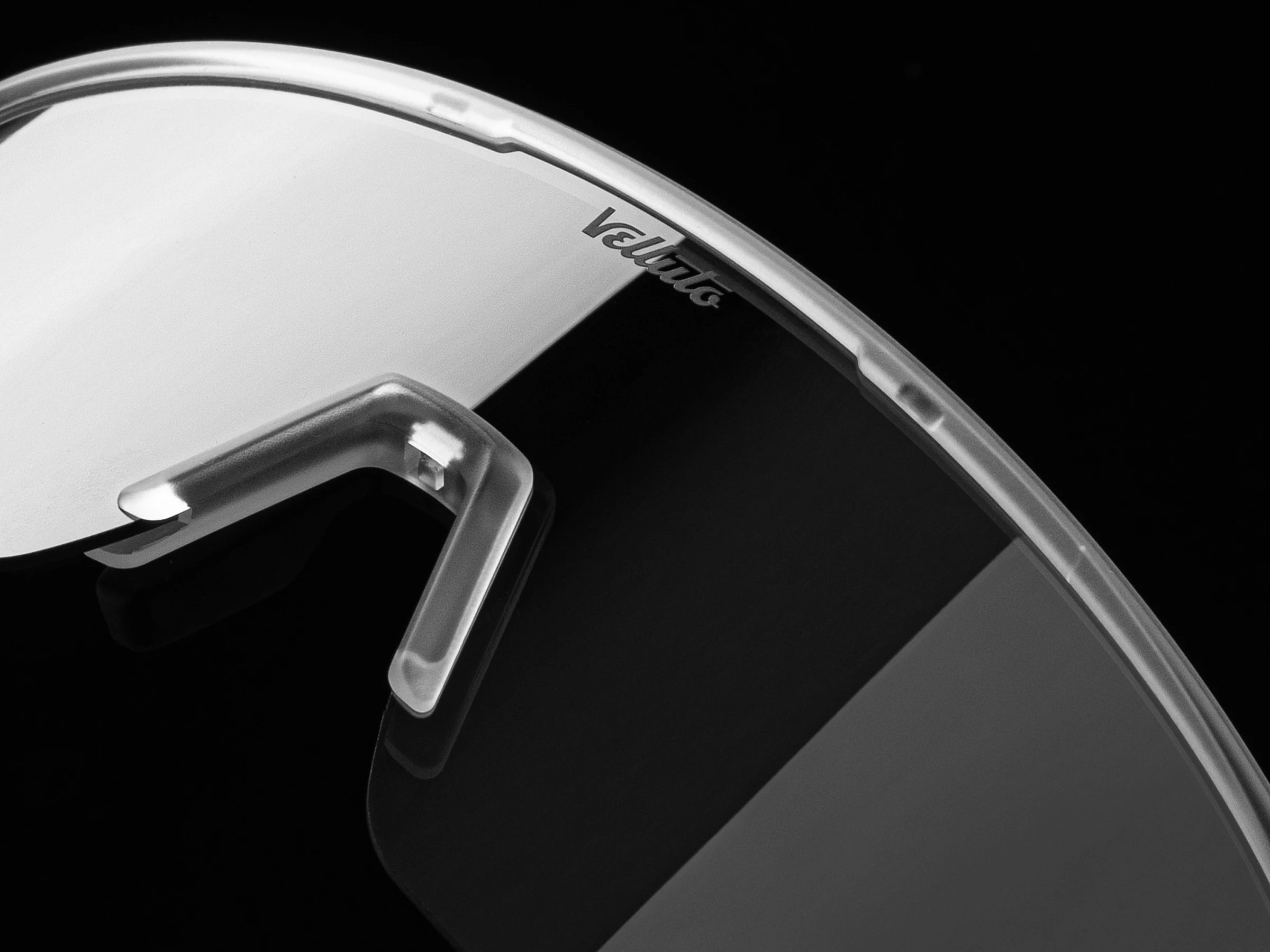
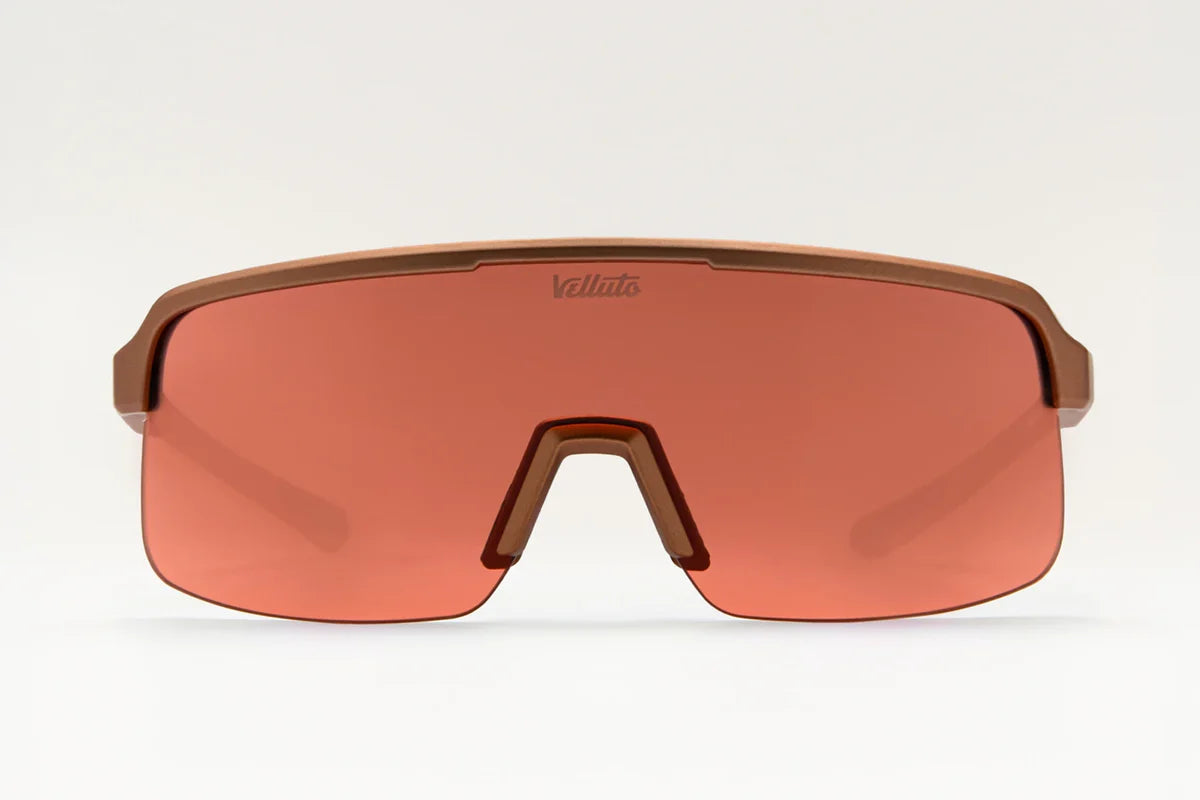
The Velluto StradaPro weighs 25 grams, positioning it among the lightest options in the interchangeable-lens category. It carries UV400 certification: 100% UVA and UVB protection confirmed. The adjustable nose pads let you dial in fit precisely, which is why the frame stays in position whether you are in the drops at 55 km/h or grinding a gravel climb. The built-in anti-fog system is engineered for the road and gravel scenarios where you transition from a cold valley into direct sun, or push into a headwind descent after a long climb.
The lens system uses two options that cover every condition a road and gravel cyclist will encounter this summer. The VellutoPuro clear lens is optimised for low-light, overcast and dawn riding, with full wind and insect protection and UV400 coverage. The VellutoVisione high-contrast lens sharpens definition in bright and variable light, making road surface texture, gravel lines and shadow-to-sun transitions significantly clearer. Both swap via a tool-free click-in system designed for single-hand operation even with cold fingers after a mountain descent.
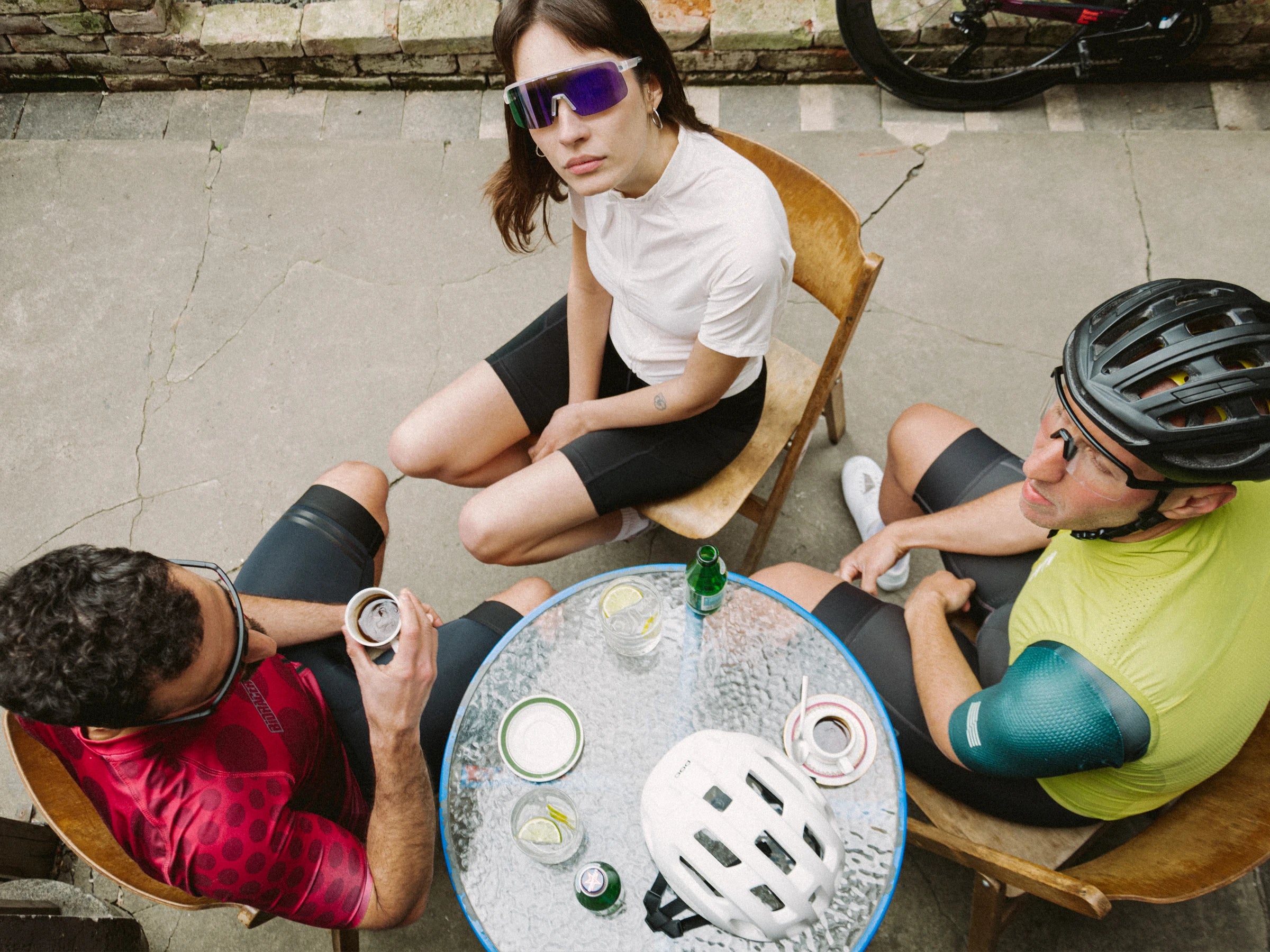
The frame comes in four colours: Arancia (orange), Espresso (brown), Nero (black) and Viola (purple). Every version ships with the same specifications. And Velluto backs the product with a 30-day risk-free trial. Ride it for a month across summer conditions. If it does not perform, return it. Free shipping on orders over 99 euros applies throughout.
 Velluto Starter Vision Kit | Viola
Frequently Asked Questions
Do cycling glasses with interchangeable lenses really make a difference on variable-light rides?
Yes, and the difference is measurable in reaction time and comfort. A lens optimised for bright sun flattens contrast in overcast conditions. A clear or high-contrast lens in direct summer sun causes squinting and eye fatigue. The ability to swap in sixty seconds at a café stop or a summit is not a luxury: it is the correct tool-selection for the conditions you are actually riding in.
How do I know if a lens swap system is fast enough to use in the field?
Test it cold. Put the glasses in your jersey pocket for 20 minutes on a winter morning, then try the swap. If you need two hands and a flat surface, the system fails the real-world test. The Velluto click-in system is designed to function with cold, gloved fingers: press the tab at the bridge, the lens releases cleanly, the replacement clicks into two anchor points simultaneously.
Is a 30-day trial period enough to properly evaluate cycling glasses?
In June and July, yes. Thirty days of summer riding will include sun, overcast, rain, mountain fog, morning starts and afternoon heat. That is more lens-testing variation than most laboratory reviews provide. The Velluto 30-day trial is structured for exactly this: ride them across real conditions, not a single test loop.
Ready to test cycling glasses with interchangeable lenses across your next 30 days of riding? Start at velluto-shop.com.