Cycling Glasses Under 200 Euros: Where Value Breaks
Contents20 min read
It is the third hour of a late-August sportive, the road tilting upward into the kind of heat that radiates off tarmac in visible waves, and the rider ahead of you reaches up to wipe the fog from their lenses on the descent. You do not. That single moment, the difference between seeing the road and guessing at it, is worth understanding before you spend any money on cycling glasses.
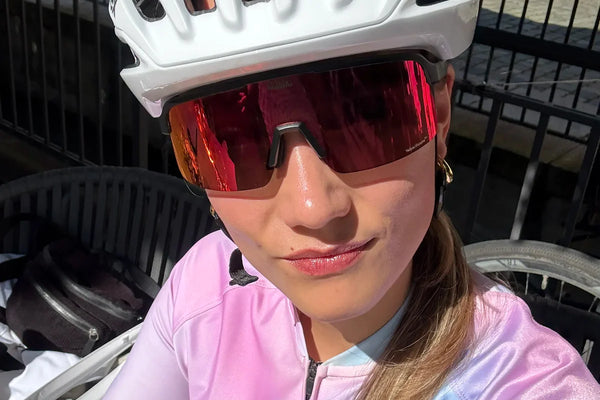
The cycling eyewear market in 2026 spans a wide range, from sub-50-euro options at the lower end to flagship professional models at 300 euros and beyond. Most cyclists, including serious club riders, gran fondo regulars, and Vuelta watchers who quietly upgrade their kit every season, are shopping somewhere in the middle: cycling glasses under 200 euros. This guide maps that territory honestly. It looks at what you actually get at the 80-euro, 120-euro, and 200-euro price points, where the real performance breaks occur, and where spending more stops delivering meaningful returns. The Velluto StradaPro sits within this range and earns its place here on verifiable specifications, not marketing language.
Last updated: 29 August 2026.
01 · The MarketWhat the cycling glasses market under 200 euros actually looks like
Walk into any well-stocked cycling shop or browse a major online retailer and the glasses wall can feel overwhelming. There are frames styled after professional peloton models, frames with single fixed lenses, frames with interchangeable systems, and frames that appear technically advanced but offer little documentation to back up the claims. Price points cluster loosely around three tiers that most buyers navigate intuitively, even without knowing the technical names for what separates them.
The entry tier, roughly 60 to 100 euros, covers glasses that fulfil the basic function: UV protection, some degree of wind and debris shielding, and a frame that stays on your face at pace. These are the glasses you buy before your first season, or that a commuter picks up to protect their eyes without over-investing. The optics are adequate. The fit is often generic. The lens systems are usually fixed or use a basic slot-swap mechanism that requires tool assistance or careful handling.
The mid-range tier, roughly 100 to 160 euros, is where the meaningful engineering begins to appear. Lens coatings improve. Frame geometries become more precisely shaped for sport use. Interchangeable lens systems start appearing with genuine click-in reliability. Nose pad adjustability, which sounds like a minor detail until hour four of a ride, becomes standard. Anti-fog systems move from passive ventilation slots to active coating-plus-ventilation combinations. This is the tier where most trained cyclists find their long-term kit.
The upper mid-range tier, 160 to 200 euros, starts to encroach on premium territory. Here you pay for premium optical coatings, lighter frame materials, and brand positioning that includes sponsoring professional WorldTour teams. The core functionality, UV protection, lens clarity, anti-fog, fit adjustment, is broadly comparable to strong mid-range options. The gains become more incremental and more dependent on individual preference.
02 · At 80 EurosWhat you get at the 80-euro price point
Glasses in the 60 to 90 euro bracket have improved substantially over the past decade. The optical quality of polycarbonate lenses at this price has risen as manufacturing tolerances tightened and coating technology became more accessible to mid-volume producers. You can buy a UV400-certified pair of road cycling glasses for under 80 euros in 2026 and not feel embarrassed wearing them past the sign-on tent at a local sportive.
What you typically get: UV400 protection, a fixed or basic single-lens design, a lightweight enough frame for casual riding, and perhaps a semi-rigid case. What you typically compromise on: lens optical quality under variable light, anti-fog reliability, fit precision, and any meaningful lens versatility. Many entry-level frames use nose pads that are moulded in a fixed position, which works acceptably for the average face but creates pressure or instability for anyone slightly outside the design median.
The anti-fog story at this tier is worth examining separately. Many 80-euro glasses carry an anti-fog label. In practice this often means ventilation slots in the frame, which helps in steady high-speed riding but does very little when you drop pace on a climb, stop at a feed station, or descend into cooler air. A lens coating that actively manages moisture is a different category of protection. That distinction rarely appears in 80-euro spec sheets.
For a rider who cycles two or three times per month, primarily on summer morning rides in dry conditions, an 80-euro pair may be entirely sufficient. For a rider doing long sportives, mixed-weather training, or anything involving extended climbs and descents, the limitations show up at exactly the moments that matter most.

03 · At 120 EurosWhat changes at the 120-euro level
The step from 80 euros to around 120 euros is, in practical terms, the most significant upgrade jump available in the cycling glasses market. This is the price band where several things converge that individually are marginal improvements but collectively change the experience of wearing glasses on a long ride.
Lens quality takes the most noticeable leap. Optical clarity improves, meaning less peripheral distortion, better colour rendering, and reduced eye fatigue over long durations. Lenses at this tier often use multi-layer coatings that handle glare reduction, scratch resistance, and hydrophobic surface treatment simultaneously. The hydrophobic coating has a secondary anti-fog effect because it prevents water droplets from spreading into a flat film across the lens surface.
Frame engineering sharpens considerably. Nose pad systems at 120 euros frequently offer genuine adjustability, not just a range of pre-moulded sizes in the box, but physical repositioning of the pad itself. This matters for two reasons. First, it means the glasses can be tuned to a specific face rather than a statistical average. Second, it means a secure fit without pressure, which over 150 kilometres translates directly to comfort and the ability to keep the glasses on the face rather than pushing them up every 20 minutes.
Interchangeable lens systems at this tier move from optional extras to genuine features. A well-engineered click-in system at 120 euros should allow a lens swap in under 30 seconds without tools and without the lens flexing alarmingly during the process. This is the functionality that turns one pair of glasses into a versatile kit item: the same frame handles a grey dawn start with a clear lens and a bright midday finish with a contrast lens.
Anti-fog performance at 120 euros begins to incorporate both ventilation and coating technology together. This combination is qualitatively different from ventilation alone. On a hard climb where speed drops and warm breath rises, a coating-assisted system maintains clarity where a ventilation-only system does not.
The step from 80 to 120 euros is where lens quality, fit adjustability, and anti-fog reliability converge into something you actually feel across a five-hour ride.Velluto Eyewear Guide, 2026
04 · At 200 EurosWhat the top of the under-200 range delivers
At 160 to 200 euros you are buying into premium construction and, in many cases, the brand positioning that comes with WorldTour team sponsorship. The fundamental question for a serious amateur cyclist is straightforward: does the performance justify the additional cost over a strong 120-euro option?
The honest answer is: sometimes, for some riders, and in specific respects. Frame materials at the top of the sub-200 range often use more refined grades of grilamid or similar high-performance polymers that shave additional grams and improve stiffness-to-weight ratios. Lens optical coatings can be more sophisticated, with additional layers addressing chromatic aberration or enhanced contrast tuning. The finish quality, hinge tolerances, and case quality are typically better.
What does not change meaningfully between 120 and 200 euros: UV400 protection (it is either certified or it is not, regardless of price), the fundamental geometry of cycling eyewear design, or the core logic of an interchangeable lens system. A tool-free click-in mechanism that works reliably at 120 euros is functionally equivalent to one that works reliably at 200 euros.
The 200-euro tier reflects costs across product development, sponsorship investments, retail structure, and marketing. Understanding this cost structure helps you evaluate where your budget allocation goes. A brand that prioritises product engineering investment can deliver strong technical performance at a competitive retail price.
For riders who compete at a high amateur level, train in very variable conditions, or simply want the best available construction regardless of marginal return, 200-euro options make sense. For the majority of road cyclists, including regular club riders, gran fondo participants, and dedicated sportive riders, the performance ceiling reached at a strong 120 to 150-euro option is entirely sufficient.

05 · The Break-PointWhere the real value break-point sits in cycling glasses under 200 euros
After mapping the three tiers, the answer to where the value break-point sits is fairly clear: it is at the top of the mid-range, roughly 100 to 150 euros. This is the zone where all the performance features that materially affect riding experience, lens optical quality, genuine anti-fog systems, adjustable nose pad fit, reliable interchangeable lenses, and meaningful frame engineering, come together without the premium pricing overhead of the upper tier.
This is not a comfortable conclusion for either budget brands or premium heritage labels. It suggests that a well-designed 120 to 150-euro cycling glass can genuinely outperform both an 80-euro option on technical grounds and a 200-euro option on value grounds. The catch is that "well-designed" is doing real work in that sentence. Not every glasses manufacturer allocates their cost budget to the features that matter most for road cycling. Some spend it on visual complexity, interchangeable frame components that add weight, or case design that impresses in the shop but adds bulk to a jersey pocket.
The features that directly affect road cycling performance, and that a buyer should prioritise within any budget, are listed here in order of functional importance:
When you evaluate cycling glasses under 200 euros against these four criteria, the field narrows considerably. Many options at each price tier fail one or more. The glasses that pass all four, certified UV protection, genuine anti-fog with coating assistance, sub-30-gram frames with adjustable pads, and reliable tool-free lens interchangeability, represent the real value zone regardless of whether their retail price is 100 or 150 euros.
06 · Velluto StradaProWhere the Velluto StradaPro sits in this landscape
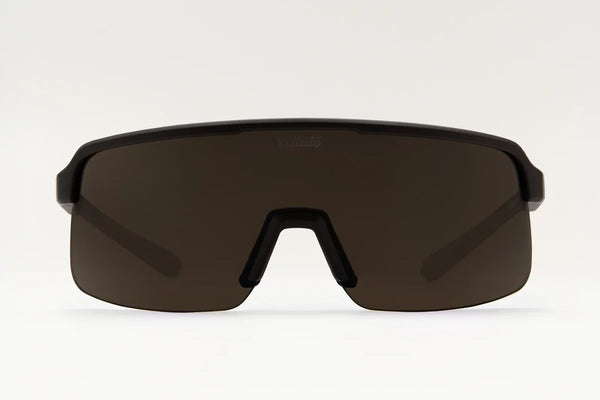
The Velluto StradaPro is a German-engineered, Italian-designed road cycling frame built explicitly for the performance tier within the under-200 euro segment. Its specifications are verifiable and publicly documented, which is the baseline any buyer should require before trusting a price-tier claim.
Frame weight: 25 grams. This is a relevant number, not just a marketing one. It places the StradaPro comfortably below the 30-gram threshold that represents a meaningful comfort difference on long rides. Adjustable nose pads are built into the frame design, allowing positional tuning for a pressure-free fit across a wide range of face shapes, including narrower or lower nose bridges where standard fixed pads create instability.
UV400 certification is confirmed, blocking 100 percent of UVA and UVB radiation. The built-in anti-fog system combines ventilation architecture with surface treatment, the combination approach rather than ventilation alone. In practice, this is the system that holds clarity on a 10-minute climb at reduced pace in August humidity, which is exactly the scenario where ventilation-only systems fail.
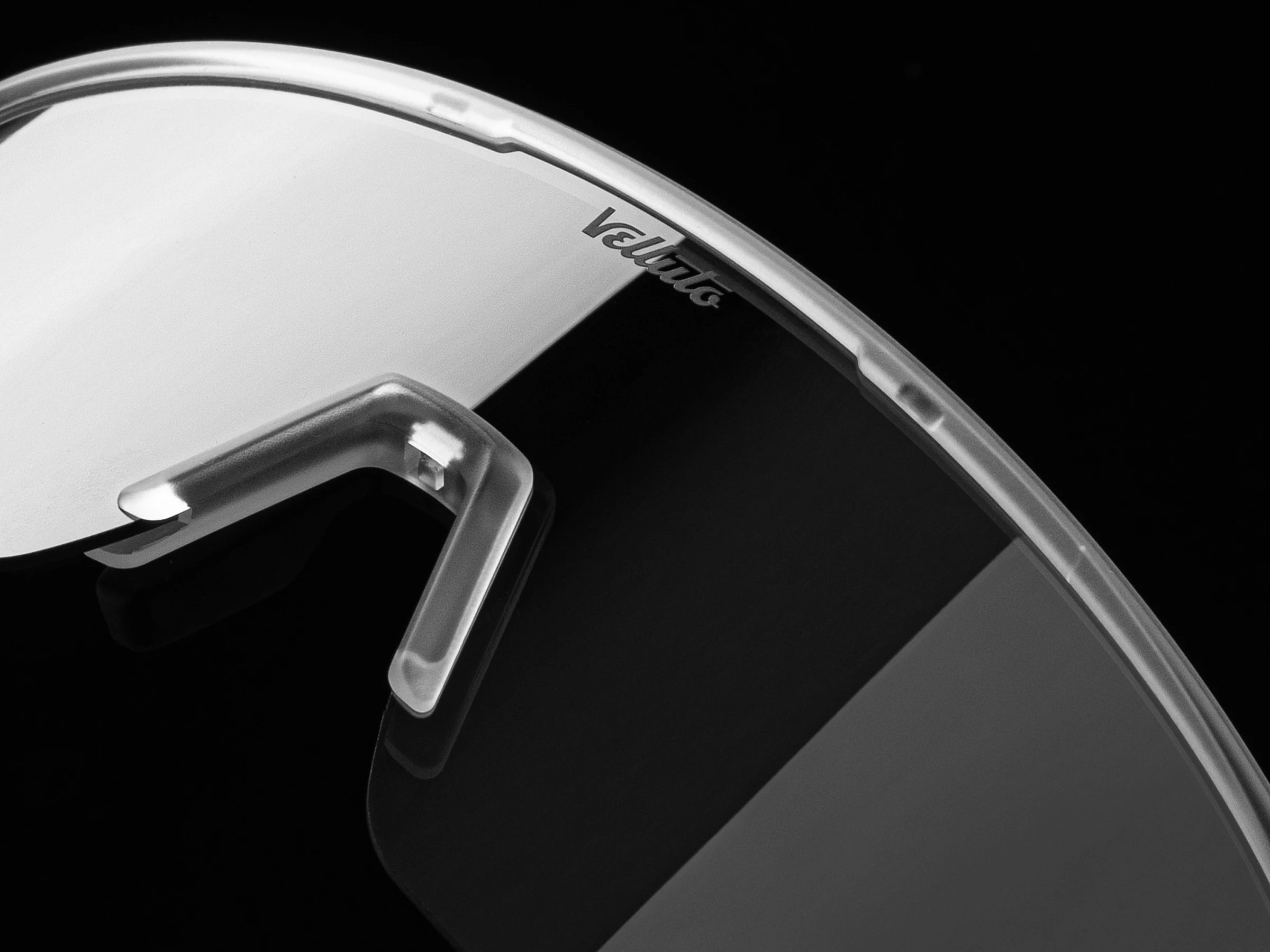
The lens interchangeability system uses a tool-free click-in mechanism compatible with two lenses: the VellutoPuro transparent lens, optimised for low-light and overcast conditions with full UV400 certification, and the VellutoVisione high-contrast lens, which uses VellutoVisione technology to sharpen visual definition and contrast in varying ambient light. Both lenses swap without tools and without the lens flexing or requiring force. The system is designed to be used on the road: you can perform a lens swap in your back pocket or at a feed station without specialist handling.
The 30-day risk-free trial is a meaningful specification. Cycling glasses fit is genuinely difficult to assess without riding, because the nose pad pressure, ear grip security, and lens coverage relative to your riding position all behave differently at pace than standing in a shop or clicking through an online product page. A 30-day trial converts this from a speculative purchase into a testable one.

07 · ComparisonCycling glasses under 200 euros: a structured comparison
The table below compares key technical criteria across the three price tiers discussed in this guide. It is built on documented or typically observable features at each level, not on individual brand claims that cannot be generalised. Where a feature varies significantly within a tier, that variation is noted rather than smoothed over.
| Feature | Under 90 EUR | 100 to 160 EUR | Velluto StradaPro |
|---|---|---|---|
| UV400 certification | Often labelled, certification varies | Typically certified | Certified |
| Anti-fog system | Ventilation only in most cases | Ventilation plus coating at better end of tier | Built-in: ventilation plus coating |
| Frame weight | Typically 28 to 38 g | Typically 25 to 34 g | 25 g |
| Nose pad adjustability | Fixed or limited sizing options | Adjustable on most models | Adjustable |
| Lens interchangeability | Fixed lens or basic swap | Click-in systems at better end of tier | Tool-free click-in |
| Lens options | Single tint in most cases | Two or more lens options on better models | VellutoPuro clear and VellutoVisione contrast |
| Trial period | Standard retail returns vary | Standard retail returns vary | 30-day risk-free trial |
The StradaPro is positioned within the 100 to 160-euro tier on every documented specification, and the 30-day trial reduces the purchase uncertainty that applies to online cycling eyewear across any price point.
08 · Lens SystemUnderstanding the two-lens system as a value multiplier
One point that the tier comparison above does not fully capture is the economic logic of an interchangeable lens system. This is worth making explicit because it changes the value calculation significantly.
A single-lens cycling glass at any price covers one set of light conditions adequately. A dark tinted lens handles bright summer sun but becomes a liability in cloud cover, tunnels, tree-lined routes at dawn, or the last hour of an autumn sportive as the light drops. A clear lens handles low light but provides minimal glare management on a clear August day with the sun low and ahead of you.
Riders who want to cover the full range of conditions with a single fixed lens are choosing a compromise in both directions. The alternative has historically been carrying two pairs of glasses, which is impractical on a road bike, or accepting the compromise.
The VellutoPuro and VellutoVisione lenses for the Velluto StradaPro address this directly. The VellutoPuro transparent lens handles pre-dawn starts, overcast training days, and shaded forest descents while maintaining UV400 protection and anti-fog performance throughout. The VellutoVisione high-contrast lens applies VellutoVisione technology to sharpen visual definition in variable and bright conditions, improving road surface reading, depth perception, and contrast between tarmac and surroundings.
Because the click-in system is tool-free, the swap is practical in real ride scenarios. You can change the lens at a cafe stop when the weather shifts, or before leaving the car park if the morning forecast has changed. This is the kind of feature that sounds marginal until the moment you need it, and then feels indispensable.
From a pure value standpoint: a frame with a reliable two-lens interchangeable system is not a single pair of glasses. It is a complete optical kit for road cycling that happens to weigh 25 grams and fit in a jersey pocket.

09 · Colour and MaintenanceChoosing your colourway and keeping your lenses performing
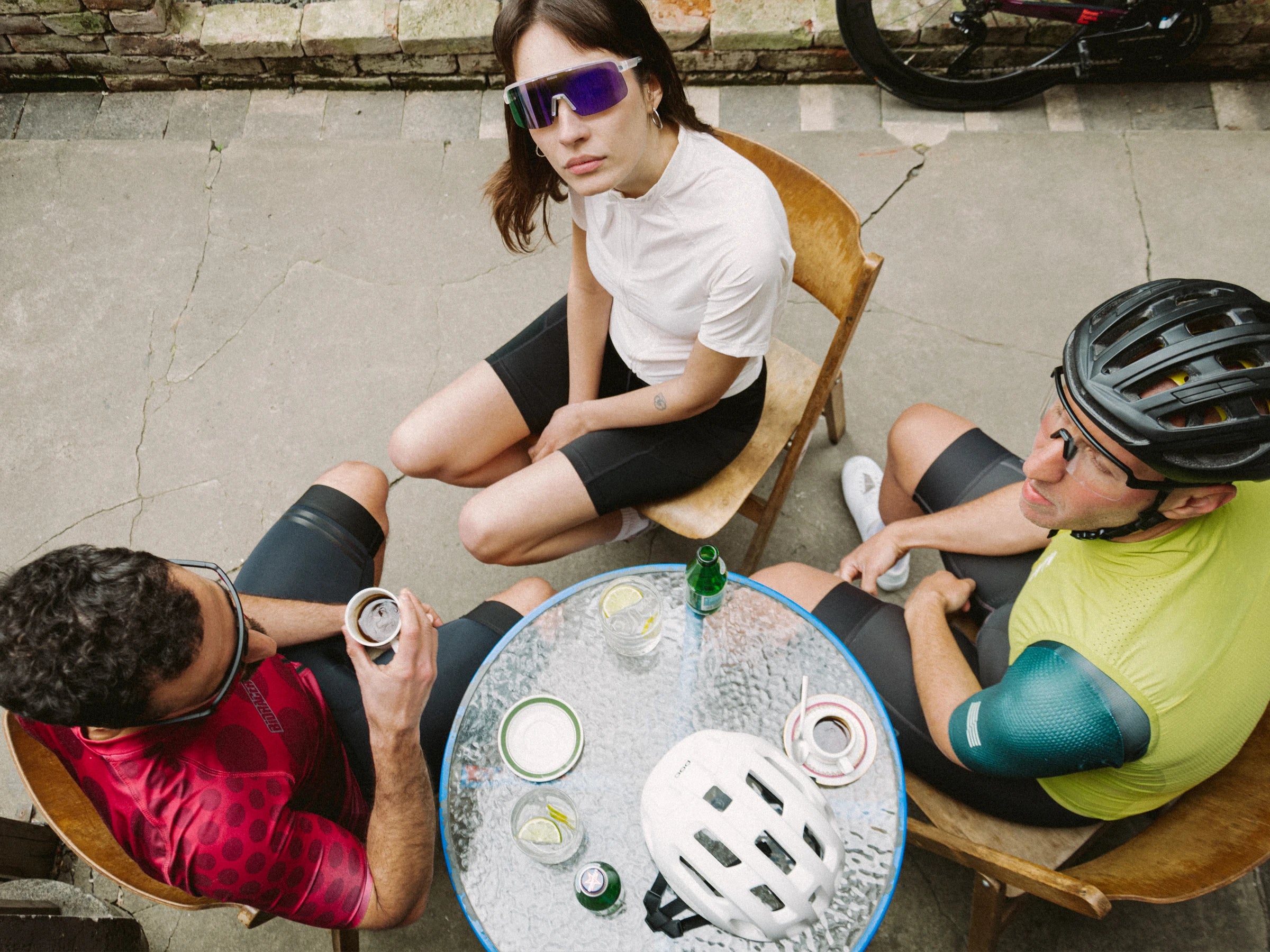
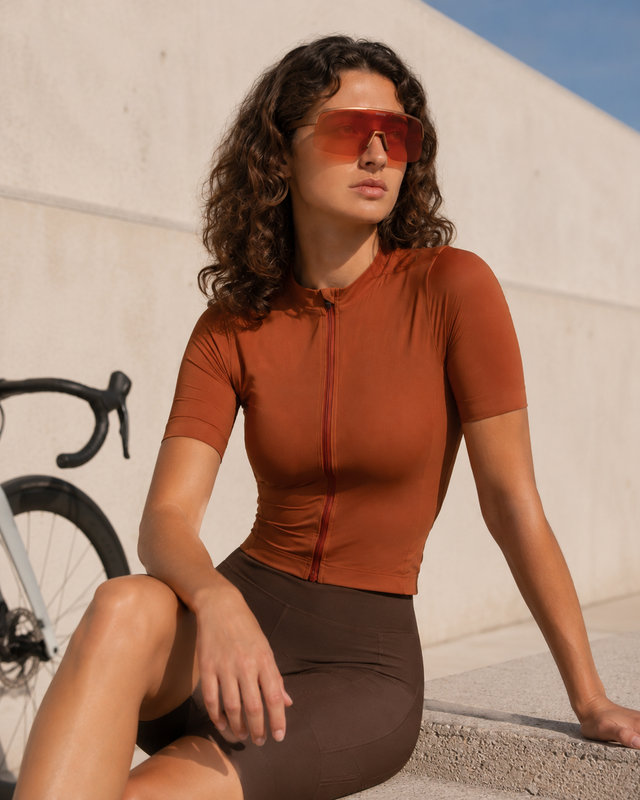
The StradaPro is available in four colourways: Arancia (orange), Espresso (brown), Nero (black), and Viola (purple). Colourway choice is personal but not entirely arbitrary. Darker frames, particularly Nero and Espresso, present a lower visual profile on the face and are often preferred by riders who want a more understated aesthetic. Arancia and Viola offer stronger visual contrast against kit colours and are popular with riders who favour a more distinctive look on the bike.
Frame colour does not affect optical performance, weight, or fit. The lens system, anti-fog properties, and UV rating are consistent across all four colourways. The choice is genuinely about preference, which is a comfortable position for a buyer to be in.
Lens maintenance is a practical concern that affects the performance of any cycling glass over time, regardless of price tier. The most common source of lens damage is not riding conditions but cleaning: dry-wiping a lens with a jersey, paper towel, or non-specialist cloth introduces fine scratches that accumulate into optical distortion and accelerate coating degradation. Using a purpose-made cleaning spray formulated for optical coatings, applied with a microfibre cloth, preserves both lens clarity and anti-fog coating performance through repeated cleaning cycles.

The Hard Case is a parallel accessory worth noting. A well-constructed case with an anti-crash guarantee protects not just the frame but the lens coatings, which are the most value-sensitive component of the glasses. Storing a pair of cycling glasses loosely in a jersey pocket, or in a bag without protection, exposes the lens coatings to unnecessary contact and debris. Using a protective case preserves both lens clarity and anti-fog coating performance through the season.
10 · Who Should Buy WhatMatching price tier to rider profile
The value break-point analysis points toward the mid-to-upper-mid range as the strongest territory for most serious road cyclists. But "most" is not "all," and it is worth being specific about which rider profiles genuinely benefit from each tier.
The 80-euro tier serves occasional riders well. If you are cycling primarily on dry summer days, on routes you know, at a pace where anti-fog is rarely triggered, and without the lens versatility demands of variable weather, an 80-euro option covers the functional baseline. UV protection, debris shielding, and basic comfort are there. The limitations appear in edge conditions.
The 100 to 160-euro tier, and specifically the top of that range, is the correct choice for regular road cyclists who ride in variable conditions, do longer events, or simply want kit that performs reliably across a full season without managing its limitations. The Velluto StradaPro falls in this tier and addresses all four of the critical performance criteria identified in Section 05.
The 160 to 200-euro tier makes most sense for riders who have already optimised their kit at the mid-range and are seeking marginal gains in optical quality or frame material refinement, for riders who specifically value the brand positioning of a WorldTour-sponsored label, or for riders whose riding conditions are at the extreme end of what mid-range frames are designed for.
What the analysis does not support is the assumption that more expensive automatically means more useful. The performance ceiling for the vast majority of road cycling use cases is reached within the mid-range. The question is finding the right option within that range, one that is verified on the specifications that actually matter, backed by a trial period that removes purchase risk, and built for road cycling rather than adapted from a general eyewear platform.


Compare the full lineup in the Velluto StradaPro cycling glasses collection.
11 · FAQFrequently Asked Questions
What is the best cycling glasses price range for a serious road cyclist?
Do more expensive cycling glasses actually have better UV protection?
Are interchangeable lenses worth paying extra for?
What does anti-fog actually mean on cycling glasses?
How important is frame weight for road cycling glasses?
Can I get quality cycling glasses for under 100 euros?
What should I look for in cycling glasses for long sportives?
Is a 30-day trial on cycling glasses useful?
How do I clean cycling glasses properly?
Cycling glasses under 200 euros cover an enormous range of genuine performance. The key is knowing which features actually affect your riding and which are marketing surface. UV400 certification, a built-in anti-fog system, a 25-gram adjustable frame, and a tool-free two-lens interchangeable system are the specifications that deliver across a season. The Velluto StradaPro brings all of them together with a 30-day risk-free trial to remove the purchase decision risk entirely. Explore the full range at velluto-shop.com.