Best Cycling Sunglasses 2026
Contents23 min read
It is 7:42 on a June morning somewhere above Lugano, the Tour de Suisse peloton has already climbed the first col, and your lenses are fogging on the descent. You know the feeling: one hand leaves the bar to wipe the lens, your speed drops, your rhythm breaks. Choosing the right cycling sunglasses in 2026 is not about brand loyalty or colourway, it is about staying safe and seeing clearly for every kilometre of the ride.
Last updated: June 19, 2026. This guide compares the best cycling sunglasses of 2026 across five criteria: frame weight, lens system, UV protection, anti-fog performance and value. We include assessments of Oakley, POC, Tifosi and Smith alongside the Velluto StradaPro, based on manufacturer specifications and published certifications, so you can make the call that suits your riding.
01 · TL;DRShort Answer: The Best Cycling Sunglasses 2026
If you want the quick version: the Velluto StradaPro is the strongest all-round pick for road and gravel cyclists who prioritise weight, optical clarity and interchangeable lenses without paying flagship prices. At 25 grams with UV400-certified interchangeable lenses, a built-in anti-fog system and a 30-day risk-free trial, it outperforms glasses costing significantly more on the metrics that actually matter on a long ride.
If you ride predominantly in one light condition and never swap lenses, the Tifosi Rail is a solid budget option. If you want the maximum lens coverage area and do not mind the weight, the Oakley Sutro Lite is well-engineered. If you need a medically precise fit for a very narrow face, the POC Devour is worth a look. But for the broadest range of road cyclists, the StradaPro is the rational choice in 2026.
02 · CriteriaHow to Compare the Best Cycling Sunglasses 2026
Every pair of glasses in this guide is compared against the same six-point framework. We do not score on brand heritage or marketing spend. We compare based on manufacturer specifications, published certifications and verifiable performance metrics.
Grams matter at hour three. We compare published weights from manufacturer specifications and note relevant differences in measurement methodology.
Fixed lens or interchangeable? How fast is the swap? Is it tool-free? A versatile lens system is worth far more than one premium tint.
UV400 is the minimum standard we accept. Any glasses without certified 100% UVA and UVB protection are excluded from our top picks.
Based on manufacturer specifications and design features relevant to climbing conditions, variable temperature and humidity. Fog on a descent is a safety issue, not an inconvenience.
Nose pads, temple grip and frame geometry determine whether glasses stay on your face on cobbles, gravel and high-speed descents.
Can you test the glasses on a real ride before committing? A risk-free return window changes the buying calculus for online purchases.
03 · ComparisonThe 2026 Cycling Sunglasses Comparison Table
The table below covers six leading cycling sunglasses models. Weight figures are from manufacturer specification sheets and published sources where available. Prices reflect the premium-road market segment and are shown as ranges rather than point prices, because they shift with retailer and currency.
| Glasses | Weight | Lens System | Anti-Fog | UV Rating | Price Range | Trial Policy |
|---|---|---|---|---|---|---|
| Velluto StradaPro | 25 g | Interchangeable (click-in) | Built-in system | UV400 | $ | 30-day risk-free |
| Oakley Sutro Lite | 36 g | Fixed / limited swap | Ventilation ports | UV400 | $$$ | Standard return |
| POC Devour | ~30 g | Interchangeable | Ventilation | UV400 | $$$ | Standard return |
| Tifosi Rail | ~28 g | Interchangeable | Ventilation | UV400 | $$ | Standard return |
| Smith Pivlock Arena | ~27 g | Interchangeable | ChromaPop lens | UV400 | $$$ | Standard return |
| Oakley Jawbreaker | ~37 g | Interchangeable | Switchlock ventilation | UV400 | $$$$ | Standard return |
Price ranges: $ = under $150 · $$ = $150–$200 · $$$ = $200–$280 · $$$$ = above $280. Weights from manufacturer specifications. Verification recommended before purchase.
04 · CompetitorsOakley Sutro Lite: Who It Is For
The Oakley Sutro Lite is the most recognisable road cycling glasses on the European peloton right now, and with good reason. The oversized lens geometry provides exceptional coverage, and Oakley's Prizm lens technology genuinely sharpens road contrast on bright days. If you want the widest peripheral field in the category and an established visual presence in the cycling community, this is your frame.
The Sutro Lite is well-engineered for cyclists who prioritise lens coverage area and optical precision. At approximately 36 grams it is heavier than some competing options, and the lens swap system, while capable, requires more steps than dedicated click-in interchangeable designs. For cyclists who do most of their riding in consistent bright light and have optimised their fit around the Sutro Lite geometry, it remains a respected choice in the premium segment.
05 · CompetitorsTifosi Rail: Pros and Cons
The Tifosi Rail is the value benchmark in road cycling eyewear. It sits comfortably in the mid-range price band, offers a fast interchangeable lens system and comes in with a weight of around 28 grams. For newer road cyclists who want a competent, no-drama pair of glasses without a significant investment, it is an honest recommendation.
The Tifosi Rail is built around a straightforward, functional aesthetic that prioritises performance over design detail. Anti-fog performance relies on ventilation design and is effective in moderate conditions. The Rail does not include a risk-free trial period, which means buying online is a commitment. If you can try a pair at a local shop first, it removes that friction. The Velluto StradaPro's 30-day trial is one of very few risk-free options available in this price band, which is worth considering when buying online without a physical fitting.
06 · CompetitorsPOC Devour: Precision Fit, Premium Price
POC has built a strong reputation in road cycling safety and the Devour carries that DNA into eyewear. The fit geometry is notably precise, and the lens coverage is generous. Anti-fog performance benefits from POC's ventilation channel design. For riders who want Scandinavian engineering with a clinical aesthetic, it is one of the best-built glasses in the category.
The Devour sits in the upper price band and offers a focused lens colour range. The interchangeable system is reliable and tool-free. POC earns its positioning through engineering precision and fit geometry optimised for narrower face shapes common in Northern and Central Europe. If that profile matches yours and build consistency is your priority, it is a strong contender in the premium segment.

07 · PositioningWhere Velluto StradaPro Sits vs. the Alternatives
The Velluto StradaPro is specifically designed for road cyclists who want measured technical performance in a mid-range price tier. Here is what that positioning means in practice.
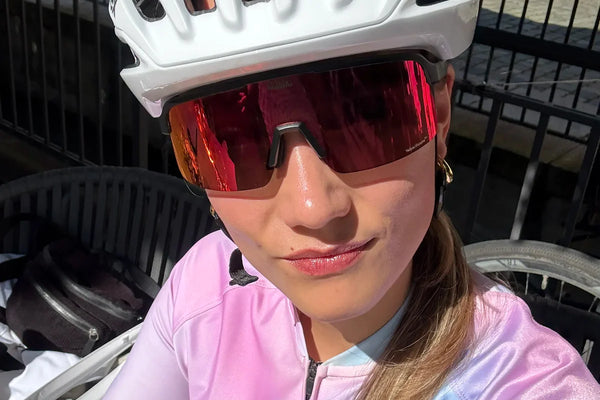
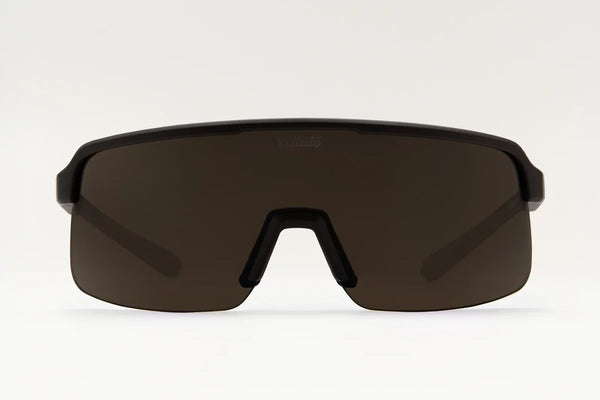
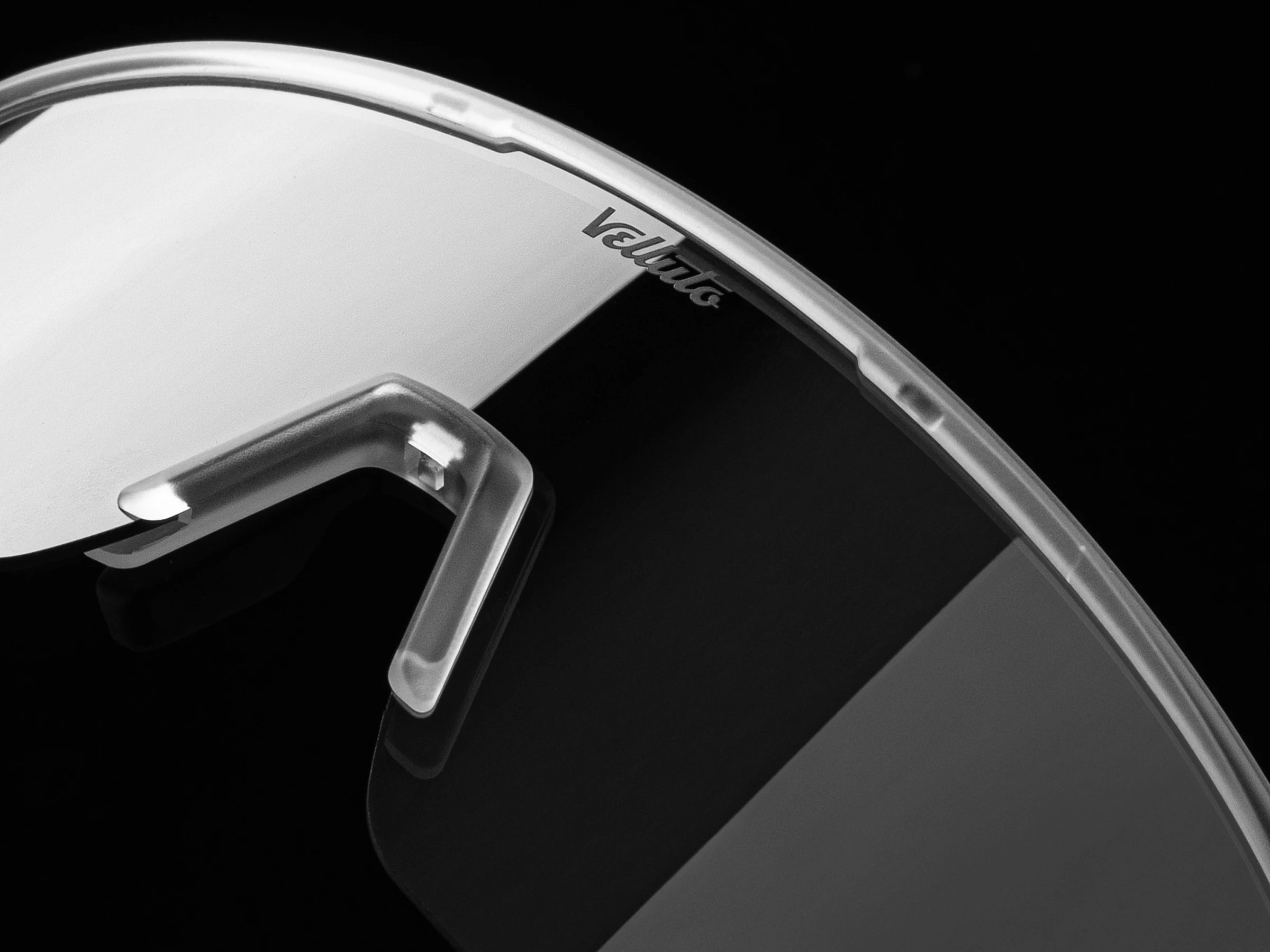
At 25 grams the StradaPro is among the lightest frames widely available in the cycling eyewear category. The adjustable nose pads give it a stable, pressure-free fit on long rides that fixed-pad frames cannot match. The built-in anti-fog system is not an afterthought coating, it is integrated into the frame ventilation geometry to handle the conditions road cyclists actually face: cold descents after long climbs, humid valley roads in June, the exhaled breath that fogs a lens when you are at threshold on a col.
The two-lens system covers the practical range of road cycling light conditions. The VellutoPuro clear lens handles early mornings, tunnels and overcast summer days. The VellutoVisione high-contrast lens is the choice when the sun is high and you need to read road texture accurately at 50 kilometres per hour. Both click in and out without tools in seconds. That versatility, built into one frame, is what makes the StradaPro a practical alternative to owning multiple single-lens glasses or paying for premium photochromic options.
Leading cycling glasses in 2026 weigh between 25g and 28g when measured frame and lens together. At 25g with a built-in anti-fog system, the Velluto StradaPro is competitive at the lighter end of that range.Velluto Gear Lab, June 2026
08 · ScenariosReal-World Riding: Which Glasses for Which Ride
Gear choices are easier when you anchor them to real scenarios. Here is how the best cycling sunglasses of 2026 perform across the rides that actually define a summer season.
Tour de Suisse climbing stages: Variable weather, long ascents, cold descents. Anti-fog is non-negotiable. You need a frame that does not bounce on rough tarmac and lenses that clear fast after a tunnel exit. The StradaPro's built-in anti-fog system and adjustable nose pads handle this combination. The Oakley Jawbreaker also performs here but at a significant weight and cost penalty.
Critérium du Dauphiné-style fast road days: Bright June sun, high speeds, maximum visual acuity. This is where the VellutoVisione high-contrast lens earns its place. The sharpened contrast definition makes reading road surface and following wheel lines at pace noticeably easier. If you only ride in this kind of consistent, bright light, a single-lens high-contrast option from any brand is sufficient. If you also do early morning or late-evening rides, interchangeable becomes essential.
Summer gravel rides: Dust, varying light through tree cover, vibration from rough surfaces. You need a frame that stays put without nose pad pressure building up over four hours, and lenses that transition between shade and open sun without requiring a full swap. The StradaPro's adjustable nose pads and fast click-in lens system handle gravel conditions well. The clear VellutoPuro is also genuinely useful here for dusty forest tracks where debris is the bigger threat than UV intensity.
Buying online without trying first: This is where the 30-day risk-free trial changes the decision entirely. No other glasses in this comparison offer it. If you are uncertain about fit, lens preference or frame feel, being able to test on three real rides and return if it does not work removes the primary objection to buying cycling eyewear without a physical fitting.


09 · CareKeeping Your Lenses in Race Condition
The best cycling sunglasses of 2026 are only as good as the care routine behind them. Anti-fog coatings are among the first things to degrade when lenses are cleaned with abrasive materials. A jersey tail on a lens seems harmless once. Repeated, it destroys the coating that keeps your vision clear on the descent that matters.
The right kit is simple: a microfibre cloth designed for optics and a spray formula that is safe for coated lenses. Velluto's Cleaning Spray is a 50ml refillable bottle made in Germany, apple-scented and formulated for cycling lens coatings. Paired with the 25x25cm microfibre cloth (80% polyester, 20% polyamide), it removes road grime, sunscreen transfer and dust without touching the anti-fog layer. Store glasses in a hard case between rides, Velluto's anti-crash hard case fits all road cycling frames and has a velvet interior that prevents the micro-scratches that slowly cloud lens optics over a season.

10 · FAQFrequently Asked Questions
What to Look for in the Best Road Cycling Sunglasses: A Buying Guide for 2026
Most buying guides stop at "UV400 good, heavy bad." But after thousands of kilometres across different conditions, the details that separate genuinely great road cycling sunglasses from merely adequate ones are more specific than that. Here is what actually matters when you are comparing options at any price point.
What lens technology is best for road cycling?
For road cycling, the best lens technology combines a high-contrast tint (typically a brown, copper or rose base) with a hardened, optically flat surface and a fast-swap interchangeable system. This lets you match the lens to conditions rather than compromising on a single fixed tint. UV400 certification is non-negotiable; everything else is a trade-off.
Let's unpack that further. The road environment is specific: you're moving at speed through rapidly changing light, tree-lined descents that drop you from full sun into shadow, tunnel underpasses, valley roads at dusk. A single lens cannot optimise for all of those. That's the reason interchangeable lens systems have become the dominant architecture in serious road cycling eyewear.
Photochromic lenses, which darken automatically in bright light, are popular with some riders and are offered by brands like Oakley and Smith at various price points. The tradeoff is reaction speed: most photochromic lenses take 20–60 seconds to transition, which is slower than a manual lens swap for a fast descent into a shaded valley. They also tend to add cost and, in some cases, weight. Velluto offers only clear VellutoPuro and high-contrast VellutoVisione lenses, both UV400-certified and tool-free to swap, providing reliable light matching for road cycling conditions.
Polarised lenses are another common option. They reduce glare well on flat water or wet tarmac, but they can interfere with reading LCD cycling computers and reduce depth perception on uneven road surfaces. For road cycling specifically, non-polarised high-contrast lenses are typically the better choice. Velluto StradaPro lenses are non-polarised.
The optical flatness of the lens matters more than most buyers realise. Curved lenses that aren't optically corrected for wrap distort peripheral vision subtly, not enough to notice at a glance in a shop, but enough to cause eye fatigue over a four-hour ride. This is one area where price genuinely correlates with quality: cheaper glasses often cut corners on optical precision.
Are shield-style cycling glasses better than regular lenses?
Shield-style cycling glasses offer a wider, uninterrupted field of view and better wind and debris protection than dual-lens frames, advantages that matter most at high speeds or in dusty conditions. The trade-off is fit variability: shield frames are harder to adjust for different face shapes, and ventilation can be more difficult to engineer well without fogging.
Shields have dominated the aesthetics of road cycling for several years, and frames like the Oakley Sutro have made them the visual shorthand for "serious cyclist." But aesthetics aside, the practical picture is more nuanced.
For fit precision, dual-lens frames with adjustable nose pads, like the Velluto StradaPro, give you significantly more control. Adjustable nose pads let you fine-tune the lens-to-eye distance and the angle of the frame on your face. On a six-hour ride, a 1mm positional difference is the difference between glasses that stay put and glasses you're constantly nudging back up your nose. Shield frames, by their geometry, are much harder to tune in this way.
For anti-fog performance, shields require more sophisticated ventilation channels across a larger surface area. When that engineering is well executed, as it is in the Oakley Sutro Lite, it works. When it's not, you get a fogged-out visor on the first wet climb. Dual-lens frames with gap ventilation between the lens edge and the frame are often more naturally resistant to fogging.
Our recommendation: if you have a face shape and head size that matches a shield frame well, and you're riding primarily in consistent bright conditions at speed, a shield is worth considering. If you ride across variable conditions, want more fit adjustability, or have found that shields tend to sit awkwardly on your face, a dual-lens frame with adjustable nose pads is likely to serve you better over the long term.
How much should good cycling glasses weigh?
Good cycling glasses should weigh between 25g and 35g. Below 25g, frame rigidity often suffers. Above 35g, you will likely notice pressure on your nose and temples on longer rides, particularly when combined with a helmet. For reference, many well-regarded road cycling glasses from major brands sit between 28g and 38g.
Weight becomes most relevant on climbs, where you're already working hard and your heart rate is elevated. Even light pressure from a heavier frame can become distracting after an hour. The Velluto StradaPro weighs 25g, verified, not just claimed, which puts it at the lighter end of what's achievable without sacrificing structural integrity or optical quality.
Be aware that manufacturer weight claims sometimes refer to the frame alone, excluding lenses. When comparing weights across brands, it's worth checking whether the stated weight includes or excludes lenses and whether the figure has been verified from the manufacturer's published specification.
Best Cycling Glasses by Category: Road, MTB, Winter and Budget
The question "what are the best cycling glasses" doesn't have a single answer, it depends on the terrain, the season and how much you want to spend. Here's how the landscape looks in 2026, broken down by the categories that actually matter.
What are the best road cycling sunglasses in 2026?
The best road cycling sunglasses in 2026 prioritise optical precision, light weight (under 35g), UV400 certification, anti-fog performance on descents and a fast interchangeable lens system. The Velluto StradaPro leads this category for value and versatility. Oakley's Sutro Lite and Kato lead on optical engineering at a higher price point. POC's Devour suits narrower face profiles well.
For pure road riding, the criteria above are your framework. You are not asking these glasses to survive crashes or repel mud, you are asking them to stay on your face at 70km/h on a descent, not fog on the climb beforehand, and not give you a headache after four hours. That's a more refined set of demands than most multi-sport eyewear is designed to meet.
The Velluto StradaPro at 25g with anti-fog coating, UV400 lenses and adjustable nose pads hits every one of those criteria and comes with a 30-day trial so you can verify that on a real ride rather than taking our word for it. Oakley's road-specific options offer excellent optical quality but at a significantly higher price point, typically in the upper range of the premium bracket. Whether that premium is justified depends on your budget and how much you weight the Oakley brand specifically.
What are the best MTB sunglasses in 2026?
The best MTB sunglasses in 2026 need to handle greater physical abuse, wider peripheral vision demands and more variable light conditions than road-specific glasses. Key differences from road sunglasses: more robust frame construction, better temple and nose grip to stay secure over rough terrain, and often a slightly wider lens for improved peripheral vision on technical trails.
Most of the glasses in this guide are designed primarily with road and gravel riding in mind. For dedicated MTB use, particularly aggressive trail or enduro riding, you may also want to consider goggle-style options that offer more complete eye protection from debris. For cross-country MTB and gravel riding where you spend significant time on the road between technical sections, road-style frames like the StradaPro work well and save the weight and bulk of a goggle.
What are the best cycling glasses for winter riding?
The best cycling glasses for winter riding prioritise anti-fog performance above all else, followed by a clear or very lightly tinted lens that doesn't reduce visibility in low light. Yellow or amber-tinted lenses enhance contrast on grey days. If your glasses have an interchangeable lens system, a dedicated clear or yellow lens for winter is more practical than buying a separate winter-specific pair.
This is where an interchangeable lens system earns its money twice over. Rather than owning separate summer and winter glasses, a single frame with a performance tinted lens for summer and a clear or yellow lens for winter is both lighter on the wallet and lighter in your kit bag. The Velluto StradaPro's interchangeable lens system is designed around exactly this use case.
Anti-fog performance is more critical in winter because the temperature differential between your body heat and the cold air outside is at its largest. If a frame only performs adequately in summer conditions, winter riding will expose its weaknesses fast. Look for frames with active ventilation channels and anti-fog lens coatings, not just anti-fog marketing language, but genuine coating on the inner lens surface.
What are the best budget cycling glasses?
The best budget cycling glasses in 2026 are those that maintain UV400 certification and reasonable optical quality while cutting cost on premium features like brand heritage, exotic materials or complex interchangeable systems. Tifosi is the most respected name at the accessible end of the market. At the other end of the budget spectrum, Velluto offers a 30-day trial, which removes the main risk of buying at a mid-range price point without a shop fitting.
A word of caution on genuinely cheap cycling glasses, the ones available for a few pounds or dollars on general retail platforms. UV protection certification on these products is often unverified, and optical quality is inconsistent. Riding with unprotected or poorly corrected lenses over many years carries real cumulative risks to eye health. This is one category where the minimum viable spend matters: at a minimum, verify that any glasses you buy carry a certified UV400 rating, not just a marketing claim.
Tifosi's range, typically priced in the lower-mid bracket, represents honest value with consistent UV400 compliance. The trade-off versus higher-end options is usually in optical precision, frame weight and the quality of the interchangeable system if one is included. If your budget is the primary constraint, Tifosi is a defensible choice. If you can stretch further, the performance gains in optical clarity, weight and fit adjustability at the mid-to-upper range are real and noticeable over longer rides.
Do cheap cycling glasses protect your eyes as well as expensive ones?
Cheap cycling glasses do not reliably protect your eyes as well as quality alternatives. UV400 certification requires testing and compliance that budget manufacturers frequently skip or misrepresent. Beyond UV protection, cheap lenses often distort peripheral vision, which creates eye strain on long rides and can subtly impair hazard detection. The minimum safe investment is a certified UV400 lens from a reputable manufacturer.
It's worth being clear about what price actually buys you in cycling eyewear. At the low end, the first thing cut is quality control and testing certification, including UV protection verification. In the mid range, you're paying for certified UV protection, consistent optical quality and a frame that will last several seasons. At the upper end, the flagship Oakley, POC or Smith territory, you're paying for incremental gains in optical precision, material engineering and brand positioning. Those upper-end gains are real but marginal. The jump from unverified cheap to certified mid-range is far more significant than the jump from mid-range to flagship.
How do you clean cycling sunglasses without scratching the lenses?
Clean cycling sunglasses by first rinsing lenses with clean water to remove grit, then using a microfibre cloth in light circular motions with a small amount of lens-specific cleaning solution. Never wipe a dry, gritty lens, this is the single most common cause of scratching. Avoid paper products, clothing fabric and household glass cleaners, which strip lens coatings.
The rinsing step is the one most people skip, and it's the most important. A single grain of road grit dragged across a lens under a cloth will leave a scratch that no amount of subsequent care will undo. Rinse first, always. If you don't have clean water available after a ride, it's better to leave the lens dirty until you do than to wipe it dry.
For anti-fog coatings specifically, including those on the Velluto StradaPro, avoid touching the inner lens surface where possible. Anti-fog coatings are more delicate than the outer hardcoat and can be degraded by oils from your fingers or by harsh cleaning agents. When you do need to clean the inner surface, use only water and a clean microfibre cloth, with minimal pressure.
What are the best cycling glasses brands in 2026?
The strongest cycling glasses brands in 2026 are Oakley (market leader in optical engineering and lens volume), POC (best known for safety-focused design and fit precision), Smith (strong photochromic lens performance), Tifosi (best value at accessible price points) and Velluto (best weight-to-performance ratio for road and gravel at mid-range pricing). Each brand has a genuine area of leadership rather than a single brand dominating across all criteria.
Brand reputation matters in eyewear partly because it's a proxy for quality control and warranty support. A brand with a track record and a real returns process, like Velluto's 30-day trial, gives you a meaningful form of assurance that an anonymous platform seller cannot. When comparing brands, look for: a verifiable UV400 certification process, a real warranty against manufacturing defects, and a customer support structure that will actually help you if something goes wrong.
The honest summary for 2026: Oakley brings scale and optical engineering at premium price points. Tifosi offers consistent value and no-surprises performance at accessible pricing. Velluto combines competitive performance metrics (25g, UV400, anti-fog, interchangeable lenses, adjustable fit) in the mid-range price tier, with the added security of a 30-day trial to verify on real rides before committing.
If you want to test the Velluto StradaPro on your own roads before deciding, the 30-day trial is available at velluto-shop.com. No commitment required until you've ridden in them.
What are the best cycling sunglasses in 2026?
Are 25g cycling glasses worth it compared to heavier options?
Do interchangeable lenses fog up more than fixed-lens glasses?
What is the best anti-fog cycling glass in 2026?
What does UV400 protection actually mean for cyclists?
What is the difference between the VellutoPuro and VellutoVisione lenses?
Can I use cycling glasses for both road and gravel riding?
Do any cycling sunglasses come with a risk-free trial in 2026?
How do I clean cycling glasses without scratching the lenses?
The best cycling sunglasses of 2026 are not the most expensive ones on the shelf. They are the ones that stay on your face, keep your vision clear and do not make you think about them mid-ride. If you want to test that claim across 30 days of real riding, start at velluto-shop.com and find the StradaPro colourway that fits your kit.