7 Oakley Alternatives for Cyclists 2026, From 69 EUR

Contents23 min read
You are three hours into a wet November cyclocross race, mud on your temples, the light dropping fast through the tree line, and your glasses are fogging on every climb. You paid a lot of money for them. At that price point, you are paying for genuine optical engineering. The premium also reflects brand positioning, athlete endorsements, and retail network margins. If those elements are part of what you value, the product delivers on its promise. If your priority is performance features and fit at a transparent price point, there are strong alternatives worth evaluating.
This guide is not about finding something cheap that looks similar. It is about finding glasses that solve the same problems Oakley's performance line is built to address, UV protection, optical clarity, anti-fog performance, weight, fit, and understanding where the money actually goes. In any premium brand, some of that money buys genuine engineering, and some reflects marketing investment and distribution costs. The goal here is to separate the two, give you a realistic set of criteria, and then walk through seven options worth considering for road and cyclocross riding this season.
One transparency note upfront: Velluto makes cycling glasses and publishes this content. The comparison below is built on verifiable, publicly available specifications. Where a competitor's spec is not confirmed from their own published data, that cell is left blank or omitted rather than invented. You will not find fabricated test results here, only documented features and honest product descriptions.
01 · Short answerThe TL;DR for Cyclists Short on Time
If you want one paragraph: Oakley makes well-engineered cycling glasses. The Jawbreaker and Sutro offer strong optical performance. At the price point Oakley occupies, you are also paying for athlete endorsements, retail network margins, and established brand positioning in professional cycling. If those things matter to you, the product delivers on its promise. If you want to spend the same money on optical performance and fit rather than on distribution, there are strong alternatives.
The seven alternatives below cover the full range of what serious cyclists actually need: UV400 protection, anti-fog performance, secure fit across different face shapes, lens versatility for variable light, and frame weight that disappears on a four-hour ride. They are not ranked against Oakley, they are ranked on the criteria that matter when you are actually riding.
02 · CriteriaWhat Actually Matters in Cycling Sunglasses
Before listing any product, it helps to agree on what performance means in a cycling glass. The marketing language across the category is remarkably consistent, every brand claims clarity, comfort and durability. What separates them is specific, measurable features. Here are the five criteria this guide uses, and why each one has a real-world riding impact.

03 · The seven alternativesOakley Alternatives Worth Riding in 2026
These seven options represent the realistic range of what a serious cyclist should evaluate when stepping back from the Oakley default. They include dedicated cycling brands, sport optics specialists, and one Italian-designed German brand that takes a different approach to pricing. Each description is based on the brand's own published specifications and positioning.
1. Velluto StradaPro
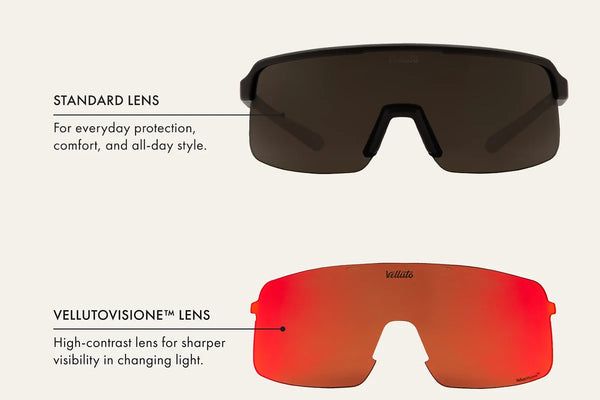
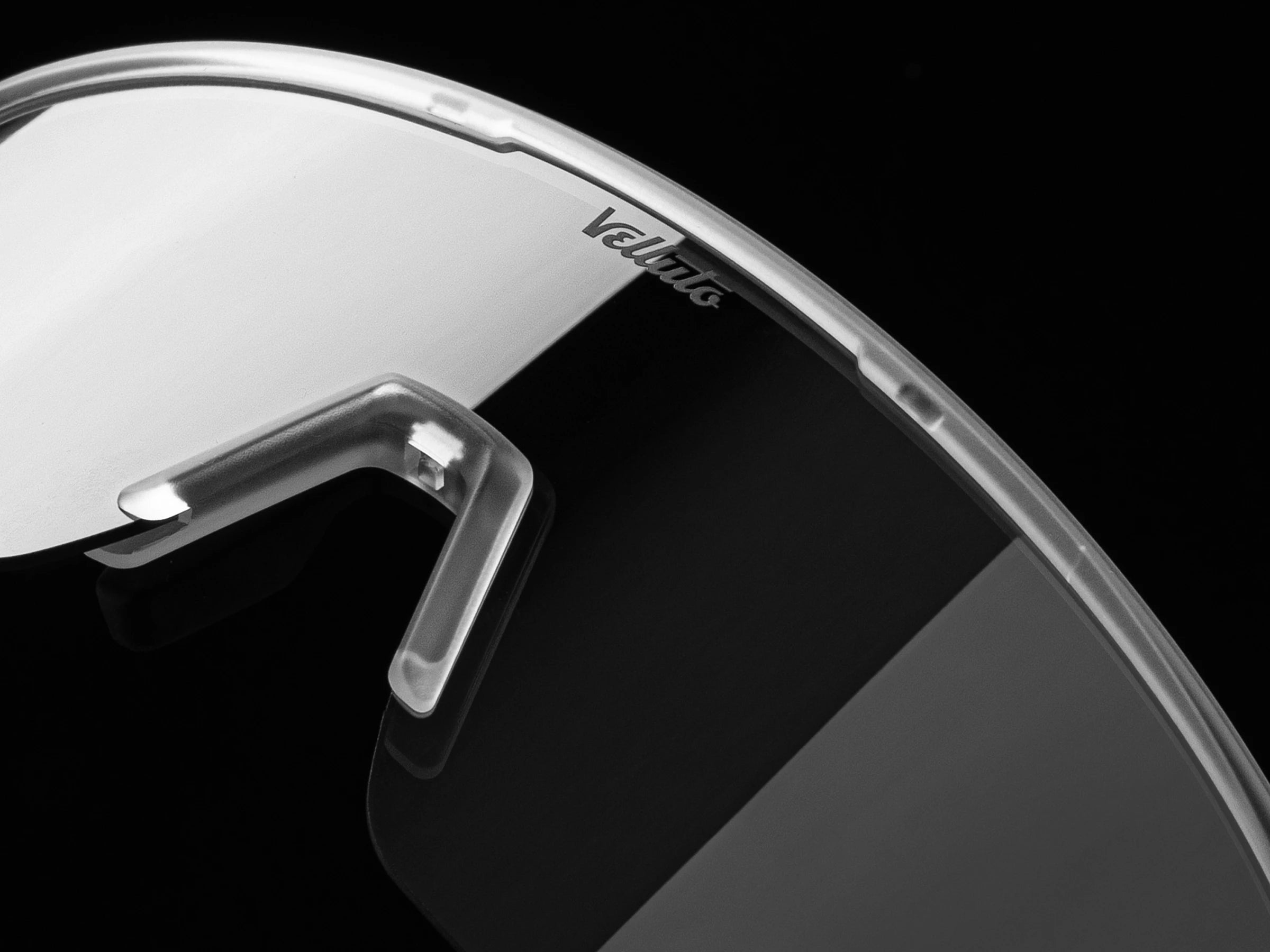
The StradaPro is Velluto's core road cycling glass: 25 grams, Italian design, UV400 certified, with a built-in anti-fog system and adjustable nose pads. The defining feature is the lens system: two click-in lenses are available, the VellutoPuro (clear, optimised for low light and wind protection) and the VellutoVisione (high-contrast, for variable light conditions). Both swap in seconds, without tools. For autumn riding and cyclocross, where light conditions change between laps, this is a practical advantage rather than a marketing claim.
The StradaPro weighs 25 grams. That is the specific number, not a category claim. At that weight, the frame does not register on climbs. The adjustable nose pads handle a range of face shapes and reduce pressure on long rides. The 30-day risk-free trial means you can test fit and lens performance in actual riding conditions before committing.
What the StradaPro does not offer: it is not photochromic, not polarised, and not intended to be worn over prescription glasses. The lens system is a two-lens interchangeable setup, if you want a single lens that adapts automatically to light changes, that is the Velluto Chromo, a separate photochromic model launching in autumn 2026 at 119 EUR. The StradaPro solves variable light with two click-in lenses; the Chromo solves it with one self-tinting lens. Different tools for different riders.

2. POC Aspire
POC is a Swedish safety-focused sports brand with a strong reputation in road cycling and mountain biking. The Aspire is their primary road cycling glass, designed with wide-field optics and Clarity lens technology, which is POC's proprietary contrast-enhancement system. POC publishes detailed safety certifications and has a credible track record in protective eyewear engineering. Their frames tend to run slightly heavier than the StradaPro's 25 g, though POC does publish weights on their product pages for direct comparison. The Aspire is a genuinely well-specified glass at a price point that sits in the same upper-mid range as most serious alternatives to Oakley.
3. Rudy Project Rydon
Rudy Project is an Italian eyewear brand with deep roots in professional cycling and triathlon. The Rydon is their most versatile frame, available in a range of lens options including their ImpactX photochromic system. For riders who want Italian optical heritage and lens versatility, Rudy Project is a logical consideration. Their frames are configurable to a degree few competitors match, and they have genuine optical manufacturing credentials. The Rydon sits at the higher end of the alternative market in terms of pricing.
4. Tifosi Podium
Tifosi is an American brand positioning itself as the performance-without-premium option in the cycling eyewear market. The Podium offers interchangeable lenses, UV400 protection, and a lightweight frame at a price point noticeably below the premium tier. For riders on a strict budget who want the core performance features, Tifosi is frequently cited as a credible option. The trade-off is typically in materials finish and lens optical quality relative to the brands above, not a dramatic difference for recreational riding, more noticeable for competitive use.
5. SunGod Velans
SunGod is a British brand that built its reputation on customisation and direct-to-consumer pricing. The Velans are their dedicated road cycling frame, and the brand's colour and lens configuration options are genuinely extensive. SunGod lenses carry UV400 certification and the brand is transparent about their optical specifications. Where SunGod differentiates is in customisation depth, if the colour of your frame matters as much as the optical performance, SunGod offers options no other brand in this list can match. The anti-fog and weight performance are competitive at the mid-to-upper price range.
6. Shimano S-PHYRE X
Shimano is better known for drivetrain components than for eyewear, but the S-PHYRE X is taken seriously in the professional peloton, it has appeared at WorldTour level, which is a reasonable signal of performance credibility. The frame is designed for aerodynamic integration with road helmets, and Shimano publishes detailed optical and ventilation specifications. For riders already deep in the Shimano ecosystem and looking for a glasses option that integrates with their existing kit, the S-PHYRE X is worth evaluating. It sits in the premium price tier.
7. Decathlon Van Rysel Racer
Van Rysel is Decathlon's road cycling sub-brand, and the Racer glasses represent the most accessible price point on this list. They are not competing with Oakley on optical technology, they are competing on value. UV400 protection, basic interchangeable lenses, and a frame weight that is competitive for the price. If your primary goal is to spend as little as possible while still getting legitimate UV protection and a reasonable fit, Van Rysel is an honest option. If anti-fog performance and optical precision matter on competitive rides, the gap to the mid and upper tier becomes more noticeable.
04 · ComparisonHow the Seven Stack Up: Feature Comparison Table
The table below is built on published specifications from each brand's official product pages. Where a figure is not confirmed from official sources, the cell is left blank rather than estimated. Competitor return policies, warranty terms and pricing are not included, these change and an incomplete comparison is misleading. The table covers the five criteria established in section 02.
| Glasses | Frame weight | UV rating | Anti-fog system | Lens system | Nose pad | Trial period |
|---|---|---|---|---|---|---|
| Velluto StradaPro | 25 g | UV400 certified | Built-in | Click-in, tool-free (2 lenses) | Adjustable | 30-day risk-free |
| POC Aspire | See manufacturer | UV400 | Ventilation | Interchangeable | Adjustable | See manufacturer |
| Rudy Project Rydon | See manufacturer | UV400 | Ventilation | Interchangeable / photochromic option | Adjustable | See manufacturer |
| Tifosi Podium | See manufacturer | UV400 | Ventilation | Interchangeable | Fixed | See manufacturer |
| SunGod Velans | See manufacturer | UV400 | Ventilation | Fixed (custom tint options) | Adjustable | See manufacturer |
| Shimano S-PHYRE X | See manufacturer | UV400 | Ventilation | Interchangeable | Adjustable | See manufacturer |
| Van Rysel Racer | See manufacturer | UV400 | Ventilation | Interchangeable | Fixed | See manufacturer |
| Oakley Jawbreaker | See manufacturer | UV400 | Ventilation | Single / Prizm lens options | Fixed | See manufacturer |
The table is intentionally sparse on competitor cells where data was not confirmed. The purpose is not to make Velluto look complete by comparison, it is to show you which questions to ask of any brand before buying. If a manufacturer does not publish a frame weight, that is a gap worth noting. If the trial period is not stated, ask before you order.
05 · Velluto positioningWhere Velluto Sits Among These Alternatives
Velluto is a German brand with Italian design. That combination is deliberate: German product standards and supply-chain rigour, Italian aesthetic sensibility applied to a genuinely functional road cycling product. The StradaPro is not a lifestyle glass that happens to be worn on a bike. It is designed for road cyclists who train seriously and race occasionally, in conditions that range from cold autumn mornings to bright summer centuries.
The 25 gram frame weight is a specific, verifiable number. So is the UV400 certification. The built-in anti-fog system is a documented feature, not a ventilation-slot claim. The click-in lens system works without tools because lens changes on the road, mid-ride, cold hands, potentially in the rain, need to work without tools. These are not aspirational claims. They are engineering decisions with a direct riding rationale.
At 25 grams, the frame stops being something you wear and becomes something you stop noticing. That is the goal.Velluto design brief, StradaPro
What Velluto does not claim: the StradaPro is not photochromic. It does not polarise. It is not the most heavily marketed cycling glass in the world, and it does not have decades of WorldTour sponsorship to point to. If those things matter to your purchase decision, the alternatives above, particularly Rudy Project and POC, have different heritage positioning and design focus. The StradaPro's claim is simpler: a 25 gram frame, two click-in lenses covering clear and high-contrast conditions, certified UV400 protection, a built-in anti-fog system, and a 30-day trial that lets the product prove itself on your rides rather than on a product page.

The pricing is transparent: from 69 EUR, with free shipping on orders over 89 EUR. That is the whole number. No lens replacement upsell required to access the full performance of the system, the VellutoPuro and VellutoVisione lenses are part of the ecosystem, not a subscription to optical competence.
06 · Riding scenariosReal-World Conditions: Which Glasses Solve What
Performance specifications mean more when they connect to actual riding situations. Here are five scenarios common to serious cyclists in autumn 2026, and how the features above translate to real outcomes.
Scenario 1: Cyclocross, variable light, mud, rapid intensity changes
Cyclocross is the most demanding environment for cycling eyewear. Light changes every lap as you move between tree cover and open field. High-intensity efforts generate heat that pushes air upward inside the lens, creating fog. Mud and debris are constant. Courses can run into dusk with artificial lighting. What you need: a robust anti-fog system (not just vents), a lens that works in low light (clear or high-contrast, not dark tinted), and a frame that stays in position through repeated dismounts and remounts.
For this scenario, the StradaPro's combination of a built-in anti-fog system and two interchangeable lenses, particularly the VellutoPuro clear lens for low-light laps, is well-suited to the specific demands. The 25 g weight is relevant here because a lighter frame applies less cumulative pressure during the sprint and run sequences that define cyclocross racing.
Scenario 2: Long road rides (4 hours plus) in autumn conditions
On a four-hour autumn ride, the light at 9 AM is different from the light at 1 PM. Cold morning air creates fog risk on the early climbs; midday sun demands tint. Temperature drops on long descents. For this scenario, lens versatility is the key criterion. If you start with a tinted lens, you will want the option to swap to clear for the tunnel sections and tree-lined valleys. The StradaPro's tool-free click-in system means that swap takes seconds at a stop, not a minute of fumbling with a coin.
Frame weight accumulates over long rides. At 25 g, the StradaPro applies minimal cumulative pressure to your nose and temples after hour three. At 32-35 g or higher, the pressure becomes noticeable on a sustained climb.
Scenario 3: Winter preparation rides, cold, low light, early mornings
November training rides in northern Europe often start in darkness and finish in thin autumn light. For this scenario, a clear lens is not optional, it is the correct choice. The VellutoPuro is designed for exactly this: UV400 protection without light reduction, combined with wind and insect protection that matters when you are moving at speed in cold air. The anti-fog system is especially relevant here because the temperature differential between your face and the cold air is at its greatest.
Scenario 4: Sportives and gran fondos, image matters, performance must deliver
Sportives are social rides with a competitive edge. The glasses you wear will be photographed. They need to look right. But a sportive that takes you over 2,000 metres of climbing will also expose you to UV intensity, altitude glare, and variable conditions on descents. The StradaPro's Italian design ensures it looks appropriate on the bike. The VellutoVisione high-contrast lens is well-suited to the shifting terrain conditions of a mountain sportive. The 30-day trial means you can confirm the fit before the event rather than finding out on the day.
Scenario 5: Commuting and training, daily use, varied conditions
For riders who use the same glasses for the morning commute and the weekend training ride, versatility is the whole game. A single tinted lens is too dark for a pre-dawn commute and insufficient for direct noon sun. An interchangeable system with a clear lens and a high-contrast lens covers the full week. The adjustable nose pads ensure the same fit regardless of helmet or cap underneath, a practical consideration for commuters who may switch between road helmets, urban helmets and bare-headed riding.
07 · Who should buy whatMatching Rider to Glasses: Honest Recommendations
This section is deliberately parallel: each option is described by what it genuinely does well. No option is described as failing at something a competitor succeeds at. The goal is to help you match your riding priorities to the right product.
Choose Velluto StradaPro if your priorities are frame weight (25 g, documented), anti-fog performance on climbs and cold rides, a two-lens system covering clear and high-contrast conditions, adjustable fit across face shapes, and a 30-day risk-free trial that lets the product prove itself on real rides. The StradaPro is well-suited to road cyclists and cyclocross riders who train seriously and want performance features without paying for brand heritage.
Choose Oakley Jawbreaker or Sutro if you value the depth of Oakley's lens ecosystem, Prizm lens technology offers a wide range of sport-specific tints, and the Jawbreaker's wraparound coverage is genuinely substantial for a cycling frame. Oakley's fit engineering and lens optical quality are well-established. If the brand's history in professional cycling is part of what you are buying, that is a legitimate choice.
Choose POC Aspire if safety certification and sports optics credibility are your primary consideration. POC's focus on protective eyewear engineering is well-documented, and the Aspire's Clarity lens technology has genuine optical differentiation. For riders who train in demanding alpine conditions and want a brand with specific protective engineering heritage, POC is a strong candidate.
Choose Rudy Project Rydon if you want maximum lens configurability and Italian optical manufacturing heritage. The Rydon's range of lens options, including photochromic, means a single frame can be built to handle almost any lighting condition. Rudy Project suits riders who want to invest in one frame and configure it precisely to their riding environment.
Choose Tifosi Podium if performance-to-price ratio is your primary filter and you are not racing at a level where the marginal optical difference between mid and premium tier is noticeable. Tifosi delivers the core features, UV400, interchangeable lenses, reasonable weight, at a price point that leaves budget for other kit priorities.
Choose SunGod Velans if colour and frame customisation matter alongside performance. SunGod's direct-to-consumer model and customisation depth are genuinely unmatched in this list. If you want to match your kit, your team colours, or simply want glasses that feel personal rather than generic, SunGod is the strongest option in that dimension.
Choose Shimano S-PHYRE X if aerodynamic helmet integration and WorldTour-level engineering are your benchmarks. The S-PHYRE X is designed around high-speed road performance and integrates with Shimano's broader road ecosystem. For riders who already invest heavily in marginal aerodynamic gains, the S-PHYRE X belongs in the conversation.
Choose Van Rysel Racer if you are building a training setup on a strict budget and need UV protection and basic lens versatility without premium pricing. Van Rysel is an honest value option from a brand that knows cycling. It does not compete at the top of the performance spectrum, but it covers the fundamentals at a price no other brand on this list can match.

08 · Small face and women's fitA Note on Fit for Smaller Face Shapes
Cycling eyewear fit guidance is overwhelmingly written for a default face shape that does not represent a significant portion of the riding population. Riders with smaller faces, narrower nose bridges or lower nose profiles consistently report that glasses designed for a "universal" fit slip forward on climbs, leave pressure marks from fixed nose pads, or simply sit too wide to stay in peripheral vision range.
The features that matter most for smaller faces are: adjustable nose pads (to raise the bridge position and reduce lateral pressure), temple length and flex (longer temples with rubberised tips grip without pinching), and frame width (a narrower lens spread stays in the visual field rather than extending into peripheral zones that do not need coverage).
The StradaPro's adjustable nose pads are specifically relevant here. A fixed nose pad system locks you into the manufacturer's assumed nose geometry. An adjustable system lets you dial in the position until the frame is level and secure, without tape, without nose pad inserts, without the compromise of a frame that is "close enough." The 30-day trial is also disproportionately useful for smaller face shapes, because it removes the risk of ordering something that fits in photos but slides on the first climb.
For women riders specifically: the StradaPro fits a wide range of face shapes and comes with interchangeable lenses for varying light conditions. The Arancia and Viola colourways are popular across the full range of riders who want something other than the default black frame. Neither colourway is gendered, they are cycling glasses designed around performance and aesthetic, available in four options.


09 · Keeping your lenses cleanLens Care: Why It Matters More Than Most Riders Think
The best lens in the world performs at the level of its last clean. Scratches from improper wiping, residue from chamois cream or sunscreen, and the micro-abrasion that accumulates from using the wrong cloth all degrade optical clarity over time. This is not a minor consideration, it is the reason lens care is a performance variable, not a housekeeping afterthought.
The standard mistakes: using a jersey corner (embedded with road grit), breathing on the lens and wiping with a cotton shirt (cotton fibres are abrasive at microscopic scale), and using household glass cleaner (which contains alcohol or ammonia that degrades lens coatings). None of these are dramatic single-incident failures. All of them accumulate.

The Velluto Cleaning Spray is a 50 ml, refillable lens cleaning solution made in Germany, with an apple fragrance. It is designed for use with the Velluto 25x25cm microfibre cloth (80% polyester, 20% polyamide), which is the correct material for cleaning coated optics without abrasion. The spray and cloth together are the proper way to maintain a UV400 lens coating and an anti-fog surface over time, not an upsell, a maintenance requirement.
Compare the full lineup in the Velluto StradaPro cycling glasses collection.
10 · FAQFrequently Asked Questions
Are Oakley cycling glasses actually better, or is some of the price brand heritage?
What weight should cycling glasses be to feel truly lightweight?
Do interchangeable lens systems fog up more than single-lens designs?
What is a 30-day risk-free trial and why does it matter for cycling glasses?
What is UV400 protection and do all cycling glasses have it?
What is the difference between high-contrast lenses and clear lenses for cycling?
Are cycling glasses with adjustable nose pads worth the extra complexity?
Do I need different cycling glasses for cyclocross and road riding?
How do I know which cycling glasses will fit my face without trying them in a shop?
If you are ready to test these criteria on your own rides, the full StradaPro range, including the VellutoPuro clear lens and VellutoVisione high-contrast lens, is available with a 30-day risk-free trial at velluto-shop.com. If you want a photochromic option that adapts automatically rather than a swappable lens system, the Velluto Chromo launches in autumn 2026 at 119 EUR.