Cycling Glasses 2026: Oakley vs Decathlon vs Velluto
Contents31 min read
It is the first week of July, the peloton is grinding through the Pyrenees, and somewhere in a cycling camp in the Alps, a rider is squinting into a white-sky climb because their lenses have fogged for the third time in an hour. The wrong cycling glasses are not a minor inconvenience on a five-hour mountain stage: they are a genuine hazard. But choosing the right ones in 2026 means navigating a market that ranges from twelve-euro Decathlon frames to three-hundred-euro Oakley flagship models, and everything in between.
Updated: July 2026. This guide cuts through that range directly. We compare the three categories of cycling glasses that come up most often among road cyclists searching for value: Decathlon (budget), Oakley (premium), and the Velluto StradaPro (performance mid-range). The goal is not to name one winner for everyone, but to give you a clear, honest framework so you can spend your money on the right pair for your riding, your budget, and the conditions you actually face.
If you are riding in the Alps or Pyrenees this summer, commuting in variable weather, or training seriously enough that your eyewear affects your performance, this guide is written for you.
01 · ContextWhy cycling glasses matter more in summer 2026
The Tour de France route in 2026 includes several high-altitude finishes and mountain passes where the temperature differential between valley floor and summit can exceed fifteen degrees Celsius. Cycling camps operating in the Pyrenees and Alps face exactly the same challenge on a smaller scale: riders start climbs in warm, humid air and finish them in cold, exposed conditions. The glasses that handled the valley will fog, slip, or simply not provide enough protection at altitude.
This is not a theoretical concern. UV radiation increases by approximately eight to ten percent for every thousand metres of elevation gain. At two thousand metres, a rider without UV400 certified protection is absorbing meaningfully more ultraviolet radiation than the same rider at sea level. Combined with extended duration, the Alps and Pyrenees are among the highest UV exposure environments road cyclists encounter in Europe.
Anti-fog performance is equally critical. On a long climb, body heat and breath condensation create the conditions for fogging even on a summer day. On a descent following that same climb, cool air at speed hits a warm lens surface. Glasses without an active anti-fog system manage this inconsistently. The difference between clear vision at eighty kilometres per hour on a descent and a fogged lens is the kind of difference that matters.
The practical upshot: in summer 2026, the bar for cycling eyewear is higher than it was five years ago. More riders are doing more ambitious trips, more camps are operating at altitude, and the options available across the price spectrum have improved enough that there is no longer a good reason to ride with glasses that do not perform.
02 · The MarketThree price tiers, three different propositions
The cycling glasses market in 2026 divides fairly cleanly into three tiers, each with a distinct value proposition. Understanding what each tier actually delivers, rather than what the marketing suggests, is the most useful thing you can do before spending any money.
Entry-level (broadly, under fifty euros): Decathlon is the most prominent name here, and deservedly so. Decathlon's cycling eyewear offers UV400 protection at a price point that is genuinely accessible. For a rider who goes out once or twice a week on flat routes, commutes by bike, or is new to road cycling and not yet sure how seriously they want to pursue it, a Decathlon frame is a reasonable starting point. The compromises are real but manageable at this level of riding: fit is generally fixed rather than adjustable, lens interchangeability is limited or absent in the core range, and anti-fog performance varies. For many riders, those compromises do not matter much.
Premium (broadly, one hundred fifty euros and above): Oakley is the most recognised name in this tier, with several models that have become genuine benchmarks for road cycling. The Oakley Radar EV Path and Jawbreaker are the two most commonly discussed among serious cyclists. Both offer excellent optics, durable frames, and lens systems with multiple tint options. The Oakley Prizm Road lens is widely regarded as one of the better high-contrast road lenses on the market. The tradeoff is price: these are meaningful purchases, and lens replacement costs are an additional consideration if you ride across a range of light conditions.
Performance mid-range (broadly, sixty to one hundred twenty euros): This is the tier where the most interesting value decisions happen in 2026. Several brands have moved into this space with frames that carry premium features, including certified anti-fog systems, adjustable fit components, and interchangeable lens systems, without premium pricing. The Velluto StradaPro sits here, and it is the frame this guide examines most closely as a value benchmark.

03 · DecathlonHonest assessment of the entry-level benchmark
Decathlon has done more than almost any other brand to make cycling-specific eyewear accessible. Their Van Rysel and Riverside ranges cover road and recreation respectively, and at their respective price points they represent solid, honest products. If you are recommending glasses to a friend who has just bought their first road bike and wants to spend as little as possible on everything, you would not be doing them a disservice by pointing them to Decathlon.
That said, honest assessment of the entry-level tier requires acknowledging the specific limitations that become relevant as riding ambition increases.
Fixed nose pads are the first practical consideration. On a two-hour ride, a frame that sits slightly wrong is manageable. On a five-hour mountain stage, fit consistency becomes more important: riders benefit from secure positioning throughout extended efforts. Adjustable nose pads address this directly, and they are not standard across the entry-level range.
Lens interchangeability is the second practical consideration. Road cycling in the Alps or Pyrenees in July means riding in conditions that change significantly: bright morning starts, overcast mountain sections, low-light cols, and fast descents into valley shadow. A single fixed lens is optimised for one set of conditions; interchangeable lenses allow adaptation across the full range.
Anti-fog performance is the third practical consideration. Some entry-level frames include ventilation systems designed to reduce fogging. Performance varies across models and conditions; dedicated anti-fog systems provide more consistent results on high-intensity climbs and technical descents.
These characteristics define the performance envelope of entry-level eyewear. For riders doing extended climbs, high-altitude riding, or variable-condition training, mid-range and premium options with adjustable fit, dedicated anti-fog systems, and lens interchangeability offer additional functionality.
04 · OakleyWhat you are paying for at the premium end
Oakley's position in the cycling glasses market is not accidental. The Radar EV Path and Jawbreaker have earned their reputation through years of use by professional cyclists at the highest level, including the Tour de France peloton. When a frame is designed for and used by riders who depend on it for their livelihood, certain quality thresholds are met as a baseline.
The Oakley Jawbreaker weighs approximately 33 grams according to Oakley's published specifications. The Sutro Lite is listed at approximately 28 grams. Both use Oakley's Unobtainium nose pad and ear sock technology, which increases grip as the rider sweats, a feature that is more relevant than it sounds during a five-hour summer stage.
Oakley's Prizm lens technology is the centrepiece of their performance claim. Prizm Road is specifically tuned to enhance road surface detail and increase contrast in the visual wavelengths most relevant to cycling. It is a proprietary lens treatment available only through Oakley for replacement lenses.
The Radar EV Path uses a semi-rimless design with a large lens geometry that maximises the visual field, which is genuinely useful for road cycling where peripheral awareness of vehicles, other cyclists, and road surface contributes to safety. The lens swap system on the Radar EV Path is functional but requires some practice to execute cleanly.
What you are paying for at Oakley's price point is a combination of: proven optics technology in the Prizm lens range, a fit system refined over years in professional cycling, material quality in frame and lens, and the brand recognition that comes with all of the above. Whether that combination represents value for your riding depends almost entirely on your budget and how much the lens technology premium is worth to you specifically.
For riders who specifically want Oakley's Prizm optics, the Radar EV Path or Jawbreaker deliver a proven lens technology. For riders who want performance-tier features including UV400 certification, anti-fog systems, adjustable fit, and interchangeable lenses, alternative options in the mid-range bracket are available.
The best cycling glasses are not the most expensive ones you can afford. They are the ones you will actually wear on every ride, in every condition, without thinking about them.A principle worth applying before any eyewear purchase
05 · Velluto StradaProThe value performance case built on specifics
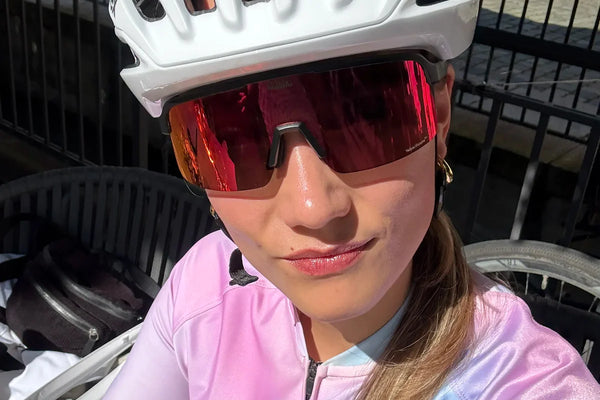
The Velluto StradaPro is a German brand with Italian design. That combination is more than aesthetic positioning: the Italian design heritage brings considered lens geometry and frame architecture, while the German brand standards apply to quality control and specification accuracy. The frame is sold across Europe and has become the most visible mid-range option for road cyclists who want performance features without the premium-brand premium.
The core specification is worth stating precisely, because in the value discussion, specifics are what separate genuine performance from marketing language.
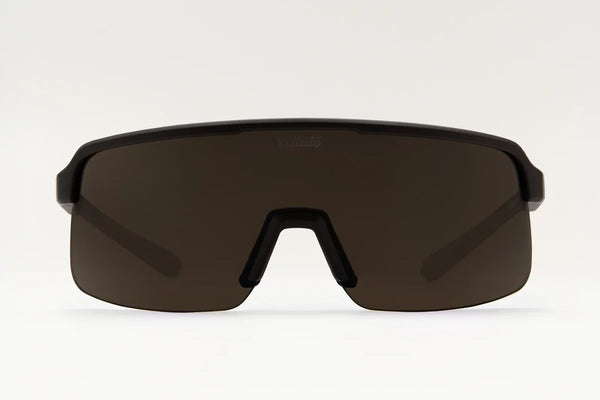
Weight: 25 grams. The StradaPro is among the lightest performance cycling frames available in 2026. In a category where every gram on a long climb is noticed, the frame's weight is a genuine strength.
UV protection: UV400 certified. This means 100% UVA and UVB protection across the lens. UV400 is the highest standard for UV protection in eyewear and the correct minimum specification for road cycling at altitude. The StradaPro carries this certification.
Anti-fog: The StradaPro has a built-in anti-fog system. On climbs and in variable weather, where fogging is most likely to occur, the system is designed to maintain clear vision. This is particularly relevant for the alpine and Pyrenean conditions that define summer 2026 riding for many cyclists in Europe.
Fit: Adjustable nose pads provide a secure fit with zero pressure on long rides. This addresses directly the fixed-fit limitation that is the most common practical complaint with entry-level frames.
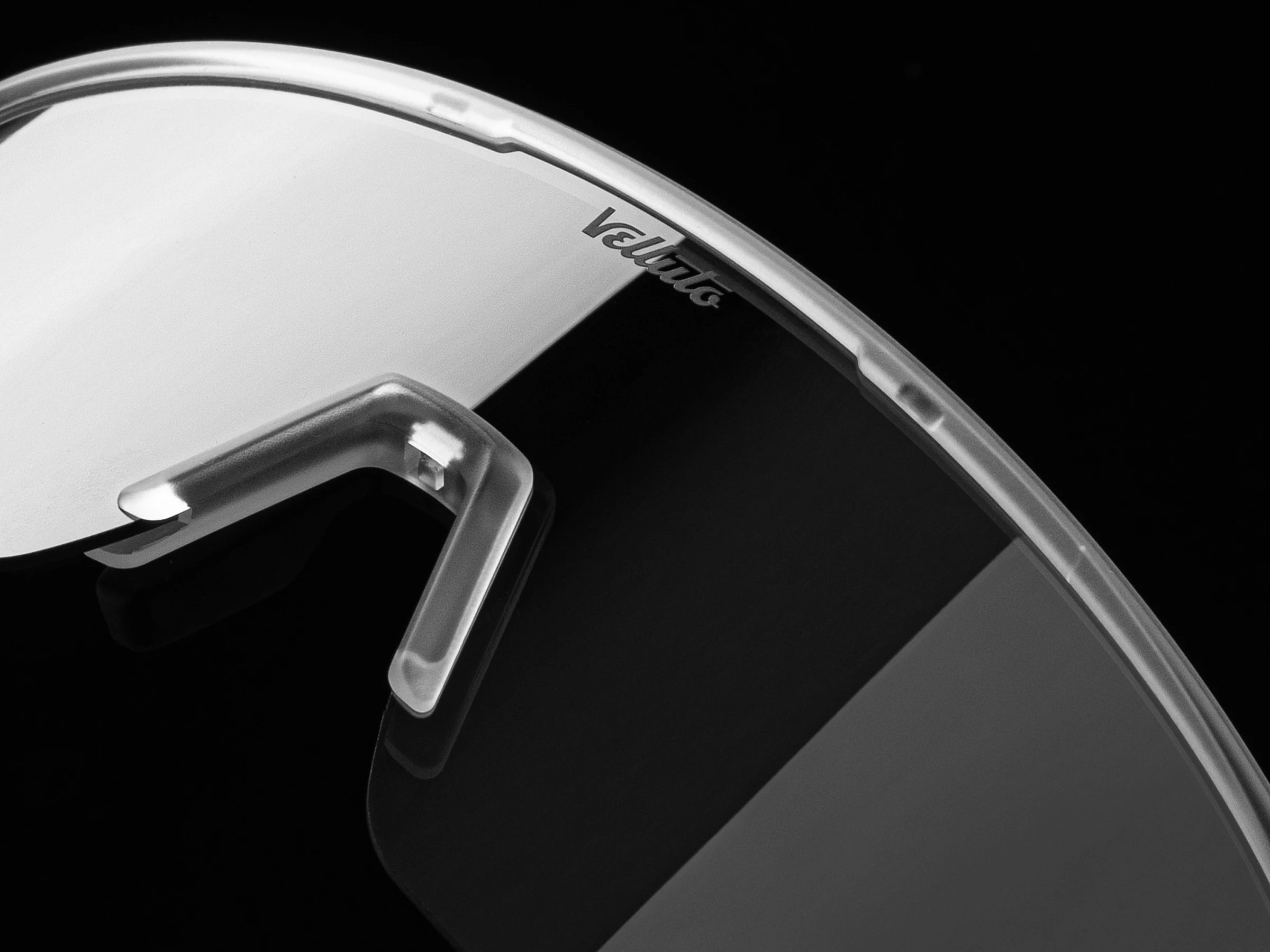
Lens system: The StradaPro is compatible with two interchangeable lenses via a click-in, tool-free system. The VellutoPuro is a clear lens optimised for wind and insect protection, UV400 certified, with anti-fog performance. The VellutoVisione uses VellutoVisione technology to sharpen contrast and visual definition, also UV400 certified. Both swap in seconds without tools, which is the correct way a lens interchange system should function on a road ride.
Trial period: Velluto offers a 30-day risk-free trial. You can ride in the StradaPro for a month on real roads before committing. For a performance product that is difficult to evaluate fully in a shop, this is a significant value addition.

06 · ComparisonOakley vs Decathlon vs Velluto StradaPro: the full breakdown
The comparison table below covers the five features that matter most to road cyclists evaluating value: weight, lens system, anti-fog, UV protection, and trial policy. These are the criteria that separate performance across the three tiers, and they are all verifiable from published brand specifications.
| Feature | Decathlon Entry | Oakley Jawbreaker | Oakley Sutro Lite | Velluto StradaPro |
|---|---|---|---|---|
| Weight | Varies by model | ~33 g | ~28 g | 25 g |
| UV Protection | UV400 (most models) | UV400 | UV400 | UV400 certified |
| Anti-fog system | Varies by model | Ventilated frame | Ventilated frame | Built-in anti-fog system |
| Interchangeable lenses | Limited in core range | Yes | Yes | Click-in, tool-free (2 lenses) |
| Adjustable nose pad | Fixed on most models | Unobtainium system | Unobtainium system | Fully adjustable |
| Risk-free trial | Return policy available | Return policy available | Return policy available | 30-day ride trial |
| Price | Entry-level bracket | Premium bracket | Premium bracket | from 69 EUR |
Examining this comparison on the basis of performance specifications, the StradaPro's positioning becomes clear. On weight, it delivers 25 grams, among the lightest in this comparison. On UV protection and anti-fog, it matches the specifications of premium-tier frames. On interchangeable lenses, it offers the core function with a tool-free click-in mechanism. On trial policy, it includes a 30-day risk-free trial. The price sits between entry-level and premium brackets.
Oakley's Prizm Road lens technology is proprietary and available exclusively through Oakley. For riders specifically seeking Prizm optics or valuing professional-cycling heritage and build quality, Oakley frames including the Jawbreaker and Radar EV Path represent established choices in the premium category.
For a rider who wants performance cycling eyewear and is not specifically committed to the Oakley ecosystem, the StradaPro delivers UV400 certification, anti-fog performance, 25-gram weight, and interchangeable lenses at a mid-range price point. The value argument is strong when considered against your specific riding needs.

07 · Lens SystemThe interchangeable lens question: what matters and why
One of the strongest value arguments for mid-range and premium cycling glasses over entry-level frames is the interchangeable lens system. It is worth explaining precisely why this feature matters for road cyclists, because it is often listed as a bullet point without enough context for a rider to judge its relevance to their riding.
Road cycling conditions change. A rider leaving a mountain village at seven in the morning on an overcast day faces different light conditions than the same rider three hours later descending from a col into valley sunshine. A single tinted lens handles one set of conditions well and compromises on the others. The practical consequences of riding with the wrong tint are not trivial: overly dark lenses in low light reduce contrast and visual detail on road surfaces, which increases the time between spotting and reacting to hazards. Overly light lenses in bright alpine sun cause squinting and eye fatigue over a long stage.
The VellutoPuro clear lens and the VellutoVisione high-contrast lens address the two most common scenarios. The Puro is optimised for lower light, dawn and dusk starts, overcast cols, and tunnel sections on alpine routes. It also protects against wind and insects, which matters more than it sounds at speed. The VellutoVisione is designed for bright conditions, where its contrast-enhancement technology sharpens visual definition on road surfaces, which is the same functional goal as Oakley's Prizm Road lens, approached differently.
The click-in, tool-free swap system means the change happens in seconds. This is not a marginal detail. If swapping lenses requires tools, or a lengthy process, or risks dropping and scratching the lens on a mountain pass, riders simply do not do it. A fast, secure swap system is what makes interchangeability a real-world feature rather than a specification on paper.
For cyclists planning trips to the Alps or Pyrenees this summer, or riding through the kind of variable conditions that characterise northern European summer training, the lens system is one of the most practically valuable features of the StradaPro kit.

08 · Alpine ContextWhat the Tour de France conditions tell us about cycling eyewear requirements
The Tour de France is a useful reference point not because most cyclists will ever ride its stages, but because the conditions it exposes riders to represent the extremes of what road cycling eyewear needs to handle. UV radiation at altitude over extended hours. Rapid temperature changes between climbs and descents. High-speed descents where lens fogging or displacement becomes a safety concern. Sweat on long stages that causes frames to shift if the fit system is not up to it.
For northern European riders travelling to Alpine and Pyrenean camps in July and August, the conditions are closer to Tour de France demands than many expect. These are not recreational day trips. A typical five-day camp includes daily stages of five hours or more, elevation gains of two thousand metres per stage, and temperature ranges of fifteen degrees or more between start and finish. The riders doing these trips are serious enough to invest significantly in training travel. The question is whether their eyewear matches the ambition of the trip.
The StradaPro's combination of UV400 certification, anti-fog system, 25-gram weight, and interchangeable lenses addresses each of the four primary demands that alpine riding places on cycling glasses. UV400 handles the altitude radiation increase. The anti-fog system handles temperature transition. The 25-gram weight means the frame is not a presence on the face during a five-hour stage. The lens system handles the light variation from valley start to col summit to valley descent.
The adjustable nose pads deserve specific mention here. On a long climb, perspiration and movement cause frames without adjustable fit components to shift. A frame that sits two millimetres lower than it should alters the visual field enough to be distracting. On a technical descent at high speed, distraction is precisely what you cannot afford. The adjustable nose pad system is not a comfort luxury: on long mountain stages, it is a performance feature.
A practical note for riders planning summer camps: bring both lenses. The clear VellutoPuro for early morning starts and overcast sections, the VellutoVisione for the bright alpine hours from mid-morning into afternoon. The swap takes seconds. The difference in visual comfort across a full stage is considerable.


09 · Value VerdictHow to make the right decision for your riding
Value is a ratio, not a price point. The most expensive glasses are not automatically the best value, and the cheapest are not automatically a saving. The question is: what does this product deliver relative to what it costs, for the specific riding I do?
Here is a straightforward framework for making that decision.
Choose Decathlon if: You ride recreationally, primarily on flat to moderate terrain, under two hours per session, without specific demands for anti-fog performance or lens interchangeability. Decathlon's core range provides UV400 protection and adequate optical clarity at the lowest accessible price. There is no reason to spend more than you need to for the riding you are actually doing.
Choose Oakley if: You are specifically committed to Prizm lens technology, you ride at a level where marginal optics performance is meaningful, or you value brand heritage and the professional provenance of the Radar EV Path or Jawbreaker. These are excellent products and the premium is justified if the Oakley-specific features are what you want.
Choose the Velluto StradaPro if: You ride seriously enough that anti-fog performance, adjustable fit, and interchangeable lenses matter on your rides, but you do not want to spend at the top of the premium tier. At 25 grams, with UV400 certification, a built-in anti-fog system, a tool-free lens swap system, and a 30-day risk-free trial, the StradaPro offers the performance features that characterise the premium tier without the premium price. For road cyclists doing long climbs, alpine camps, or variable-condition training, this is the value sweet spot in 2026.
One additional consideration: the 30-day trial changes the risk calculation entirely. On a performance product that you cannot properly evaluate in a shop, the ability to ride it for a month on real roads and return it if it does not work for you removes the primary barrier to trying it. It is a strong indicator of a brand confident in what it is making.

The accessories available from Velluto complement the core glasses well. The Velluto Cleaning Spray is a 50ml apple-fragrance spray made in Germany, refillable, designed for lens maintenance on the road. The hard case carries an anti-crash guarantee and has a velvet finish. The microfiber cleaning cloth is 25x25cm, 80% polyester, 20% polyamide. These are not afterthoughts. Lens clarity is partly a maintenance question, and having the right tools for it is part of a complete eyewear setup.
Compare the full lineup in the Velluto StradaPro cycling glasses collection.
10 · FAQFrequently Asked Questions
What to Look for in Cycling Glasses: Lens Technology, Fit, and Weight Explained
Before you commit to any frame, whether you're comparing a sub-twenty-euro Decathlon pair or a flagship Oakley, it helps to understand what the specifications actually mean on a long day in the mountains. Most cyclists focus on price and brand. The faster riders I know focus on four things: lens technology, weight, ventilation, and fit. Here's what each one means in practice.
What lens technology is best for road cycling?
For road cycling, the best lens technology combines UV400 protection with anti-fog coating and good optical clarity. Category 2-3 tinted lenses handle most conditions, while interchangeable lens systems give you flexibility across varying light. Photochromic lenses adapt automatically but react slowly at speed; they suit commuters more than racers.
Let's unpack that. UV400 is the baseline, it means the lens blocks all ultraviolet radiation up to 400 nanometres, covering both UVA and UVB. Any glasses that don't carry UV400 certification are not doing their primary job, regardless of price. This is non-negotiable at altitude, where UV exposure increases substantially with every thousand metres you climb.
Beyond UV protection, lens category matters. Category 0-1 lenses are for overcast and low-light conditions. Category 2 handles variable cloud. Category 3 is where you want to be on a bright summer day in the Alps or Pyrenees. Category 4 is reserved for extreme environments like high-altitude snow, it transmits so little light that it's illegal for driving and dangerously dark on shaded descents.
Anti-fog coating is where cheaper lenses tend to fall apart. A lens without it will fog reliably on a humid climb, then clear briefly on the descent, then fog again when you slow down. An active anti-fog treatment applied to the inner lens surface breaks the surface tension that causes condensation to accumulate. The difference between coated and uncoated lenses in real mountain conditions is not subtle.
Photochromic lenses, which darken and lighten in response to UV levels, are genuinely useful for commuting in variable weather. Their limitation for performance riding is reaction time, typically 20 to 60 seconds, which means you're riding into a tunnel or under tree cover with a lens that hasn't caught up yet. They also react more slowly at low temperatures, which is relevant if you're descending into a cool valley. Oakley offer photochromic options at a significant price premium. Velluto does not offer photochromic lenses, instead relying on an interchangeable lens system that lets you swap between tints manually, a faster solution when you know your conditions in advance.
Polarised lenses reduce glare from flat reflective surfaces and are excellent for water sports and driving. On the road, they can make it harder to read wet tarmac and may interact oddly with certain phone and GPS screens. Useful in some contexts, but not a priority for most road cyclists. Again, Velluto doesn't offer polarised lenses; if that's a specific requirement for your riding environment, look at competitor ranges.
How much should good cycling glasses weigh?
Good cycling glasses should weigh between 20 and 35 grams. Below 25 grams is considered lightweight for performance riding. Above 35 grams, you'll notice the frame on long climbs and during hard efforts. Weight matters most on multi-hour rides where even minor pressure points accumulate into real discomfort.
This is one of those specs that sounds trivial until you've ridden six hours with glasses that sit a few grams too heavy on your nose. Lightweight frames stay in place without pinching, don't shift under vibration from rough road surfaces, and reduce fatigue on your nose and ears over long days. The Velluto StradaPro comes in at 25 grams, which puts it at the lighter end of the performance mid-range category. Premium Oakley road models sit in a similar range, though specific weights vary by model. Budget frames from Decathlon tend to be heavier, though the gap has narrowed in recent years.
What weight figures don't tell you is balance. A frame that's 28 grams but poorly distributed, heavy at the front, light at the arms, will feel worse than a 30-gram frame with good balance. The combination of weight and fit is what actually determines comfort. That's why adjustable nose pads matter: they let you tune the fit to your face rather than relying on a one-size approach. Velluto's adjustable nose pads are one of the practical details that makes the weight figure meaningful in practice rather than just in the spec sheet.
Are shield-style cycling glasses better than regular lenses?
Shield-style cycling glasses (a single curved lens spanning both eyes) offer better peripheral vision and reduced wind intrusion compared to twin-lens frames. They're the dominant choice among road racers. The trade-off is that replacing or swapping a shield lens is more expensive than swapping individual lenses, and they can feel warmer in low-ventilation versions.
For pure road riding at pace, shields are generally preferred by experienced cyclists. The uninterrupted visual field is better, the aerodynamic profile is cleaner, and there's no central bridge to obstruct your view on aggressive riding positions. If you spend time in a low, aero position on a road bike, the absence of a central bridge makes a noticeable difference.
Twin-lens frames remain common in the mid-range and budget segments because they're mechanically simpler and the lens replacement cost is lower. For commuting, casual riding, or conditions where you're frequently removing your glasses (stopping at cafes, going indoors), twin lenses are more practical. For a dedicated road training or racing setup, shields have become the standard for good reason.
Budget vs Premium: What You Actually Get for Your Money in 2026
What are the best budget cycling glasses?
Decathlon's cycling glasses, typically priced in the ten to thirty euro range, represent the most accessible entry point in 2026. They offer UV400 protection and reasonable optical quality at price points where replacement cost is low. The trade-offs are weight, fit adjustment options, anti-fog performance, and lens interchangeability.
Being direct: the best budget cycling glasses are Decathlon's Van Rysel range, and they're genuinely good for what they cost. If you're new to road cycling, riding occasionally, or fitting out a group of riders for a one-off trip, they make complete sense. UV400 certification is standard across the range. Optical quality for the price is solid.
Where budget glasses show their limits is in the details that matter on long, serious rides. Anti-fog performance is inconsistent, fine for a short summer ride, unreliable on a three-hour Alpine climb where you're generating significant heat. Fit tends toward generic sizing with limited adjustment. Lens interchangeability is limited or absent, which means you're choosing one condition to optimise for rather than adapting to changing light. Weight is typically higher than performance-oriented frames.
None of these are dealbreakers for the use case budget glasses are designed for. They become relevant when you start riding more ambitiously, longer distances, higher altitudes, more varied conditions, faster descents. At that point, the gap between a thirty-euro Decathlon frame and a quality mid-range option becomes a practical performance gap, not a luxury gap.
Do cheap cycling glasses protect your eyes as well as expensive ones?
On UV protection specifically, yes, if the cheap glasses carry genuine UV400 certification, they block the same ultraviolet radiation as expensive ones. Where they fall short is optical clarity under stress, impact resistance, lens coatings (anti-fog, anti-scratch), and fit stability at speed. Eye protection is a floor, not a differentiator.
This is worth being precise about. UV400 is a certification, not a luxury feature. A lens either meets it or it doesn't. Reputable budget brands like Decathlon apply it consistently. Where they don't cut corners on safety, they do cut corners on performance coatings and frame engineering.
The practical risk with very cheap glasses, unbranded options under ten euros, is that UV400 labelling may not reflect genuine certification. At that price point, quality control is inconsistent enough that you can't rely on the specification. With Decathlon's Van Rysel range, you can. With random marketplaces or unbranded options, you can't.
Impact resistance matters more than many cyclists realise. Gravel strikes, insect impacts at speed, and falls are all real scenarios. Higher-end frames use materials that are more resistant to shattering and more likely to deform on impact rather than fragment. This is not a small thing if you're descending at speed.
What are the best cycling glasses brands in 2026?
In 2026, the consistently recommended cycling glasses brands are Oakley and Rudy Project at the premium end, Decathlon's Van Rysel range at the budget end, and a growing mid-range tier including Velluto for riders who want performance specifications without flagship pricing. Brand choice should follow use case, not prestige.
Oakley remains the benchmark at the top end. Their road cycling line sets the standard for optical quality, build precision, and lens technology. The prices reflect that, expect to spend well over a hundred euros for a proper Oakley road setup, and significantly more for their flagship models. If budget isn't a constraint and you want the best available, Oakley is the honest answer.
Rudy Project and Smith occupy similar premium territory with their own strengths, particularly around fit diversity and lens systems. 100% has built a strong following in the performance mid-range. Julbo is worth knowing for mountain-specific lenses and altitude performance.
Velluto's StradaPro positions itself as a direct answer to the question of whether you can get premium-relevant specifications, 25g weight, UV400, anti-fog, interchangeable lenses, adjustable nose pads, without premium pricing. The 30-day trial removes the risk from that proposition: you can test them in real riding conditions and return them if they don't work for you. That's worth more than most spec comparisons. You can see the StradaPro at velluto-shop.com.
Cycling Glasses for Specific Conditions: Winter Riding and Lens Care
What are the best cycling glasses for winter riding?
For winter cycling, prioritise anti-fog performance above all else, followed by a Category 1 or clear lens for low-light conditions, wraparound fit to block wind, and a frame that works with a cap or balaclava underneath a helmet. Photochromic lenses suit commuters; interchangeable lens systems suit riders who train across varied conditions.
Winter riding exposes every weakness in cycling eyewear. The temperature differential between your face and the outside air is at its most extreme. Breath rises directly into the lower edge of the lens. Wind chill makes any gap in coverage genuinely uncomfortable. Low light, early mornings, late afternoons, overcast skies, means a dark Category 3 lens that was perfect in July is dangerous in December.
The practical setup for serious winter training is a frame with strong anti-fog performance paired with a clear or very lightly tinted lens. An interchangeable lens system means you can use the same frame year-round and swap the lens rather than buying a separate pair. This is one of the strongest arguments for frames like the Velluto StradaPro or comparable options from other brands, the frame investment pays off across seasons when you're not buying multiple pairs for different conditions.
Fit matters more in winter because you're layering. A cap under your helmet changes where the frame sits. A balaclava changes the temple clearance. Adjustable nose pads help here, they let you fine-tune fit to account for additional headwear without the glasses sitting awkwardly or pressing where they shouldn't.
Photochromic lenses are commonly recommended for winter, and for commuting they make sense, you want automatic adaptation when you're not focused on riding performance. For training, the slow reaction time in cold temperatures is a genuine limitation. If you're doing intervals or descending, you want a lens that's already correctly matched to conditions, not one that's catching up.
How do you clean cycling sunglasses without scratching the lenses?
Clean cycling lenses with a microfibre cloth and lens-specific cleaning spray or plain water. Never use your jersey, dry paper, or household glass cleaners. Rinse off grit before wiping, dragging a particle across a lens under pressure is the most common cause of fine scratches that accumulate over time.
The sequence matters: rinse first, wipe second. If there's road grit, dust, or dried insect residue on the lens, wiping it with a dry cloth, even a microfibre, will scratch the surface. Water or cleaning spray lubricates the lens and suspends the particles so they lift off rather than being dragged across the coating.
Use cleaning spray formulated for coated optics, or plain water if you don't have it. Avoid anything with alcohol, ammonia, or abrasives, standard household glass cleaner will strip anti-fog and anti-scratch coatings over time. A cycling-specific lens cleaning spray from any optical retailer costs very little and extends the life of coatings significantly.
Store glasses in a hard case or microfibre pouch rather than loose in a jersey pocket. The most common damage pattern is lens-against-key or lens-against-nutrition-wrapper in a back pocket, damage that happens in seconds and can't be undone. Most glasses come with a case; use it habitually rather than as an afterthought.
For anti-fog coatings specifically: avoid touching the inner lens surface with your fingers. The oils from skin degrade the coating over time. When cleaning, be gentler on the inside of the lens than the outside. If your anti-fog performance has degraded, some brands sell coating refresher sprays that partially restore performance, worth trying before concluding the glasses need replacing.
What are the best value cycling glasses in 2026?
How much should I spend on cycling glasses?
Are Decathlon cycling glasses good enough for road cycling?
How does the Velluto StradaPro compare on weight to Oakley cycling glasses?
What interchangeable lens system does the Velluto StradaPro use?
Does the Velluto StradaPro have anti-fog?
What is the 30-day risk-free trial?
Are the Velluto StradaPro available in multiple colours?
Does Velluto offer free shipping?
If you are riding in the Alps or Pyrenees this summer, training seriously through the Tour de France season, or simply looking for a pair of road cycling glasses that delivers performance-tier features without a premium-tier price, the StradaPro is worth a serious look. The 30-day trial means there is no financial risk in finding out whether they are right for you. Start at velluto-shop.com and see the full range, including all four colours and both lens options.