Cycling Glasses Care and Cleaning: The Complete Guide

Contents19 min read
You finish a four-hour autumn sportive, peel off your helmet, and hold your cycling glasses up to the grey October light. The lenses are cloudy with dried sweat, road spray, and something that might be a squashed insect from the third hour. The question is not whether to clean them. The question is how to clean them without turning that cloudiness into a permanent network of micro-scratches that scatter light straight into your eyes on the next descent.
Cycling glasses take more punishment per kilometre than almost any other piece of kit. Wind, UV radiation, sweat, road spray, insect debris, helmet padding contact, and the occasional jersey-pocket survival situation all happen before you even think about cleaning. The result is that most riders replace lenses far sooner than necessary, or put up with degraded optics far longer than is safe, simply because nobody gave them a clear maintenance protocol. This guide fixes that. It covers how to clean without scratching, how to store correctly, how to keep anti-fog working across seasons, and how to know when a lens has genuinely reached the end of its useful life.
01 · Why it mattersWhy How You Clean Matters as Much as Whether You Clean
A polycarbonate cycling lens is not glass. It is lighter, more impact-resistant, and far better suited to sport use, but it is also softer on the surface and more vulnerable to the wrong cleaning technique. The anti-fog coating, UV filter, and any tint or contrast layer all live in micron-thin strata on the lens surface. A single wipe with a dry jersey hem applies enough grit and friction to score visible scratches across that surface in under a second.
The damage compounds invisibly at first. You wipe once badly, and the scratches are too fine to catch in normal light. You wipe ten more times over the season in the same careless way, and the lens reaches a state where low-angle autumn sun turns it into a smear of diffused glare rather than a clear optical surface. At that point the glasses are not just aesthetically worn. They are actively hazardous on fast descents, in wet conditions, or when riding into oncoming headlights at dusk.
Getting the cleaning habit right from the first ride is therefore not fastidiousness. It is the difference between a lens that lasts three seasons and one that lasts three months.
02 · The right toolsWhat You Actually Need Before You Start
Good cleaning comes down to three tools, none of which are expensive or hard to find. Using the wrong substitute for any one of them is where most lens damage happens.
A purpose-made lens cleaning spray. This is non-negotiable. Standard glass cleaners, window sprays, and multi-surface household products contain ammonia, alcohol, or solvent compounds that dissolve optical coatings. They work brilliantly on your bathroom mirror and catastrophically on a polycarbonate lens with an anti-fog coating. A sports-specific lens spray is pH-balanced, coating-safe, and formulated to emulsify the oils, insect proteins, and road film that accumulate on cycling lenses specifically. The Velluto Cleaning Spray is made in Germany, apple-scented, 50ml, and refillable, which makes it practical to keep one bottle on a workbench and refill it rather than buying single-use alternatives repeatedly.
A high-quality microfibre cloth. The weave density of a microfibre cloth determines whether it lifts particles off the lens surface or grinds them across it. A cloth made from very fine fibres (the Velluto cloth is 80% polyester and 20% polyamide at 25x25cm) has enough softness to trap particles between fibres rather than dragging them. The cloth must be clean. A cloth that has been used to wipe a saddle, a handlebar, or the inside of a jersey pocket is contaminated with particles that will scratch the next lens it touches. Wash your cleaning cloth regularly in warm water without fabric softener, and keep it in the case with your glasses rather than loose.
Running water. This is the step most riders skip, and it is the most important one. Cool or lukewarm running water removes loose grit, pollen, dried insect material, and salt crystals before any wiping happens. Those particles are abrasive. Wiping without rinsing first is the mechanical equivalent of sanding the lens with very fine sandpaper. Thirty seconds under a tap eliminates ninety percent of the scratching risk before you have even picked up the cloth.

03 · Step by stepThe Correct Cleaning Sequence, Ride by Ride
The process below takes under two minutes and applies after every significant ride. During stage races like the Vuelta, where riders face combinations of heat, dust, road spray, and high sweat volume across consecutive days, lens maintenance is a daily discipline, not an occasional chore. The same logic applies to autumn sportives and peak gravel season, where roads mix mud, wet leaves, and residual harvest dust in ways that load up a lens surface fast.
Step one: rinse. Hold the glasses under cool running water for fifteen to twenty seconds. Let the water flow across the outer lens surface and remove loose particles. Do not rub at this stage. If there are heavy insect deposits, let the water soak them for a moment before moving on. Use lukewarm water only. Hot water can distort lightweight polycarbonate frames and soften the adhesive that holds some nose pad components.
Step two: apply cleaning spray. Shake the bottle lightly and apply two to three short sprays to each lens surface, covering the outer face evenly. If you are without a purpose-made spray, a single small drop of mild unscented dish soap on a damp lens is an acceptable field substitute. Avoid any product containing alcohol, ammonia, or fragrance-delivery solvents.
Step three: wipe in straight strokes. Using a clean, dry microfibre cloth, wipe the lens in straight horizontal or vertical strokes from one edge to the other. Do not use circular motions. Circular wiping concentrates any remaining particles into a spiral path across the lens and creates the distinctive swirl pattern that becomes visible in low light. Apply light, consistent pressure. There is no benefit to pressing harder, and increased pressure increases scratch risk.
Step four: address the inner surface carefully. The inner face of the lens is where the anti-fog coating lives. It requires a lighter touch than the outer face. If the inner surface has condensation marks or sweat residue, apply one spray and wipe once with a fresh section of the cloth. Do not rub repeatedly. The anti-fog coating is durable in normal use but degrades faster than the outer surface under repeated abrasive contact.
Step five: dry and inspect. Hold the glasses up to a light source at an angle of about forty-five degrees. This raking light reveals any remaining smears or micro-particles before they get pressed into the surface on the next wipe. If smears remain, one additional light spray and wipe resolves them. If a haze persists despite repeated cleaning, the coating may be degraded rather than dirty, which is a separate problem covered in section seven of this guide.
The inner lens surface is where anti-fog lives. Clean it gently, rinse it often, and never touch it with bare fingers mid-ride.Velluto maintenance protocol
04 · Anti-fog maintenanceKeeping Your Anti-Fog System Working All Season
Anti-fog performance is one of the first things riders notice when it starts to fail, because it fails at exactly the worst moment: the foot of a long climb, where body heat is maximal and the lens interior fogs in seconds. The frustrating part is that anti-fog degradation is almost entirely caused by maintenance errors, not by normal wear.
The anti-fog coating on a cycling lens works through hygroscopic chemistry: it pulls moisture molecules away from the surface and disperses them as a thin uniform film rather than as droplets that scatter light. Two things destroy this chemistry faster than anything else. First, finger contact. The oils in human skin block the hygroscopic sites on the coating surface. Every time you push your glasses up your nose by touching the lens, or clear a smudge with a thumb mid-ride, you reduce the active area of the coating. Second, solvent-based cleaners. Ammonia and alcohol dissolve the coating material directly, often invisibly, until enough surface area is degraded that fogging becomes chronic.
Practical anti-fog maintenance means: do not touch the inner lens surface with bare fingers if avoidable, adjust fit using the frame or temple arms instead. Use only coating-safe cleaning products. When cleaning the inner surface, wipe once lightly rather than scrubbing. In wet or cold conditions, ensure the glasses fit close enough to the face to allow the ventilation system to work rather than trapping still air between lens and face.
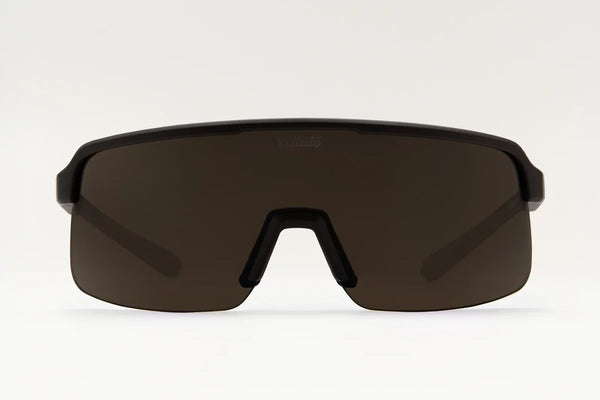
The StradaPro from Velluto cycling eyewear includes a built-in anti-fog system in the lens design, combining ventilation geometry with the anti-fog coating. This dual approach is more robust than coating alone, because even partially degraded coating still performs when ventilation is active. Maintaining both means the glasses remain fog-free across the variable weather conditions that define European autumn riding: the temperature swings between valley starts and hilltop finishes, the fog at dawn sportives, the sudden rain that turns a warm ride cold inside twenty minutes.
05 · StorageStorage That Protects Between Every Ride
Most lens damage does not happen during cleaning. It happens during storage. A pair of cycling glasses placed lens-down on a workbench, dropped into the bottom of a gear bag, or balanced on a helmet visor is exposed to scratching, pressure, and impact that accumulates invisibly across a season.
The correct storage habit is simple: glasses go into a rigid case every time they are not on your face. Not balanced on a bar table at a cafe stop. Not hooked to a jersey zip. Not resting on the passenger seat of a car. Into the case.
The Velluto hard case is designed specifically around road cycling glasses geometry and features a velvet interior that provides soft, zero-pressure contact with lenses and frame. The anti-crash guarantee means the case exterior can take the kind of impacts that happen in transition areas, at race sign-on, and in overfull gear bags. If you are travelling to a sportive by car or plane, the case is the correct place for the glasses regardless of how careful you intend to be with your bag.
One additional storage consideration: temperature. Leaving cycling glasses in a car on a hot summer day exposes the frame and lenses to temperatures that can exceed 70 degrees Celsius inside a sealed vehicle. At these temperatures, lightweight frames can distort slightly, and lens coatings can begin to separate from the lens base. In autumn and winter, the risk is less severe but still present. Store glasses at room temperature when possible, and avoid leaving them in a van or car boot overnight in cold conditions where condensation cycles can stress coatings.
06 · Field cleaningCleaning Mid-Ride and in the Field
Race situations and long sportives create cleaning needs that cannot wait for a full protocol at home. During the Vuelta peloton conditions, riders deal with road spray, insect debris, and sunscreen sweat from other riders' skin in close proximity. At autumn gravel events, mud and wet debris arrive in waves. You need a field approach that is good enough without being perfect.
The minimum viable field clean is: rinse with water if a bidon or water point is available, then use a clean section of the microfibre cloth. Do not wipe a dry lens with a dry cloth if you can avoid it. If your bidon is empty and the lens is gritty, gently blow across the surface first to shift loose particles before any wipe. A small pocket-sized cleaning spray is a practical addition to any jersey pocket for rides where lens clarity matters enough to stop at a cafe or feed station and sort it properly.
What to avoid entirely in the field: your jersey fabric (even clean kit contains road film and body oils after an hour of riding), paper cafe napkins or tissues (wood-pulp fibres are abrasive enough to leave fine scratches on polycarbonate), and any pre-moistened wipe that is not specifically formulated for optical lenses. These are common instincts and all of them cause damage.

07 · Lens replacementWhen to Replace Your Lenses, Not Just Clean Them
Good cleaning extends lens life significantly, but every lens eventually reaches a point where replacement is the correct decision. Knowing when that point has arrived matters both for performance and for safety.
The clearest signal is persistent haze that does not resolve after a proper cleaning sequence. If you have rinsed, sprayed, wiped correctly, and the lens still looks dull or milky at a raking angle, the coating is degraded rather than dirty. No amount of additional cleaning will restore a coating that has been chemically stripped or physically worn through. What you see as haze is light scattering from the degraded surface, and it will scatter the same way when you are riding into low autumn sun at forty kilometres per hour.
Micro-scratch networks are a related but distinct indicator. Individual fine scratches from a single bad wipe may be tolerable and localised. A network of overlapping scratches that covers the central optical zone, visible as a fine grey haze in direct light, is a replacement signal. The optical distortion from a heavy scratch network affects depth perception and contrast, which matters most at exactly the speeds where you most need clear vision.
Coating delamination shows as milky or rainbow-iridescent patches that move slightly when the lens flexes. This is a structural failure of the coating layer and cannot be reversed. Any crack or chip in the lens body, however small, is an immediate replacement situation: polycarbonate cracks propagate under stress, and a chipped lens provides reduced UV protection at the damaged area.
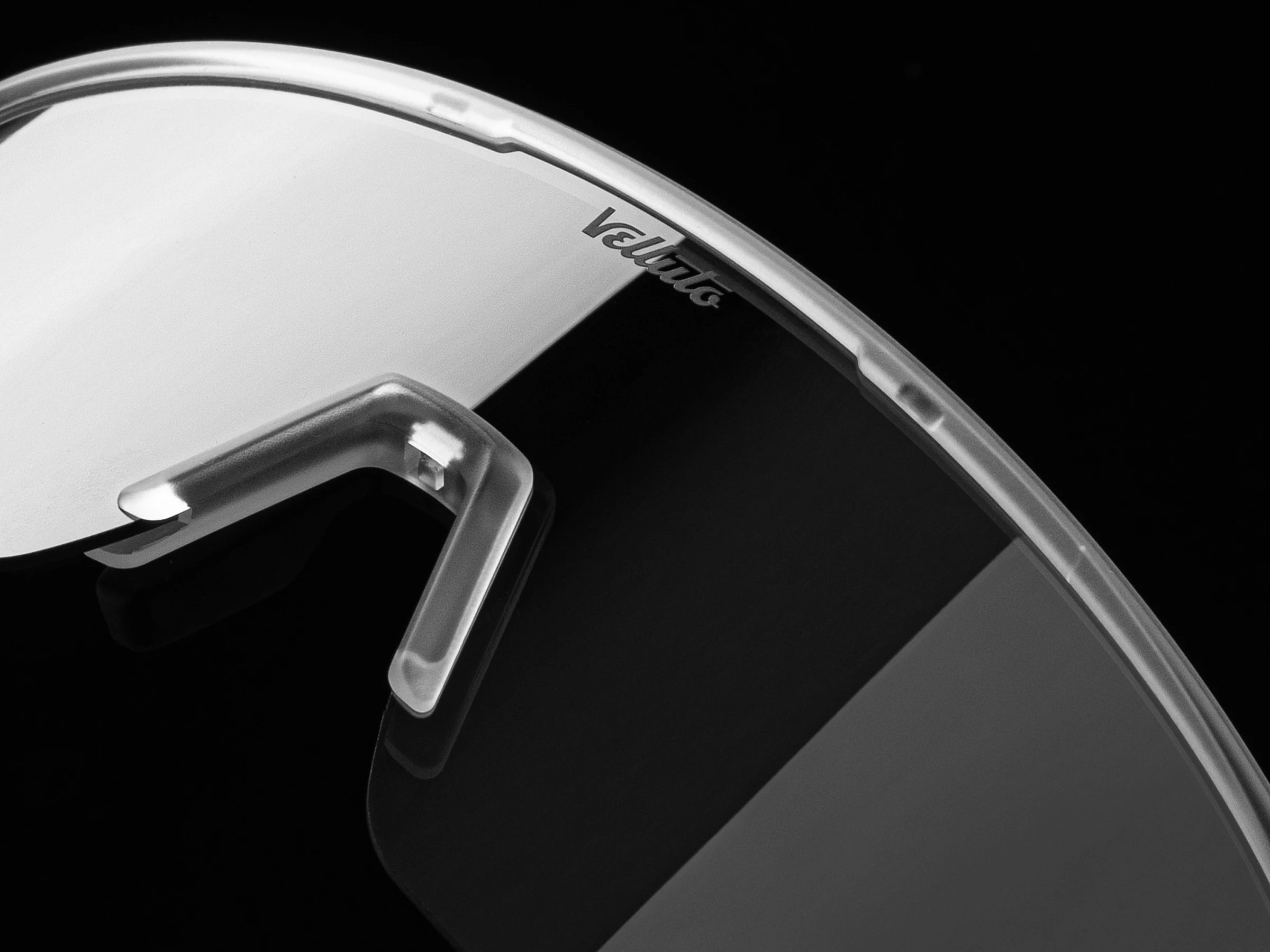
With the StradaPro's click-in interchangeable lens system, replacement is straightforward. The VellutoPuro clear lens and VellutoVisione high-contrast lens swap in seconds without tools. This means you can replace a degraded lens without replacing the entire frame, and you can maintain both lens types independently rather than treating them as a single unit with a single lifespan.
The practical implication is that the two-lens system is not just a light-condition convenience. It also means that if you ride predominantly in bright conditions and use the VellutoVisione lens ninety percent of the time, that lens takes ninety percent of the UV exposure, sweat contact, and cleaning cycles. The VellutoPuro lens used for dawn training and autumn cloud cover accumulates far less wear. Tracking them separately and replacing the more heavily used lens first is both more economical and better for optical quality.

08 · Seasonal careAutumn and Winter Specific Maintenance Considerations
Autumn riding creates a specific set of maintenance challenges that differ from summer conditions. The combination of shorter, lower-angle sunlight, more frequent rain, colder temperatures, and the particular debris profile of harvest-season roads (leaf tannins, agricultural dust, mud) puts different pressures on cycling glasses than July conditions do.
Sweat volume is lower in cooler temperatures, which reduces one source of lens contamination. But road spray frequency increases dramatically as routes pass through wet conditions more often. Road spray from autumn roads carries a different chemical profile than summer dust: it often contains leaf tannins that leave brownish residue, tyre rubber particulates from wet roads, and agricultural residues that are more alkaline than summer road film. This mix can accelerate coating wear if left on the lens for extended periods, making the post-ride rinse even more important in autumn than in summer.
Temperature cycling between a cold start and a hard climb creates rapid fogging risk at the lens surface. This is where the StradaPro's built-in anti-fog system earns its keep most visibly. But it also means the inner surface collects more condensation moisture through an autumn ride than through a dry summer one, and the post-ride cleaning sequence should always include a gentle wipe of the inner surface to remove residual moisture before storage.
Winter storage, if you have a period of complete off-bike time, should follow the same principles as regular storage with one addition: do not store glasses in an unheated garage or shed where temperatures drop below freezing regularly. Thermal cycling through freeze-thaw repeatedly stresses any laminated or coated surface. A shelf at room temperature inside is always the correct winter storage location.

09 · The cleaning kitThe Right Product for the Job
Most cyclists already own the frame and lenses. The cleaning side of the equation is often an afterthought, which is why degraded lenses are so common. Having the right product within reach of where you gear up and gear down is the habit that makes the difference.
The Velluto Cleaning Spray is formulated for polycarbonate sports lenses and is coating-safe by design. The refillable format makes it practical to maintain a consistent supply without generating single-use waste. At 50ml it is small enough to pack for multi-day events or travel without consuming significant space in a gear bag.
Pairing it with the Velluto 25x25cm microfibre cloth, which features a fine fibre density of 80% polyester and 20% polyamide to trap particles without dragging them across the lens surface, gives you the complete cleaning system the StradaPro is designed to work with. Both live inside the hard case between rides, which means the complete kit is always exactly where you need it.


Compare the full lineup in the Velluto StradaPro cycling glasses collection.
10 · FAQFrequently Asked Questions
What is the safest way to clean cycling glasses without scratching the lenses?
Can I use household glass cleaner on cycling lenses?
How do I maintain the anti-fog performance of my cycling lenses?
How should I store cycling glasses between rides?
How often should I clean my cycling glasses?
When should I replace my cycling lenses rather than clean them?
Can I swap lenses on the Velluto StradaPro myself?
Is it safe to rinse cycling glasses under running water?
Does sweat damage cycling glasses over time?
Your cycling glasses are a precision optical instrument that lives at the intersection of performance and safety. Treat the cleaning and storage side with the same attention you give to tyre choice or chain lubrication and they will return clear, fog-free, UV-protected vision across seasons rather than months. For the full StradaPro range, lens options, and the complete cleaning kit, visit velluto-shop.com.