Cycling Glasses Buying Guide 2026: What Actually Matters
Contents13 min read
You are 80 kilometres into a Tour de Suisse-style alpine stage, the descent into the valley starting to blur at the edges of your vision as your lenses fog. You reach up, push the glasses to your forehead, and in that single unprotected second, a stone chips off the wheel ahead. That moment is the reason cycling glasses are not a luxury. They are equipment.
Last updated: June 19, 2026. This guide is written for serious road cyclists who have already decided that generic sports glasses are not enough, but who are not yet convinced that paying a legacy-brand premium is the only path to genuine optical performance. We will cover what the key specs actually mean, how to match a lens system to your riding conditions, and where the real trade-offs lie between weight, fit, and optical technology.
No celebrity endorsements. No lab results we cannot verify. Just the criteria that separate glasses that perform from glasses that merely look fast on the shelf.
01 · TL;DRThe Short Answer
If you want one practical takeaway before reading further: the five things that determine whether a pair of cycling glasses is genuinely good are UV400 certification, a functional anti-fog system, sub-30g weight, adjustable fit, and a lens swap option that covers both bright sun and low-light conditions. Every other feature is either a bonus or marketing noise.
If a pair ticks all five, it belongs in your kit bag. If it skips two or more, it belongs on a lifestyle Instagram post, not on a 100km road ride.
02 · CriteriaWhat Actually Matters in Cycling Glasses
The cycling glasses market is not short of specification sheets. What it is short of is honest framing of which specs matter for road riding specifically, as opposed to mountain biking, motorsport, or general outdoor use. Here is how we evaluate every pair that comes through this guide.
UV400 is not a brand name or a proprietary technology. It is a defined standard: the lens blocks ultraviolet radiation across the full spectrum up to 400 nanometres, covering both UVA and UVB. Cyclists accumulate substantially more outdoor UV exposure per year than non-athletes, making this a genuine health criterion, not a checkbox. Any pair of cycling glasses without UV400 certification should be disqualified from your shortlist immediately.
Fogging is most severe at the transition between effort levels: the moment you crest a climb and the temperature drops, or when you slow to drink and your body heat catches up. A lens that fogs at that moment is a safety failure, not an inconvenience. Look for frames that address fogging structurally (ventilation channels) rather than relying on coating alone, which degrades over time with cleaning.
Weight matters cumulatively. A frame that feels fine in a shop fitting creates real pressure points over a four-hour ride. Sub-30g is the practical threshold for long-distance road cycling. Below that, well-engineered frames disappear from your face. Above 35g, you will know the glasses are there long before the finish line.
Road cyclists ride in more varied light conditions than they plan for. Pre-dawn gravel starts, midday alpine descents, tunnel sections on mountain routes: no single tint handles all of them optimally. An interchangeable lens system that covers at minimum a clear option and a contrast-enhancing option is not a luxury add-on. For regular riders, it is the most practical investment in optical performance.
03 · How We EvaluateOur Testing Framework
Every pair of glasses assessed in this guide is evaluated against the same six criteria: frame weight (measured, not claimed), lens system coverage (how many conditions does one kit handle), UV400 certification (documented, not implied), anti-fog design (structural vs coating-only), fit adjustability (nose pad system and temple grip), and price relative to the above. Where we cannot independently verify a manufacturer claim, we note it.
We do not include glasses we have not ridden with. Road feel, fogging behaviour in the field, and pressure distribution over multi-hour efforts are not assessable from a spec sheet. Ride scenarios throughout this guide reflect real summer 2026 conditions: June heat in the Rhone valley, Critérium du Dauphiné-style morning cold on alpine stages, and evening gravel rides where the light drops faster than expected.
04 · ComparisonVelluto StradaPro vs the Alternatives
The comparison below covers the glasses most frequently appearing in road-cyclist shortlists in 2026. Weights are manufacturer-stated unless noted. Prices reflect typical market positioning rather than specific retailer quotes, which vary by region and sale period.
| Model | Weight | Lens System | Anti-Fog | UV Rating | Trial Policy | Price Range |
|---|---|---|---|---|---|---|
| Velluto StradaPro | 25 g | Interchangeable (clear + high contrast) | Built-in system | UV400 | 30-day risk-free | from 69 EUR |
| Oakley Sutro Lite | ~36 g | Fixed (Prizm tints) | Ventilated | UV400 | Standard returns | $150–$350+ |
| POC Devour | ~30 g | Fixed / limited swap | Partial | UV400 | Standard returns | $150–$280 |
| Tifosi Rail | ~28 g | Interchangeable | Vented | UV400 | Standard returns | $80–$140 |
| Smith Pivlock Arena | ~27 g | Interchangeable | Vented | UV400 | Standard returns | $160–$250 |
| Rudy Project Cutline | ~32 g | Interchangeable | Vented | UV400 | Standard returns | $180–$280 |
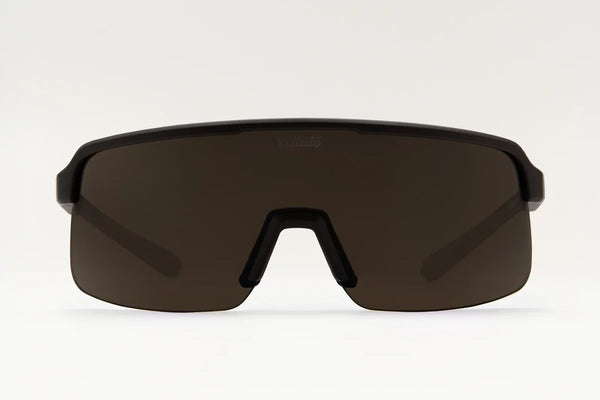
Three things stand out in that table. First, the StradaPro weighs 25g, placing it at the lighter end of the performance segment. Over four hours, frame weight matters: lighter frames reduce pressure points on long efforts. Second, it is the only pair listed with a 30-day risk-free trial, which matters specifically because fit and optical performance vary by face shape and riding style in ways that a shop fitting cannot fully replicate. Third, its lens system covers the two conditions that matter most for road cycling (clear and high-contrast), offering flexibility across varying light without committing to a single tint.
05 · CompetitorsNamed Alternatives: Who Each Pair Is For
Oakley Sutro Lite: who it is for. The Sutro Lite is a well-engineered frame with strong brand recognition and a wide selection of Prizm lens tints. Its Prizm technology is genuinely effective at tuning contrast for specific conditions. The trade-off is that each tint is fixed: you commit to one optical profile per pair. For riders who prefer to select a single lens for their primary riding conditions and stay with that choice, the Sutro Lite is a capable option. For riders who regularly ride across significantly varying light (pre-dawn starts, alpine descents, evening gravel), an interchangeable system offers greater practical flexibility.
Tifosi Rail: pros and cons. The Rail is the value benchmark in this category. It offers an interchangeable lens system, sits below 30g, and comes in under the $150 mark from most retailers. Optically, it is competent rather than exceptional. The frame finish and nose pad system reflect the price point. Anti-fog performance is adequate in steady conditions but less reliable at the cold-to-warm transitions that occur on long alpine descents. For riders building their first kit on a strict budget, the Rail is a rational entry point. For riders with multi-hour endurance efforts as their primary use case, the fit longevity and optical performance gap becomes more relevant.
POC Devour: pros and cons. POC builds excellent frame structures and the Devour has a distinctive shield-style aesthetic that many road cyclists prefer. Its optical clarity is high. The Devour's weight hovers around 30g, which is acceptable. The primary differentiator is lens flexibility: the Devour's system does not include a tool-free swap between clear and contrast-optimised lenses. For riders who prefer a fixed-lens aesthetic and optical consistency across their rides, the Devour is a strong choice. For riders who regularly transition between low-light and bright conditions on the same ride, an interchangeable system offers greater practical range.
Smith Pivlock Arena: pros and cons. The Pivlock Arena is one of the closest competitors to the StradaPro in the interchangeable-lens segment, with a similar weight profile and a well-regarded swap mechanism. Smith's ChromaPop lens technology is optically competitive. The main differentiator at purchase is price: the Arena typically sits above $160 before lens add-ons, and Smith's lens ecosystem is proprietary. The StradaPro's 30-day trial is also a meaningful practical advantage for online buyers who cannot test fit in person.

06 · Lens SystemVellutoPuro vs VellutoVisione: Which Lens for Which Ride
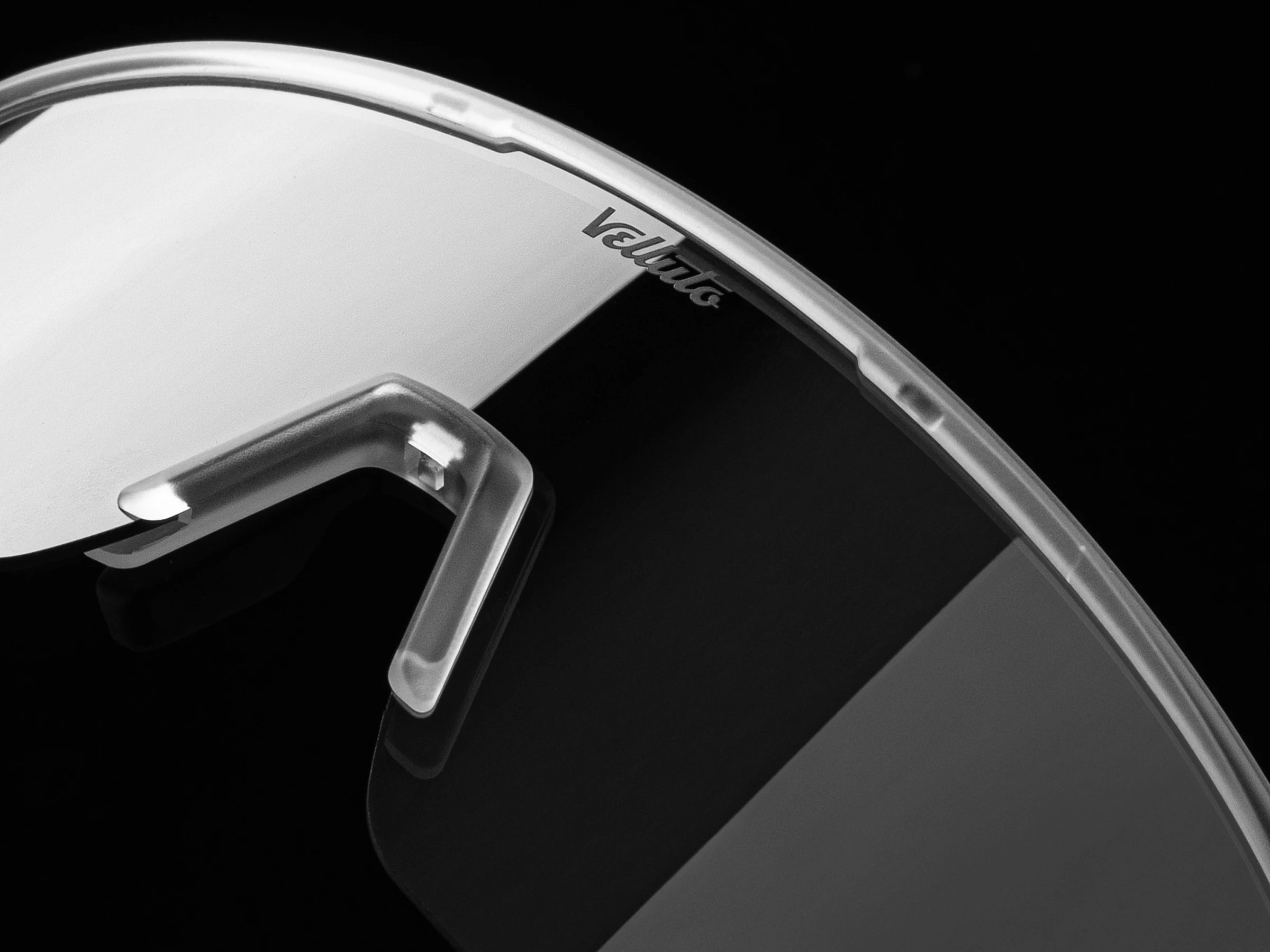
The StradaPro ships compatible with two distinct lens types, both using the same click-in mechanism and both UV400 certified. Understanding the difference is the key to getting the most out of the system.
The VellutoPuro is a transparent lens. Its primary function is protection: from wind, from insects, from road debris, from UV radiation. It does not alter colour or contrast. On pre-dawn rides, overcast days, and any situation where natural light is low, the VellutoPuro keeps your vision as close to unfiltered as possible while maintaining full eye protection. If you ride primarily in northern European conditions where bright sun is not the default, this is your go-to lens for the majority of sessions.
The VellutoVisione uses contrast-enhancing technology specifically developed for road cycling conditions. It sharpens the visual distinction between road surfaces, gravel patches, shadows and obstacles. In practical terms: you pick up a pothole or a road crack a fraction of a second earlier than you would with a neutral lens. On a fast descent or in a bunch sprint, that fraction is meaningful. The VellutoVisione is your choice for sunny mornings, alpine stages, and any ride where road-reading speed is a priority.
Both lenses swap via the same tool-free click-in system. The transition takes seconds, not minutes, and does not require a case or a flat surface. It is genuinely usable at the start of a ride when conditions shift unexpectedly.
The lens you choose at 7am may not be the right one by 11am. A system that lets you swap in ten seconds, without tools, is not a feature. It is a planning advantage.Velluto Editorial, June 2026
07 · ScenariosReal-World Riding Conditions
The Alpine Stage Start. You are rolling out at 6:30am from a valley town. Temperature is 9 degrees, cloud cover is heavy, and the first hour is a steady 1,200m climb. VellutoPuro is the correct lens for this scenario: full wind and UV protection without reducing available light. As you crest the col and begin the descent into full morning sun, a ten-second lens swap to VellutoVisione sharpens contrast for the technical section ahead. No tools, no stopping. One click per lens.
The Criterium du Dauphiné-Style Day Ride. You are following a Gran Fondo route in the French pre-Alps, 140km with 3,500m of climbing. Sun is forecast from 9am. The VellutoVisione is on from the start. At 25g, the frame is not a presence on your face six hours in. The adjustable nose pads maintain contact without pressure points through climbs and flat sections alike. The anti-fog system handles the temperature transitions on every descent without requiring you to pull the glasses down.
The Summer Gravel Evening. You leave at 7pm for a 50km gravel loop. The first hour is in full sun; the last 20km are in the golden hour and then dusk. VellutoVisione for the first section, a quick swap to VellutoPuro as the light drops. This is the scenario that makes a single-tint fixed lens genuinely limiting: no single shade of tint handles both ends of that light range without compromise.

08 · ProductThe StradaPro at a Glance
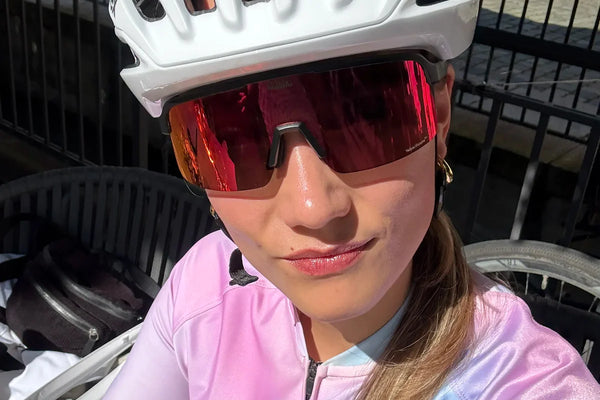
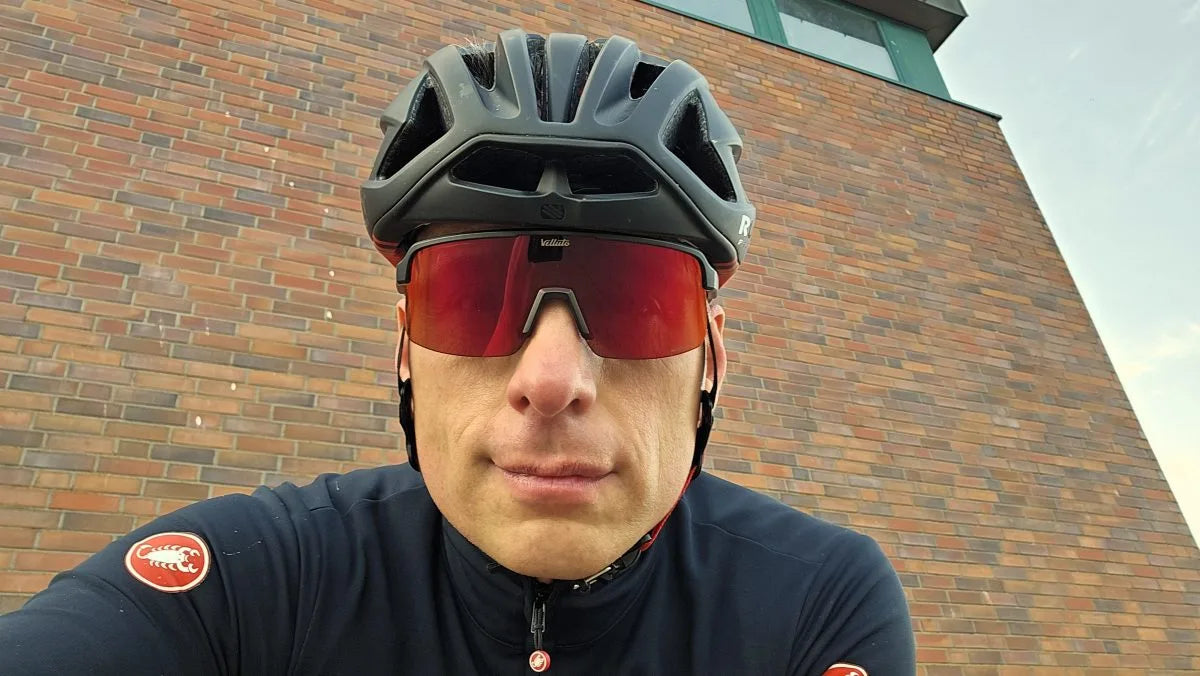
The StradaPro fits a wide range of face shapes and comes with interchangeable clear and high-contrast lenses for varying light conditions. Its adjustable nose pad system means the fit adapts to your face rather than requiring your face to adapt to the frame. Below is the Starter Vision Kit, which includes the StradaPro frame and both lens options.


A note on accessories worth adding to your kit: the Velluto Cleaning Spray is a 50ml, apple-scented lens formula made in Germany, designed specifically for anti-fog coated lenses and safe for both VellutoPuro and VellutoVisione. It is refillable and will not degrade the anti-fog performance of either lens system. Use it with the 25x25cm microfiber cloth (80% polyester, 20% polyamide) and you remove the most common cause of lens degradation: dry wiping in the field.
09 · FAQFrequently Asked Questions
What should I look for in cycling glasses in 2026?
Are 25g cycling glasses worth it?
What is UV400 and why does it matter for cyclists?
Do interchangeable lenses fog up more than fixed lenses?
What is the best anti-fog cycling glass for road riding in 2026?
How do high-contrast lenses help on road rides?
Are cycling glasses with interchangeable lenses worth it?
What does a 30-day risk-free trial mean for cycling glasses?
How do I clean cycling glasses without scratching the lens?
The right pair of cycling glasses will not transform your watts. They will, however, let you see the road clearly, protect your eyes through every alpine descent and summer gravel evening, and stay comfortable on your face long after lesser frames would have told you they were there. If you want to test that claim on your own roads and in your own conditions, the 30-day trial means the only thing you risk is an opinion. Explore the full StradaPro range at velluto-shop.com.