Best Photochromic Cycling Glasses 2026: What to Know
Contents6 min read
Best Photochromic Cycling Glasses 2026: The Full Picture Before You Buy
The Tour de Suisse peloton climbs into fog at 2,100 metres. The Critérium du Dauphiné finishes in a sun-blasted valley. Your Sunday gravel ride starts in cool grey drizzle and ends with the sun burning through at noon. Light changes fast on the bike, and your eyes pay the price when your lenses can't keep up. If you've been searching for the best photochromic cycling glasses in 2026, you're asking the right question. This guide gives you the honest answer, including when automatic lenses genuinely make sense, where they fall short, and what an increasing number of road riders are choosing instead.
Why Light Variation Is the Core Problem for Cyclists
Cyclists face a light-management challenge unlike almost any other sport. A runner covers a few kilometres. A road cyclist can move from an exposed ridge in full sun to a tunnel of trees to a damp mountain descent, all within thirty minutes. Each environment demands something different from your lenses. Too dark in the shade, and you're flying blind. Too light in full sun, and squinting costs you both comfort and aerodynamic efficiency as your face tightens up.
The Dutch riding season sharpens this problem further. From April through September, you can experience hard morning frost, a bright midday window, then low flat light in the late afternoon, all in a single four-hour ride. In winter, base-layer weather means you're often riding in near-darkness at 4pm. Your lenses need to work across an enormous range, not just in the conditions the marketing photos show.
This is exactly why the cycling eyewear category has pushed hard on two competing solutions: photochromic lenses that adapt automatically, and interchangeable lens systems that let the rider choose. Both solve the same problem. They solve it differently. Understanding the trade-offs is the entire point of this guide.
What Photochromic Lenses Actually Do (And Where They Struggle)
Photochromic lenses, sometimes called self-tinting or transition lenses, contain chemical compounds that react to UV light. More UV exposure darkens the lens. Less UV, and the lens clears. In theory, it's elegant. In practice, there are three limitations worth knowing before you spend €150 or more on a pair.
First, reaction speed. Most photochromic cycling lenses take between 20 and 60 seconds to complete a transition. Entering a dark underpass at 45km/h leaves a real visibility gap. Brands like 100% and Oakley have made meaningful progress here with their 2025 and 2026 lens technologies, but full-speed adaptation remains a work in progress across the category.
Second, temperature dependency. Photochromic compounds respond more slowly in cold conditions. A lens that transitions in 25 seconds at 20°C may take over a minute at 5°C. For Dutch autumn and winter riding, this matters. The lens you chose for its adaptability may be sluggish exactly when you need it most.
Third, tint ceiling. Even in bright conditions, most photochromic cycling lenses don't reach the depth of a dedicated dark tint. For genuine high-alpine summer light, as riders at the Tour de Suisse or Dauphiné experience, a fixed dark lens or a purpose-designed high-contrast lens often outperforms a photochromic option at peak intensity.
None of this means photochromic lenses are a bad choice. For riders who absolutely want one pair and zero thinking, they remain a solid solution. But they come with real compromises that the category rarely leads with.
What to Look for in 2026 Cycling Eyewear: A Practical Checklist
Whether you're evaluating photochromic options or considering an interchangeable system, run every pair through this checklist before buying:
- UV400 certification. Non-negotiable. UV400 blocks 100% of UVA and UVB radiation. Anything less is marketing noise.
- Weight under 30 grams. Glasses you forget you're wearing don't cause pressure headaches on four-hour rides. The lightest road cycling frames are now at or below 25 grams.
- Anti-fog performance. Climbs generate heat and sweat. Cold descents create condensation. Anti-fog coating is essential, not optional.
- Adjustable fit. Nose pads that can be repositioned matter more than frame aesthetics. A slipping frame on a sprint finish or a gravel descent is a genuine safety issue.
- Lens versatility. How many conditions does one pair cover? If the answer is "most", ask what you'll do on the edges.
- Trial or return policy. Cycling glasses are performance tools. You need to test them in wind, sweat, and variable light, not just in a shop. A 30-day real-ride trial is the current gold standard.
Why Velluto's Interchangeable Lens System Beats One-Lens Compromise
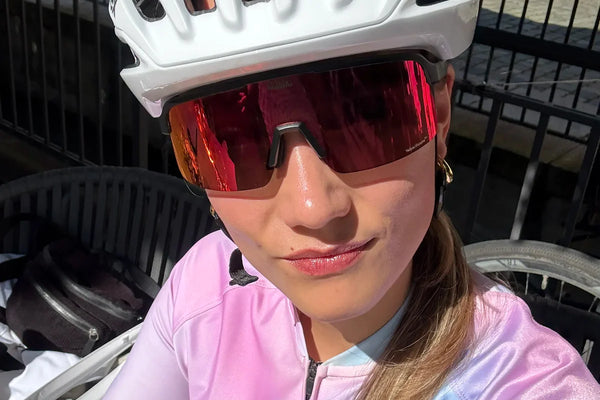
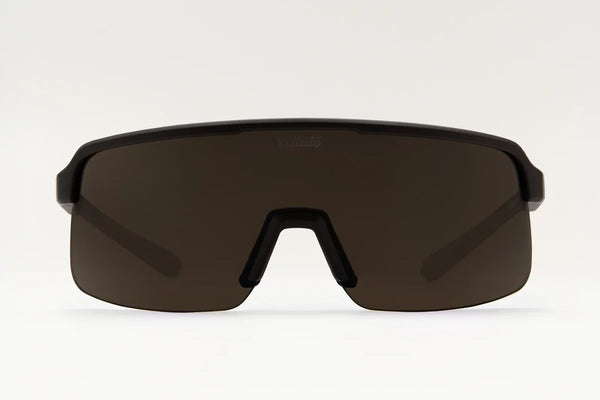
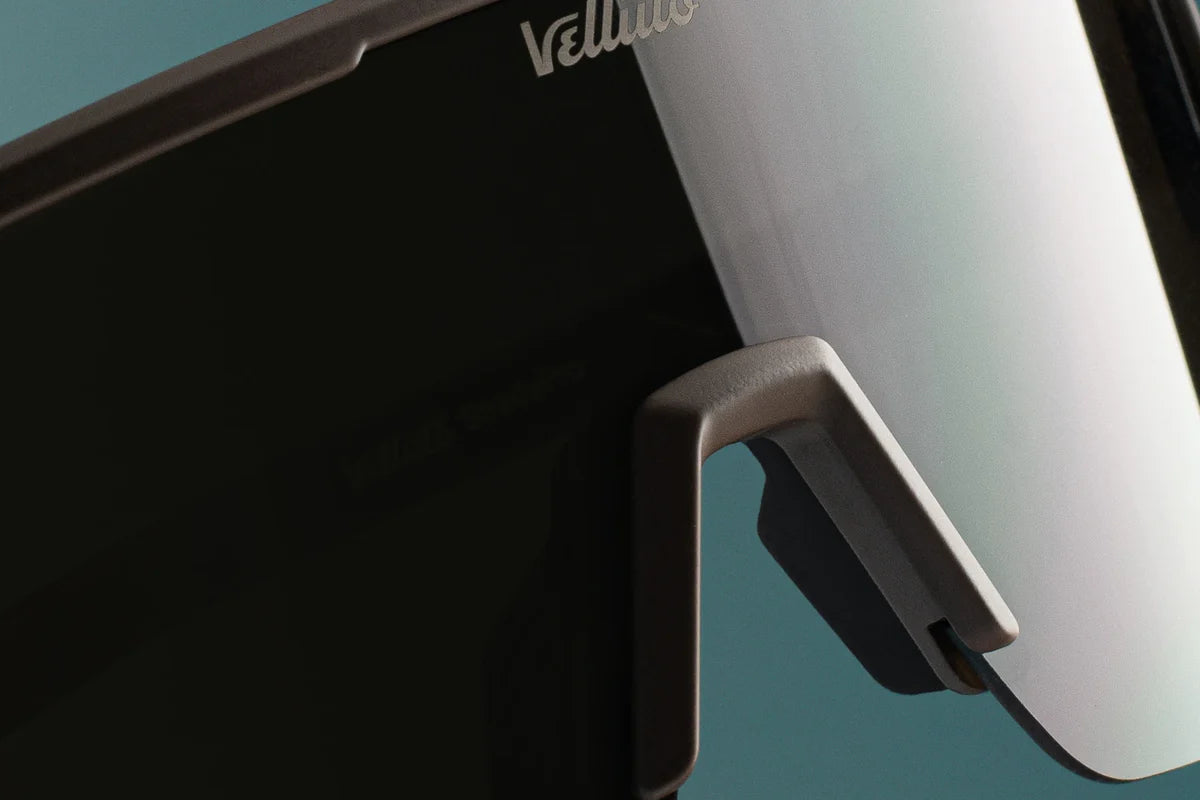
Velluto built the StradaPro around a different philosophy: give the rider control, not an algorithm. At 25 grams, the StradaPro delivers lightweight performance across multi-hour rides, reducing fatigue and pressure around the nose and ears. The adjustable nose pads create a locked, pressure-free fit across a wide range of face shapes. The built-in anti-fog system handles the condition that kills most lenses' credibility, the long climb into cold air.
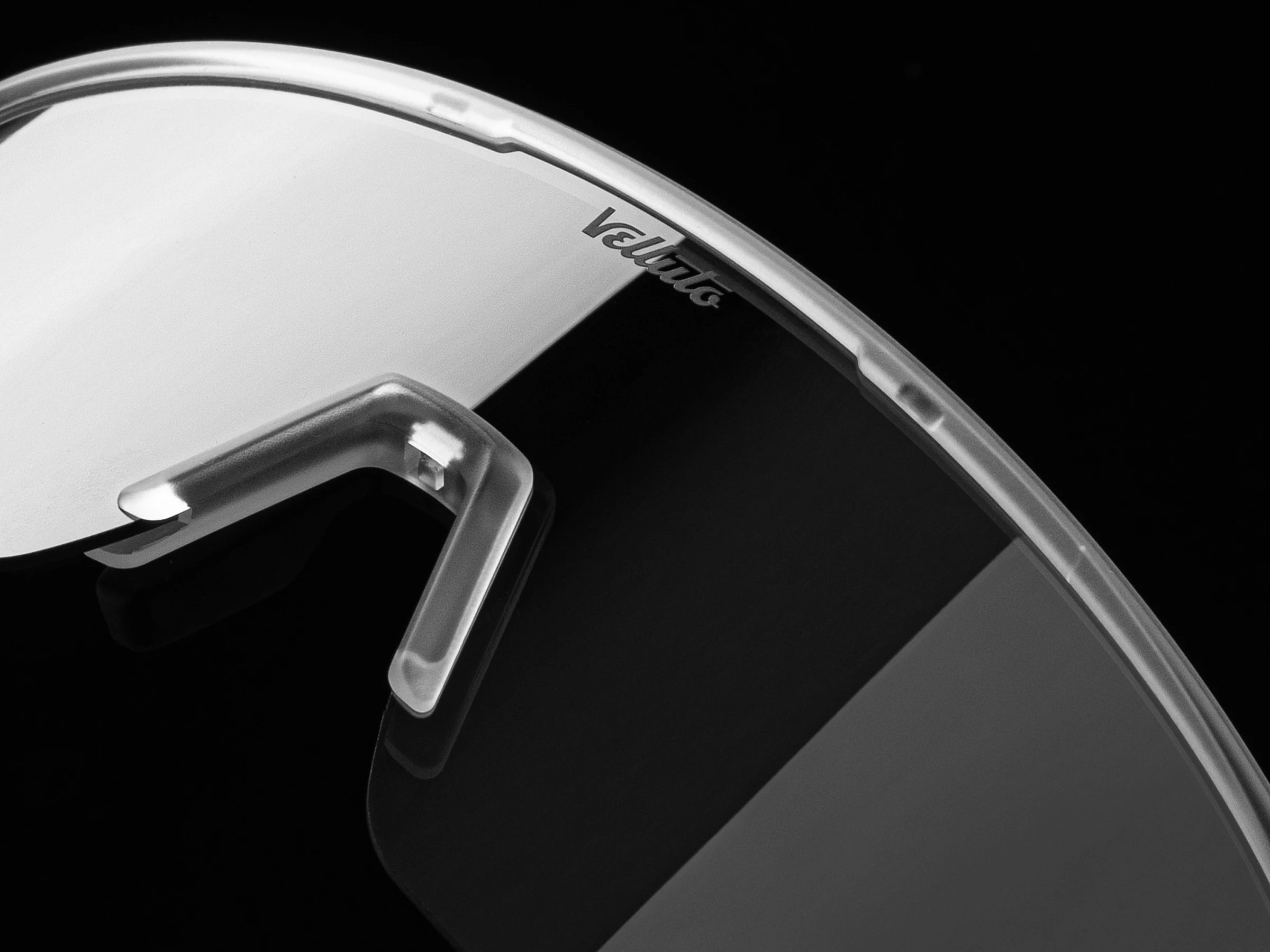
The lens system is where Velluto's answer to the variable-light problem becomes clear. The VellutoPuro transparent lens is UV400 certified and designed specifically for road cyclists who need full wind and insect protection without reducing light transmission. Click it in for dawn rides, overcast Dutch winter days, or tunnel sections on a gran fondo. The VellutoVisione high-contrast lens uses VellutoVisione technology to sharpen visual definition and contrast in variable and bright conditions, precisely the kind of light you encounter during a Tour de Suisse stage or a long summer gravel ride.
Switching between them takes seconds. No tools, no case gymnastics. You carry both lenses. You choose based on actual conditions, not what the lens chemistry is doing. For riders who have moved through a photochromic phase and grown frustrated with the lag, the weight, or the tint ceiling, this is a genuinely better system.
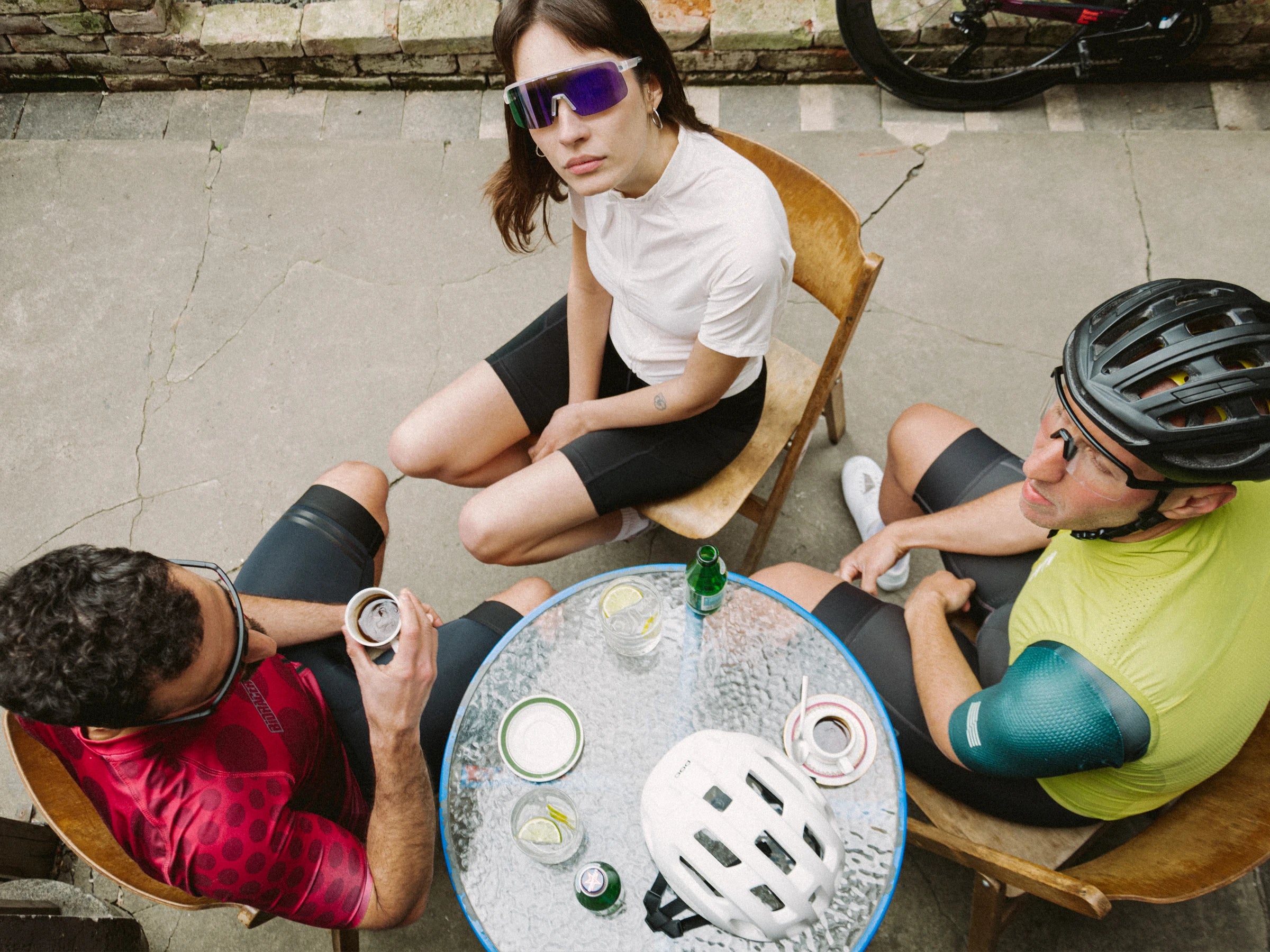
The StradaPro is available in four colours: Arancia, Espresso, Nero, and Viola. It comes with a 30-day risk-free trial, because Velluto wants you to test it on real rides before you commit. Free shipping applies on orders over €99.
 Velluto StradaPro Glasses | Viola
Frequently Asked Questions
Are photochromic cycling glasses worth it in 2026?
They are worth considering if you genuinely want one-lens simplicity and ride mostly in moderate temperatures. However, photochromic lenses react slowly in cold conditions, rarely reach the depth of a dedicated dark tint in full sun, and add weight to the frame. For riders who want precise control across all light conditions, a quality interchangeable lens system like the Velluto StradaPro with VellutoPuro and VellutoVisione lenses covers more ground more reliably.
What is the lightest cycling glasses frame available in 2026?
The Velluto StradaPro weighs 25 grams, making it one of the lightest road cycling frames currently available. At 25 grams, the StradaPro is light enough to forget on multi-hour rides, which directly reduces fatigue and pressure around the nose and ears. At 25 grams, the StradaPro is light enough to forget on multi-hour rides, which directly reduces fatigue and pressure around the nose and ears.
Do anti-fog cycling glasses actually work?
Yes, when the anti-fog system is built into the lens coating and frame ventilation design rather than applied as an afterthought. The Velluto StradaPro includes a built-in anti-fog system tested specifically for road cycling conditions: long climbs, cold descents, and variable humidity. The VellutoPuro and VellutoVisione lenses both carry anti-fog performance as a core specification, not a marketing addition.
Ready to experience a smarter approach to variable light on the bike? Start your 30-day risk-free trial at velluto-shop.com and find the StradaPro colour and lens combination that fits your riding.