Lunettes Cyclisme vs Lunettes Soleil 2026 | Velluto
Contents9 min read
Road Cycling Glasses vs Regular Sunglasses 2026 | Velluto. Que change vraiment à la vitesse
Observez le peloton au départ du Tour de Romandie ou du Critérium du Dauphiné et une chose devient immédiatement évidente : personne ne porte ses lunettes de soleil ordinaires. Les coureurs qui se lancent dans une descente à 60 km/h, les grimpeurs qui s'acharnent dans le brouillard du matin au-dessus de Chamonix, les gravel racers qui dévalent les pentes poudreuses d'un sentier estival, tous portent des lunettes conçues spécifiquement pour les exigences du cyclisme. Si vous vous êtes jamais demandé pourquoi Road Cycling Glasses vs Regular Sunglasses 2026 | Velluto mérite d'être débattu, la réponse devient claire dès que les conditions deviennent difficiles.
Pourquoi les lunettes de soleil ordinaires échouent à vélo
Les lunettes de soleil ordinaires sont conçues pour un objectif principal : bloquer la lumière vive du soleil lorsque vous êtes immobile, que vous marchez ou que vous conduisez. C'est un problème fondamentalement différent de la protection de vos yeux à 40 km/h face au vent, avec la poussière, les insectes et la lumière imprévisible qui vacille à travers une route bordée d'arbres. Les montures de mode reposent librement sur le visage, un choix délibéré, car le confort au repos signifie une pression de serrage faible. À vélo, cette même laxité devient une responsabilité. Les lunettes glissent à chaque cahot, descendent le long de votre nez en montée, et s'envolent complètement de votre visage sur les descentes accidentées.
La lentille optique d'une lunette de soleil typique est un autre problème caché. Une lentille légèrement incurvée conçue pour l'usage piétonnier introduit de la distorsion dès que vous inclinez votre tête en avant dans une position de conduite. Les cyclistes sur route maintiennent une inclinaison prononcée vers l'avant, l'angle œil-lentille change, et une lentille qui était optiquement neutre lorsque vous étiez droit peut créer une légère déformation sur les bords. Au cours d'une sortie de quatre heures, cela provoque de la fatigue. Au cours d'un été de cyclisme, vous cessez de remarquer à quel point vos yeux sont vraiment fatigués.
Ensuite, il y a la ventilation. Les lunettes de soleil ordinaires sont solides autour de la monture, elles ont bonne allure sur une terrasse de café. À vélo, cela crée une poche d'air chaud scellée devant la lentille. Au moment où vous ralentissez en montée, ou que vous roulez dans l'air frais du matin lors d'une descente gravel, la condensation se forme instantanément. Vous descendez à l'aveugle. Ce n'est pas dramatique, c'est juste du brouillard. Mais le brouillard à la vitesse est dangereux, et c'est entièrement évitable avec les bonnes lunettes.
Ce qu'il faut rechercher dans les lunettes de cyclisme sur route : une liste de contrôle pratique
Une fois que vous acceptez que les lunettes de soleil ordinaires n'appartiennent pas à un vélo de route, la question suivante est ce qui compte vraiment. Voici les caractéristiques qui méritent d'être prioritaires et celles qui méritent d'être ignorées.
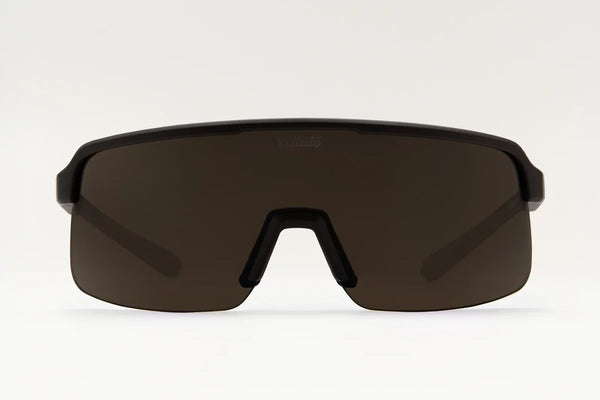
Le poids. Chaque gramme sur votre visage devient perceptible au cours d'une longue sortie. La pression d'une monture plus lourde s'accumule sur le nez et les tempes. Recherchez des montures de moins de 30 g. Le Velluto StradaPro pèse 25 g, une légèreté remarquable pour une monture de cyclisme haute performance.
Certification UV400. Pas de protection UV. La protection UV400, la norme qui certifie le blocage à 100 % des rayonnements UVA et UVB. En altitude dans les Alpes ou lors de longues sorties gravel estivales, l'exposition aux UV augmente considérablement. Ne faites pas de compromis ici.
Système anti-buée. Pas de revêtement anti-buée, ceux-ci s'usent. Recherchez un système anti-buée structurel intégré à la conception de ventilation de la monture. C'est ce qui garde votre vision claire au sommet d'une montée lorsque votre corps génère de la chaleur et que l'air extérieur est frais.
Plaquettes nasales ajustables. Les formes de visage varient énormément. Un pont nasal fixe s'adapte bien à un visage et mal à tous les autres. Les plaquettes ajustables répartissent la pression uniformément et empêchent les lunettes de glisser vers le bas au cours d'une longue sortie, ce qui est exactement le moment où vous en avez le plus besoin.
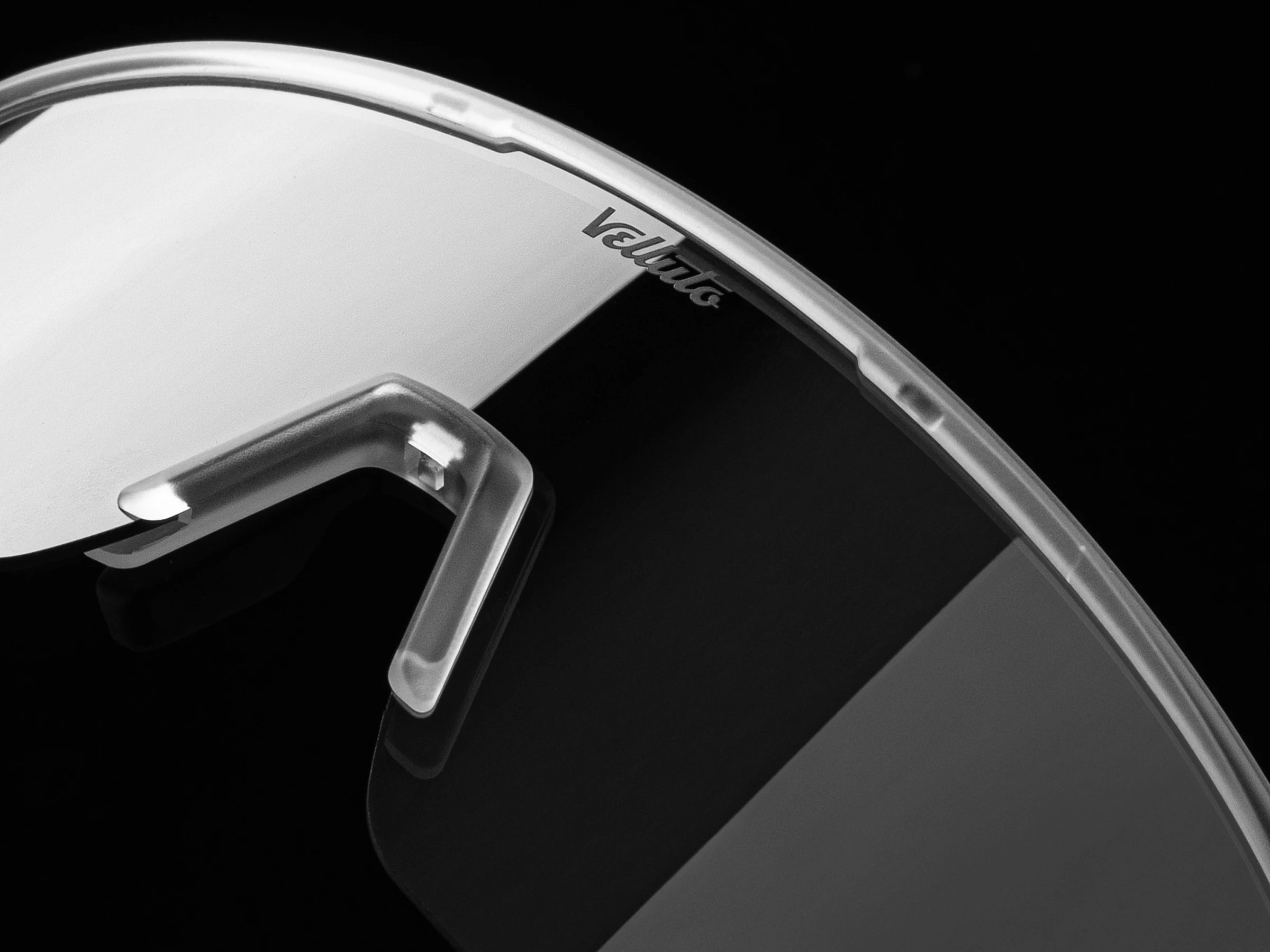
Verres interchangeables. Matins d'été, après-midi en haute altitude, étapes gravel nuageuses, les conditions lumineuses changent constamment. Des lunettes avec un système de lentilles à clic vous permettent de porter un verre transparent pour les démarrages à l'aube et un verre rehaussant le contraste pour la pleine lumière du jour sans porter deux paires séparées.
Ce que vous n'avez pas besoin : verres polarisés pour le cyclisme sur route (ils peuvent masquer la texture de la surface de la route et interagir mal avec certains écrans), une teinte excessive qui réduit la visibilité à l'ombre, et des montures de mode surdimensionnées qui privilégient le style à l'ajustement aérodynamique.
Road Cycling Glasses vs Regular Sunglasses 2026 | Velluto. Pourquoi le StradaPro a été construit pour cela
Le StradaPro est une réponse directe à tous les points de défaillance que les lunettes de soleil ordinaires exposent sur la route. À 25 grammes, il repose sur votre visage sans se faire sentir, les plaquettes nasales ajustables signifient une accumulation de pression nulle au cours d'une sortie de quatre heures. Les verres certifiés UV400 bloquent 100 % des rayons UVA et UVB. Le système anti-buée intégré gère les transitions de température qui causent le brouillage de la plupart des lunettes en montée : les canaux de ventilation structurelle acheminent l'air sans créer d'effet tunnel à la vitesse.
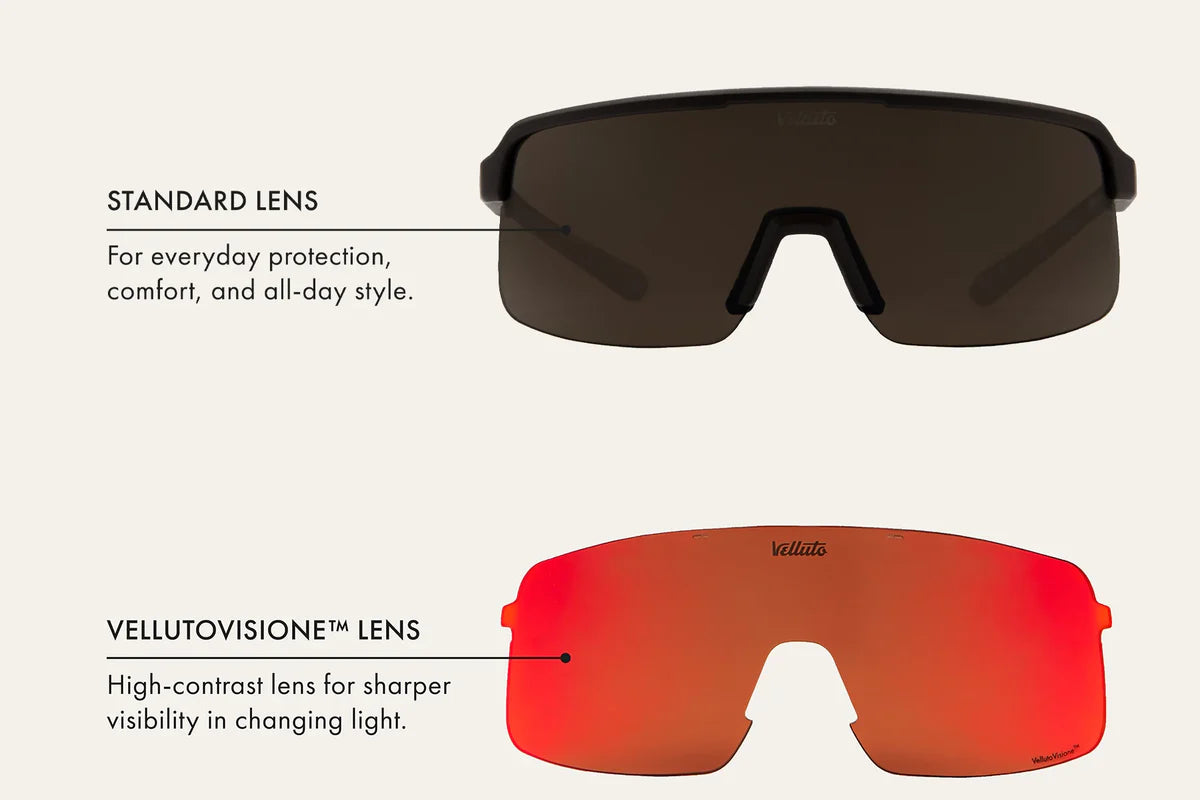
Le système de lentilles est l'endroit où le StradaPro gagne sa polyvalence. Deux options interchangeables, VellutoPuro (transparent, pour la protection contre le vent et les insectes dans une lumière variable) et VellutoVisione (contraste élevé, pour affiner la définition de la surface de la route dans les conditions lumineuses brillantes), se cliquent et se sortent sans outils. Une sortie gravel matinale et une étape route à midi peuvent utiliser la même monture avec un échange de verre en dix secondes. Le design italien signifie que la monture combine l'esthétique et la performance : c'est quelque chose que vous choisiriez pour son allure aussi bien que pour sa fonction.
 Velluto StradaPro Lunettes | Nero
Essai sans risque pendant 30 jours sur vos vraies sorties
Le StradaPro est livré avec une garantie de satisfaction de 30 jours. Essayez-le sur une montée humide du matin, une longue boucle gravel estivale, une sortie route rapide en groupe. Si vous n'êtes pas entièrement satisfait, renvoyez-le. C'est l'offre parce que c'est la confiance derrière le produit.
Questions fréquemment posées
Puis-je utiliser des lunettes de soleil ordinaires pour le cyclisme occasionnel ?
Pour les sorties lentes et décontractées dans une lumière constante, les lunettes de soleil ordinaires offrent une protection UV de base. Mais pour toute sortie au-dessus de 30 km/h, par temps variable, sur des descentes techniques, ou sur des distances plus longues qu'une heure, la combinaison d'un mauvais ajustement, d'aucun anti-buée et d'une ventilation inadéquate rend les lunettes de soleil ordinaires une responsabilité pratique plutôt qu'une solution.
Quelle est la différence entre un verre transparent et un verre à contraste élevé pour le cyclisme ?
Un verre clair comme le VellutoPuro est idéal pour les démarrages à l'aube, les jours nuageux et les routes avec beaucoup de tunnels, il offre une protection contre le vent et les insectes sans réduire la transmission lumineuse. Un verre à contraste élevé comme le VellutoVisione affine la définition de la texture de la route et des bords de la surface dans les conditions lumineuses brillantes, ce qui améliore le temps de réaction lors de la lecture des surfaces de route à la vitesse.
Le poids du verre a-t-il une importance dans les lunettes de cyclisme ?
Oui, mais le poids de la monture compte plus. Le pont nasal et les branches des tempes supportent la charge de l'ensemble du montage. Une monture de 25 g comme le StradaPro répartit cette charge uniformément sur les plaquettes nasales ajustables, ce qui signifie aucun point chaud ou fatigue de pression même lors de sorties d'une journée complète. Le poids du verre contribue marginalement, mais la géométrie de la monture et l'ajustement des plaquettes sont les variables dominantes du confort en longue sortie.
Prêt à voir la différence par vous-même ? Explorez la gamme complète StradaPro, disponible en Nero, Arancia, Espresso et Viola, à partir de 69 EUR sur velluto-shop.com. Livraison gratuite sur les commandes de 89 EUR ou plus.
Lunettes de cyclisme sur route vs lunettes de soleil classiques : comparaison côte à côte
Avant d'approfondir, voici le moyen le plus clair de voir la différence. Le tableau ci-dessous compare les Velluto StradaPro aux marques premium que vous trouverez dans n'importe quel magasin de cyclisme sérieux, Oakley, Rudy Project, Bollé et leurs équivalents, ainsi qu'aux options bon marché qui encombrent les rayons inférieurs. L'objectif n'est pas de vous submerger de chiffres, mais de vous montrer exactement où chaque gamme trouve sa place et où elle s'effondre au moment où la route s'incline et la vitesse augmente.
| Critère | Velluto StradaPro | Marques premium (Oakley, Rudy Project, etc.) | Options bon marché |
|---|---|---|---|
| Prix | À partir de 69 €, comprend deux verres, un étui rigide et un chiffon de nettoyage | Généralement 150 à 350 € et plus par monture, les accessoires vendus séparément | Généralement 15 à 40 €, verre unique uniquement, extras minimes |
| Poids | 25 g, monture ultra-légère que vous oubliez après la première côte | Le poids varie selon le modèle, les montures de performance varient de légères à sensiblement plus lourdes | Souvent plus lourd en raison d'une construction en plastique basique, l'inconfort sur les longs trajets est courant |
| Système de verres | Deux verres interchangeables inclus : VellutoPuro transparent (nuit et tunnels) + VellutoVisione contraste élevé (lumière mixte et ciel couvert) | Systèmes interchangeables propriétaires disponibles, les verres de remplacement sont généralement vendus à un coût supplémentaire | Verre unique fixe, pas d'interchangeabilité, une condition, une solution |
| Protection UV | UV400 sur les deux verres, protection complète du spectre à n'importe quelle altitude ou angle du soleil | UV400 standard sur la plupart des modèles premium | Les niveaux de protection UV sont incohérents, pas toujours certifiés UV400 |
| Anti-buée | Revêtement anti-buée sur les deux verres, reste clair du fond de la vallée au sommet | Traitements anti-buée disponibles sur certains modèles, souvent une amélioration premium | Rarement inclus, la buée sur les descentes ou les matins frais est un problème connu |
| Ajustement et réglabilité | Plaquettes nasales ajustables pour un ajustement sûr et personnalisé selon les différentes formes de visage | Les plaquettes nasales et les branches ajustables sont courantes à ce niveau, l'ajustement est généralement bien conçu | Géométrie fixe à taille unique, le glissement lors des efforts intenses est une plainte fréquente |
| Accessoires inclus | Étui rigide + chiffon de nettoyage en microfibre inclus dans chaque kit Starter Vision | Pochette souple ou étui rigide généralement inclus, le chiffon peut ou non être fourni | Sac basique au mieux, l'étui de protection est rarement inclus |
| Entretien des verres | Compatible avec Velluto Cleaning Spray, formulé pour protéger les revêtements et garder l'optique claire trajet après trajet | Produits de nettoyage spécifiques à la marque ou tiers recommandés, la compatibilité des revêtements varie | Pas de système de soin dédié, les lingettes de verre standard dégradent rapidement les revêtements basiques |
| Essai et retours | Essai sans risque pendant 30 jours, roulez dedans, courez dedans, puis décidez | Les fenêtres de retour standard au détail, les politiques de style essai sont l'exception plutôt que la règle | Les politiques varient considérablement, beaucoup de vendeurs en ligne bon marché offrent des retours limités ou nuls |