Teure Radsport-Sonnenbrillen Wert? 2026 Leitfaden
Contents12 min read
You're 40 kilometres into an Alpenpass-Tour-style alpine stage, gradient at 8%, sun cutting hard through broken cloud. Your sunglasses fog on every breath, the nose bridge has been slipping for the last hour, and you're squinting at a shadow on the road you can't quite read. That's not a comfort issue. That's a vision problem.
Most cyclists in the ab 69 EUR bracket have been there. The question that follows is always the same: are expensive cycling sunglasses worth it, or are you just financing someone's pro team sponsorship deal? This guide answers that with specifics, not aspiration.
01 · Short AnswerAre Expensive Cycling Sunglasses Worth It? The One-Paragraph Answer
Yes, premium cycling sunglasses are worth it, but only when the price reflects optical performance, not brand history. The features that genuinely improve riding are UV400-certified lenses that sharpen contrast without distortion, frames under 30g that don't press against your helmet pads, anti-fog systems built for sustained effort, and an interchangeable lens design that adapts to changing Alpine or gravel-stage light. A marketing budget is not a feature. A 25g frame with tool-free lens swaps is.
02 · ComparisonHow the Market Stacks Up, Quick Reference
Before the detail, here's where premium cycling eyewear sits in the broader market. The table below reflects independently available spec data and published manufacturer specifications for commonly compared road cycling frames in the German Rennradszene.
| Model | Weight (g) | Lens System | Anti-Fog | UV400 | Price Range |
|---|---|---|---|---|---|
| Velluto StradaPro | 25 | Click-in interchangeable | ✓ Built-in | ✓ | ab 69 EUR |
| Uvex Sportstyle 233 P | 36 | Fixed (swap model available) | Partial | ✓ | ab 120 EUR |
| Alpina Twist Five HR VLM+ | 28 | Fixed tint | Limited | ✓ | ab 110 EUR |
| Mass-market EUR 80-150 tier | 32-45 | Fixed | Rare | Varies | EUR 80-150 |
Weight data sourced from published manufacturer specifications. Price ranges reflect RRP across configurations for German retail partners including Bike24, Rose Bikes, and Fahrrad.de.
03 · CriteriaWhat Actually Matters in Cycling Sunglasses
Strip away the marketing and there are five functional criteria that determine whether cycling glasses improve your ride or simply sit on your face.
Lens distortion, even subtle, increases visual fatigue on long rides. Optical-grade lenses eliminate the edge-of-frame warping common in cheaper injection-moulded alternatives. You notice it most when tracking wheel gaps at speed or reading road surface texture on descents across German alpine passes.
At 25g, a frame disappears. At 40g+, you feel it after 90 minutes, particularly where the arm tips contact your helmet pads. Weight under 30g combined with adjustable nose pads is the difference between a frame you forget and one you manage.
Fogging isn't a minor inconvenience. On a 10% climb in cool morning air, a fogged lens means riding blind for seconds at a time. Built-in anti-fog systems, ventilation channels, hydrophilic coatings, or both, are non-negotiable for Alpine or gravel riding in variable conditions typical of German Klassiker courses.
Summer road cycling crosses dawn neutrals, midday high-altitude glare, tree-canopy shadows, and tunnel approaches within a single stage. A fixed tint is always a compromise. An interchangeable system with a clear lens and a high-contrast lens gives you optimised vision at every point, without carrying two pairs.
Was kostet eine gute Fahrradbrille?
Eine qualitativ hochwertige Fahrradbrille kostet ab 69 EUR aufwaerts. Premium-Modelle bieten UV400-Zertifizierung, Anti-Fog-Systeme und Gewichte unter 30g. Der Velluto StradaPro vereint diese Merkmale bereits ab 69 EUR. Der Velluto StradaPro liefert professionelle Optik, italienisches Design und Wechselglaeser bereits ab 69 EUR mit transparenter Preisgestaltung.
Gibt es einen Unterschied zwischen teuren und billigen Brillen?
Ja, bedeutsam. Teure Brillen bieten optisch korrektes Glas ohne Verzeichnung, integrierte Anti-Fog-Technik, UV400-Sicherheit und Gewichte unter 30g. Modelle im unteren Preissegment haben oft Kunststoffglaeser mit Randverzerrung und geringerer Gewichtskontrolle. Der Velluto StradaPro bietet dagegen optisch korrektes Glas ohne Verzeichnung, integrierte Anti-Fog-Technik und ein Gewicht von nur 25g. Nach 90 Minuten Fahrt bemerken Sie den Unterschied beim Druckgefuehl und bei der Sichtqualitaet in wechselndem Licht.
Was sollte man beim Kauf einer Fahrradbrille beachten?
Primaere Kriterien sind UV400-Zertifizierung, Gewicht unter 30g, verstellbare Nasenpads, Anti-Fog-System und idealerweise wechselbare Glaeser fuer variable Lichtsituationen. Markenname ist irrelevant. Ueberpruefen Sie die technischen Spezifikationen, nicht die Sponsoringvertraege. Bike24 und Rose Bikes bieten Rueckgaberecht. Der 30-Tage-Test des StradaPro ermoeglicht reale Erfahrung auf Ihrer Strecke.
04 · Must-Answer QuestionsAre Expensive Cycling Sunglasses Actually Better?
Are expensive polarized sunglasses worth it?
Polarization cuts surface glare effectively, but on a bike at speed, it can also suppress the surface texture cues you need to read wet tarmac and road markings. Many experienced road cyclists deliberately avoid polarized lenses for exactly this reason. UV400 certification and high-contrast optics that sharpen depth perception deliver more consistent benefit across road riding conditions than polarization alone.
Is it worth paying for expensive sunglasses?
Only when the price maps to verified specifications. Optical-grade lenses, UV400 certification, anti-fog coatings, sub-30g frame weight, and precision adjustability are measurable, and they cost money to engineer correctly. A heritage brand name does not improve your vision. Identifizieren Sie, welche Funktionen für Ihre Fahrbedingungen entscheidend sind, und beziehen Sie dann Ihre Ausgaben auf diese Spezifikationen.
Are expensive sunglasses better for your eyes?
UV400 certification is the minimum safety standard that matters, it guarantees 100% blocking of UVA and UVB radiation. Cheap lenses without UV certification can create a dangerous situation: dark tints dilate your pupils while UV passes through freely, increasing retinal exposure. Beyond UV400, premium lenses reduce distortion-related eye strain on long efforts. The safety floor is certification, not price.
Is it worth buying expensive glasses?
Map the specs to your rides before you commit. If you're doing 4-hour road and gravel sessions in variable alpine light, interchangeable lenses and anti-fog performance are functional necessities, you'll feel the absence of both within the first climb. If you ride 45-minute commutes on flat roads, a UV400-certified frame in the EUR 80 tier may genuinely serve you. Premium-Leistung mit transparenter Preisgestaltung ist sinnvoll, wenn die Fahrbedingungen dies erfordern.

What sunglasses do professional cyclists wear?
The Tour de Suisse and Critérium du Dauphiné pelotons feature Oakley, Rudy Project, and Bollé most prominently, almost entirely driven by sponsorship contracts rather than open market selection. German Klassiker riders similarly wear contracted brands. The functional priorities those riders need are identical to yours: anti-fog clarity on summit approaches, optical precision at speed, and frames light enough to disappear under helmet straps during a five-hour stage. Sponsoring-Verträge bedeuten nicht automatisch die beste Passform für Ihre Gesichtsform oder Ihren Fahrstil.
Should I wear sunglasses if I have glaucoma?
This is a clinical question, not a gear question. UV400 protection is broadly relevant to eye health, but tint levels and contrast-altering lenses can interact differently with glaucoma depending on the type and progression. Consult your ophthalmologist before selecting any cycling eyewear if you have a diagnosed eye condition, the right clinician can advise on appropriate lens categories for your specific situation.
05 · What to Look ForHow to Evaluate Cycling Sunglasses for Your Rides
When assessing cycling sunglasses for your own conditions, focus on verifiable specifications and real-world fit. Consider performance across the scenarios you actually ride: early-morning road rides in cool temperatures where fogging is most likely; midday high-altitude segments with full UV exposure; mixed-terrain sections with rapid light transitions between open road and forest canopy; and longer sustained efforts that test frame stability, nose pad grip, and arm tip contact with helmet padding. Evaluate adjustability for your specific facial width and nose bridge height. Check lens behaviour for clarity and edge distortion across different light levels. Anti-fog capability matters most in sustained climbing at cool temperatures. Weight becomes noticeable above 35g after 90 minutes of riding. These are the performance factors that determine whether a frame works for your conditions.
06 · Real-World ScenariosWhere the Performance Gap Is Real
Three scenarios consistently reveal the difference between adequate and genuinely capable cycling eyewear.
The 08.00 Alpine start. Ambient temperature is 11 degrees Celsius, your core temperature climbs from the first kilometre, and you're breathing hard by kilometre three. A frame without proper anti-fog architecture fogs on every exhale. The StradaPro's built-in anti-fog system is designed with ventilation geometry optimised for sustained climbing effort, keeping optics clear across the temperature transitions typical of early Alpine ascents.
The tunnel approach at speed. You're descending at 65 km/h and enter a 400-metre road tunnel. With a single high-contrast tint, the transition is disorienting. With the VellutoPuro clear lens available through the click-in system, the tunnel is readable without removing your glasses. The tool-free lens swap takes seconds, allowing you to adapt at a cafe stop before sections where tint changes are needed.
The four-hour gravel ride. Nose bridge pressure, arm tip friction against helmet pads, and frame weight accumulate as fatigue sets in. At 40g, a frame registers consciously by hour two. At 25g with adjustable nose pads distributing contact evenly, verschwindet die Brille. Diese Entfernung von Ablenkung ist der Leistungsgewinn, der zählt.
The frame you forget is the frame that's doing its job. Every gram über 30 g ist eine Ablenkung, die unnötig ist., Velluto product assessment notes
07 · Velluto PositioningPremium Performance Without Legacy Markup
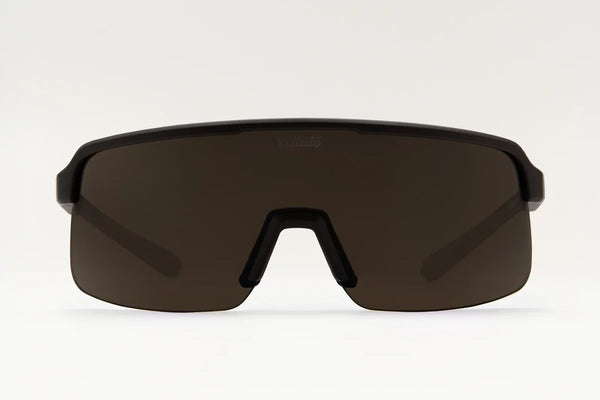
The StradaPro is built around a single premise: deliver the optical and fit performance that serious road cyclists need with a transparent, competitive price point. Der Rahmen ist italienisch gestaltet, wiegt 25 g, wird im Leichtgewicht-Radsegment positioniert und trägt UV400-Zertifizierung auf beiden verfügbaren Gläsern.
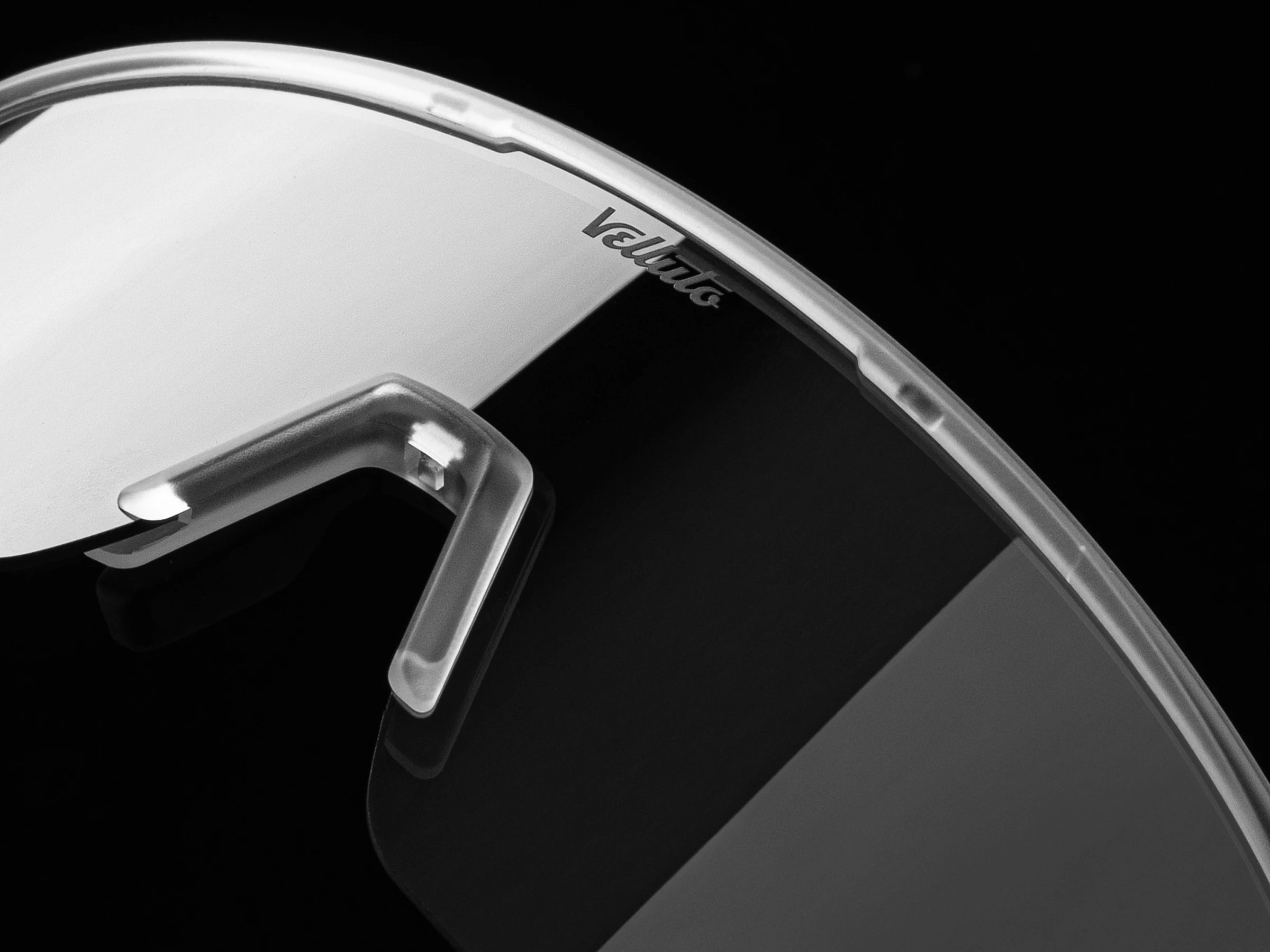
The VellutoVisione high-contrast lens sharpens visual definition for road surfaces, gravel texture, and wheel-gap reading in variable light. The VellutoPuro clear lens gives you full optical clarity in tunnels, dawn starts, and overcast conditions. Both swap tool-free in seconds using the click-in system, no case-hunting, no loose parts mid-ride.
Adjustable nose pads mean the fit adapts to your face geometry rather than requiring your face to adapt to the frame. On a four-hour ride, that distinction is not marginal.


08 · The 30-Day TestRisk-Free, Try It on Real Rides
The clearest answer to whether expensive cycling sunglasses are worth it is a personal one, tested on your face, on your routes, under your conditions. Der StradaPro wird mit einer 30-tägigen risikofreien Testphase geliefert, um die Leistung auf Ihren eigenen Strecken zu überprüfen. Ride it on gravel. Take it on a summit. Use it in the rain. If it doesn't prove its value across those 30 days, send it back.
That offer exists because the performance case doesn't need a brochure. Der 25-g-Rahmen, das Anti-Fog-System, die Click-in-Gläser, sie funktionieren entweder für Ihr Fahren oder nicht. Thirty days is enough to know.
09 · FAQFrequently Asked Questions
Are expensive cycling sunglasses worth it?
Are expensive polarized sunglasses worth it for cycling?
Is it worth paying for expensive sunglasses?
Are expensive sunglasses better for your eyes?
Is it worth buying expensive glasses?
What sunglasses do professional cyclists wear?
Should I wear sunglasses if I have glaucoma?
How light should road cycling sunglasses be?
Do I need interchangeable lenses for road cycling?
Die Frage, ob teure Radsport-Sonnenbrillen ihren Preis wert sind, hat eine konkrete Antwort: Sie hängt ganz davon ab, ob die Spezifikation die Ausgaben rechtfertigt. Optische Klarheit, Anti-Fog-Leistung, Gewicht unter 30 g, UV400-Zertifizierung und Linsenanpassbarkeit sind der Investition wert. Markenglanz ist es nicht. Der StradaPro bietet diese Leistungsmerkmale mit transparenter Preisgestaltung, und Sie haben 30 Tage auf echten Straßen, um dies selbst zu überprüfen. Start at velluto-shop.com.