Cycling Glasses Lens Colors Guide: Which Tint Wins?
Contents16 min read
It is 6:47 on a late August morning somewhere in the Pyrenees. The peloton rolls through a valley still grey with mist, then crests a col and hits a wall of white Spanish sun. Within three kilometres the light changes three times. The riders who had the right lens in their glasses that morning noticed none of it.
Lens tint is the most underrated decision in a cyclist's kit bag. Most riders buy one pair of glasses, wear them in every condition, and spend years squinting into dawn light with smoke lenses or wincing through midday glare with clear ones. The fix is not complicated. Once you understand what each tint actually does to the light reaching your eye, the decision becomes a two-second checklist before every ride. This guide walks through each colour category in plain terms, tells you when each one wins, and gives you a practical decision tree you can use year-round.
01 · The basicsWhat lens tint actually does
A lens tint is a filter. Every colour has a Visible Light Transmission rating, abbreviated VLT, which tells you what percentage of visible light passes through. A 100% VLT lens is completely clear. A 10% VLT lens transmits only one-tenth of the light, blocking the rest. Tint colour then determines which wavelengths within the visible spectrum get selectively filtered, which is what produces the contrast-enhancement or colour-shift effects you notice when you swap lenses.
UV protection is a separate matter entirely. UV400 certification means a lens blocks 100% of ultraviolet radiation up to 400 nanometres, covering both UVA and UVB. This has nothing to do with how dark or light the lens looks. A completely clear lens can be UV400 certified, and it should be if you plan to wear it outdoors. UV exposure accumulates over a cycling career, and unprotected eyes on long summer rides are genuinely at risk regardless of cloud cover.
The practical takeaway: choose tint for light management and comfort, choose UV400 as a non-negotiable baseline for any lens that goes on your face outdoors. These are two separate criteria, and both matter.
02 · Clear lensesNight, rain, and tunnel riding
Clear lenses have a VLT close to 100%. They transmit almost all visible light and add no colour shift. In practical terms, this means your brain receives the scene as close to unfiltered as possible, which is exactly what you need when the ambient light is already low.
The conditions that call for a clear lens are predictable: pre-dawn starts, rides that run into dusk, heavy rain, routes with long tunnel sections, and any night training session. In these situations the risk is not glare. The risk is reduced visibility, slower reaction times, and an inaccurate read of road texture and surface hazards. A tinted lens in low light amplifies all of those risks.
Clear lenses are also the correct choice for indoor training sessions on a smart trainer if you train in eye protection, and for gym or track environments where lighting is fluorescent and directional rather than solar. Anywhere that the total available light is modest, a clear lens is not a compromise. It is the right tool.
One common mistake is assuming clear lenses offer no protection. A UV400 certified clear lens blocks all UVA and UVB radiation, the same as any dark tinted lens. What it does not do is reduce glare or visible light intensity. Wear a clear lens when light is limited. Wear a tinted lens when light is abundant. The UV protection works either way.

03 · Yellow lensesLow light and overcast mornings
Yellow lenses occupy the middle ground between clear and tinted. Their VLT typically sits in the 70 to 90% range, meaning they transmit most available light while selectively filtering short-wave blue light. The effect is a perceived brightening of the scene. Cyclists often describe it as the world snapping into focus on a grey morning.
The mechanism is straightforward. Blue light scatters more than other wavelengths, and overcast skies deliver a disproportionate amount of it. By filtering that diffuse blue component, yellow lenses reduce visual noise and make edges and contours stand out more clearly. On an overcast road, this translates to better pothole spotting, clearer white line definition, and a sharper read on the road ahead.
Yellow lenses are a strong choice for the 5 a.m. to 8 a.m. window in late summer when the Vuelta peloton rolls through early mountain stages in cloud and mist. They are equally useful in light drizzle when a smoke lens would be dangerously dim but a clear lens gives no contrast benefit. Many riders keep a yellow lens as a dedicated early-morning option for autumn and winter months when overcast skies are the default rather than the exception.
The limitation of yellow lenses is that they are not a substitute for sun protection. As ambient light increases toward midday in high summer, yellow lenses transmit too much light to be comfortable, and the blue-blocking effect offers no relief from direct glare. Once the sun is high, switch to smoke or high-contrast amber.
04 · Smoke and grey lensesFull sun and bright summer stages
Smoke and neutral grey lenses are the default choice for high-output summer riding. Their defining characteristic is a neutral spectral response: they reduce the total quantity of light reaching the eye without shifting the colour balance significantly. What you see through a smoke lens looks roughly the same as the real scene, just dimmer. This matters on the road because accurate colour perception affects your ability to read road surfaces, judge distances, and spot changes in asphalt quality ahead.
VLT for smoke lenses typically runs from 8% to 20%. At the darker end, this is appropriate for high-altitude rides in Spain or southern France in August, where UV levels and glare intensity are at their annual peak. At the lighter end, a smoke lens around 15 to 18% VLT handles a typical northern European summer day with intermittent cloud.
The late summer Vuelta a España provides a useful reference point. Stages crossing the Sierra Nevada and the Basque climbs happen in intense afternoon light, then dip into shadowed valley sections within minutes. Riders using a fixed dark smoke lens manage fine on the exposed sections. The challenge comes in rapid transitions. This is the scenario where an interchangeable lens system begins to show its value: a high-contrast amber lens swapped in for the shadow-heavy stages, a smoke lens clicked in for the exposed mountain tops.
For most recreational cyclists doing sportives in late August and September, a smoke lens covering the 12% to 18% VLT range handles the majority of their sunny-day riding. Pair it with a clear or high-contrast lens in the kit bag for the ride home or a changed forecast, and almost every scenario is covered.

05 · Brown and amber lensesContrast, depth, and variable conditions
Brown and amber lenses are the most technically interesting category in road cycling eyewear. Like yellow, they filter blue light selectively. Unlike yellow, they do so at a lower VLT, typically 20% to 40%, which means they provide meaningful sun protection at the same time as contrast enhancement. The result is a lens that sharpens visual definition in variable light while still being wearable in moderate to strong sun.
The visual effect cyclists notice most is improved depth perception on complex surfaces. Gravel, wet asphalt, and textured road surfaces all present subtle three-dimensional cues that flat, overcast light tends to wash out. Brown and amber lenses restore some of that dimensionality by enhancing the contrast between highlight and shadow across the road surface. This is not a minor aesthetic preference. Spotting a pothole or a patch of loose gravel half a second sooner has real consequences at 40 kilometres per hour.
Brown and amber are also the lenses most suited to the specific lighting conditions of late summer European sportives. The sun sits lower in the sky in August and September than it does in June. Low-angle light produces long shadows, alternating bright patches, and frequent glare from road surfaces and opposing vehicles. High-contrast amber lenses handle this combination better than smoke, which flattens the scene, or yellow, which transmits too much total light.
The low August sun does not just produce glare. It creates a contrast problem. Amber lenses solve both at once.Velluto Lens Guide, 2026
For road cyclists who want a single tint that performs across the widest range of real-world conditions, brown or amber is the closest thing to a universal lens. It is weaker than smoke in extreme midday sun and weaker than clear in true darkness, but it covers the middle 80% of a typical European riding year better than any other single option.

06 · The decision treeChoosing the right tint before every ride
The goal is a two-second decision at the door. Work through these questions in order and you will have the right lens in the frame before you clip in.
Two lenses cover almost every scenario a road cyclist will encounter across a full year. A clear lens for night and rain. A high-contrast lens for everything in between and above. If your frame accepts interchangeable lenses and you can swap in ten seconds, you are carrying both options on every ride for no additional weight or complexity.
07 · The Velluto approachTwo lenses, one frame, every condition
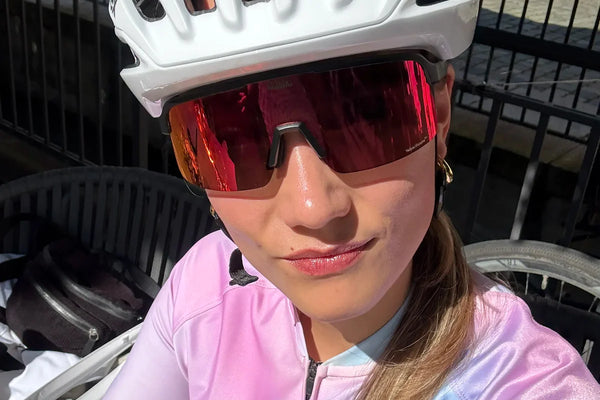
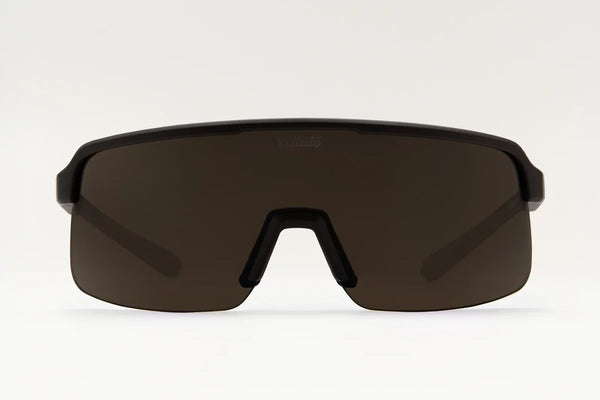
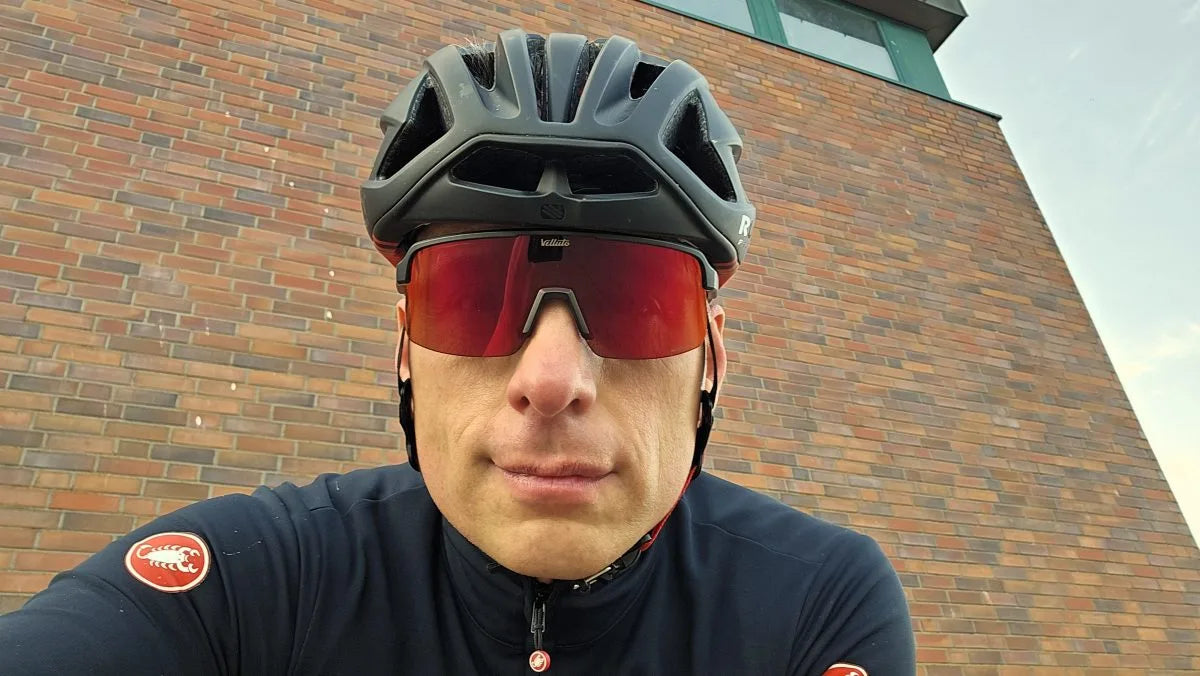
The StradaPro is built around exactly this logic. Rather than offering a dozen tint variants to guess from at the point of purchase, Velluto's system gives you two lenses that cover the full range of real riding conditions: the VellutoPuro clear lens for night, rain, and low light, and the VellutoVisione high-contrast lens for variable and bright conditions.
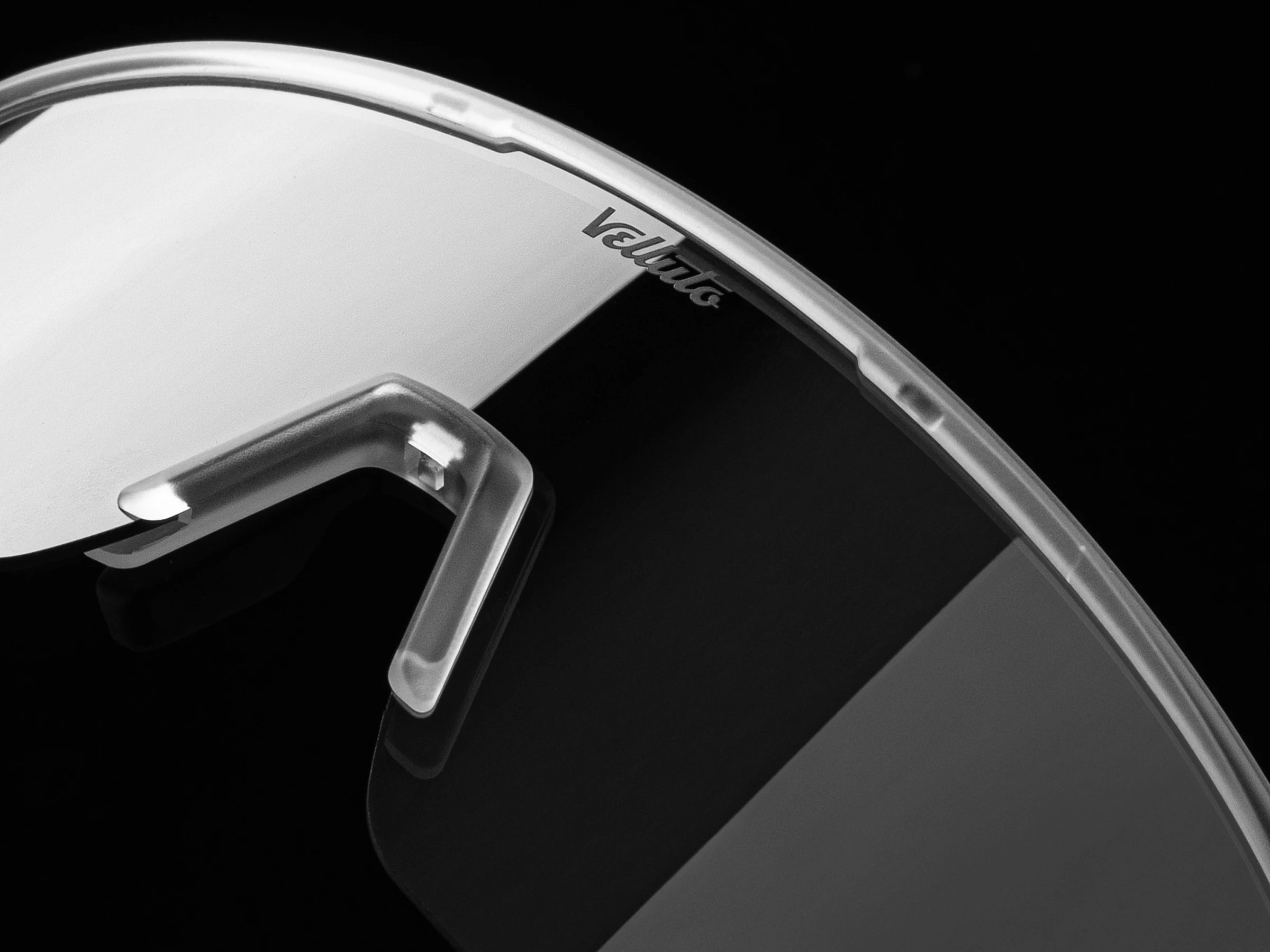
The VellutoPuro is a UV400 certified clear lens with anti-fog performance. It is optimised specifically for road cycling protection against wind and insects, which matters when you are descending at speed in a rain stage and need both clarity and physical protection. No tint, no colour shift, full UV coverage.
The VellutoVisione uses a purpose-built high-contrast technology that sharpens visual definition and edge contrast. On the road, it makes the difference between reading a rough patch of asphalt as a grey blur or as a clear surface hazard. UV400 certified, the same click-in system as the Puro, compatible with every StradaPro frame colour.
The click-in system requires no tools and takes a few seconds: press the lens tabs, pop the current lens free, align the new one and click it in. At the first café stop of a sportive, you can assess the conditions outside and swap accordingly. This is not a gimmick. For any cyclist who rides across seasons, across time zones, or whose ride starts before dawn and finishes in afternoon sun, interchangeable lenses remove the need to own and carry multiple pairs of glasses.
The StradaPro frame itself weighs 25 grams and uses adjustable nose pads that distribute the load without pressure points. The built-in anti-fog system keeps the lenses clear on climbs where temperature differentials between face and air are highest, which is exactly when you least want to be wiping your lenses. All of this is available in four frame colours: Nero, Espresso, Arancia, and Viola.

08 · Frame coloursNero, Espresso, Arancia, Viola
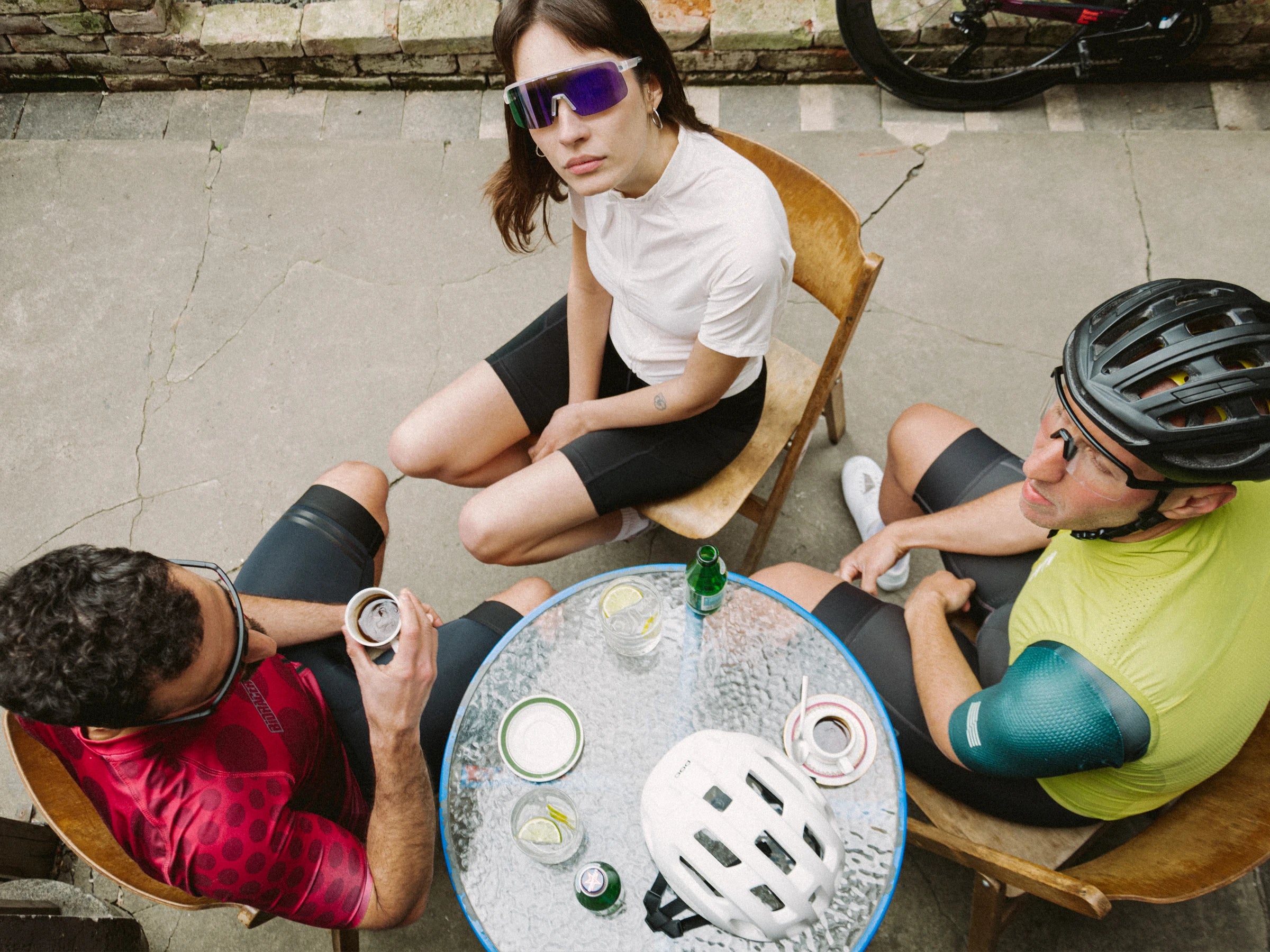
The StradaPro is available in four colourways, each with Italian design aesthetics and the same 25-gram frame, adjustable nose pad, and click-in lens compatibility. The frame colour is a personal and aesthetic choice that does not affect optical performance, but matching it to your kit or riding identity is a genuine part of the ownership experience.


Nero is the versatile default: it works with any kit colour and reads as understated on the road. Espresso pairs naturally with earthy and classic cycling aesthetics, and its warm brown tone complements the amber VellutoVisione lens beautifully. Arancia is the bold choice, particularly for riders who want their eyewear to be a visible part of a coloured kit. Viola brings a quieter, distinctive character that stands out without shouting.

09 · Keeping lenses clearMaintenance between rides
The best lens in the world performs badly if it is smeared. Cycling lenses accumulate road spray, insect residue, sunscreen transferred from a gloved hand, and sweat salt, often within a single ride. Cleaning them correctly extends both their optical life and their anti-fog coating integrity.
The basic rule is that dry wiping a lens with anything abrasive, including a jersey, destroys anti-reflective and anti-fog coatings faster than almost any other action. A purpose-built cleaning spray and a proper microfiber cloth are not luxury items. They are protective maintenance for an optical surface that costs significantly more than the cloth.
Velluto's Cleaning Spray is 50ml, apple-scented, refillable, and made in Germany. It is formulated specifically for optical surfaces, which means it dissolves road film and biological residue without attacking coatings. The accompanying microfiber cloth is 25 by 25 centimetres, 80% polyester and 20% polyamide, which is the standard composition for safe optical cleaning. Two sprays, a gentle wipe, and your lens is back to the clarity it had out of the box.

Compare the full lineup in the Velluto StradaPro cycling glasses collection.
10 · FAQFrequently Asked Questions
What lens color is best for cycling in bright sunlight?
Can I use clear lenses for daytime road cycling?
What is a high-contrast lens and when does it help?
Are yellow lenses good for cycling?
What does UV400 mean on cycling glasses?
Do I need different lenses for morning and afternoon rides?
What lens color is best for rainy and wet conditions?
How does the Velluto interchangeable lens system work?
How light is the Velluto StradaPro frame?
Getting your lens tint right is the kind of detail that separates a comfortable ride from three hours of squinting. Whether you are lining up for an August sportive in late summer Spanish heat or rolling out before sunrise on a grey autumn morning, the right lens makes everything sharper, safer, and more enjoyable. The full StradaPro range, with both the VellutoPuro clear and VellutoVisione high-contrast lenses, is available at velluto-shop.com, with a 30-day risk-free trial so you can put the decision tree to work on real roads before you commit.